When The Church Breaks Your Heart

This letter is free for you to read, but it took time and energy to produce. If you’re interested in supporting the work of This Catholic Family, I would be honored if you would prayerfully consider upgrading your subscription. Or, you can always buy me a coffee here.

Rose Colored Glasses

Some of my Catholic author credits state that I “joyfully received the Sacrament of Confirmation on Easter Vigil in 2016.” 

Those words are certainly more than true.

After living my life as a passionate, Jesus-loving Evangelical, and then as a quiet agnostic afraid to leave the routine and community of church-going life, in 2016 I stood in front of thousands of people in a beautiful cathedral and confirmed my decision to live the rest of my life in the Roman Catholic Church. It had been a long, harrowing journey, but I will never forget the feeling I had that night. I felt so intimately connected to Church history, to the Church established by our Savior over 2,000 years ago. I know this is a favorite cliché among converts, but I literally felt like I had finished a long journey and finally had found my way home.

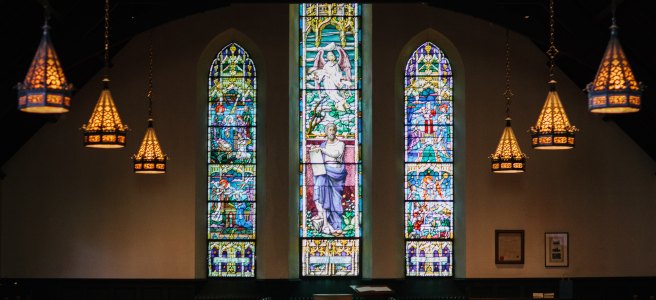
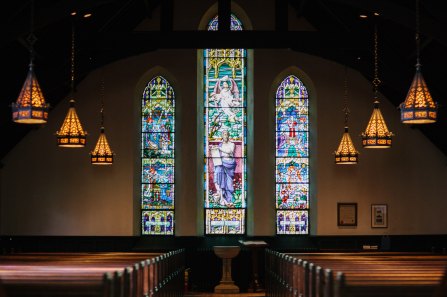
To me, everything about the Church was beautiful. The truth of it, the traditions, the Sacraments and the infusions of grace that come with them. Even the churches themselves, the stone Cathedrals, the stained glass, the columns that stretch to the heavens. The transcendence of it all that pulled my heart closer to my Lord and Savior.

I had the privilege of the first seven years since my conversion to keep those sweet rose-colored glasses largely intact. 

One year ago, that changed.

It was bad, my friends. Even writing it out, it is difficult to accurately convey the seismic shift- the millions of tiny ripple effects that impacted multiple areas of life and that in many ways still do. But, in vague terms, some of the people in our community didn’t like a decision that someone in authority made. It wasn’t a morally problematic decision, but it was unpopular with some people. And the reaction to that decision threatened to tear the community apart. 

The former Protestant in me railed- at the very least, aren’t we a group of people who assent to authority? This is how schisms start! We don’t have to like every decision, but a pastoral decision that we disagree with certainly isn’t reason enough to foment a full-scale rebellion, sights set on destruction???

Ah, Lorelei, you sweet summer child.

As someone who didn’t grow up Catholic, this shocked me. I knew that the many, many different denominations that I had gone to church at over the years were all a result of a schism, at one time or another, from a different church just a little further up on the branch of the Protestant family tree. As Catholics, surely we don’t do that. We assent to the authority of the Pope, of our Bishops, and of our Pastors because we believe Jesus established a Church and set it up that way for good reason.

I’m sure I had vaguely heard of parishes having extreme struggles before, but it was always distant, always far away. None of it ever felt even remotely close to hitting home. And then when we found ourselves smack dab in the middle of one of these struggles, I found my Catholic rose-colored glasses ripped off as I absorbed blowing winds around me. 

I haven’t been able to find them since.

When Home Isn’t Safe

Some of the things that followed were incredibly painful. People began whispering about others and refusing to talk to them. I watched as a big ole game of telephone took place before me, as if all the grown-ups forgot that the point of that game is the farther away you get from the source, the farther away you get from the truth. In grown-up telephone, the distortions get bigger and louder, and sometimes they even grow teeth. I would be delighted to never hear another person start a sentence with “Well I heard…” ever again.

Our decision to support the authority of our church resulted in one of our children being bullied in a group text filled with her classmates, despite the fact that she doesn’t even have a phone. She found out the next day because the bullying left the digital sphere and spilled over into cruel words and harsh exclusion when she arrived at school the following morning. When she found out why, she rushed out of her classroom in tears.

I received an incredibly aggressive and hurtful email that left my heart racing and my hands shaking in front of my children that came from someone who I thought was kind. People stopped talking to us, stopped looking at us, stopped acknowledging our human presence entirely and in some cases I don’t think that I’ll ever get the chance to ask why.

Those are just a few of the pain points, though there were many more. 

I’ve thought for months now that I want to get some words out about what happened, but I’ve also put pressure on myself to have come to some grand resolution about it all. I hoped that at some point I’d have some wise words to share about how I found my rose colored glasses, straightened out the bridge, and set them right back on my nose.

That hasn’t happened, and I’m not entirely sure that it will. I’m even starting to think that maybe I’m not meant to go back to the way things were before.

Before last spring, I would hear about people who left the Church because the people inside the Church are broken and can sometimes cause pain to others. It’s difficult to admit, but I’ve been internally judgey to people who leave the Church for a reason like that. I am quick to point out that Judas was a disciple, and that Peter denied Jesus three times on the literal night that he died for our sins, and that therefore leaving the Church because of a rotten egg or two doesn’t make any sense. People are imperfect, and that fact doesn’t do a single thing to alter the truth of Catholicism on the whole.

I get why people leave the church now. 

Moving forward, I’m going to be a lot more humble when I learn about people who have experienced pain at the hands of fellow Catholics and who, in their pain, decided to leave. Because while the people in the Church are not the entirety of the Church, they are the face of the Church and the hands and the feet of the Church and therefore they become a representation of the Church to others. When those people do hurtful things, it is incredibly difficult to untangle the objective beauty of Catholicism and the ugliness right in front of your face.

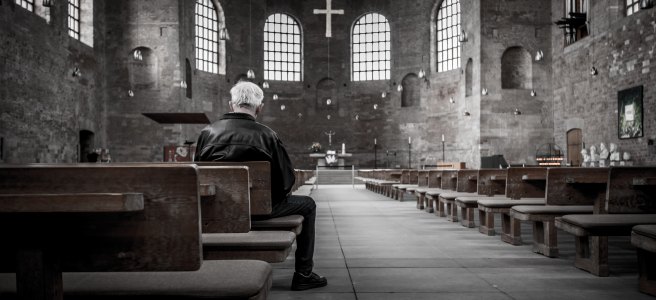
It can feel like the very earth beneath your feet has been torn away to think you’ve found a safe space and then to find yourself feeling the exact opposite of safe in the community you chose to call home.

Good Friday

Easter weekend is right around the one year anniversary of when the path became increasingly difficult for us to walk, and as a person prone to marking landmarks in time and using them as opportunities to reflect, I found myself talking to JP about the past year as we sat outside our cabin on our recent trip to the Smoky Mountains. 

“I don’t want the Church to be ugly,” I said. “I want it to be beautiful.” 

In fact, that longing of my heart hits especially close to home today, on Good Friday, as I publish this post. It is the eight year anniversary of my entrance into the Catholic Church. Eight years since one of the most beautiful days of my life.

Another reason that I converted was I fell in love with the idea of “both/and,” a common refrain in so much of the Church’s logic and theology. Jesus is both God and human. We follow both scripture and tradition. God can have created the world and we can also accept science. On and on, the both/ands of our faith drew me to it and made me love it all the more.

And so, I have to fight internally rolling my eyes as I find myself begrudgingly admitting that maybe the Church is both ugly and beautiful at the same time. For the past year I’ve been wanting either/or- I’ve been wishing for and longing for and mourning the loss of the idea that it could possibly be all beauty. That it could leave any sliver of ugliness behind.

Good Friday is a perfect example of this, and therefore perhaps today is a perfect day for me to wrestle through it.

Jesus on the cross, purpled with bruising, nails in his hands, blood dripping down his face was objectively an ugly sight to see. But the fact that he chose that, out of love for us makes it also incredibly, astonishingly, breathtakingly beautiful too. 

His suffering, and our own, is ugly. Loneliness, pain of any kind is a symptom of our fallen world and it stinks. But we also know, because of the cross, that something in that suffering, when put to work, can also bring about redemption. 

We can’t skip Good Friday and still have Easter morning, can we. 

I find that I like the idea of redemptive suffering far more than I like the actual suffering itself. I am certain that I will be wading through the murky waters of what happened for many years to come, along with any other suffering that comes my way. But just because I don’t like it, doesn’t mean that it isn’t important, or that there isn’t beauty to be found.

Some of my healing over the past year has come in the form of leaning into those true, good, and beautiful things. Finding consolation in the lives of the Saints, who lived very human lives and let God fill them up so much that there was nothing else. I’m drawn as much as ever into beautiful, reverent liturgy. I have carved out more time for stillness and quiet in prayer.  

A year later, and things in our community are better now, by quite a lot. The culture is rebuilding and it feels healthier and on its way to becoming whole. If we had to do it again, we would have made the same decisions. I believe in the authority of the Church. It’s one of the major reasons I became Catholic in the first place.

I’m going to try and sit with these thoughts today, and in the days and weeks to come. I will wrestle through the idea of a church that can be ugly sometimes but that is also incredibly beautiful too. I will try and strip away the idea that in this area I must insist on an either/or. 

During our recent porch conversation, JP suggested that maybe those years where I was able to wear my rose-colored glasses were a grace from God to let me settle in. This next part is harder, to be sure, but I also feel it is incumbent on me to not just be a passive recipient of the beauty of the Church, a consumer of it, if you will. I understand more than ever the importance of becoming part of the beauty of the Church, of leaning into the beautiful things and letting the grace of God form me so I look more and more like Him. 

I don’t think I have come to any profound conclusions about the suffering we endured this past year. 

But I do know this. 

In a few hours, our family will load up into the minivan and go to gaze upon the cross. The ugliness of it. The beauty of it. And I will keep my heart open to the profound intermingling of the two. 

-Lorelei

Looking For Liturgy

This letter is free for you to read, but it wasn’t free for me to produce. If you’re interested in supporting the work of This Catholic Family, I would be honored if you would prayerfully consider upgrading your subscription. Or, you can always throw a little change in the tip jar here.

I used to love the events my youth group put on in middle and high school. I started attending events regularly around the time I was twelve. Overnight summer camp, the fall lock-in, winter ski retreat, and more. I had this little chalkboard in my room and I would often create a countdown for each event, sometimes starting over 100 days out. These youth events were times in my year that were always encouraging, always edifying, and were a beautiful part of the rhythm of my life.

Photo by Bich Tran on Pexels.com

I recently told JP about this, and he said: “Oh, you were looking for liturgy!”

I had never thought about it that way before, but it struck me as definitely true.

In my Catholic faith, we use the word liturgy when we are referring to the whole complex of official services, all the rites, ceremonies, prayers, and sacraments of the Church (New Advent). Another way of looking at the word liturgy is to think of rhythm. Liturgy is the pattern of our worship. It is the rhythm to our faith.

The longer I live, the more I’m convinced that humans are wired for liturgy. Pattern and rhythm bring us comfort. We do best when our life has a rhythm and an order to it. We struggle when we are thrown off our daily routine, or maybe even moreso when we are forced to navigate something like a major life change and we must create all our rhythms anew.

But when we are in the rhythm of life, our mind doesn’t have to work hard to navigate all the details of every single moment. During a routine drive to work we may be able to listen to a podcast or notice the beauty of the sky or the trees because our brain doesn’t have to focus on not getting lost.

Photo by Craig Adderley on Pexels.com

We know the way, and that frees us.

This has also held true for me as I practice a formally liturgical faith.

I used to believe the stereotype that Catholics were just going through the motions by following the same procedures over and over again. The same Mass. The same prayers.

But my experience living the liturgy has been so much richer, so much deeper than that. The rhythm of the Mass has embedded itself in me, and because I live that rhythm my mind and heart and soul are free to enter deeply into the presence of God. Repeated prayers like the Hail Mary create an opportunity to enter into meditation and deep reflection on the life of Jesus in the Gospels.

Catholic liturgy has been so very good for my soul.

Photo by Pixabay on Pexels.com

And maybe that’s a better way to look at liturgy overall than how I used to view it. Just because someone follows a rhythm, doesn’t mean their heart isn’t in it. In fact, it may be a very beautiful part of that person’s life. We’re wired for liturgy, for routine, for rhythm. I think we all find liturgy of some kind, in at least some parts of our lives because we are drawn to it.

Turns out that little teenage me was drawn to the rhythms of my faith, and grown-up me is still drawn to them too.

Feel free to reflect or share:What do you think about liturgy, or people who practice a more liturgical faith? Where do you see liturgy in your own life?

-Lorelei

The First Day I Chose to Go to Mass

This December marks the five year anniversary of the first time I ever went to Mass by choice.

I had been to Catholic Masses before…as a baby, for my own baptism and that of my brother. I had been to funeral Masses. A few weddings. I had begrudgingly and awkwardly joined JP’s very devout family at Mass when we visited them so as not to cause ripples.

But there was something very different about the first time I decided I wanted to go to Mass, the first time I chose it for myself.

The Pre-Conditions

First of all, the conditions to led me, a once anti-Catholic evangelical, to seek out a Catholic Mass in the first place.

I had gone from a very fervent young Christian, to a disillusioned young adult inside the walls of various Protestant churches over a number of years. I was struggling to reshape the faith of my childhood into something with the depth required for my adult experiences. My own journey of faith began as a strong believer when I was a child and teen, but transitioned to a life as a near-agnostic in my early 20’s. That shift called into serious question the Protestant doctrine of “Once Saved Always Saved” because my own experience proved that one can start out with true belief but deny it later on. Our foray through a variety of denominations brought me to doubt individual interpretation of Scriptiure- if it’s that clear, why do all these churches disagree on issues both big and small? I grew weary of the hyper-emotional structure of worship, and the expectation that I developed equating a good church service with feeling emotionally fulfilled.

To top it off, no one could tell me what the early Church looked like, just as I was beginning to suspect that the Americanized version of Protestant Christianity wasn’t it. I wasn’t sure if what I was looking for even existed, and if it didn’t, I didn’t think I could remain in good conscience a sola-scriptura, once-saved-always-saved, American Protestant for much longer. Or, if this was all that Christianity was, I didn’t know if I would remain a Christian at all.

Cue me, sitting on my sofa, realizing that among these and many other things, I was possibly starting to think like…gulp…a Catholic. I hungered for a connection to the history of my faith. I wanted something deeper than an emotionally-driven experience could offer. I wanted sound theological depth.

I didn’t really know how to bring this up to JP because I had persuaded him away from actively practicing his Catholic faith early in our marriage. But I sprung the question on him one snowy night in downtown Racine while we were out at dinner. I asked, simply: “Do you want to go to Mass?” Shocked, JP shared with me that he had been praying for our unity in private, and had himself felt like he was being led back to the Catholic Church.

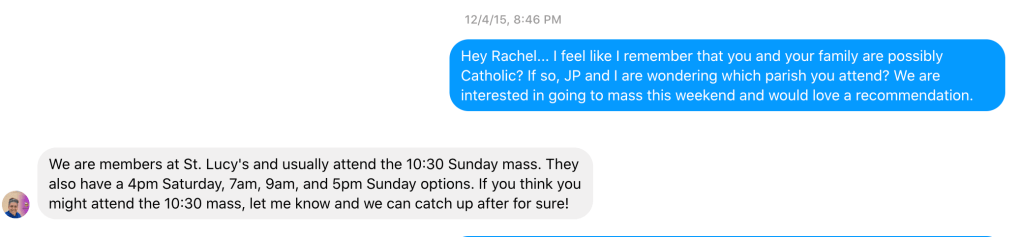
We got home from dinner and I sent a message to one of my friends, who I suspected might be Catholic:

The Mass Itself

Two days later, on December 6th, JP and I led our (then) two children through the doors of St. Lucy Parish in Racine, Wisconsin for the 10:30 Mass. Even though I had been to Masses here and there, I didn’t really know what to expect, and I wasn’t entirely sure what to do throughout the different components. But, on that Sunday, my experience in a Catholic church that early Sunday in December was markedly different from any Mass I had been to before.

I had chosen to be there. And, at last, my heart was open to what I might find.

I don’t remember a ton of specifics, other than the distinct feeling that if what I was looking for existed anywhere at all, it likely existed here. The very Church I had sometimes ignored and other times argued against, certain that it was filled with irrelivant, extranneous, anti-Biblical teachings, now might just be my only chance to remain in the Christian faith.

I do remember that there were many families with young children sitting altogether in the pews, which impacted me because at the church we went to a the time, we sent our kids to Sunday School in different rooms. I remember that there wasn’t any sense at all that this service was designed to cater to me, another marked contrast to the hip coffee-house, welcoming committees of the Protestant churches we had recently attended. The music was traditional. The components themselves were somewhat foreign, and yet oddly familiar too. I caught in them some echoes of the fragments that Protestant churches have held onto- Scripture readings, an act of contritian, Communion. But here, inside the Catholic Mass, they weren’t fragments of some lost, greater whole. I remember trying to piece together how it was I grew to be so anti-Catholic in the first place, when it was clear I knew so little about it.

The Aftermath

My friend met us after Mass and, after expressing my continued interest, she helped us get connected with RCIA at St. Lucy’s. We enrolled immediately. Inside the walls of that little RCIA room, I asked every question my heart had been wrestling through, knownig that I had to leave everything on the table. Based on what I had seen in multiple Christian churches over nearly 30 years, if the answers couldn’t be found in the Catholic Church, then they probably couldn’t be answered by anyone, and the Christian faith was a sham. One week later, we attended my last church service at the Protestant Church we had been a part of. I have many friends who love Jesus who remain Evangelical, but I could no longer look at it the same way as I once had.

And the rest, as they say, is history. That early December night, where the snow fell like wisps of cotton outside the restaurant window, when I asked JP if he wanted to go to Mass, was less than four months away from the day I’d stand in front of a full Cathedral in St. Paul Minnesota. Easter Vigil, 2016, when I was confirmed into the Catholic Church.

Protestant churches do a really good job of making new guests feel welcome. They greet you, connect you with a small group, offer you donuts and coffee. They give you great concert-quality music and an inspiring message. My first intentional visit to a Catholic Mass didn’t contain any of those things to the same extent I had been used to before. But I didn’t need any of that to be drawn in to the Catholic Church, at least not once my heart was open to it. The Mass drew me in, not with bells and whistles and trends and the promise of friendship with other people like me. It drew me in with beauty, and history, and, above all, rock-solid Truth.

-Lorelei

Purchase Lorelei’s Books Here:

Why Didn’t God Just Take Away the Tree?

I love having conversations with the kids about our Catholic faith. Their insights and questions astound me and amaze me time and time again, and it’s such an honor and a privilege to engage with them.

Recently, while doing a short follow-up at bedtime to our most recent faith formation lesson, in which our six-year-old son learned about original sin and the fall of man, he asked a simple, yet profound question:

“Why didn’t God just take away the tree?”

The tree, of course, that he’s referring to, is the tree of the knowledge of good and evil as described in Genesis. His sweet reasoning was that if God had just taken away the tree, then Adam and Eve would never have sinned, and humanity would have saved ourselves a whole lot of trouble.

I realized very quickly that my son was really asking a much, much bigger question than he even realized at the time.

How do we even read the story of The Fall anyway?

I’ll pause here a moment to share my own journey with the book of Genesis. I was raised Protestant, and was taught to believe the Bible was both historically and literally true in all its components. That sort of thinking made it hard for me to reconcile certain parts of the Bible, like the two seemingly-conflicting accounts of creation in Genesis chapters 1 and 2. As I came into adulthood, it caused me to struggle to see the Bible as something more than a book of children’s stories. And, in the end, that type of firm adherence to literal interpretation across the board, was one of the many reasons I became Catholic.

There’s a great video here by Fr. Mike Schmitz that helps explain how the Bible is meant to be read, emphasizing the fact that the Bible is actually a collection of books by many different authors that are all true- but that are not all meant to be historically and literally true in every instance. The appropriate way to read a Bible would be to see it as a book made of books of different genres and purposes. While the accounts of creation in Genesis are historically true (in the sense that at some point God started time and brought the world into existence), they weren’t intended to be a literal telling of how that happened.

I like to say this when talking with my children about the different parts of the Bible- that some parts, like the gospels, were recorded as historical and literal truths about the life of the person Jesus. Some books, like the Psalms, are songs and poems. And some parts, tell us what happened, but weren’t meant to tell us exactly how.

The story of creation in Genesis and the depiction of the fall fit that what but not the specific how definition. For example, as Catholics, we are not bound to believe in a literal talking snake, but we are to believe the deeper truth of the fall of man and original sin, as taught in the Catechism.

Back to the Tree

Okay, so back to my conversation with my son.

What he was really asking, in the question of “Why didn’t God just take away the tree?” boiled down to what love means and what is required for love to be possible in the first place.

Let’s start with God. God is love, completely and fully. So, when God decided to create, He brought forth nature, he brought forth animals. And then, at some point in the vast spectrum of the process that was creation of the known universe, He did something different. He made an animal, but with something more. He gave that animal the capacity to love, just like Him. Until then, he had nature that followed the laws of science. He had animals that followed the laws of their instincts. But we are made in His image, particularly in His capacity to love. This is what sets us apart from squirrels and bears and donkeys. We can choose to go against our urges and instincts, we can do things that have absolutely no benefit to us or even to our survival, in the name of love.

Why Does that Matter?

Next, let’s imagine an Eden without the tree of the knowledge of good and evil. Adam and Eve live in peace and harmony, and all of mankind follows, right? Sure. They would have been perfectly contented little creatures.

But God didn’t make us to be perfectly contented little creatures. He made us for love.

And what is required for love?

Love requires and demands the freedom to choose.

Without choice, then we can’t really love. Without choice, we’re robots. We’re submissive. We do the will of God not because we want to but because we must.

If God had taken away the proverbial tree, he would have taken away Adam and Eve’s free choice to choose Love or to turn away from it. And then they wouldn’t have been able to really, truly, love at all.

The tree had to be there. And by the tree, I mean the choice. The choice had to exist. For love to be real, you have to have the option to say: “No, I don’t want that.” “I choose my good over your good.” Or, in the best case scenario, “I choose your good, regardless of what that means for me.”

We do it all the time, even still to this day. How many times during a day are we faced with that very same decision. I can be short with my kids or I can be patient. I can get irritated at the person in front of me in line who is taking forever, or I can be gracious. On a larger scale, I can offer myself as a gift to my husband and my children, my neighbors, strangers and friends, or I can choose self-preservation and selfishness.

Back at the beginning and resonating through time to our very moment in this world today, that choice contains so much power.

It’s what makes love possible in the first place.

The Bedtime Chat

Of course, with my son, I didn’t quite go into all of this depth just yet. He’s six, and, God-willing, we’ll have time. But we did talk about the tree, and what it means. We talked about God and how he desires more than anything for us to love Him and other people and the world. And if he had taken away the tree, if he had taken away that choice, then our original parents wouldn’t have been able to really love Him or anyone or anything at all.

The story of The Fall is a sad story, but it’s so very, very important. It’s only the beginning of a much bigger, much more beautiful story of Love, giving all of Itself for all of us. The story we are all a part of, even to this day.

And I can’t wait to have more conversations with my kids about it as we live our our lives in the domestic church we call home.

-Lorelei

Purchase Lorelei’s Books Here:

When Waiting Hurts

Her lace and ribbon white dress is hanging in the closet next to her veil. It is waiting.

The Eucharist rests in the tabernacle behind the altar of our beautiful church, St. Rahael the Archangel. It is waiting.

I’ve never been a person who does well when things don’t go as planned. I’ve gotten better as I’ve grown older, but I still like to know what to expect. And I like things I can count on. Our family has been spared some of the more devastating effects of the pandemic thus far, but today was one of the harder ones for the family, and for Felicity in particular.

Today was supposed to be Felicity’s First Holy Communion. She is waiting.

IMG_2326

What We Miss

I was 30 years old before I received my First Holy Communion. But for almost all of that time, I didn’t know what I was missing. I viewed communion as a symbol, something to help us remember a long ago event that was important to the foundation of the Christian faith.

Felicity understands differently, at a much earlier age than I did. And so she felt the delay of receiving her First Communion in a significant way.

For anyone who does not share our Catholic faith and might be wondering why this such a big deal, here’s a little bit of background on what we believe.

The Eucharist, or Holy Communion is the source and summit of our Catholic Faith. It is the centerpiece, the main event of every Mass. The readings, the songs, the prayers, they all lead up and point toward the Eucharist, where we believe Jesus is truly and fully present.

We take John 6 literally, and we believe Jesus instituted the Eucharist at the Last Supper. And that he conferred authority to his disciples to do the same. And that they conferred their authority to their disciples. And so on and so on until we reach the men serving as Priests today.

We believe Holy Communion is a miracle. And that Christ is truly present in it- body, blood, soul and divinity. It is a Sacrament. It confers immense grace.

So while we are away from Mass, we don’t eat crackers and juice at home. Because we don’t believe Communion is a symbol of an event that happened a long time ago. We believe that when we participate in Mass, we slip outside of time and, in a mysterious way, are joining in with the very first Communion Jesus shared with his disciples, and in Jesus’s one time sacrifice on the cross.

For Those Who Wait

There are so many who have had to wait for things during this time, and we are praying for all those who are feeling the ache of waiting for something dear to their hearts. We pray for those who long for the Sacraments, and those who don’t have access to them as often as we usually do here where we live.

In lieu of First Communion, Felicity and I went to have an ice cream cone together, and just talked for a bit about the day. Then we drove to church and looked at the flowers, and said hello to Jesus from outside. We know He is with us in our hearts, but there is something so very, very precious to a Catholic who not only can receive Jesus spiritually, but also physically and tangibly through the Eucharist as well.

The uncertainty of the timing of when it will be Felicity’s turn weighs on me as her mother as I feel her disappointment today. But Jesus waited 30 years for me to find my way home, and much longer for many others. I’m certain we can bear the burden of waiting for a much shorter amount of time to receive him in this special way.

Sending prayers for all those who are delayed in receiving any of the precious Sacraments, and for all those who are impacted by the virus, in big ways and small.

-Lorelei

Happy Easter from the Savaryns 2020!

Though this year has taken a turn that I don’t think many would have expected, our goal this Holy Week was to create some special memories for the kids even though our plans had very much changed.

Our house is loud, and the noises aren’t always happy, but overall we’re hanging in there and doing our best to be patient and loving with each other.

IMG_2090
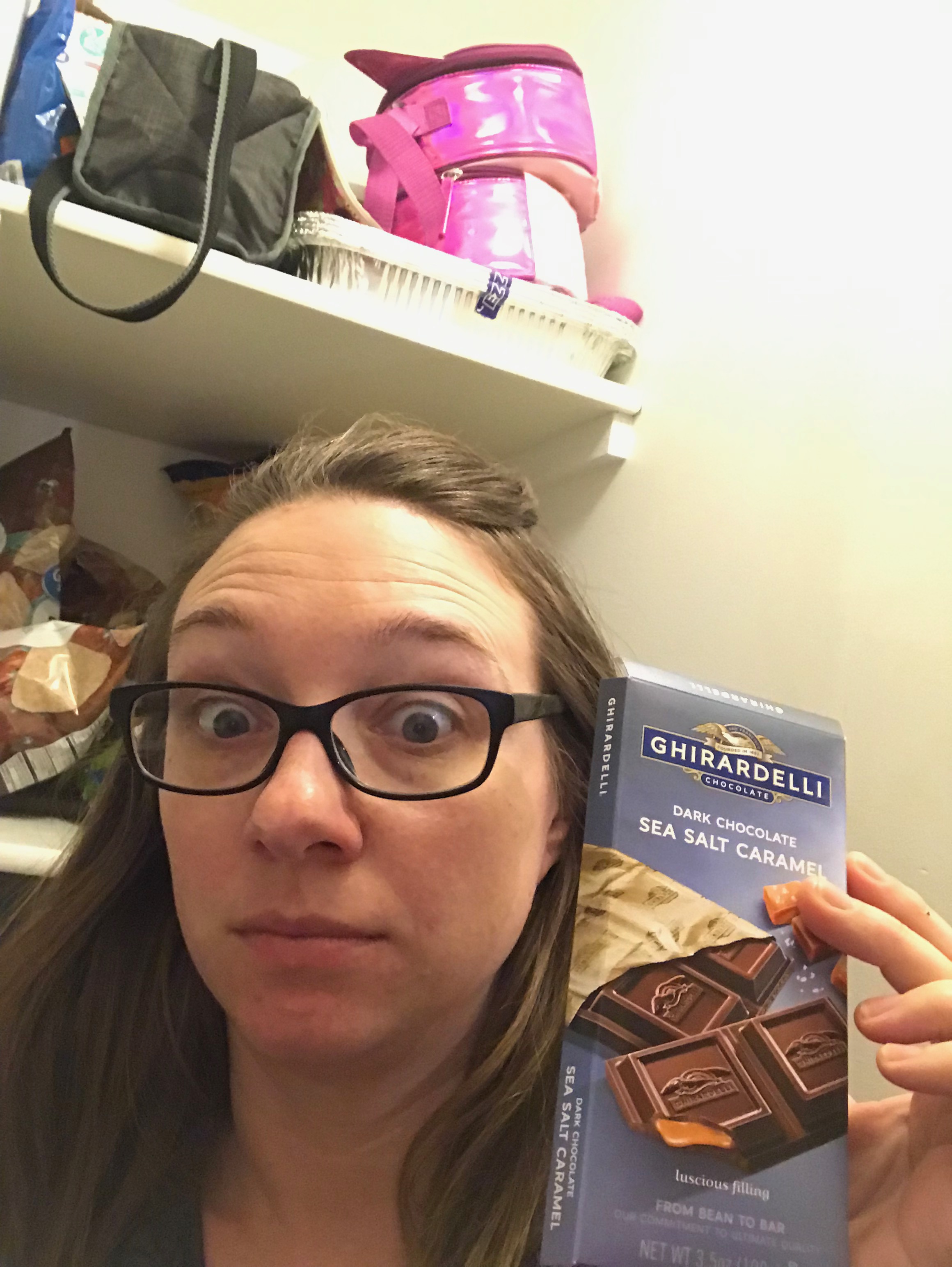
When all else fails, there’s always sneaking chocolate in the pantry.

Here’s a glimpse into how we celebrated Holy Week this year together!

In general news, Zelie turned 8 months this week! She’s got two little chicklet teeth on the bottom and is cute as a button.

IMG_2121

And the weather was nice enough during the week to have a picnic!

IMG_2093

Holy Thursday

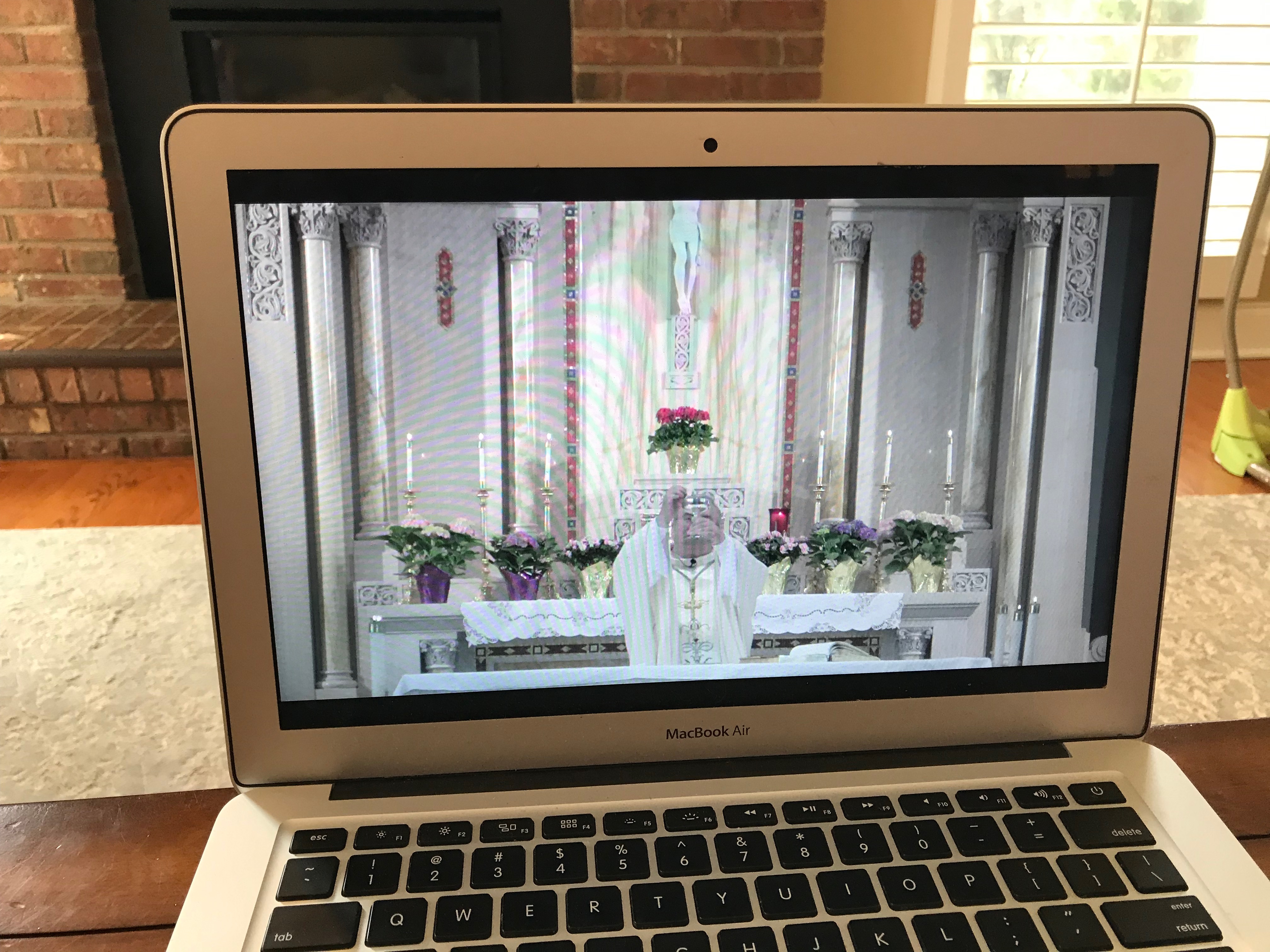
On Thursday, we watched Mass on the computer via Michigan, where Msgr. Michael Steber gave the homily. He is the Priest who married JP and I, and even though I was sad about not being able to be at Mass in person, it was a unique blessing to be able to participate in Spiritual Communion and join in a parish we otherwise wouldn’t have gotten to.

A major thanks to Bishop-Elect McGovern, our parish Priest, who was thoughtful enough to mail us the Magnificat Kids for the whole month of April! It especially helps Felicity to follow along.

Good Friday

On Good Friday, we particpated in the Stations of the Cross via Brother Francis, which is available as a DVD or on Formed.org. It was actually my first time doing Stations of the Cross, and I really don’t know what I was waiting for!

Stations of the Cross - Brother Francis | Leaflet Missal

After that, we set up an area to pray and remember Jesus’s sacrifice for us in a quiet area of the house (which is sometimes the basement).

IMG_2149

We took turns going down there and spending a few moments in prayer.

Holy Saturday

On Holy Saturday, we embarked upon the Pinterest-y goodness I’ve seen from many friends: creating our own stained glass window using craft paint and tape! There were moments that I was certain it would be a disaster- I did not get the paint/water ratio right and it was pretty drippy! But the kids had fun and in the end it turned out okay.

IMG_2166

I also went grocery shopping for the first time wearing a mask. There’s nothing to remind you of the reality of the times like going out in public during a pandemic. People were very friendly, but it just was definitely a reminder that Big Things are going on outside the walls of our home.

IMG_2152

August and I also patronized a local business by having an ice cream date in our car with a banana split.

IMG_2153

On Easter Eve, we prepared Resurrection Cookies for the first time- there are Bible verses that go along with each ingredient, and, in theory, if you do it right, the cookies will have an air pocket on the inside in the morning, which represents the empty tomb.

Reader- despite my never having made merangue in my life, it actually worked!

Easter Morning

Easter morning was a bustle of kids searching out candy and Easter baskets, and me prepping for our Easter meal. We got dressed up and watched Mass at our home parish, St. Raphael’s. He is Risen, Alleluia!!!

IMG_2174.jpgIMG_2232.jpg

IMG_2204

IMG_2177

Earlier in the week, Mary had requested a tea party. And I thought, well, we might as well have it for Easter!

The forecast had called for clouds and rain, so it was a very pleasant surprise to be graced by sunshine and beautiful weather for the morning. We took advantage and went on a walk, and left a message for our friends and neighbors, then tie-dyed some shirts.

IMG_2253

And then we rented the new Trolls movie because the kids have eaten A LOT of candy. They spent all Lent filling a mason jar with beans representing their good deeds that turned into jelly beans this morning, and they put a HEFTY dent into those good deeds already today.

Not Supermom. Not even a little bit.

Lest anyone go thinking I’m any sort of semblance of a Supermom, I want to share that this week was really hard for me. We are healthy, and that is a huge blessing, and I don’t take that for granted. But, I also miss going to Mass. We were supposed to be in coastal Georgia this weekend, enjoying the beach and spending time with extended family. I know the kids are disappointed by the change in plans, and honestly I probably put too much pressure on myself over the past few days to create positive memories for them. Major holidays like this one often feel like a big sporting event for moms. I’m always prepping things late into the evening, wanting the next day to be magical. This year I felt some extra pressure.

This coming week I fully intend to be more gracious to myself. I’m going to read something floofy, relax a bit more, work on writing, which I love. I don’t regret all the effort this week took, but it was definitely a lot and there were times where I wondered if what I was doing was really making a difference. I couldn’t make up for the lost vacation, or the lack of Mass, but I think the kids will remember this Easter fondly. And that’s really valuable to me.

A Note For Those Waiting on Sacraments

Finally, I (Lorelei) received the Sacrament of Confirmation four years ago on Easter Vigil. My Catholic faith has been such a gift, and I was so thankful to learn that the Coming Home Network had chosen one of my previous posts to share in their April Newsletter this year. For anyone waiting to be received into the Catholic Church, our prayers are with you. The wait will be worth it!

Along those lines, Felicity’s First Communion, which was originally scheduled for later this month, has been postponed. Her dress is hanging in our closet, ready for when it’s able to be rescheduled. Please pray for her and all those waiting to receive Sacraments during this time.

-Lorelei
Purchase Lorelei’s Books Here:

Donuts After Mass and Other Hopeful Things

Well, we’ve made it to Illinois! Though the move wasn’t too far, mileage speaking, it was far enough that we are having to reset many aspects of our life. In the next few weeks, we will be finding new doctors, dentists, playgrounds… pretty much everything. We keep checking things off the list, but new things get added as well. They all keep telling me it will settled down at some point. And I will choose to believe them. I look forward to the day when all the big stuff is done. But we are here. And that’s a good start.

So here’s a little update on the goings-on of This Catholic Family, now of Illinois.

Donuts After Mass

We think we’ve found a parish! St. Raphael the Archangel. It’s a gorgeous church built of multiple old churches, just a few minutes from our house. I have grown to love beautiful churches so much in the past few years, and this one just felt right for our family, almost as soon as we walked in. The beauty is there, and the history, and the hope of something new. They are still installing the stained glass windows, and have additional work to to in finishing the build of the church so we feel like we are a part of a beautiful beginning, but also something that has roots.

One of the things we were going to miss about moving was our family tradition of donuts after Mass. We would go to O+H Danish Bakery in Racine frequently after Mass for donuts. As we were preparing to move, I looked and couldn’t find a bakery in our area that would quite feel the same. St. Raphael’s, it turns out, offers donuts and fellowship time in the basement of the church each and every Sunday. And you can bet we’ve checked it out! I wish more parishes had something like this, and I am so thankful St. Raphael’s does. It’s helped us get to know a few people already. We are optimistic about joining our family life with the life of this new parish.

Emptiness = Potential

There’s a lot of empty in this house right now. Empty walls, waiting to be painted then filled up with art and pictures. Empty rooms waiting for furniture to arrive. And the emptiness that comes from living in a space you haven’t made many memories in yet, which feels a bit lonely at times. But that kind of emptiness is also filled with potential. The potential for all the memories that we are going to make. It’s been helping me during this transition to pay attention to when a new memory shows up in this new town, in this new home we are forming for ourselves.

A few examples:

When the kids came to the the house for the first time after we moved, they ran and squealed as they went to find their new rooms, and checked out the space. The kids have their own rooms now, but August went right to Felicity and said “My door is always open.” It was so sweet.

There’s one.

A huge rainstorm came through. We can see a lot of sky from our front yard, and when the rain passed, the dark purple rainclouds brushed away to more open skies with streaks of clouds containing every color of the rainbow. The burnt orange sun slipped down toward the horizon, and I stood outside in that salty, warm air, and saw a sunset I would have never been able to see from outside our old house. JP joined me outside and we just stared at it for a while together. I could have looked at that sunset forever.

There’s one.

This weekend we had a family movie night, and watched The Greatest Showman with the kids. At the end credits everyone was dancing and twirling around the family room until we were all pretty dizzy.

There’s one.

Slowly, but surely, this empty house will fill up. With furniture, with kids projects from school, with pictures on the wall. And with memories. This will be the house we think of first when we tell our family’s story. The emptiness of this space has so, so much potential.

And we found a way to still have donuts after Mass. 🙂

-Lorelei

Purchase Lorelei’s Books Here:

10 Tips for Those Entering The Catholic Church This Easter

Two years ago this Easter Vigil, I entered the Catholic Church. Here are 10 things I found helpful when approaching my own Confirmation. I hope they are helpful to any of you out there who will be Confirmed this year! Several of the items on this list are helpful for us all to remember, no matter how many years we have been a part of the Catholic faith.

1. Go to Confession

This is a good idea for anyone as we come up to Easter. Let us make sure we are turning towards God in our lives, with our choices and our heart, so we are ready to receive Him and celebrate the joys of Easter Sunday. Let us bring our struggles before God, and let him help us change. Let us get right with our God.

2. Go to as Many Services as You Can

The days leading up to Easter Sunday can be a profoundly spiritual experience for someone entering the Catholic Church. If you can attend the Triduum services, that is amazing. It helps put our faith into context as we approach this most significant celebration. It gives you time to pray, to connect with God, and to prepare your heart.

3. Look Around

When you stand in front of the congregation on Easter Vigil in the moments after you are anointed with oil and confirmed into the Catholic Church, take a moment to look around you. Take a moment to appreciate that you are in full union with the Church established by Jesus himself 2,000 years ago. The Church that has remained connected to its history and its source through apostolic succession. You are connected, in the most powerful way on earth, to the roots of your Christian faith.

4. Take Pictures

I am so thankful to have pictures from the night of my Confirmation. I can just see the joy on my face. It takes me right back there, right back to that moment when I knew I was finally, and fully home- as much as I am going to be before heaven. Whatever your path to get here, it’s worth recording and remembering and celebrating. It’s a hugely significant moment in your life. Document it.

Lorelei_Savaryn_Easter_Vigil
Yay Catholic!!!

5. Reflect

When my own Confirmation approached, I took some time to look back and was so, so thankful for all the bits and pieces along the way that led me to find peace, and Truth, and such a firm foundation. So, take some time. What was your path like to get here? Was it smooth, difficult? Did you wrestle through doubts or did you walk a path of peace? Where do you see God’s hand leading you? Who were the people who helped you along the way? How would you tell your story? However you got here, it’s beautiful. It’s amazing. Give it the weight it deserves, and be sure to give thanks.

6. Get Connected with Other Converts

One of the things that helped me the most,both when things were good and when things were difficult in my transition to the Catholic Church, was being connected with other converts. Regardless of how similar or different our backgrounds were, I found I had so much in common with those who walked the path before I did, in so many ways. This gave me encouragement and strength. It still does to this day. This connection can take many forms. I read stories of converts in books like Journey’s Home. I joined the Coming Home Network, which provides resources, articles, and community online and in print for those of us making our way back to Rome. Watch Journey Home episodes on EWTN. Keep an eye open for other converts in your parish. We all share a common bond. Let’s continue to walk alongside each other even after Confirmation.

7. Go Big

One of the most fun things for me around the time of my Confirmation was getting caught up on my Catholic “Swag.” I was so excited to receive some Rosaries. We got a Mary statue for our backyard. Bought some books on the Saints. Put up a legitimate crucifix in our home. Holy water font. Had things blessed by a priest. I gotta be honest, the weeks leading up to Easter still get me excited and I just bought this Nerdy Catholic Tee (not making fun of it- that’s what the company is called!)

mockup-57853159.jpgMy lovely, but cradle Catholic husband asked me what on earth that meant. When we become Catholic, we call it Crossing the Tiber. And this shirt is awesome. So, if you are feeling inspired, add some of those items to your own life and home. They are tools to help us keep our faith in our hearts and minds at all times. They are tools to help us reflect, remember and pray. And, at least in my case at the time, I had some serious catching up to do.

8. Study up on Easter Vigil

Friends, if you have never been to an Easter Vigil service before. It is amazing and beautiful and symbolic and The. Best. It is also long. It will help so much if you can take some time to understand what is happening and why at each part of the service. Here’s a primer on the USCCB website. I found I was able to embrace the beauty of the Catholic Church once I understood what it was. You will be able to get the most out of the service if you do too.

9. Be Patient

If you are already connected to your parish community- great! If you don’t yet feel connected, I encourage you to keep pressing on. Sometimes it takes time to get to know people in a Catholic parish. This is a huge, global church. Depending on the background you are coming from, and depending on the parish you attend, many things might be different from what you’re used to. There might not be an active home/small group structure, there might not be donuts and coffee after Mass. But there will be people there that you will connect with. It might just take some more time. Two years in, JP and I have found some very dear friends in our parish, and in the Catholic community in our town. We recognize people at Mass on Sunday and stay for a bit and chat. It didn’t happen overnight, but somewhere between year 1 and year 2 we got there. We weren’t feeling lonely anymore. Not only do I now know I’m spiritually home, but going to Mass actually feels like home in the way of the fact that our parish family is there with us too. Be patient. Connection will come.

10. Celebrate!

Whether you will be alone with your sponsor at Mass on Easter vigil, or if there will be pews filled with people who have come alongside you on that day, Confirmation is something to celebrate. Celebrate in whatever way is right for you. A dinner before Mass, some time in Adoration, taking a walk, announcing it to the world. Stay true to yourself, but celebrate. Celebrate the beauty of Easter, the beauty of our faith, and the beauty of crossing the bridge into full unity with the Catholic Church.

-Lorelei

Purchase Lorelei’s Books Here:

Why Are Catholic Sermons So Short?

This letter is free for you to read, but it wasn’t free for me to produce. If you’re interested in supporting the work of This Catholic Family, I would be honored if you would prayerfully consider upgrading your subscription. Or, you can always buy me a coffee here.

They’re so Short!

Something that was always strange to me as a Protestant attending Mass was how short Catholic sermons are. Well, technically we call what happens when the Priest speaks after the gospel reading a homily, but homily isn’t a word seen too often outside the Catholic realm.

The priests seemed to have varying degrees of preparation in their message, and it varied from a minute to about ten minutes at most. It varied greatly in level of depth. Sometimes it was more an encouraging word than a message at all.

I thought, what’s the deal with this?

At every single non-Lutheran Protestant Church I attended, there was a sermon. And the sermon was comparatively long. 20 minutes was normal. Some could go over 30. If the sermon was good, I left church feeling challenged and uplifted. If it was just okay, I might have been disappointed.

Expositional Preaching vs. The Homily Objective

There is a big movement right now in the non-liturgical Protestant realm towards expositional preaching. Where a pastor delves deep into a passage of scripture, often going through entire books of the Bible in an extensive sermon series. The pastor delves into the historical, cultural context, along with the original language and preaches on what he or she concludes after that extensive study.

This makes sense in the Protestant world because in Protestant churches, the sermon is the pinnacle of the service. Everything, the music, the offering, the reading (if there is one before the sermon itself), builds up to the sermon. The sermon is, structurally, the main event.

The homily, on the other hand, is meant to be an application of the readings for the day.

More in-depth study of the Bible is available to Catholics, (and should be used!), in a variety of different formats. There are Bible Studies, books, and video and online resources for in-depth delving into scripture. The readings for each day are thematically connected, and resources are readily available each day from a variety of different sources that delve into the readings. It’s been amazing to learn how connected the Old Testament is to the New via utilization of these resources. Here’s a link to one.

But the Mass isn’t ever going to be a place for lengthy, expositional study of Scripture.

But why???

Simply put, in a Protestant service, everything builds up to the sermon.

But in Catholic Mass, everything builds up to something else.

The Eucharist

Christian Mass, and living the Christian faith, from the time of the earliest Christians, focused heavily on Holy Communion. Another word we use for that as Catholics is The Eucharist. The earliest Christians called it that too.

In many Protestant Churches, communion is served once a month, or twice a month in some instances, but this wasn’t always the case in the history of our faith.

As a Catholic, though we need to be in attendance on Sundays, there is actually Mass held every single day. And at every single Mass, the Eucharist is there.

josh-applegate-301321
Photo by Josh Applegate on Unsplash

The preparations for the Eucharist begin in concrete form after the prayers of the faithful.

Then, the liturgy of the Eucharist begins and takes us to the completion of the Mass.

Why is that important?

It’s important because Catholics, like the early Christians, believe Christ is truly present in Holy Communion. We believe we actually receive Jesus: body, blood, soul and divinity when we receive the Eucharist.

We believe this is one of the most intimate ways we can interact with our Creator while we walk on this earth. We believe there is grace there. We believe receiving the Eucharist on a regular basis helps strengthen our walk of faith, helps unite us to other Christians, and that, among other things, it helps us turn our hearts to God. We believe that just as Jesus took the form of a man, that he is with us still, in the form of bread and wine. That he instituted the Eucharist at the Last Supper. That he meant what he said in John 6.

When we kneel before the Eucharist, we kneel before our Savior.

Weirdness

As someone who grew up in a Protestant world, the things I just wrote would have been weird and offensive.

Communion was merely a symbol in my Protestant realm. It was more casually passed out, and more casually received. I ultimately concluded that this Catholic practice was so weird to me because it was unfamiliar. But just because I had never heard of something before, didn’t mean it wasn’t true. Imagine someone living a Pagan existence in a remote location of the world. The Gospel would sound pretty strange to them at first. But that doesn’t mean it isn’t true.

When deciding where my faith would land, I researched a lot of things extensively. Especially this. And I found only solid evidence that the earliest Christians, those closest to Jesus held that exact same belief as the Catholic Church about Holy Communion. That belief as Communion as a symbol was considered heresy. This may not be the case everywhere, but the churches we attended didn’t delve regularly into Church history. Especially not Church history on the Christian beliefs surrounding Communion.

I’ll probably dive more into this in another post, but if it was good enough for Jesus’ disciples, and their disciples after, and on and on through apostolic succession, then it was good enough for me.

Conclusion

So that’s why Catholic sermons, or homilies, are so short. Some are longer than others, and some Priests spend more time crafting them than others do. But Priests are really busy guys. They spend time visiting the sick, and being instruments of grace through the sacraments.

Besides, the sermon isn’t the main event. Jesus is. And, long homily or not, he meets us there, every single Mass, loving us and offering to us himself in the bread and the wine.

-Lorelei

Want to hear more from This Catholic Family?

Join us on Facebook!

Purchase Lorelei’s Books Here:

Are Catholics Just Going Through The Motions?

The Protestant Worship Experience

As a Protestant, worship took on many forms. But corporate worship in the context of a church setting was typically an emotional experience.

The worship leaders, of which I was one, sang sometimes with eyes closed, hands raised, voice impassioned and face exuding feeling.

catholics-going-through-motions-lorelei-savaryn

There was this connotation that in sincere worship, one felt something. We were reaching out to God in song. Sometimes we smiled, sometimes we cried, but we wore our emotions on our sleeves. Worship music was, in many cases, tied to an outward expression of feeling.

In America, this is how Protestant worship often functions. Not in all denominations, as there are several denominations that follow a more liturgical structure to the service, but in enough that it has become a common Protestant norm in many cases.

The Catholic Mass

Contrast that with the worship we see during Catholic Mass. There’s a stereotype that has become aimed at those more traditional services, but I think especially towards Catholics in regard to the sincerity of Catholic worship.

catholic-going-through-motions-savaryn.jpg

Part of this comes from the fact that the Mass is more structured. Things happen every single time in the same order. If we switched things up or changed things around or added to it or left things out, it wouldn’t be the Mass. It’s the same every time out of necessity. The Mass knows what it is. Christians have been celebrating the Mass since the beginning of our faith. It doesn’t change.

Also, in Mass, people are kneeling, sitting, and standing, saying things at the same time, and in general, we don’t look or sound too excited.

So the question becomes: If we don’t look the part, are we engaged in worship?

Gather round, my friends, whilst I tell you a story.

When I was a worship leader in the Protestant Church, particularly during the period of my life where I was questioning my faith, I looked the part. I raised my hands at the right times, I crunched my face up, I closed my eyes, I smiled. All at the right times, all designed to give the impression of impassioned worship.

Each time I did that, I hoped to draw others in to impassioned worship as well, regardless of how I was feeling. But there were times when I was singing those words and doing those things when I didn’t even think I believed in God. Or at least not a personable God as Christians know him.

And no. one. knew. it.  At that time, I was too scared to tell anyone I was having serious doubts. I was too scared to step down, even though I knew I should, because I knew I would have to answer the inevitable “why’s?” that would follow.

I was, quite literally, putting on a show. Not to bring glory to myself, but to cover the darker reality that was hiding underneath.

Today, when you see me at Mass, my face is probably, more often than not, neutral. My hands are not raised in the air unless I’m inviting the congregation to join in while singing as a cantor.

But, even though outwardly I am less emotional and more stoic, my heart is much closer to God while I worship during the Mass than it was in those months of doubt and darkness when I appeared otherwise to everyone around me.

So, Which Is It?

Is it possible that the things we recite in Mass sound so boring and our faces look so stoic because our hearts really aren’t engaged? Sure. I’m sure there are people in each Mass whose hearts are far from God. But I spent a decent amount of time looking the part in a public position in my Protestant church, and my heart was far from God too.

When I go to Mass, I still have a lot to learn. But there are many things I know and appreciate. I know when we are quoting Revelation when we sing. I know the meaning of the Creed and believe it with all my heart. I know why we kneel, sit, and stand when we do. Those postures all help put my heart in the frame of mind for prayer, for listening, and for worship.

And sometimes, quietly, and to myself, I wipe a tear from my eye during Communion as I am so moved by God’s love for humanity. You just probably won’t see it, because you’ll be in quiet contemplation and prayer yourself.

The point of this is to say worship does not necessarily have to be tied to an emotional experience. And we shouldn’t be so quick to judge those who connect with God in a different way than we do. And we can’t assume that just because a person looks a certain way, or looks like they are feeling a certain thing, that they are. And we can’t assume that just because a person looks disengaged, that he or she is.

So no, Catholics, are not just going through the motions. We worship through the liturgy. And our worship looks different than the Protestant Churches in America who express their love for God with outward feeling and passion. God cares about our hearts. Not about how high we raise our hands or how much we bounce up and down with a worship song.

I’ve found such peace in worshipping through the Mass. And I will never again trade calm sincerity for false fervor.

-Lorelei


Purchase Lorelei’s Books Here: