When The Church Breaks Your Heart

This letter is free for you to read, but it took time and energy to produce. If youโ€™re interested in supporting the work of This Catholic Family, I would be honored if you would prayerfully consider upgrading your subscription. Or, you can always buy me a coffee here.

Rose Colored Glasses

Some of my Catholic author credits state that I โ€œjoyfully received the Sacrament of Confirmation on Easter Vigil in 2016.โ€ 

Those words are certainly more than true.

After living my life as a passionate, Jesus-loving Evangelical, and then as a quiet agnostic afraid to leave the routine and community of church-going life, in 2016 I stood in front of thousands of people in a beautiful cathedral and confirmed my decision to live the rest of my life in the Roman Catholic Church. It had been a long, harrowing journey, but I will never forget the feeling I had that night. I felt so intimately connected to Church history, to the Church established by our Savior over 2,000 years ago. I know this is a favorite clichรฉ among converts, but I literally felt like I had finished a long journey and finally had found my way home.

To me, everything about the Church was beautiful. The truth of it, the traditions, the Sacraments and the infusions of grace that come with them. Even the churches themselves, the stone Cathedrals, the stained glass, the columns that stretch to the heavens. The transcendence of it all that pulled my heart closer to my Lord and Savior.

I had the privilege of the first seven years since my conversion to keep those sweet rose-colored glasses largely intact. 

One year ago, that changed.

It was bad, my friends. Even writing it out, it is difficult to accurately convey the seismic shift- the millions of tiny ripple effects that impacted multiple areas of life and that in many ways still do. But, in vague terms, some of the people in our community didnโ€™t like a decision that someone in authority made. It wasnโ€™t a morally problematic decision, but it was unpopular with some people. And the reaction to that decision threatened to tear the community apart. 

The former Protestant in me railed- at the very least, arenโ€™t we a group of people who assent to authority? This is how schisms start! We donโ€™t have to like every decision, but a pastoral decision that we disagree with certainly isnโ€™t reason enough to foment a full-scale rebellion, sights set on destruction???

Ah, Lorelei, you sweet summer child.

As someone who didnโ€™t grow up Catholic, this shocked me. I knew that the many, many different denominations that I had gone to church at over the years were all a result of a schism, at one time or another, from a different church just a little further up on the branch of the Protestant family tree. As Catholics, surely we donโ€™t do that. We assent to the authority of the Pope, of our Bishops, and of our Pastors because we believe Jesus established a Church and set it up that way for good reason.

Iโ€™m sure I had vaguely heard of parishes having extreme struggles before, but it was always distant, always far away. None of it ever felt even remotely close to hitting home. And then when we found ourselves smack dab in the middle of one of these struggles, I found my Catholic rose-colored glasses ripped off as I absorbed blowing winds around me. 

I havenโ€™t been able to find them since.

When Home Isnโ€™t Safe

Some of the things that followed were incredibly painful. People began whispering about others and refusing to talk to them. I watched as a big ole game of telephone took place before me, as if all the grown-ups forgot that the point of that game is the farther away you get from the source, the farther away you get from the truth. In grown-up telephone, the distortions get bigger and louder, and sometimes they even grow teeth. I would be delighted to never hear another person start a sentence with โ€œWell I heardโ€ฆโ€ ever again.

Our decision to support the authority of our church resulted in one of our children being bullied in a group text filled with her classmates, despite the fact that she doesnโ€™t even have a phone. She found out the next day because the bullying left the digital sphere and spilled over into cruel words and harsh exclusion when she arrived at school the following morning. When she found out why, she rushed out of her classroom in tears.

I received an incredibly aggressive and hurtful email that left my heart racing and my hands shaking in front of my children that came from someone who I thought was kind. People stopped talking to us, stopped looking at us, stopped acknowledging our human presence entirely and in some cases I donโ€™t think that Iโ€™ll ever get the chance to ask why.

Those are just a few of the pain points, though there were many more. 

Iโ€™ve thought for months now that I want to get some words out about what happened, but Iโ€™ve also put pressure on myself to have come to some grand resolution about it all. I hoped that at some point Iโ€™d have some wise words to share about how I found my rose colored glasses, straightened out the bridge, and set them right back on my nose.

That hasnโ€™t happened, and Iโ€™m not entirely sure that it will. Iโ€™m even starting to think that maybe Iโ€™m not meant to go back to the way things were before.

Before last spring, I would hear about people who left the Church because the people inside the Church are broken and can sometimes cause pain to others. Itโ€™s difficult to admit, but Iโ€™ve been internally judgey to people who leave the Church for a reason like that. I am quick to point out that Judas was a disciple, and that Peter denied Jesus three times on the literal night that he died for our sins, and that therefore leaving the Church because of a rotten egg or two doesnโ€™t make any sense. People are imperfect, and that fact doesnโ€™t do a single thing to alter the truth of Catholicism on the whole.

I get why people leave the church now. 

Moving forward, Iโ€™m going to be a lot more humble when I learn about people who have experienced pain at the hands of fellow Catholics and who, in their pain, decided to leave. Because while the people in the Church are not the entirety of the Church, they are the face of the Church and the hands and the feet of the Church and therefore they become a representation of the Church to others. When those people do hurtful things, it is incredibly difficult to untangle the objective beauty of Catholicism and the ugliness right in front of your face.

It can feel like the very earth beneath your feet has been torn away to think youโ€™ve found a safe space and then to find yourself feeling the exact opposite of safe in the community you chose to call home.

Good Friday

Easter weekend is right around the one year anniversary of when the path became increasingly difficult for us to walk, and as a person prone to marking landmarks in time and using them as opportunities to reflect, I found myself talking to JP about the past year as we sat outside our cabin on our recent trip to the Smoky Mountains. 

โ€œI donโ€™t want the Church to be ugly,โ€ I said. โ€œI want it to be beautiful.โ€ย 

In fact, that longing of my heart hits especially close to home today, on Good Friday, as I publish this post. It is the eight year anniversary of my entrance into the Catholic Church. Eight years since one of the most beautiful days of my life.

Another reason that I converted was I fell in love with the idea of โ€œboth/and,โ€ a common refrain in so much of the Churchโ€™s logic and theology. Jesus is both God and human. We follow both scripture and tradition. God can have created the world and we can also accept science. On and on, the both/ands of our faith drew me to it and made me love it all the more.

And so, I have to fight internally rolling my eyes as I find myself begrudgingly admitting that maybe the Church is both ugly and beautiful at the same time. For the past year Iโ€™ve been wanting either/or- Iโ€™ve been wishing for and longing for and mourning the loss of the idea that it could possibly be all beauty. That it could leave any sliver of ugliness behind.

Good Friday is a perfect example of this, and therefore perhaps today is a perfect day for me to wrestle through it.

Jesus on the cross, purpled with bruising, nails in his hands, blood dripping down his face was objectively an ugly sight to see. But the fact that he chose that, out of love for us makes it also incredibly, astonishingly, breathtakingly beautiful too. 

His suffering, and our own, is ugly. Loneliness, pain of any kind is a symptom of our fallen world and it stinks. But we also know, because of the cross, that something in that suffering, when put to work, can also bring about redemption. 

We canโ€™t skip Good Friday and still have Easter morning, can we. 

I find that I like the idea of redemptive suffering far more than I like the actual suffering itself. I am certain that I will be wading through the murky waters of what happened for many years to come, along with any other suffering that comes my way. But just because I donโ€™t like it, doesnโ€™t mean that it isnโ€™t important, or that there isnโ€™t beauty to be found.

Some of my healing over the past year has come in the form of leaning into those true, good, and beautiful things. Finding consolation in the lives of the Saints, who lived very human lives and let God fill them up so much that there was nothing else. Iโ€™m drawn as much as ever into beautiful, reverent liturgy. I have carved out more time for stillness and quiet in prayer.  

A year later, and things in our community are better now, by quite a lot. The culture is rebuilding and it feels healthier and on its way to becoming whole. If we had to do it again, we would have made the same decisions. I believe in the authority of the Church. Itโ€™s one of the major reasons I became Catholic in the first place.

Iโ€™m going to try and sit with these thoughts today, and in the days and weeks to come. I will wrestle through the idea of a church that can be ugly sometimes but that is also incredibly beautiful too. I will try and strip away the idea that in this area I must insist on an either/or. 

During our recent porch conversation, JP suggested that maybe those years where I was able to wear my rose-colored glasses were a grace from God to let me settle in. This next part is harder, to be sure, but I also feel it is incumbent on me to not just be a passive recipient of the beauty of the Church, a consumer of it, if you will. I understand more than ever the importance of becoming part of the beauty of the Church, of leaning into the beautiful things and letting the grace of God form me so I look more and more like Him. 

I donโ€™t think I have come to any profound conclusions about the suffering we endured this past year. 

But I do know this. 

In a few hours, our family will load up into the minivan and go to gaze upon the cross. The ugliness of it. The beauty of it. And I will keep my heart open to the profound intermingling of the two. 

-Lorelei

What’s The Deal With Catholic Relics? (And how we ended up with one in our home!)

This letter is free for you to read, but it wasnโ€™t free for me to produce. If youโ€™re interested in supporting the work of This Catholic Family, I would be honored if you would prayerfully considerย upgrading your subscription. Or, you can alwaysย buy me a coffee here.

I am over seven years past my Catholic confirmation, and I did not really know much or think much about the relics of the Saints until recently. JP and I had been listening to The Exorcist Files, a great podcast that is engaging catechesis on the experiences of an official Catholic exorcist and the theology behind spiritual warfare and the demonic. The Priest, Fr. Carlos Martins, is also known as “The Relic Guy,” and in one episode, he shared how the relics of the Saints can be a useful tool in combating demons as they can cause demons considerable distress.

This prompted me to want to learn more about relics!

What Are Relics?

In brief, a relic of a Saint is either part of a Saint’s body, or something they owned, or something they touched. There are three degrees of relics:

1st Class Relics: These are parts of the body of a Saint (bone or flesh, for example)

2nd Class Relics: These are possessions that the Saint owned.

3rd Class Relics: These are objects that have been touched to a first or second class relic, or they can be objects that the Saint touched.

An interesting tidbit is that every Catholic church should have at least one relic inside the main altar! Might be worth checking with your local parish Priest to see if he knows whose relic your parish has.

Biblical References to Relics

I was also very interested to learn that there are many examples of relics being objects that God uses for His glory in several instances of the Bible. In 2nd Kings 13:20-21, we see a man being buried. He is cast into the grave of Elisha and upon touching Elisha’s bones (a first class relic), the man revives.

In Acts 5:15-16, people go out onto the streets hoping that even Paul’s shadow will fall upon them so they can be healed.

In Acts 19:11-12, handkerchiefs and aprons that Paul had touched (3rd class relic) were taken off to people who were sick or possessed and they were healed.

There are others, but even those three passages show us that God sometimes uses relics as a tool in healings. The relics themselves are not magical, nor do they have any power on their own, God is the one who heals, but his grace can reach us through the Saints in a mysterious way.

How We Ended Up With A Relic of St. Anthony

My kids love to bring home items from the “Free to Take” table at our parish. This often means we’re coming home with prayer cards, or pictures of the Divine Mercy, or little trinkets from religious organizations that send out things in the mail. One day this summer, I was rifling through a drawer in our kitchen that contained many items from the “Free to Take” table, and I found a relic of St. Anthony preserved inside a metal frame!

Imagine my surprise! Now, the relic is a very small piece of fabric, and is very likely a 3rd class relic- something that has been touched to a first or 2nd class relic, but it’s still really cool! We ask St. Anthony for prayers to God for things that we’ve lost pretty often, so it seems especially fitting that I “found” this relic that was right under our noses for a while!

Do Relics Matter?

At the end of the day, any healing or good that comes to us in this world is from God, but I do think it’s pretty awesome that God uses holy men and women, and even sometimes the objects that they owned or touched, to be a vessel for His grace. It’s another way to take something spiritual and to connect it with our tangible experience here on earth. Remembering the Saints and their lives and how they followed God so closely is becoming more and more of an inspiration to me as time goes on.

-Lorelei

A Visit With St. Thรฉrรจse and Her Parents

This letter is free for you to read, but it wasnโ€™t free for me to produce. If youโ€™re interested in supporting the work of This Catholic Family, I would be honored if you would prayerfully considerย upgrading your subscription. Or, you can alwaysย throw a little change in the tip jar here.

I thought the most difficult thing for me to navigate as a convert would be the Churchโ€™s devotion to Mary. But by the time all my other theological questions and been answered and misconceptions set aright, assenting to the Churchโ€™s relationship with Mary was much easier than I thought.ย 

It turned out that the hesitation that lingered the longest was my relationship with the saints. I understood the good in honoring them and respecting them and asking them for prayers. But there was part of me that was quite intimidated by these Holy men and women, people who had done something that seemed so remote and unattainable. I was intimidated to the point that it took a couple of years past my Confirmation before I even read a complete book of writings by Saint Teresa of Calcutta, my confirmation saint. 

The sense of intimidation has faded over time, and my interest in and gratitude for the saints has increased. These days I find myself frequently asking for their prayers and pondering their words and their lives in a way that buoys up my faith. 

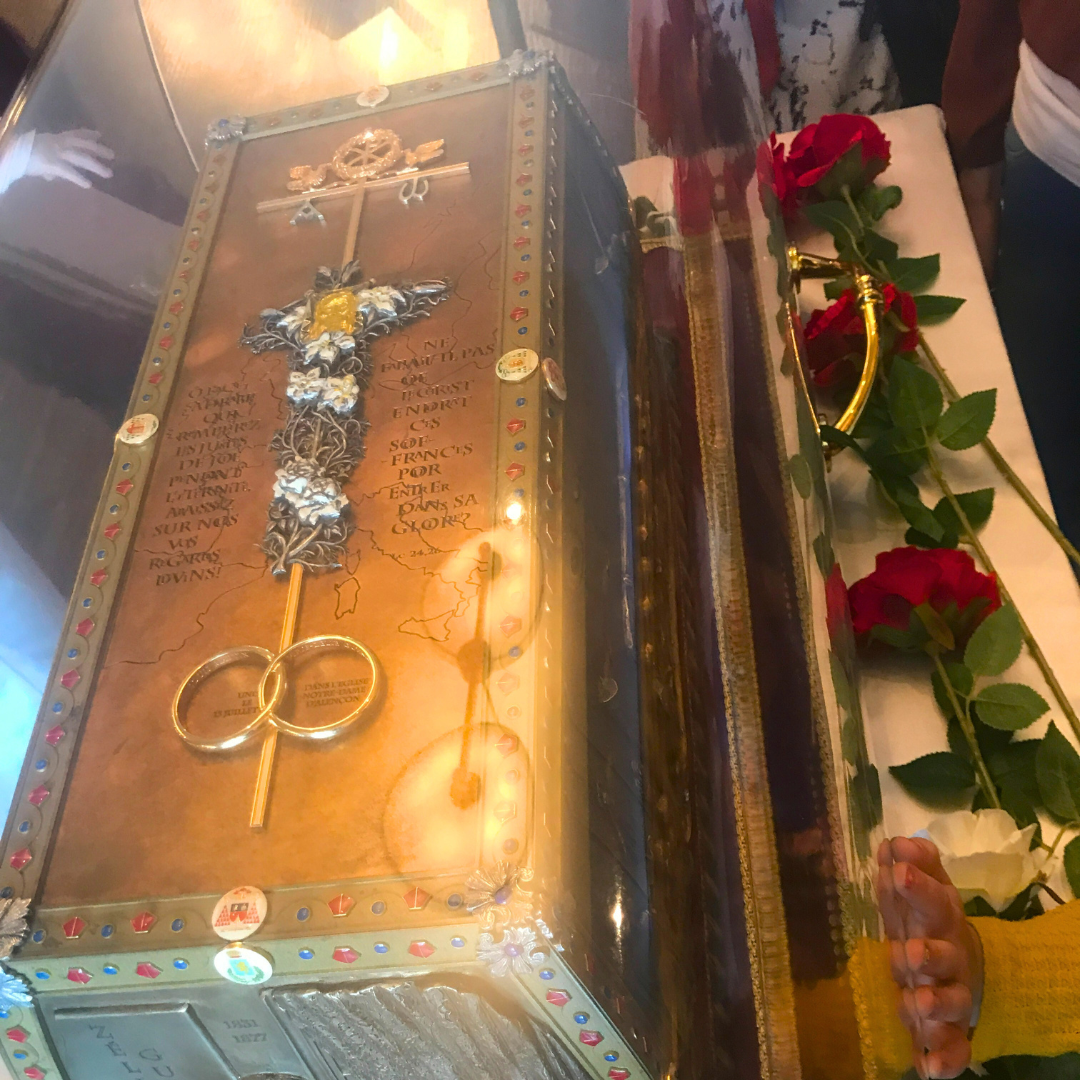
And so, it felt like an important step for our family when we learned that the relics of Saint Thรฉrรจse and her parents Saints Zรฉlie and Louis Martin would be visiting the National Shrine and Museum of Saint Thรฉrรจse for a couple of weeks, just an hour from our home. Especially since our youngest daughter is named Zelie. 

We arrived as the reliquary of Saints Zรฉlie and Louis Martin were being carried from on building to another, and we all immediately could tell that this was going to be a special experience. 

There was a deep reverence throughout the church and museum, among all the pilgrims who had come to draw near. We learned that the reliquaries held the bones of this family of saints, and we touched the glass and prayed beside them. 

Saints Zรฉlie and Louis Martin are particularly special to our family because of their witness in marriage and because of the way they raised their children to love the Lord. We asked for their prayers for the grace to follow in their footsteps. 

null

Another thing I noted, that particularly stood out to me as a convert, was that relics are another gift of the faith that we can experience tangibly. I fell in love with the Sacraments as I converted, the fact that we can taste the Eucharist, that we can feel the waters of Baptism, that we can hear Godโ€™s forgiveness in Confession. My Christianity moved from intangible to being something I could experience with my mind, my soul, and my body as well.   

Click to tweet:
Relics are another gift of the faith that we can experience tangibly. #CatholicMom

null

It is easy to be disappointed in ourselves when we continually fall short of living our faith fully. It is easy to feel disillusioned with the Church when the people within it disappoint us, sometimes deeply. But in the relics we have real, tangible evidence of people who have done it, who have let Godโ€™s love in so fully that there wasnโ€™t room for anything else. Being close to the relics of Saint Thรฉrรจse and her parents reminded me that it can be done, that it has been done, that we are not alone in the journey toward heaven.   

All the disappointments in ourselves or others faded and our whole family left reminded and encouraged that we are not alone, and that we have a heavenly family praying for us and encouraging us along the way.  

null

Sign up here to receive an email whenever we publish a new post!

Bad Theology in 90’s Christian Rock

This letter is free for you to read, but it wasnโ€™t free for me to produce. If youโ€™re interested in supporting the work of This Catholic Family, I would be honored if you would prayerfully considerย upgrading your subscription. Or, you can alwaysย throw a little change in the tip jar here.

I grew up in the 90’s, when Christian Music grabbed a shovel and carved out a space for itself in the music industry for good.

At the time, I belonged to a pretty conservative Evangelical church, where it was generally frowned upon to listen to much, if any, secular music at all. So DC talk, The Newsboys, Audio Adrenaline and the like became the soundtrack to my formative years. I still think of a lot of these songs with incredible fondness. I’ve been known to ask Alexa to play 90’s Christian rock from time to time when I’m looking for nostalgia.

But as certain songs have cycled back into my psyche, and as I’m listening to them now through the eyes and heart of a Catholic convert, I’ve realized that some of the songs I’d belt out in my bedroom aren’t theologically accurate. And more than that, in some cases, the lyrics in these songs perhaps contributed in the end to a period of agnosticism in my life- when I didn’t really think that God was a personal God, or that He could be known. That period of agnositicism was a quiet stretch that I was too scared to share with my church family at the time, but it was real, and it directly preceeded my conversion.

The lyrics to two songs in particular have haunted me in this regard, whispering their strangeness in the decades that have followed.

The first is a song by The Newsboys called Believe.

Here are the lyrics:

I just believe, I just believe it
And sometimes I dunno why
I gotta go with my gut again on this one

The idea that faith is a matter of going with our gut, that we don’t really need (and potentially shouldn’t seek) reasons for our faith is the thing that nuzzled its way inside me through this song.

Michael W. Smith also had a song called Reason that contained a similar theme.

Here is the chorus:

There was a boy who had the faith to move a mountain
And like a child he would believe without a reason
Without a trace he disappeared into the void and
I’ve been searchin’ for that missing person

Again I found myself singing loud the idea that it was better to believe without a reason, that doubts or questions were something to lament. That a Christian just believes, they just believe it. They don’t (and probably shouldn’t) need a reason why.

Now, I’m very familiar with the idea of having a faith like a child, and how that is a beautiful thing that Jesus encourages. But when I came into my 20’s, and started needing in a very real way to transition the faith of my childhood into the faith of my adulthood, these refrains, well…they started to haunt me.

I needed some reasons. I needed to know that my faith was more than just the Bible stories of my childhood. I had to know that God was in logic, was in reason, and that those things were not in contradiction with my beliefs.

Somewhere during this time, I came upon Timothy Keller’s book, The Reason for God. It was a huge part of what brought me back from agnosticism and back into Christianity. It helped pave a way for me for the intersection of reason and faith, and I am forever grateful to this book.

There were a lot of good things about American Christianity in the 90’s, but I wish there had been more of an emphasis on why our faith and reason go hand in hand. Interestingly, both of the songs I mentioned above released in 1998.

You know what else released in 1998? A book called The Case for Christ by Lee Strobel.

Lee Strobel took a systematic, reason-based approach to the evidence for Christianity, and I think perhaps was a big part of bringing about a shift in the mainstream Christian mindset. I read this book shortly after it came out, and loved it.

But by that point, that earlier message, the idea that I’d need to turn off my mind at least to some extent to accept the premesis of Christianity, had already taken hold.

These days, I don’t worry anymore about if God can handle my doubts or questions. Science, reason, logic, God built every single one of those things, so those of us who operate more on that level have free reign to lean into discovering God inside them.

In the end, one of the reasons I landed where I am today, a Catholic convert, is the fact that from the very first day I walked into my RCIA class, I was given free reign to think deeply and ask all the questions on my mind and my heart. I had already gotten to a point where I wanted to find the most full expression of the Christian faith I possibly could. I banked everything on finding it.

And I’m so glad I did.

-Lorelei

Sign up here to receive an email whenever we publish a new post!

Purchase Lorelei’s Books Here:

The Hidden Blessing in Being Interrupted

A few days a week, I get to a point where I ask (usually in exasperation): โ€œWhy canโ€™t I even just finish a single thought?!โ€

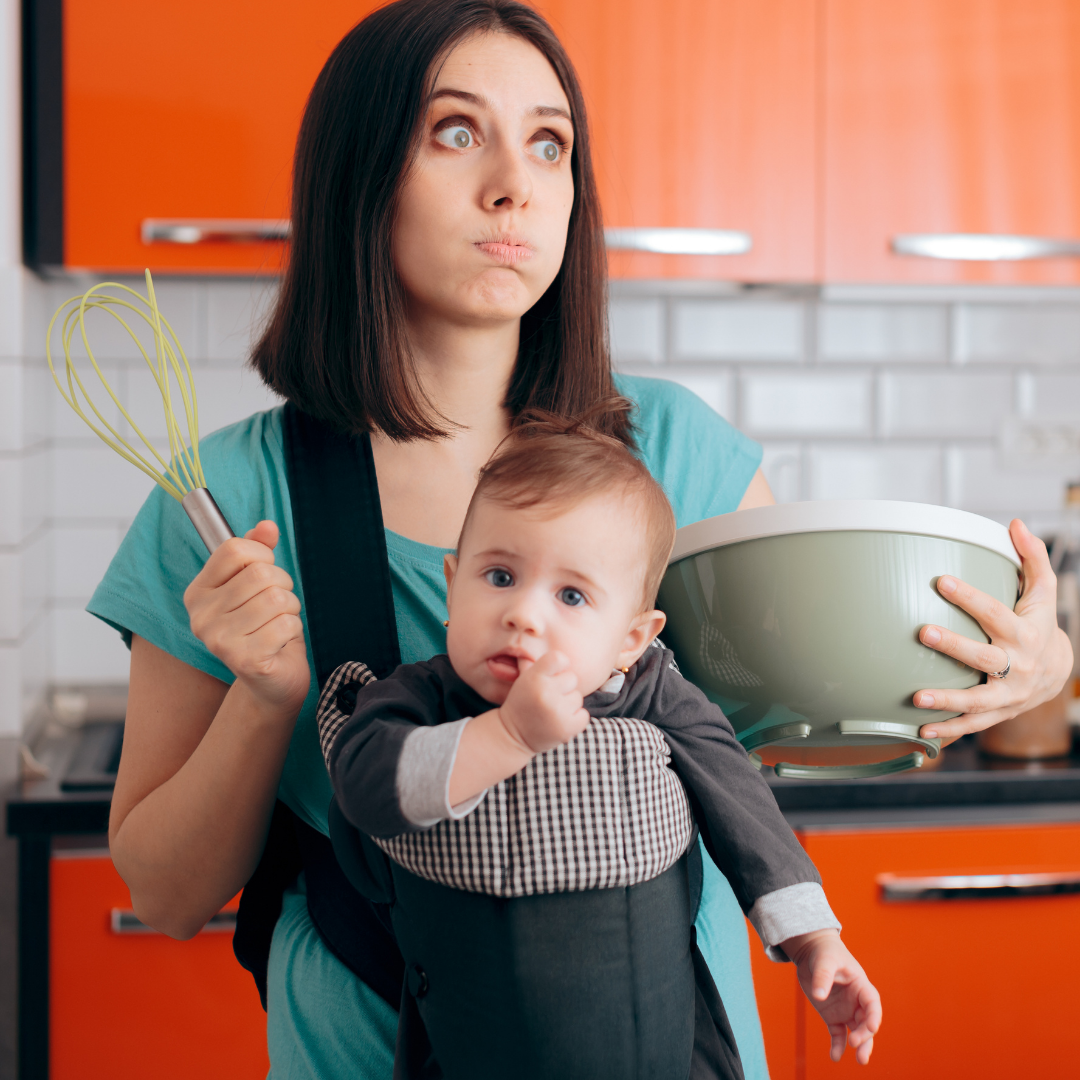
Itโ€™s often after hours of homeschooling the kids, trying to place online grocery pick up, folding a basket of laundry, sending a few emails, feeding the children, in a flurry that often feels like a juggling act in a domestic circus. I will freely admit that I sometimes donโ€™t juggle very well. I stare at a few pieces of laundry, sitting folded on the couch nearly all day while the rest of the basket sits untouched. An email languishes, half-composed in my inbox. Iโ€™m still in my pajamas at lunchtime because I waited, ever so naively, for a peaceful moment to sneak away.

My brain is even more fragmented than the physical world around me. Four kids at four different developmental stages all ask me different questions and need different things on a near-constant rotation. Someone could scream at any time, or excitedly slam a door, or hurt themselves and need my support.

overwhelmed mom cooking while holding baby in a carrier

Once, last month, after planning a very nice Advent activity that got interrupted about five bajillion times, I asked, in front of my children, โ€œWhy do I even bother?โ€

The answer came only seconds later, and Iโ€™m glad I ended up saying both the question and the answer out loud.

And the answer was this: โ€œBecause I love you. Thatโ€™s why I bother.โ€

We all had a moment of exhale after that, and we kept forging on, as we always do.

Sometimes the interruption is to show me something theyโ€™re proud of.

Sometimes itโ€™s to ask about something theyโ€™re curious about.

Sometimes itโ€™s because they need help with something.

To be sure, not all interruptions even have the potential of being pleasant. A tattle, a fight born out of selfishness, those are the really tough ones for me. How can we just finish talking about being loving and then go off and do selfish things? But even those, no matter how much my heart pinches when I see it, are chances for me to help my kids (and myself) turn back to love.

Iโ€™m not very good at accepting interruptions, at least not at the frequency I receive them these days. I like to start tasks and finish them, but the truth is, many of the tasks my kids interrupt arenโ€™t truly emergencies. They arenโ€™t things that are vital for me to complete in any given moment. Truly, sometimes the most important thing is closing my laptop and leaving that email unfinished so I can look at my sonโ€™s newest Lego build, or my daughterโ€™s picture. Itโ€™s just not always easy, in the moment of the interruption itself, to see it.

Click to tweet:
Interruptions can be good. And, at least once, a great interruption saved us all. #catholicmom

I think back over 2,000 years ago when God made what could probably be considered the biggest interruption of all. He literally interrupted time with Himself incarnate. Some people were ready for the interruption, and accepted it gladly. For others, it took a while. For still others, it was hard to accept it at all, and still is to this day. But that great interruption paved the way for humanity to be restored in union with God, through the person of Jesus.

Iโ€™m so, so glad, even with all the varied spectrum of reception, that God bothered. And He bothered because He loves us. I hope my kids continue to bother too, because I want to see their creations. I want to hear their hearts. I want to put band-aids on their wounds. I want to keep trying to do cool things with them, even if it doesnโ€™t go as smoothly as I hoped.

Interruptions can be good. And, at least once, a great interruption saved us all.

May we all strive to look a bit more kindly on interruptions this new year, as there are sure to be plenty. May we see the opportunity hidden inside them, and learn to let go of ourselves and lean into what they might have to teach us.

mom on computer and phone with baby on lap

Note: This article originally appeared on Catholic Mom

Purchase Lorelei’s Books Here:

Learning to say “I Forgive You”

Struggling to Say It

Growing up, the words “I’m sorry” and “I forgive you” didn’t always come together. I think my parents, particularly when dealing with me and my brother, did their best to teach us how to get along and make things right when someone was offended. But one of the things that strikes me the most when looking back, is that repentance and forgiveness wasn’t necessarily modeled to us, at least not regularly and consistently for me to remember that as a pattern of family life.

I think that’s partly why, as an adult, it was really hard for me to say I was sorry, and even harder for me to say “I forgive you” after someone had apologized to me. This was especially true when it came dating and early marriage. I remember times, sitting in the car with my husband driving, when he had apologized for something and I just sat there, staying silent. I literally felt the heat of anger inside of me as I made him wait a long time for those words. Even when he pointed out my reluctance and that it ws hurtful to him, my mouth did not want to open. I still don’t fully understand why it was so hard for me to offer that to someone I loved, other than some selfishness in me felt it would be more just to make him suffer.

Confession and Forgiveness

Another piece of my journey in this area that’s been helpful has been the Sacrament of Reconciliation. Five years ago, as I neared the culmination of my conversion to the Catholic faith, I began to understand and deeply appreciate the value of examining my conscience-saying I was sorry, and literally, audibly, hearing forgiveness offered to me by the Priest, who is really standing in Jesus’s place. Trusting you’re forgiven is one thing. Hearing that mercy spoken to you out loud is certainly another. Confession has changed me, and continues to do so. I know now very deeply how it feels to know you are forgiven by hearing it said. I know how much it has the power to heal.

My husband had grown up in a home when repentance and forgiveness came easy, or readily, at least. And he couldn’t understand why it was so hard for me to offer forgiveness to him. I’ve had to work really, really hard over the years to say “I’m sorry” as soon as I understand I’ve caused hurt to someone, and to say “I forgive you” honestly and quickly after an apology is offered to me. We are now teaching this to our kids and modeling it intentionally with our own actions in and out of the home.

Because here’s the thing: Our entire faith is based on an ocean of unmerited grace. It doesn’t really matter what someone has done to me or how I’ve been offended. If I believe in Jesus and his sacrifice on the cross and his power over death, and his doing all of that to offer reconciling grace to me and everyone else who has ever existed or will ever exist, that significantly changes how much of a right I have to hold a grudge.

In some cases, offering forgiveness and also letting go or setting boundaries might be the appropriate choice. But I also think there is something to be said for the healing power of forgiveness not only for the person being forgiven but also for the person who forgives. Forgiveness can help heal the offender, but it also heals the offended. And if the Creator of the Universe has chosen to not only forgive us, but has suffered greatly to do it, then how freely should I open my arms to others and forgive them?

If we truly understand the former, then the latter isn’t even really a question.

Lent is a beautiful time of year in the Church for so many reasons. The continued call to conversion through almsgiving, fasting, and penance helps prepare our hearts for Easter in such a special way. If you haven’t been in a while, or even if you have, perhaps it’s time to go to Confession. To find a few quiet moments this Lent to examine your heart and say you’re sorry and turn yourself back to love.

And then, of course, to receive an absolute ocean of unmerited grace. A grace that has the power to fill us, and flood out into the whole entire world as we forgive others, too.

-Lorelei

Purchase Lorelei’s Books Here:

What We’re Teaching Our Children About Prayer

A Thin Foundation

Growing up, I didnโ€™t really have a strong foundation in the area of prayer, or how it worked, or what it really meant. I knew in a general sense that prayer was talking to God, and that it often meant asking Him for something, or giving thanks. A lot of times I saw people pray for things they wanted to happen that didnโ€™t come true, even though they prayed for it really hard.

That kind of thin, shapeless theology ended up causing trouble for me as a young adult. I didnโ€™t understand how my prayers would even matter a little bit to a God who had so many bigger problems to deal with. I also didnโ€™t think prayer really worked, so I went through the motions of praying at church and with family. And when alone, I didnโ€™t really pray at all.

Fast forward to raising children and becoming Catholic. I understand prayer a lot differently now, I think, in part, because I understand God differently. As such, in our home, weโ€™ve become much more intentional about how we pray, and what we teach our children about it, which can be boiled down to three main ideas.

1: Share Anything On Your Heart

This is one aspect of prayer that I understand better because Iโ€™m a parent. We teach our kids that they can literally come to God with anything on their hearts. As such, our kids often pray really beautiful, honest, and vulnerable things. And sometimes they pray that they would grow up to become super heroes and rock stars, too.

We teach them this because, as parents, I donโ€™t care what my kid is feeling, I am ready to hear their heart. Any thought they have that they want to share, I will kneel on the floor in a heartbeat and lean in close. I want them to know I am a safe space for the vulnerable places inside them, or the joyful places, or the silly ones. God is the absolute best Father, and I am certain that He leans close too, no matter what we have to say.

2: God Gives What We Askโ€ฆOr Something Better

I think prayer can sometimes fall into operating like a slot machine, where we want the answer we want and right when we want it. We can get disillusioned if we get something else instead, or if we receive silence. Which is why we also teach our kids that God always, always, answers our prayers. And if he doesnโ€™t give us what we ask for, he will give us something better.

Now, this doesnโ€™t mean if you ask God for a lollipop that Heโ€™ll give you an entire candy store, although He could! What it does mean is that God knows our needs far better than we do, and we need to trust that He can and will only give us what is good for us.

I think, if I let them, my kids would eat pure sugar for breakfast, lunch, and dinner. They might think that sounds amazing. They might think doing that would be the very best thing. But I know a bit about growth and nutrition and blood sugar, and, because I know whatโ€™s good for them, I canโ€™t let them have candy any time they want. I have to say no and offer them an apple instead.

God might answer our prayers a different way than we asked it. But He is Good, and just like as a parent I understand that certain things are good or bad for my children that they might not understand or see, God knows which things are good or bad for us too, and He will never give us something that isnโ€™t truly good.

3: The Role of Suffering in Prayer

Which brings me to this. We also teach our kids that sometimes God might allow us to suffer. We live in a world that is fixated on comfort, and often strives to avoid suffering at all costs. But our Catholic faith doesnโ€™t even come close to teaching that comfort is best. Sure, we can and should hope for better things to come, but we also need learn to accept what He gives. Sometimes, there might be a thing that is broken inside us that will hurt while it mends. Growing in holiness comes with the pain of releasing attachment to sin. We donโ€™t deserve comfort, even though sometimes we are gifted it generously, and for that we can and should be grateful.

But our goal isnโ€™t comfort. Our goal is sainthood, whatever it takes. We need only to look at the cross to see how suffering is redemptive. The most loving God saved us through it.

The Three Things

Letโ€™s especially remember, as we head into a new year after a year that brought so many hardships on a global scale, to ask God for whateverโ€™s on our hearts, trust that His answer is good, and to accept what He gives, even if it means we need to accept the call to suffer. These are three big things Iโ€™ve learned about prayer as a parent and a Catholic. And I pray that my kids will hold onto these truths both now while theyโ€™re children, and as they grow up in the faith.

Lorelei

Purchase Lorelei’s Books Here:

Meet Saint (Maker) Savaryn! (& Reflections on 2020, too)

When Covid started, I kept seeing all these people getting dogs. I was like “JP, all these people are getting dogs because they’re stuck at home hahaha, how interesting is that. We will clearly never get a dog because we’ll be too busy resuming our jet-setting lifestyle as soon as this is over. Also, dogs poop all over the yard.”

And then…with 13 days to go in this difficult year, a puppy arrived at our home and joined our family. Turns out, never say never has become quite the theme in my life, in many more ways than one.

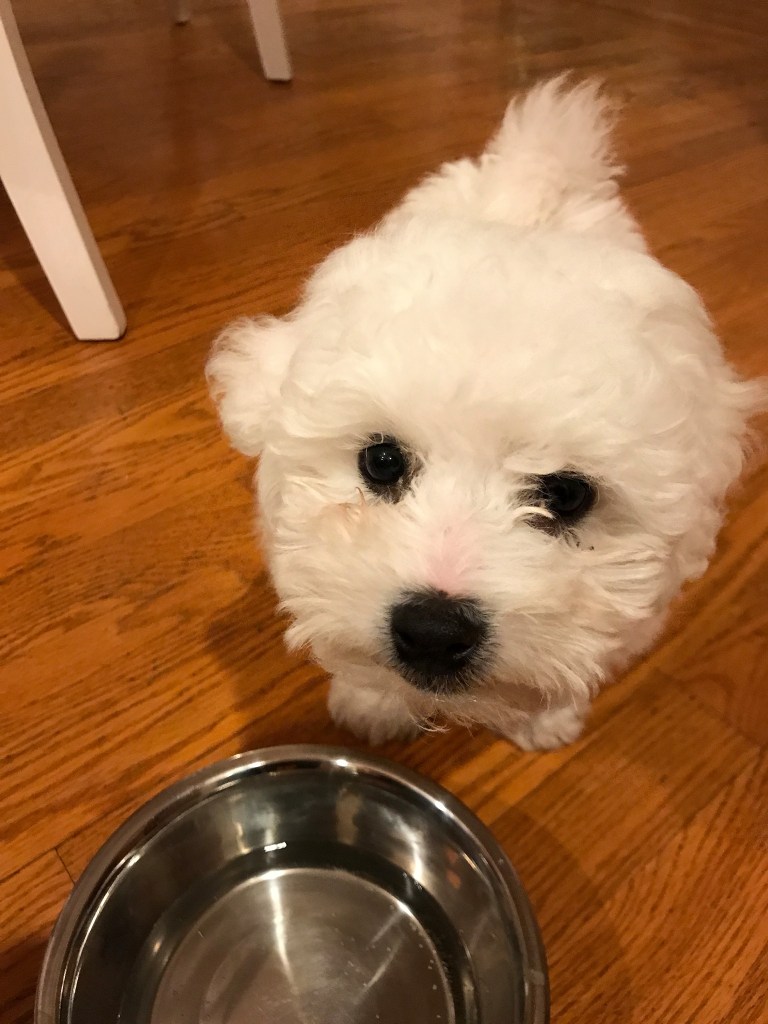
Meet Saint Maker Savaryn!

We call him Saint, but his full name is Saint Maker because he will help us grow in virtue. Also, every time we call his name, which is a lot, it’s a reminder of our main objective- to become Saints ourselves!

Saint is a fluffy cuddle ball who loves pretending he is a great hunter, cuddling, licking peoples’ faces, and sometimes tinkling on our floor.

I am not a dog person, but I’m slowly warming to him. I like seeing the kids take him outside to go to the bathroom. I don’t completely mind when he’s tired at night and rests his little warm fuzzy self on my lap. JP has promised to brush his teeth daily so he doesn’t get stinky dog breath as he gets old.

JP is very sweet with him, too. He grew up with dogs and loves them even more than I realized. It’s cute to see my full grown husband walking around with the little fluffball Saint. They’re already becoming good friends.

Reflections on the Year

There have been less distractions this year- in terms of places to go, things to do, people to see. And it’s given me so much time to look at the life right in front of my face with clarity. Because of this, one of my biggest take home messages of the year has interestingly been an intense reaffirmation of how often the most worth-it things are not the easiest.

Growing in holiness is hard, raising children is hard, writing a book is hard, loving selflessly is hard, homeschooling is hard. But they are are really, really important things that I value, and this year, I found myself often reevaluating how I can be more intentional in all of these areas. Each is an act of love, in a very particular way, so, really, with all of these things so very present, and my own flaws so very exposed, the question has truly become: how can I love better? Especially inside the domestic church that is my home.

I’m much more impatient than I would like. I grow weary quickly with my family. I can have unrealistic expectations or not give someone the benefit of the doubt. I’ve fought battles against my own insecurities this year, particularly with writing. Once- when realizing I had to undertake a huge revision on my second book- a really, really important one that would make the difference between getting the book right or not- JP found me on the floor of our closet crying a little. This story mattered so much but I didn’t know if I was good enough to do what needed to be done. I was so scared! But, in time, I stood up, pushed through the uncomfortable feelings and got to work, one word at a time. And now I’m on the other side of that revision and am so very proud and excited to share that book with the world!

Which brings me to another big takeaway of 2020. Life isn’t about avoiding uncomfortable feelings at all costs, or even about avoiding suffering. Both of those things are part of life, and this year has given us all a lot to be uncomfortable with, or to bear as suffering. We cannot avoid those things, even in a ‘normal’ year, but in 2020 we all had to confront it on a global scale. What do we do when uncertainty hits? What do we do when we suffer? How can we take those things and use them for good-or to make the world a better and more hopeful, loving place?

Happy New Year

I wish everyone who reads this blog a Happy New Year. I almost was going to wish everyone a smoother 2021, but I think it’s better to wish everyone a 2021 that brings us all closer to God, to Love, to living as Gift of Self. God knows what we need to be holy, and it’s our job to accept whatever he brings.

Even if he brings you a puppy that likes to tinkle on your floor. ๐Ÿ™‚

-Lorelei

When Saying “Yes” Hurts

Mother Mary’s humble yes sent shockwaves through all of creation and set into motion the part of God’s salvation story that His people had been waiting on for such a long time.

My own tiny yesses pale in comparison to Mary’s. And while sometimes saying yes has ushered a period of excitement and joy in my own life, I have found that, oftentimes, saying yes also hurts.

I find encouragement in the joys of obedience, to be certain. But, even more than that, I find so much comfort and strength in uniting my little yesses to the yes of the Mother of our Lord, especially when the fiat isn’t joyful, or when it brings pain.

In many ways, Mary’s yes must have hurt. At the start, her unplanned pregnancy brought with it the potential for serious consequences- not only for her marriage, but even for her life. And later, she watched her son as he was treated like a criminal, crucified, and killed before her very eyes. Mary has the most beautiful mother’s heart of all. It could not have been easy to watch her son in so much pain, and to also know that she had to say yes yet again in that moment for what God had started to be fulfilled. The first yes that Mary gave to the angel found its fulfillment in the silent and continued yes of watching her son suffer for the salvation of all.

A Few Examples of “Yes”

Over the past five years and thanks to Mary’s example, a couple of my small yesses have helped me lean more into our Holy Mother, particularly when saying yes has been painful in some way.

To start, I am a Catholic convert. Saying yes to becoming Catholic was one of the most joy-filled, beautiful moments of my life. But it also hurt. We lost some friends and were cut off from our social supports at the Protestant church we left. We had many strained discussions with others who didn’t understand what we were doing and weren’t interested in learning why, but who were genuinely worried for our salvation. It’s a bit harder to get connected at a Catholic parish than a Protestant church, and the first year or so as a Catholic felt quite lonely. Especially as someone coming from a position of caution when it came to devotion to Mary, in my struggles as a brand new Catholic I leaned into her and started viewing her as my mother, too. I spent time staring at the Pieta in our Adoration room, and understood better that pain is not always something to be avoided. In fact, pain and suffering is often important. Even more than that, pain is the very thing that led to our redemption.

Another important yes in my life came after my Confirmation, when my husband and I felt the call to openness to life yet again. We had two beautiful children, and, in them, the family I had imagined I would have ever since I was a little girl. God’s gentle question, asking me to consider bringing more life into the world wasn’t a small ask. Pregnancy, for me, brings incredible physical and mental strain. I am prone to hyperemesis gravidarum, which often means nausea medication throughout my pregnancy, and sometimes means hospitalization. In the case of my youngest, it meant feeling like a stranger in my skin, nauseous every waking hour for the full nine months, my only relief coming in the hours I was able to fall asleep. At this point in my life, I consider my pregnancies to be the source of my greatest suffering, and also my greatest blessings.

I leaned even harder into Mary during those slow, difficult hours that made up the days that made up the weeks of my pregnancy. I learned even more about redemptive suffering. My agony was literally bringing life into the world.

On the other side of it, I met two children I never knew I would have. My third child, Mary, is a spunky, joy-filled delight. And Zelie is a toddler who loves hugs and does the silliest dances just to make us laugh. Those were difficult yesses for me to make, but the rest of our lives will be all the more beautiful for it.

Our yes can look like the examples I gave, but they can look many different ways as well. Sometimes our yes might not necessarily be the act of taking something on. Our yes might be tear-stained acceptance of a loss. It might be want for something, or a longing unfilfilled. Those yesses are exceptionally special as well, because they are a yes to suffering, particularly in a way where the reward may not be seen or known this side of heaven.

Yes Leads to Redemption

The problem of pain isn’t new. It’s a problem as old as the fall of man. There are some times, like in the examples I shared, when we see the redemption in the pain during our lives here on earth. There are other times when we may not. Those are the times when we must say yes to a greater trust in our faith that the world we see and touch and hurt in today isn’t the end of the story. Mary can help us there, too. She saw her son die, and she saw her son raised. She witnessed mankind’s greatest redemption. But she is also our Mother, and she witnesses our pain with the same tender care and compassion as she witnessed the pain of her son on the cross.

She whispers gently to us that saying yes may not be easy. But our yes, no matter how big or how small, is a beautiful, vital part of God’s redemption story. She assures us that we are never alone in our journey to be faithful. Even if, and especially when, it hurts.

-Lorelei

Purchase Lorelei’s Books Here:

The First Day I Chose to Go to Mass

This December marks the five year anniversary of the first time I ever went to Mass by choice.

I had been to Catholic Masses before…as a baby, for my own baptism and that of my brother. I had been to funeral Masses. A few weddings. I had begrudgingly and awkwardly joined JP’s very devout family at Mass when we visited them so as not to cause ripples.

But there was something very different about the first time I decided I wanted to go to Mass, the first time I chose it for myself.

The Pre-Conditions

First of all, the conditions to led me, a once anti-Catholic evangelical, to seek out a Catholic Mass in the first place.

I had gone from a very fervent young Christian, to a disillusioned young adult inside the walls of various Protestant churches over a number of years. I was struggling to reshape the faith of my childhood into something with the depth required for my adult experiences. My own journey of faith began as a strong believer when I was a child and teen, but transitioned to a life as a near-agnostic in my early 20’s. That shift called into serious question the Protestant doctrine of “Once Saved Always Saved” because my own experience proved that one can start out with true belief but deny it later on. Our foray through a variety of denominations brought me to doubt individual interpretation of Scriptiure- if it’s that clear, why do all these churches disagree on issues both big and small? I grew weary of the hyper-emotional structure of worship, and the expectation that I developed equating a good church service with feeling emotionally fulfilled.

To top it off, no one could tell me what the early Church looked like, just as I was beginning to suspect that the Americanized version of Protestant Christianity wasn’t it. I wasn’t sure if what I was looking for even existed, and if it didn’t, I didn’t think I could remain in good conscience a sola-scriptura, once-saved-always-saved, American Protestant for much longer. Or, if this was all that Christianity was, I didn’t know if I would remain a Christian at all.

Cue me, sitting on my sofa, realizing that among these and many other things, I was possibly starting to think like…gulp…a Catholic. I hungered for a connection to the history of my faith. I wanted something deeper than an emotionally-driven experience could offer. I wanted sound theological depth.

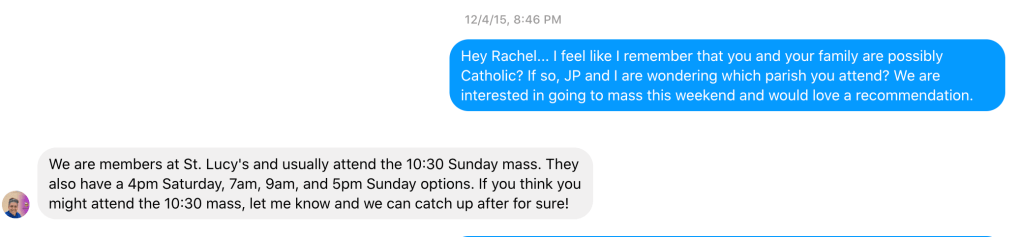
I didn’t really know how to bring this up to JP because I had persuaded him away from actively practicing his Catholic faith early in our marriage. But I sprung the question on him one snowy night in downtown Racine while we were out at dinner. I asked, simply: “Do you want to go to Mass?” Shocked, JP shared with me that he had been praying for our unity in private, and had himself felt like he was being led back to the Catholic Church.

We got home from dinner and I sent a message to one of my friends, who I suspected might be Catholic:

The Mass Itself

Two days later, on December 6th, JP and I led our (then) two children through the doors of St. Lucy Parish in Racine, Wisconsin for the 10:30 Mass. Even though I had been to Masses here and there, I didn’t really know what to expect, and I wasn’t entirely sure what to do throughout the different components. But, on that Sunday, my experience in a Catholic church that early Sunday in December was markedly different from any Mass I had been to before.

I had chosen to be there. And, at last, my heart was open to what I might find.

I don’t remember a ton of specifics, other than the distinct feeling that if what I was looking for existed anywhere at all, it likely existed here. The very Church I had sometimes ignored and other times argued against, certain that it was filled with irrelivant, extranneous, anti-Biblical teachings, now might just be my only chance to remain in the Christian faith.

I do remember that there were many families with young children sitting altogether in the pews, which impacted me because at the church we went to a the time, we sent our kids to Sunday School in different rooms. I remember that there wasn’t any sense at all that this service was designed to cater to me, another marked contrast to the hip coffee-house, welcoming committees of the Protestant churches we had recently attended. The music was traditional. The components themselves were somewhat foreign, and yet oddly familiar too. I caught in them some echoes of the fragments that Protestant churches have held onto- Scripture readings, an act of contritian, Communion. But here, inside the Catholic Mass, they weren’t fragments of some lost, greater whole. I remember trying to piece together how it was I grew to be so anti-Catholic in the first place, when it was clear I knew so little about it.

The Aftermath

My friend met us after Mass and, after expressing my continued interest, she helped us get connected with RCIA at St. Lucy’s. We enrolled immediately. Inside the walls of that little RCIA room, I asked every question my heart had been wrestling through, knownig that I had to leave everything on the table. Based on what I had seen in multiple Christian churches over nearly 30 years, if the answers couldn’t be found in the Catholic Church, then they probably couldn’t be answered by anyone, and the Christian faith was a sham. One week later, we attended my last church service at the Protestant Church we had been a part of. I have many friends who love Jesus who remain Evangelical, but I could no longer look at it the same way as I once had.

And the rest, as they say, is history. That early December night, where the snow fell like wisps of cotton outside the restaurant window, when I asked JP if he wanted to go to Mass, was less than four months away from the day I’d stand in front of a full Cathedral in St. Paul Minnesota. Easter Vigil, 2016, when I was confirmed into the Catholic Church.

Protestant churches do a really good job of making new guests feel welcome. They greet you, connect you with a small group, offer you donuts and coffee. They give you great concert-quality music and an inspiring message. My first intentional visit to a Catholic Mass didn’t contain any of those things to the same extent I had been used to before. But I didn’t need any of that to be drawn in to the Catholic Church, at least not once my heart was open to it. The Mass drew me in, not with bells and whistles and trends and the promise of friendship with other people like me. It drew me in with beauty, and history, and, above all, rock-solid Truth.

-Lorelei

Purchase Lorelei’s Books Here: