How Saint ZĂ©lie Helped Me Stop Comparing Myself to Other Moms

This letter is free for you to read, but it wasn’t free for me to produce. If you’re interested in supporting the work of This Catholic Family, I would be honored if you would prayerfully consider upgrading your subscription. Or, you can always throw a little change in the tip jar here.

Today is the feast day of Saint Zélie Martin, and while I am no liturgical living professional, this is one of the feast days I always like to mark with a little something special.

A little bit of background on Saint Zélie. She and her husband Louis were both on a path toward religious life when they met each other and learned that God had asked them both to the vocation of marriage together. They had nine children, four of which who died while very young. Her surviving five children all went into religious life, the most well-known of which is St. Thérèse of Lisieux. She saw a lot of hardship. She and her husband are a great example of a holy marriage. She ran her own very successful lace business as well.

I learned about St. ZĂ©lie’s canonization and named our fourth baby Zelie in honor of her. Since then, St. Zelie has held a very special place in my heart, one that I lean in to and understand a bit more with each passing year of life, in particular as I grow in my understanding of my vocation as a mom.

The Temptation to Compare

Ever since becoming a mom eleven years ago, I have been fighting some sort of comparison battle inside my mind and my heart, all while trying to figure out my own identity as a mother. In the early years, the question of what should a Christian mom look like? loomed large. When I converted, I substituted the word Christian for Catholic and continued to ask.

Some of the churches we attended and people we hung out with had stronger messages for us than others. You need to stay at home, you need to homeschool, you need to coupon, you need to clean with vinegar, you need to bake your own bread, you need to not have a job, you need to have a side gig that contributes to your income, you need to remember all the liturgical things, you need to pray the rosary every day with your children, you need to keep a lovely home…these messages and more swarmed, faster and faster, louder and louder. Some of the messages contradicted other messages entirely.

Social media did not help.

Photo by Andrea Piacquadio on Pexels.com

Why We Recruit

Now, not all the moms I compared myself to were actively recruiting their lifestyle as the absolute only way to be a Catholic or Christian mom, they were often just sharing from their passion and joy, which is a lovely thing to behold. Some, however, were. Some of the messages were more implicit in the church or online community, but still there.

And I think I get why we as humans are sometimes tempted to take what works for us and prescribe it for others, especially in motherhood. Motherhood is so intimate, so vulnerable, and so personal. We don’t want to mess it up. It isn’t comfortable to look around us and feel like we’re the only ones doing what we’re doing. The moms I know, myself included, are often questioning our decisions on a pretty regular basis. Is it the right call to stay home? Is it the right call for me to work? The right call to homeschool/private school/public school? And the list goes on.

It can feel a lot less lonely to be part of a pack. Finding or recruiting people with likeminded philosophies says “You do what I do, and that affirms that I picked the right thing. Then I’m doing it the right way.”

A Different Path

My suggestion isn’t that we stop talking about or sharing the things we’ve found helpful, or the mothering style that brings us joy. My suggestion is that we avoid saying that the way God has asked us to live out this vocation is the way that God is asking all women to live out this vocation. And, for those of us on the receiving end, that we reframe how these messages impact us.

Turns out, St. ZĂ©lie didn’t stay home full time. She also had in-house help. She ran a business. Her kids began their education at home for a time. Learning about St. ZĂ©lie’s life helped me see that she didn’t live like any one cookie cutter Catholic mom box, and she became a Saint. Her life helped me feel free to live the unique Catholic motherhood I am called to each day.

For me, that has looked like staying home when a new baby is very young, but eventually returning to work. My jobs are usually in education, and allow me a similar schedule as the kids. The professional fulfillment makes me a better wife and mom at the end of the day. I am a creative person, and I need a creative outlet. Mostly, that outlet comes in finding time to write. I write short and long essays for the web, and I write fiction books for young readers. Sometimes I play with watercolor markers. Sometimes I read. I am also an introvert. That means I need to carve aside time to be alone. My family can tell if I’ve gone too long without a little stretch by myself, and it is okay that some alone time is important to me. When those things are in place, all the family stuff…the family dinners, the bedtime stories and prayer, the request for a push on the swing, all of that is better and richer and more vibrant because I am embracing and respecting who God made me to be as a person and therefore as a mom.

This realization, that we have never been meant to do it one specific way, completely changed my view. I was able to admire and respect the Catholic moms with particular approaches or particular strengths. Hooray for the liturgically awesome mom! The aesthetic home mom! The daily rosary mom! The homeschooling mom! And hooray for me and the mom I am too!

It was incredibly freeing to be able to separate the idea that I have to do what other moms do, and to celebrate the diversity of Catholic motherhood that exists. It was exciting to realize that doing Catholic motherhood in the way that matched the way God made me and my unique family was not going to look like a carbon copy of another family, another Catholic mom, but that all these things could be very, very good.

Some Questions For The Journey

As mothers, we can too often absorb the message of unhealthy self-denial. Yes, of course we are supposed to deny ourselves in terms of offering ourselves up for the good of another. But we also are meant to become fully who God made us to be, and the things God has put inside our hearts are intrinsically good. Intrinsically unique. And they are meant to shine.

Here are some questions to consider as we all continue on the journey toward embracing and growing into the person God made us to be.

When do you feel most alive as a person, woman, and mother? Under what circumstances do you see the world in full color? When does your heart feel so full it might just burst? When are you most grateful? What things do you long for, and what might those longings teach you about yourself? What might a life look like for you and your family that integrates your uniqueness? Whether your have felt pressure from yourself or from others, what steps can you take to let go of that now?

None of us are meant to be copies of another woman, another Catholic mom. We are all meant to be glorious and beautiful in our uniqueness. We are meant to celebrate each other, to lift each other up.

Like snowflakes, no two of us are the same.

St. Zélie, pray for us.

Amen

Want to Read More From This Catholic Family?

Sign up here to receive an email whenever we publish a new post!

When The Idea of Homemaking Makes You Cringe A Little Bit

As someone who has spent most of my life in the Evangelical world, and who has spent the last few years in the Catholic world, ‘homemaking’ is something I’ve heard often in both places. There are books written about homemaking and podcasts about it. People talk about it—and we seem to all know what the idea of homemaking means.

When I think of the word homemaking, it conjures up images of throw pillows, and softly slung blankets across the arms of chairs. Fresh baked muffins and clean floors. Cute little artsy things on the walls and mantel that were probably purchased from Target or Hobby Lobby. A friend and I were talking recently about how even those more ‘surface’ level connotations are kind of difficult to swallow sometimes, especially if there are stains all over your pillows and couches from grubby little fingers, or if you don’t enjoy hanging cutesy things on the walls.

But there are some deeper connotations, too, and I wonder if other women feel the same way.

It’s not that I don’t want to make my house a home, it’s that I don’t want to feel like ‘home’ has to look a certain way for me to fit my identity as a Catholic Christian woman.

We stopped homeschooling in January, and that has been the best thing for our family. I haven’t always been a stay-at-home mom. I’m currently the owner of a mobile children’s bookshop and an author of middle-grade novels, but I’ve also been a teacher. Our home has looked different in all of those seasons, but I don’t think that at any point it has been any more or less a home.

null

Sometimes my husband does the laundry. Never do either of us iron any of our clothes unless we’re going to a wedding. I can’t sew anything more than a button. I am horrible with yeast. Do not ask me to make anything that requires ‘rising’ because it will not work. But these are all things that I’ve felt, at one time or another, has been presented as the proper way to make a home by women in faith communities, both Evangelical and Catholic.

I think it may be helpful for us to reframe our idea of what homemaking means. To broaden it, and give it room to breathe. To create space for the diversity of women of faith, our unique gifts and strengths, and the different phases of our lives.

What about leaving the floor for later and going outside to play with your kids? That’s homemaking too. Really, really good homemaking. What about letting the grubby little fingerprints on the fridge go so you can sit down with a coffee and read a book? That’s homemaking, because our peace of mind impacts everyone else. What about letting go of the expectation that we need to entertain our kids all the time to the point that we burn out, and accept that creating a stable home with a predictable routine is also making a home?

Click to tweet:
A pretty house can be an indicator of a true home, but it also can cover up struggle. #catholicmom

null

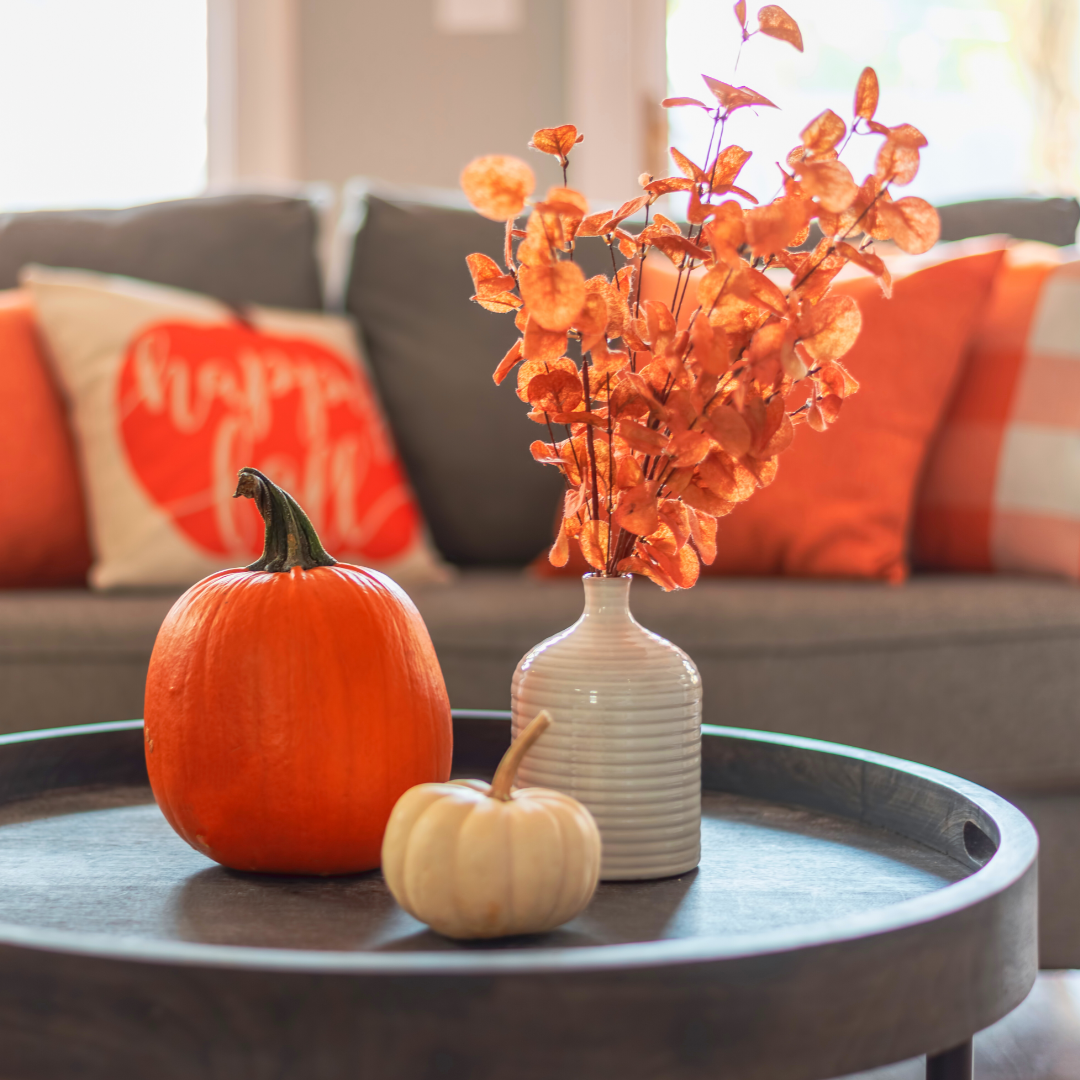
While I personally love a good throw pillow, having seasonal throw pillows does not make a home. I am a big fan of creative ways to display pumpkins in the fall, but having decorative pumpkins is not in any way the essence of homemaking either. I’ve seen too many situations that look amazing on the surface, but when you peel back a few layers, you see a lot of brokenness and hurt. A pretty house can be an indicator of a true home, but it also can cover up struggle. And when we equate these superficial, first world Christian Woman expectations with being a Good Catholic Mother, then I think that leaves room for us to hide the struggles, or puts pressure on us to do things that may not be our strengths.

In the end, true homemaking is about a safe, and joy-filled, and peaceful home where hearts are safe to grow into what God made them to be.

That’s it, that is homemaking. That is making a home.

I’d love to hear what you think about homemaking—if it’s a concept you’ve embraced (which is great, if that’s you!), if it’s a word that you also struggle with, or if you just have never carried the emotional burdens like I have (haha). I’d love to know your thoughts.

null
This article originally appeared on CatholicMom.

My Goal for This School Year

Homeschool Beginnings

I started homeschooling our school-aged children in March, 2020. I know I am not alone in this timing, though we had planned to start homeschooling in the fall, so I had a bit of a jump on researching curriculum and thinking through what this shift might look like for our family.

I also have a background as an elementary school teacher. I have strong opinions on instructional strategies, and the ways that kids learn best, and I trusted that would serve me well in teaching my own students. It certainly helped me to have confidence in the tools we were using and how I supported the structured learning now going on in our home. But what I didn’t expect was how my background as a teacher would add some struggle and stress into what I hoped would be a (generally) peaceful, enriching time with my kids.

Pressures from the Past

Most of my teaching was done in schools where standardized test-taking was emphasized, partly due to school ratings and funding tied into scores. Most of my students were coming into my classroom “behind,” according to those tests. There was a lot of pressure to catch my students up, and have them make about a year and a half’s progress during their time in my classroom. This had many side effects for me as a teacher and impacted the environment my students were expected to learn in. Some of these I counterbalanced well in order to provide my students with a place where they felt safe to explore and make mistakes and remember to love learning. But as a teacher, under the surface, I felt a lot of anxiety and pressure and like I was climbing a steep mountain without a harness or a rope.

Unfortunately, this carried over into my first year of homeschooling. If we were a bit off-pace for the day, or if the toddler just wasn’t having it, I felt pressure to still somehow “get it all done.” Sometimes that stress rubbed off on my kids. I remember reminding myself, many times, that we weren’t behind, and that one of the reasons, among many, that I chose to homeschool was the flexibility in pacing that it offered. I also remember failing to act as though any of those things were true, and many moments where I didn’t serve my kids or their learning as well as I could due to the anxiety that I carried.

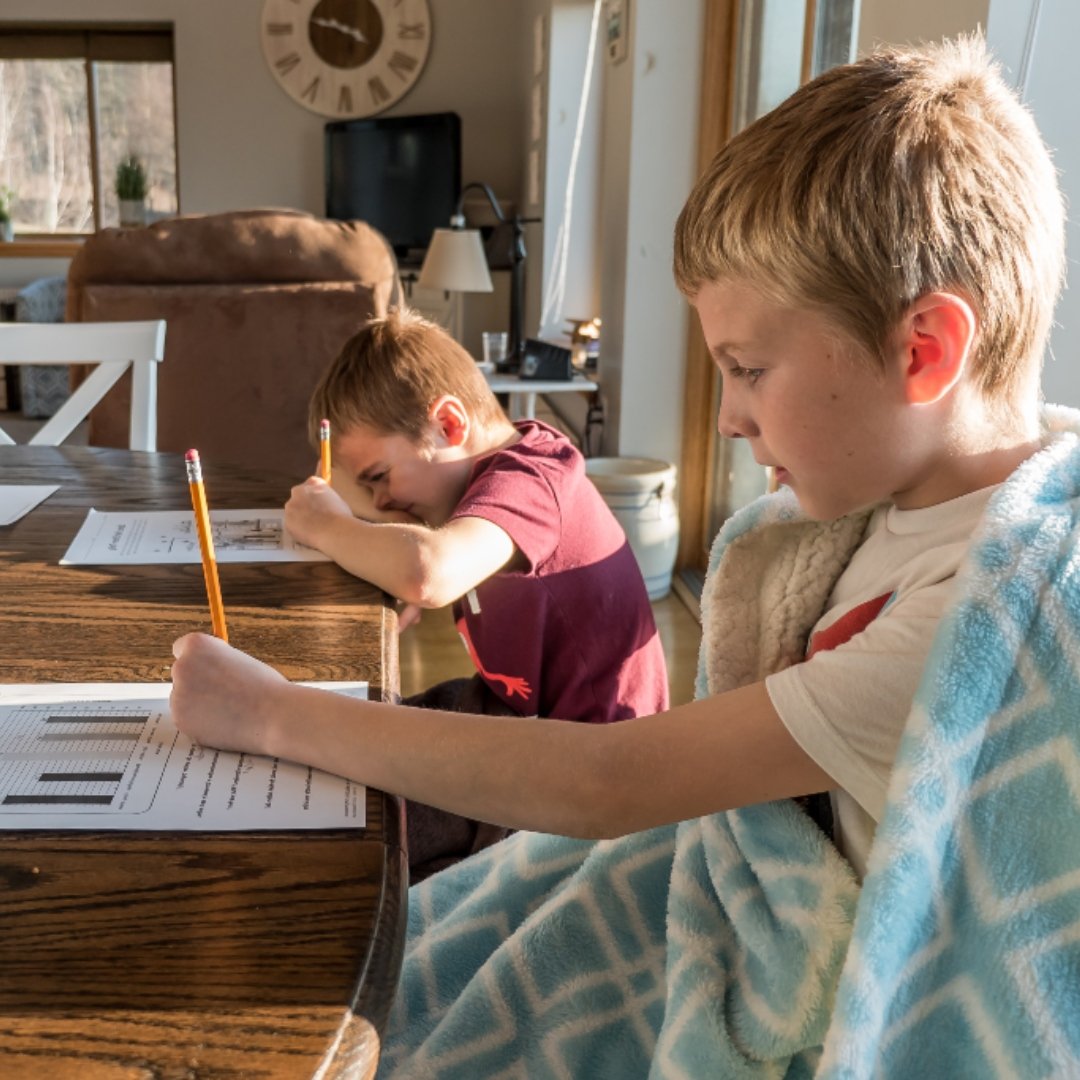
2 boys doing schoolwork at kitchen table


Love Them Well

After going year-round since we started, minus extended breaks for vacations or holidays, we took our first big break from school during July and part of August. As we’re gearing up to start again, I’ve taken some time to think about the goals I have for our technical “second year” of the homeschooling life.

Turns out, I could only come up with one. One single goal that I hope will frame my decisions as my children’s mother and teacher, and move us closer to the homeschooling life I hope to have.

And the goal is this: to “Love them well.”

If my kids can begin and end each homeschool day knowing I love them, and if I can remember that teaching them love is the most important thing, then I think all the academic stuff will turn out okay. If school takes a bit longer than usual, or if our 2-year old makes progress a bit tricky, we can navigate that through the lens of love. If a concept is difficult for someone and it means one lesson takes two days, that’s fine. We can navigate that through the lens of love. I don’t expect that I’ll all of a sudden become the perfect homeschooling parent, but I know this will help us smooth some of the bumps we faced getting started, and I’m looking forward to viewing our days through this goal.

New Beginnings

It’s been tough to break some of the pressures and anxieties of being a classroom teacher in a struggling school, and it makes me sad to think that I probably hid that pressure better from my students than I sometimes do from my own children. But love has conquered so many worse things than this, and God, the ultimate source of love, can help me slow down, see what my kids need in the moment, and give them that grace and room to breathe, or for things to come up, or for us to just have an off-day and come out of it unscathed.

I’m going to write this goal down and remind myself of it often, and see what happens after framing our homeschool life like this after a while as I work to let go of the stressors of the past and focus in on the sweet children right before me now.

Whether you homeschool, or if your kids go to school elsewhere, I’d love to know what your goals are for the upcoming school year!

-Lorelei

(Article originally appeared on CatholicMom)