Five Fun Advent Traditions to Try This Year!

Advent is fast approaching! (whaat?!?!)

I’m not the queen of liturgical living, but over the course of the past few years we’ve built in some family traditions that help us really focus on on the Advent season in some simple yet meaningful ways. In what has been a challenging year, I’m really looking forward to keeping these sweet little traditions going in the Savaryn household.

Today, I’ll be sharing some of those ideas with you! If you’re looking to add something manageable and meaningful to your own Advent season, this might just be the place to start.

The Giving Manger

We have a slightly different set, but this has become a favorite for all the kids. We start with an empty wooden cradle. Then, the goal during Advent is to make Jesus’s bed as soft as we possibly can. We do this by adding pieces of straw for acts of love throughout the season. If the kids sacrifice something for the good of the other, show kindness or selflessness, generously give, etc., then they participate in making a soft bed for Jesus’s arrival on Christmas morning.

I love this, especially in light of the teachings of Saint Teresa of Calcutta that I read recently. It reminds me of her devotion to the thirst of Jesus on the cross, and how acts of love help to quench that thirst. We’re serving baby Jesus with this family preperation, but the spirit is the same.

Purchase Here: The Giving Manger

Advent Wreath

While we eat most meals family-style in the kitchn, we love to set up an Advent Wreath in our dining room and eat a family dinner there each Sunday during this liturgical season.
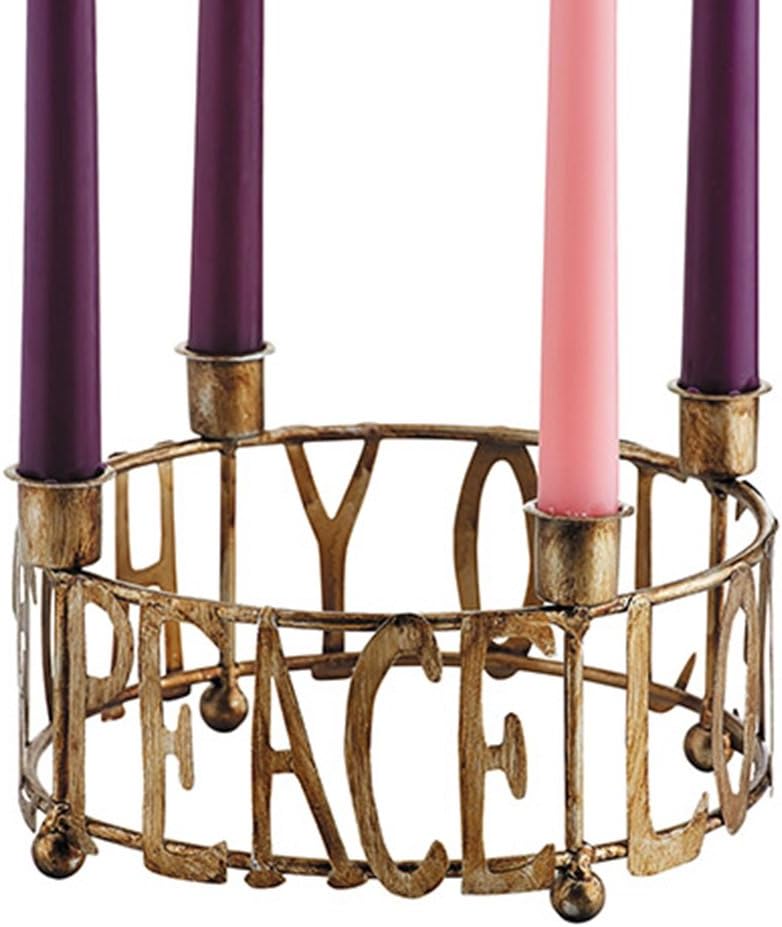
We’ve tried a few brands of candles and have had the best luck with the ones at the link below. I’v also linked to the same wreath we have, which I think has a timeless quality and goes with many decorative styles.

Purchase Here: Advent Candles, Advent Wreath

Brother Francis: The Days of Advent

The Savaryn household loves Brother Francis! We generally are able to access this adorable and informative video series on Formed.org, but for those who don’t have a parish subscription, you can also buy episodes and specials on DVD. There are episodes on Easter, Mass, Prayer, Stations of the Cross, and many more!
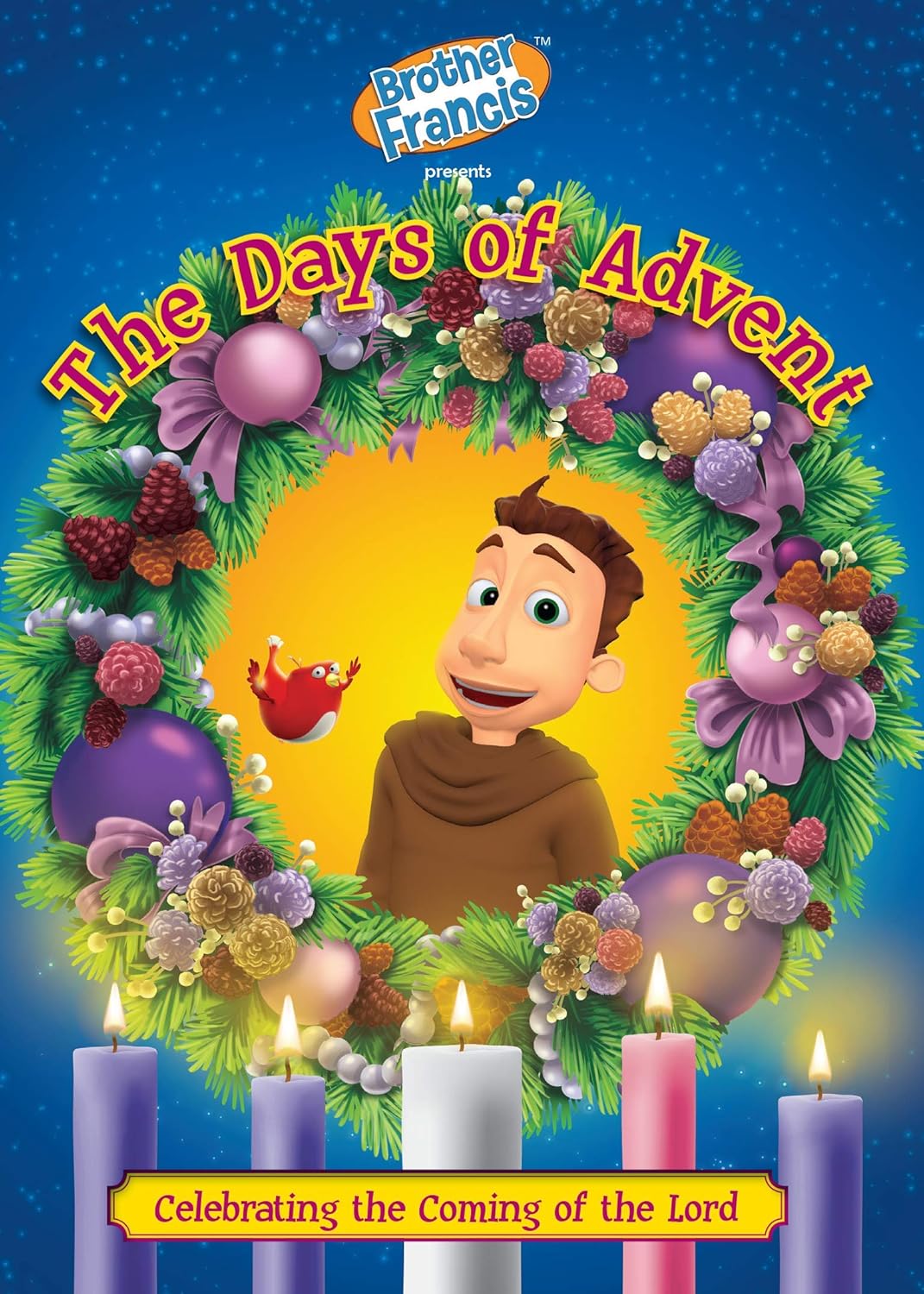

The Days of Advent includes 25 short, thoughtful reflections to take the entire family through the season. We like to watch these after dinner and before bedtime routine starts. Even if you miss a night here or there, it’s still a worthwhile tool to keep everyone’s hearts and minds focused on the reason for the season.

Purchase Here: The Days of Advent

Saint Nicholas

When I was a kid, it was hit or miss if my parents remembered St. Nicholas day in early December. As a Catholic Convert, we’re making an active effort to make the Saints a part of our regular family life. For me, this means making sure my kids know the full story of St. Nick, and why we put our shoes out and celebrate his feast day on December 6th.
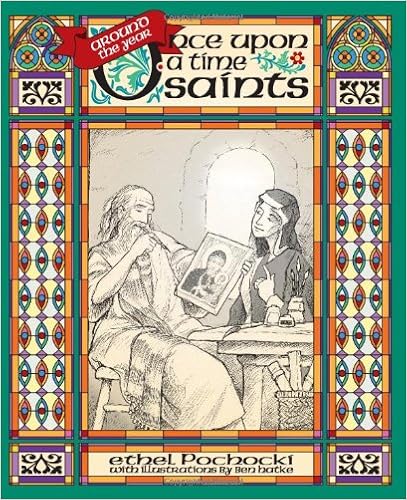
This year, a friend of mine introduced Once Upon A Time Saint books to me, and I immediately fell in love! We had been hoping to celebrate more feast days during the year, with special attention to Saints that we’re named after, or ones that we have special devotions too, and this book has helped a lot! I love it because it highlights a few Saints each month and tells their story in the form of a lovely, engaging story, appropriate for the whole family to share around the fire (especially at this time of year!) Why not read up on the story of Saint Nicholas with your own kids before they set out their shoes?

Purchase Here: Around the Year Once Upon A Time Saints

The Changing Nativity

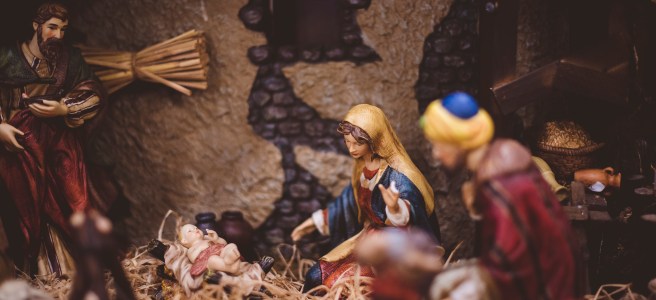
This has been a really fun tradition to grow into! I love the Willow Tree nativity set, but you can use any nativity set that you already have and love.

We display the set on the mantle in our living room, but during Advent, Jesus, Mary and Joseph haven’t arrived yet. Their pieces are set up somewhere else in the house, far away, and they journey through the house and closer to the nativity scene as Christmas approaches. We also set up the wise men in a far-off location (they start moving after we reach Christmas, and arrive on Epiphany.) We love unboxing the precious pieces and setting them up together, and the kids love finding where the Holy Family and the wise men are each morning once they start to move! The only thing weird about the Willow Tree nativity is that you can’t separate the Mary from Baby Jesus, so we’ve just made do or substituted in a pregnant mother Willow Tree carving for the lead up to Christmas morn.

Purchase Here: Willow Tree Nativity, Willow Tree Three Wise Men

What About You?

And that’s it! Do you have an Advent family tradition that you hold close to your heart? Feel free to share in the comments below!

Links to purchase the items on this post are affiliate links from Amazon, through which I earn a small commision.

-Lorelei

Purchase Lorelei’s Books Here:

When Waiting Hurts

Her lace and ribbon white dress is hanging in the closet next to her veil. It is waiting.

The Eucharist rests in the tabernacle behind the altar of our beautiful church, St. Rahael the Archangel. It is waiting.

I’ve never been a person who does well when things don’t go as planned. I’ve gotten better as I’ve grown older, but I still like to know what to expect. And I like things I can count on. Our family has been spared some of the more devastating effects of the pandemic thus far, but today was one of the harder ones for the family, and for Felicity in particular.

Today was supposed to be Felicity’s First Holy Communion. She is waiting.

IMG_2326

What We Miss

I was 30 years old before I received my First Holy Communion. But for almost all of that time, I didn’t know what I was missing. I viewed communion as a symbol, something to help us remember a long ago event that was important to the foundation of the Christian faith.

Felicity understands differently, at a much earlier age than I did. And so she felt the delay of receiving her First Communion in a significant way.

For anyone who does not share our Catholic faith and might be wondering why this such a big deal, here’s a little bit of background on what we believe.

The Eucharist, or Holy Communion is the source and summit of our Catholic Faith. It is the centerpiece, the main event of every Mass. The readings, the songs, the prayers, they all lead up and point toward the Eucharist, where we believe Jesus is truly and fully present.

We take John 6 literally, and we believe Jesus instituted the Eucharist at the Last Supper. And that he conferred authority to his disciples to do the same. And that they conferred their authority to their disciples. And so on and so on until we reach the men serving as Priests today.

We believe Holy Communion is a miracle. And that Christ is truly present in it- body, blood, soul and divinity. It is a Sacrament. It confers immense grace.

So while we are away from Mass, we don’t eat crackers and juice at home. Because we don’t believe Communion is a symbol of an event that happened a long time ago. We believe that when we participate in Mass, we slip outside of time and, in a mysterious way, are joining in with the very first Communion Jesus shared with his disciples, and in Jesus’s one time sacrifice on the cross.

For Those Who Wait

There are so many who have had to wait for things during this time, and we are praying for all those who are feeling the ache of waiting for something dear to their hearts. We pray for those who long for the Sacraments, and those who don’t have access to them as often as we usually do here where we live.

In lieu of First Communion, Felicity and I went to have an ice cream cone together, and just talked for a bit about the day. Then we drove to church and looked at the flowers, and said hello to Jesus from outside. We know He is with us in our hearts, but there is something so very, very precious to a Catholic who not only can receive Jesus spiritually, but also physically and tangibly through the Eucharist as well.

The uncertainty of the timing of when it will be Felicity’s turn weighs on me as her mother as I feel her disappointment today. But Jesus waited 30 years for me to find my way home, and much longer for many others. I’m certain we can bear the burden of waiting for a much shorter amount of time to receive him in this special way.

Sending prayers for all those who are delayed in receiving any of the precious Sacraments, and for all those who are impacted by the virus, in big ways and small.

-Lorelei

Being “Gift” In A “Take” World

The Disease of What’s Best for Me

There is a disease rampant in our world today. A disease called “What’s Best for Me.”

Entertainment programs are filled with tips on how to make our lives better. How to get the best deal. How to make ourselves look good. How to advance in our careers. How to make more money. How to improve our existence.

And we absorb that culture, particularly if we live in a part of the world where we are saturated with it. Unless we actively counteract the messages we receive, they absorb into us, and we end up reflecting the approach of the world instead of the approach of our faith. Unlike what we see and read and hear every day, happiness isn’t found in improving our lives and seeking our benefit. The Catholic Church teaches that happiness is found in seeking to improve the lives of others, through a sacrificial donation of self.

To Will the Good of Another

At the core of this question is the idea of love.

To love, according to the Catholic Church, is to “will the good of another.” (Catechism of the Catholic Church, 1766). That’s it. It sounds so simple.

If we are married, love is to will the good of our spouse. If we are parents, to love is to will their good too. Whatever phase of life, to love is to will the good of those we encounter.

It rings so true when we hear it, but it’s so different from the culture we live in! And it is less easy to apply to our relationships each and every day than it seems. But if we live our faith, if we put our energies into absorbing the truths the Catholic Church teaches, living as gift becomes more and more natural, more and more a part of how we function and view the world. Our lives become all the more beautiful for it.

Being Gift in Choosing Life

Our parish Knights of Columbus just distributed baby bottles for us to collect change in, and that will go towards Right to Life causes. The tragedy of abortion is great in our world, and this is another example of where so many have bought into the lie of What’s Best for Me so much, that they are willing to support the legal right to end a human life.

The reality is that women have this awesome opportunity to live our lives as gift in a way unique from men. We give our bodies as a sacrifice to grow and nurture life. And pregnancy and raising children is, indeed, a big sacrifice.

But we have an amazing example of bodily donation as gift for another in Jesus.

Jesus lived as the ultimate and perfect self-gift. His own words, which we hear at each and every Mass, are: “This is my body, given for you.” He gave his whole self for us, and it’s a beautiful parallel to what happens when a woman sets aside her own comfort to bring life into the world.

“This is my body” is such a popular phrase in pro-choice culture. But they distort the beautiful meaning of the phrase. Those who fight for legal abortion say, “This is my body, and I get to do what I want with it. No one has the right to stop me.” Jesus says, “This is my body, and I am going to give of myself fully to turn the power of sin on its head and to heal the world.”

There is a clear winner between the two uses of that phrase. In goodness, in beauty, and in the truth of what our bodies are meant to be.

Living as Gift is life-giving. Living for self is life-taking, sometimes in the very real and literal sense in issues like abortion. But also, in the sense that each time we choose self over another, we take the essence of life – truth, beauty, love, from those we wound with our sin.

Living as Gift within Marriage

I spent more years than I’m proud of watching the popular TV show, The Bachelor.

That show sends the message that love is meant to make us feel good. That it’s exciting and thrilling. There is the unspoken belief that love will be like that forever. Like a fairy tale, it will make me feel good forever.

It sets up extremely unrealistic, unhealthy expectations. Nothing about even the concept of that show is willing the good of the other – one person dating upwards of 20 men or women at one time is not good for anyone involved. That’s one of the reasons I won’t watch the show anymore.

It’s distorted. It’s sending a lie about love. It perpetuates a belief that I can do what’s best for me, no matter how many people get hurt in the process.

If we understand what the Church teaches about love and Catholic marriage, the idea of Gift is one of the keys to living a marriage that stands as witness to God’s love for humanity. This occurs when the husband and wife are living as Gift to each other in all areas of the marriage.

When we encounter any situation with our spouse, and we ask the question “Am I doing this for his/her good?” we are letting God into our decision with our spouse. Before we say that sharp word, before we lose our patience, before we assume the worst, we can think about our partner’s good.

This applies in a special and beautiful way to our sexuality, too. Catholic teaching on sexuality isn’t meant to be repressive, and it isn’t without reason. The things we are not allowed to use/do in Catholic marriage – contraception, climax without intercourse, pornography, etc., are all forms of believing the “What’s Best for Me” lie. Contraception says “I’m going to give myself to you, but I’m not going to give myself fully.” Climax without intercourse says “I’m going to take from you, rather than give myself to you.” And pornography says “I’m going to take pleasure without giving anything at all.”

But when we live as Gift, when we respect the whole person of our spouse, including our fertility, when we give mutually and fully to each other, each and every time, that is where the beauty lies. The joy of sex isn’t in finding the best way to feel good for ourselves. It’s in mutually seeking the good of the other in an all-encompassing and powerful way. A way that mirrors the life of the Trinity and foreshadows heaven.

A Disease of Humanity and the Cure

Reaching for goals and working to improve are all positive things. But when those things are distorted, and we start pursuing our own betterment even when it is to the detriment of others, then we do have a problem. When we seek our own comfort first, or own best first, when we forget to be Gift to those around us, then we have become sick.

If we live with a What’s Best for Me mindset, we will never be as happy as we could be. We will never have the peace we could have. We will never find the joy. We weren’t meant to be satisfied with the things of this world. We were meant to be satisfied with God. It follows that living life as God intended will bring us the greatest true fulfillment.

The ultimate way we can serve God is by living our lives as a gift in gratitude to our Creator. All of the above examples help to lead us in that direction. The realization that our lives are, ultimately, not our own, that each and every day is a gift from God helps us release any false control we have tried to cling to. None of this is ours. Life is gift from God. It’s meant to be lived as Gift to God and others.

The Me First disease is more than just an American problem. It’s a humanity problem. A result of original sin, when Adam and Eve were the first to believe the lie that eating the fruit was what was best for them and their own personal goals and advancement.

But the Church gives us this beautiful remedy to the sickness. The remedy for the poison that is What’s Best for Me is a firm commitment to What’s Best for You, to living life as Gift. It turns selfishness to selflessness, greed to generosity, and taking to giving. Living life as gift reverses the darkness of sin and let’s God’s light shine through. That is a powerful witness to a world that has absorbed a dangerous lie.

For more information on living life as “Gift,” please see John Paul II’s Theology of the Body, or check out Theology of the Body for Beginners by Christopher West.

Note: This article was originally published on Catholic Stand.

Why Are Catholic Sermons So Short?

This letter is free for you to read, but it wasn’t free for me to produce. If you’re interested in supporting the work of This Catholic Family, I would be honored if you would prayerfully consider upgrading your subscription. Or, you can always buy me a coffee here.

They’re so Short!

Something that was always strange to me as a Protestant attending Mass was how short Catholic sermons are. Well, technically we call what happens when the Priest speaks after the gospel reading a homily, but homily isn’t a word seen too often outside the Catholic realm.

The priests seemed to have varying degrees of preparation in their message, and it varied from a minute to about ten minutes at most. It varied greatly in level of depth. Sometimes it was more an encouraging word than a message at all.

I thought, what’s the deal with this?

At every single non-Lutheran Protestant Church I attended, there was a sermon. And the sermon was comparatively long. 20 minutes was normal. Some could go over 30. If the sermon was good, I left church feeling challenged and uplifted. If it was just okay, I might have been disappointed.

Expositional Preaching vs. The Homily Objective

There is a big movement right now in the non-liturgical Protestant realm towards expositional preaching. Where a pastor delves deep into a passage of scripture, often going through entire books of the Bible in an extensive sermon series. The pastor delves into the historical, cultural context, along with the original language and preaches on what he or she concludes after that extensive study.

This makes sense in the Protestant world because in Protestant churches, the sermon is the pinnacle of the service. Everything, the music, the offering, the reading (if there is one before the sermon itself), builds up to the sermon. The sermon is, structurally, the main event.

The homily, on the other hand, is meant to be an application of the readings for the day.

More in-depth study of the Bible is available to Catholics, (and should be used!), in a variety of different formats. There are Bible Studies, books, and video and online resources for in-depth delving into scripture. The readings for each day are thematically connected, and resources are readily available each day from a variety of different sources that delve into the readings. It’s been amazing to learn how connected the Old Testament is to the New via utilization of these resources. Here’s a link to one.

But the Mass isn’t ever going to be a place for lengthy, expositional study of Scripture.

But why???

Simply put, in a Protestant service, everything builds up to the sermon.

But in Catholic Mass, everything builds up to something else.

The Eucharist

Christian Mass, and living the Christian faith, from the time of the earliest Christians, focused heavily on Holy Communion. Another word we use for that as Catholics is The Eucharist. The earliest Christians called it that too.

In many Protestant Churches, communion is served once a month, or twice a month in some instances, but this wasn’t always the case in the history of our faith.

As a Catholic, though we need to be in attendance on Sundays, there is actually Mass held every single day. And at every single Mass, the Eucharist is there.

josh-applegate-301321
Photo by Josh Applegate on Unsplash

The preparations for the Eucharist begin in concrete form after the prayers of the faithful.

Then, the liturgy of the Eucharist begins and takes us to the completion of the Mass.

Why is that important?

It’s important because Catholics, like the early Christians, believe Christ is truly present in Holy Communion. We believe we actually receive Jesus: body, blood, soul and divinity when we receive the Eucharist.

We believe this is one of the most intimate ways we can interact with our Creator while we walk on this earth. We believe there is grace there. We believe receiving the Eucharist on a regular basis helps strengthen our walk of faith, helps unite us to other Christians, and that, among other things, it helps us turn our hearts to God. We believe that just as Jesus took the form of a man, that he is with us still, in the form of bread and wine. That he instituted the Eucharist at the Last Supper. That he meant what he said in John 6.

When we kneel before the Eucharist, we kneel before our Savior.

Weirdness

As someone who grew up in a Protestant world, the things I just wrote would have been weird and offensive.

Communion was merely a symbol in my Protestant realm. It was more casually passed out, and more casually received. I ultimately concluded that this Catholic practice was so weird to me because it was unfamiliar. But just because I had never heard of something before, didn’t mean it wasn’t true. Imagine someone living a Pagan existence in a remote location of the world. The Gospel would sound pretty strange to them at first. But that doesn’t mean it isn’t true.

When deciding where my faith would land, I researched a lot of things extensively. Especially this. And I found only solid evidence that the earliest Christians, those closest to Jesus held that exact same belief as the Catholic Church about Holy Communion. That belief as Communion as a symbol was considered heresy. This may not be the case everywhere, but the churches we attended didn’t delve regularly into Church history. Especially not Church history on the Christian beliefs surrounding Communion.

I’ll probably dive more into this in another post, but if it was good enough for Jesus’ disciples, and their disciples after, and on and on through apostolic succession, then it was good enough for me.

Conclusion

So that’s why Catholic sermons, or homilies, are so short. Some are longer than others, and some Priests spend more time crafting them than others do. But Priests are really busy guys. They spend time visiting the sick, and being instruments of grace through the sacraments.

Besides, the sermon isn’t the main event. Jesus is. And, long homily or not, he meets us there, every single Mass, loving us and offering to us himself in the bread and the wine.

-Lorelei

Want to hear more from This Catholic Family?

Join us on Facebook!

Purchase Lorelei’s Books Here:

When Advent Doesn’t Go As Planned

Advent Interrupted

You guys, Advent was going to be so much fun! I was excited, and wrote this Very Catholic Mom Post about all the cool Advent family traditions we were going to start this year.

Now, before I write any further, I still am very excited for these traditions we (attempted) to start. They are concrete ways our kids can understand the season, and they are ways we as a family can come closer together and anticipate Jesus’ birth.

But… this Advent, almost nothing went as planned. But the toughest part was the health issues we dealt with as a family over the past two weeks.

Our Sunday Advent family dinners were interrupted Week 2, when Felicity (age 6) had a stomach bug. Several of the rest of us went down with a mild virus that week, which included several changes of sheets #ifyouknowwhatImean.

Our Sunday Advent family dinners were interrupted Week 3, when Mary got sick in her high chair. And the rest of us battled a stronger stomach bug through the first half of the week.

But then things took a scary turn. We had a hard time getting Mary’s fever down for over a day, her breathing was rapid, and she was not looking well. So I took her into the ER.

She was diagnosed with RSV and Pneumonia, and we were admitted for what would turn out to be a two night hospital stay.

Let me tell you… anyone who has ever had a sick child… you know. And my prayers are with anyone whose kiddo has a longer, more harrowing hospital stay than ours did. Because…

It broke me.

She’s so little. She can’t talk. She can’t explain how she’s feeling. She can’t fully understand. She was hooked up to fluids and an oxygen monitor, and poked and prodded and given medication.

Through that first night as her levels dropped, I stayed up holding an oxygen mask on the face of my sleeping child. As she worked hard to breathe, and fought to fight fever, I held her so she knew her mother was near.

There we were. Work, and school, and plans aside. Spending the some of the final days of Advent…

Taking care of a helpless baby that we love more than our own lives.

I would have traded places with her if I could. I wanted her back stressing me out by climbing on the coffee table, and on chairs, and finding hazardous things and otherwise keeping me on my toes.

Advents Past

In Advents Past, I have thought about Mary, heavy laden with child, preparing to give birth. That’s what I had hoped to do this Advent as well.

But, as the fluorescent hospital lights filtered through the blinds onto my chair where my baby slept, I thought of a different Mary.

A Mary who saw her baby suffer. Who stayed by his side. Who knew the anguish of watching her child in pain.

Sometimes knowing you aren’t alone helps. But I also knew I had someone who understood who could pray for me while I could barely summon the words to pray myself.

And it’s all connected, really, isn’t it?

Welcome To Our World

There’s a song by Chris Rice called Welcome to Our World that I watched with Mary on Praise Baby Christmas while she was sick, but before we took her in to the hospital.

One of the verses strikes that connection in a powerful way.

“Fragile finger sent to heal us

Tender brow prepared for thorn

Tiny heart whose blood will save us

Unto us is born”

-Chris Rice, Welcome to Our World

That little baby was going to grow into a man who would right all that is wrong. Who would heal us. Whose suffering would bring about our ultimate redemption.


And as Mary now sleeps peacefully in her own crib, there is so much to be thankful for. We’ve had a rough couple of weeks, but we are overall healthy, and we will heal. We have time together as a family coming up through the end of the year, so we can enjoy each other’s company. We have years to build our family traditions together. And so much more.

So whether our Advent is filled with family traditions that help us joyfully anticipate His arrival, or whether we have fallen upon some harder times, let us give thanks.

He is coming.

He is coming to fix all that is broken.

Come Lord Jesus.

-Lorelei


Purchase Lorelei’s Books Here:

Embracing The Crucifix

When I was growing up in various Protestant churches, and in all the Protestant churches of my adulthood, one of the few symbols on display in each church was an empty cross. Usually inside the sanctuary, front and center.

Catholic churches, as most probably know, are known for their use of the Crucifix. This practice is odd to some, and unacceptable to others outside of the Catholic faith.

This is why I have embraced the Crucifix.

What’s Missing In The Empty Cross

To start, I would like to share why I’ve come to the conclusion that the empty cross is a less-than-ideal representation of our faith. I’ve been told a few reasons why Protestant churches display only the empty cross. One reason is the idea that Catholics leave Jesus on the cross because we for some reason don’t focus on His resurrection… and that Protestants do focus on his resurrection, hence not leaving Jesus hanging up there. And another reason is that the idea of making “graven images” is clearly forbidden in scripture.

I remember even as a little girl, thinking that the empty cross didn’t make a lot of sense to represent our belief in and focus on the resurrection. Namely, the fact that when Jesus was taken down off the cross, and the cross was indeed empty … he was dead. It feels like to me, wherever there is an empty cross, we are basically displaying an empty instrument of torture. The cross was used to execute many, many people over the ages, including 2 others at the time of Jesus’ crucifixion itself. The cross is how Jesus died, but apart from Jesus being on it, it is an execution device upon which many others died as well.

I always thought that some sort of symbol of the empty tomb, or the stone rolled away from the door would be more appropriate to represent the resurrection. If we want to reflect Jesus risen, let’s make a symbol of the place He rose from, right?! No one else rose from the dead under His own divine power like Jesus did. Lazarus, too, rose, but it was only under the power of Jesus that he did that. So the idea of the empty tomb symbolizing Christ’s resurrection, if that is the ultimate aim of those who leave Jesus off the cross, would probably be a better fit.

Graven Images

And then there is the graven images argument. In my new life as a Catholic, I am so enjoying learning about the Old Testament and how Judaism points to The Gospel in so many different ways. But, as I’ve learned, when one looks specifically about God commanding the Israelites not to make graven images in Exodus, he’s telling them not to make graven images to worship. Not that they can’t make images ever. In fact, shortly after issuing that command, God tells the Israelites to construct two statues of angels for either side of the tabernacle. The Israelites were to make statues, or images of angels. They just couldn’t, and shouldn’t worship them.

Similarly, Catholics don’t worship the crucifix. What a crucifix does is help us focus our minds on Christ, and the love that he poured out for us in his redemptive suffering. Worship is reserved for God alone.

Love in Action

While I still like the idea of the empty tomb, I believe a cross depicting Jesus on it helps remind us of how great the cost of our salvation was, and how great God’s love is for humanity at the same time. Especially in America, we are generally so comfortable. Many, though not all, of us don’t have a context for extreme suffering. And the cost for our salvation was so, very great. Every time I look at a crucifix I see the love of my Savior and I am so thankful.

And, honestly speaking, sometimes, also, the Crucifix is hard for me to look at. I don’t like picturing Jesus up there on the cross and knowing that he needed to do that because of my sin. I also believe that just because it’s difficult to look at doesn’t mean I shouldn’t. I can’t imagine what it would be like to be Mary, seeing her Son up there, dying, and staying by his side. Not even all the disciples were there with Jesus at the cross. I wonder if I would have had the strength to stay. When I pray through the Sorrowful Mysteries on the Rosary, the crucifixion is by far the most difficult decade for me to meditate on. But I also take comfort that Peter, who denied Jesus 3 times and likely was not at the crucifixion, was still the man God called to be the first Pope of the Church.

Even though it is difficult to look at, the Crucifix reminds me of the abundant grace of God then, and now, and forever. Seeing the Crucifix enables me to raise up my eyes and be willing to carry whatever cross I have before me during any particular moment of any particular day. It helps me think on God more. And it helps me grow in my faith and joy at what was accomplished on Calvary and 3 days later. All good, faith building and life giving things.

Embracing the Crucifix has been another of the gifts of my Catholic faith.

-Lorelei

Note: This article appeared in its original form on my conversion blog, ProtestantInterrupted, in April 2016, and has been updated for This Catholic Family in November 2017.

Purchase Lorelei’s Books Here:

How This Catholic Family Approaches Mass With Young Children

Many Families, Many Approaches

There are as many ways to manage a family with young children at Mass as there are families that attend. Many people will have something different that works for them. I’m always on the lookout for ideas and have read several articles on what age appropriate expectations are, as well as articles with ideas on how to engage kids in our Catholic faith, both during Mass and throughout the week.

These articles have often been an encouragement to me, and I love picking up new ideas or being able to identify with a family who manages things in a similar way.

So, here is how our family approaches bringing our children to Mass. We have a 5-year-old, a 3-year-old, and a 9-month-old.

8 Ways Our Family Approaches Mass

1- We Bring Them

Each week, our family of five loads up in our car and goes to Mass together. Exceptions for this have been when a kid is sick, one parent stays back and the other parent takes the rest of the family. I think the fact that we do this each and every week, over time, will set a good example of the importance of practicing our faith. Even when we are out of town or on vacation, we find a Catholic Church and attend Mass together.

2- Expectations Vary By Age

When our daughter turned 5, we began expecting that she would follow along with the postures of Mass (sitting, standing, kneeling), and also to join in with the parts of Mass she knew. She now sings along with many of the congregational responses.

Our 3-year-old is expected to be quiet and not distract others. He sometimes joins in during some of the parts, but we aren’t requiring he follow every sit/stand/kneel yet.

More on our 9-month-old in a bit.

3- We Sit Up Front

We’ve tried many different seating positions, but have found, for our children, that sitting up front is the most conducive to a smooth Mass (at least for the older two). They can see what’s happening, and that helps keep them more engaged.

4- We Explain Things

We don’t insist that the kids be absolutely silent during Mass. But we also won’t talk about whether or not we are getting donuts after or other random things. They are more than welcome to ask us questions, quietly, or to point something out they notice in the church, or something relevant to the Mass itself. We also sometimes will explain what is happening, or note something interesting for them to pay attention to. These small things are done in whispers. It is important to me that if my kids have a question or are excited to notice something, that I validate their engagement. When it’s time for the Eucharist, we invite them to join us to come and see Jesus, even though they are too young to receive.

5- Activities

I’m a relatively recent Catholic convert (2016) and my husband is a revert. Just prior to becoming Catholic, we were at a church with a comprehensive children’s program, where our kids never were in church with us. They went to their own classrooms to play and have a Bible lesson for the entire service. So, going from that to having them in with us at Mass every week, was a bit of an adjustment for everyone, though I have come to enjoy having our family together each Sunday.

To start, we brought an activities kit, with coloring and notebooks. We also did some crackers and water. It’s what we saw as the best option to help our kids make the transition. Now, our daughter doesn’t use the coloring much at all because she is participating, and our son sometimes does, but often sits quietly. It was something that helped us. Our daughter also has taken to bringing her children’s Bible with her. We can sometimes turn to the story in her Bible that matches the reading, and definitely can turn to the Last Supper so she can draw connections between that and the Eucharist.

My hope is that parishioners can give families grace in this area. As a teacher, I know each child is so different. One kid might need something to fidget with the whole Mass. Another kid might be able to focus the whole time right away. And every possible thing in between. Having those activities helped our kids transition, and they are weaning off their dependence on them as they grow, and as we gain experience attending Mass together.

6- Taking Turns

Our 9-month-old is incredibly wiggly. She is constantly on the go. Right now, we try to start Mass with her in the pew with us. Typically, we can make it to the Gospel before she starts getting frustrated at the confinement we’ve placed her in. She wants to crawl under the pew, and out the side, and to eat the pew and make noises to hear the sound of her voice. My husband and I are currently taking turns bringing her out to the foyer, where we can hear the service, so she can get her wiggles out until she is old enough to know how to sit still. She’s just an adventurous baby, and she won’t be that way forever. The person who is out with the baby doesn’t experience Mass as fully as the other, but the Eucharist is there, and we are able to receive Jesus into us, even whilst in the phase of baby wiggles.

7- Special Masses

During the Easter Triduum this year, I tried something new that I think I would like to continue. During those special Masses, where some unique things occur (Holy Thursday Mass is an example,) I made my daughter a chart, with pictures noting certain things for her to look out for, like the presentation of the oils, the washing of the feet, the stripping of the altar. When she noticed each thing happening, she checked it off. It was a way to keep her engaged, and to start teaching her about these particularly important moments in our faith.

8- We Make It Special

We make sure to hold hands with the kids, or let them sit on our laps, or put our arms around them, and in general just make it a special family time. We want them to feel close to us, and to experience the faith together. We smile at the big kids when they participate in something new, encouraging them to keep it up. We want Mass to be a positive experience. Something they look forward to, most weeks at least, and something they see as part of our family identity.

Conclusion

Again, there are as many approaches to Mass with kids as there are families. This is just what has been working for us, at this phase of life. It always warms my heart to see other families with young kids at Mass each week. Bringing our children to Mass is one of many things we can do to help our children grow in faith and virtue now and for the long road ahead.

We’re all in this together.

(Note: This article originally appeared on Catholic Stand)

-Lorelei

Purchase Lorelei’s Books Here:

Finding Peace Amidst Chaos In Adoration (Catholic Stand)

(The article below originally appeared on Catholic Stand. Click here to read.)

Letters To God

While sorting through a bin of items from my childhood, I came across several pages of prayer journals. In different phases of my life, I would write my prayers to God in letter form. The letters are written in such familiar language, as though I was writing a letter to a best friend. They made me smile. Some of my letters were written during normal times where nothing extraordinary or desperate was happening. Others were written during relatively difficult periods of time. But they were all very honest and trusting. They were also all handwritten, which means I made the effort to steal away and share my heart with my God.

In particular, these letters reminded me that I am currently far from the place where make such a concerted effort to pray. I pray, yes. But they are shorter, more fleeting prayers: praying with the kids before bed, praying a Hail Mary during the day. There is a place for those prayers inserted into the daily routine, to be sure. But there is also, I think, a need and a place to slow ourselves down and let the world melt away and connect with our Creator on a more intentional level.

How Quickly We Forget

I have to smile and shake my head a bit at how, despite all the changes in technology and industry and convenience, human nature really changes very little. For example, the Israelites witnessed God parting an entire sea to save them from the pursuit of Pharaoh and sustained them with manna. They so soon forgot, however, and built idols made of gold. Similarly, I forget so easily the balance, peace, and joy that is in my life when I intentionally spend time with God.

I know, historically, that the times where I am the most peaceful, the most grounded, and have the most perspective are the times in my life when I make time to pray. There was the summer I babysat several days a week and, while the kids napped, I would spend the time in devotion. There was the spring I went through a break-up and met God daily in my sorrow. There were many times when nothing in particular was going on, and I just acknowledged it was important and made the time.

But then I get comfortable. I let my priorities subtly, yet consistently shift. In those phases of life, when fleeting prayers are all that sustains me, something significant is out of balance. I am quicker to anger. I am more easily burdened by the stressors of life. I lose perspective on what is truly important. The Israelites and I? We have more in common than I’d like to think.

Making God Time A Priority

I am always going to be busy, though as the years go on the business takes on different forms. In high school, it was extracurriculars, and calculus homework. In early married life it was graduate school and learning how to be a teacher. Now, it’s three children aged five and under who are always hungry and who leave a trail of toy wreckage in their wake.

My husband recently (and gently) pointed out that I have many Martha-like tendencies. I spin many plates. Most of them necessary. I spin the plates of meal planning, house-keeping, playing with the kids, writing, and planning ahead so our family has what we need. Anxiety doesn’t rule my life, but there is more of it that I’d prefer when I am always focusing on the plates I spin, instead of looking up beyond the plates, to the One who created these gifts in my life. The gifts of food to eat, and a home to keep, and children to love, and a brain that loves to create and plan.

Amidst the business, there must still be time for God. Yes, he is there with us in the chaos. But he is also there, waiting for us to spend time with Him. He is there, in the quiet of our bedroom, or backyard, or coffee shop. He is there, in the Eucharist at each and every Catholic parish. He waits for us there in a full and real and tangible way.

Finding Adoration

Prior to becoming Catholic, I had access to God in many beautiful ways and many beautiful places through my Christian faith.

But one of the many significant gifts I have access to now through being Catholic, is the gift of Adoration. When I am weary, when I am burdened, I can go to my parish, and sit with my Savior. After our Mary/Martha conversation, I knew I was past due for some time sitting at my Savior’s feet.

So I went to Eucharistic Adoration. I entered to the scent of incense, a symbol of the prayers of the people rising up to God. I didn’t go with any specific agenda, or prayer requests in mind. I just wanted to slow down and remember what it felt like to be with God.

Through the brief time I was able to spend in Adoration, I found it was difficult to slow down my ever quickly moving mind. I realized it’s probably pretty tricky for God to get through to me sometimes when my own brain is moving a million miles an hour. I need to remember to slow down. I didn’t have any lightning bolt revelations, or earth-shattering clarity. But I did have rest. How beautiful is it that God is always there waiting for us? He is there in Adoration, in the Eucharist, in all those created in His image, in the world He set into motion in a universe filled with stars, voids, gravity, and light.

He is so patient with us. He finds us where we are, and makes Himself available for us to come to him. Where he veils himself in something so humble as the bread and the wine. Which, when I think about the immensity of God, isn’t that different from when He veiled His glory in the body of a human man.

It humbles. It inspires awe.

And so, I will go again to the feet of my Lord until I remember how to slow down my mind, to sit and to be, and to let Him fill me with his peace and His love. Then, I know, I will be able to accept with peace whatever it is that may come my way. Perhaps next time, I will once again bring a notebook and a pen, and remember what it is to share my ordinary and extraordinary burdens and joys with my God. And then to put the pen down, be still, and remember what it is to listen and to soak in His love for me.

-Lorelei

Purchase Lorelei’s Books Here:

What Is Love?

I have to admit, whenever I think about this question the first thing that pops in my head is this:

https://giphy.com/gifs/saturday-night-live-jim-carrey-parody-12mgpZe6brh2nu

But Night At The Roxbury is not what we are here to talk about today. And, just a hunch, but I’m not sure those guys would be able to contribute too much to the conversation we are about to have on the true definition of love.

Love and Infatuation

Full disclosure: I watched every season of The Bachelor/Bachelorette for nearly ten years.

Most people (I hope) don’t take shows like that too seriously. But they really are a unique microcosm of the Infatuation Effect. The whole “I’m obsessed with you, you are my whole world” phase of relationships that are just getting off the ground.

But, as a culture, I think we do misunderstand infatuation for love in our own real lives. Infatuation is chemicals and hormones, and is wonderful and exciting.

But it isn’t love.

Love and Utility

I’ve been writing a fair amount about utility lately… the idea that we only give people value when we find them useful to us in one way or another.

I think, though, unless we actively counteract our tendency to relate to people in this way, the idea of seeing people for their usefulness is unfortunately rather innate.

A few examples:

In Childhood:

  • Befriending a slightly more popular girl in school in the hopes of raising your own social status.
  • Making a “trade” with a friend for a piece of candy because they have something you want, rather than because you want to give them something they desire.

In Adulthood:

  • Befriending people who might help give you the image of status/social life you hope to convey.
  • Relating your own kindness or generousity to a spouse in terms of how much they do for you.

Valuing people for their utility also  isn’t love.


So, What Is Love?

According to Aquinas, to love is “to will the good of another.”

If we love, we want the other’s good. This could be a friend, a spouse, a child, a relative, a stranger. We love them if we want good for them.

It seems so simple.

Tonight, my son fell and cut his chin on a sharp edge of plastic. I held gauze to his chin to stop the bleeding. It was a deep wound. We were at church, and I left immediately to go to the nearest pharamacy to get what I would need to take care of my boy. I wanted him to not be in pain. I wanted to help him heal, and quickly. In those moments, I loved him well.

I don’t always love well. This is something I’m sure I will be working on my entire life. Far too often I want the bigger piece of cake, the more comfortable situation, the first place in line. To be the receiver of good rather than the giver. It is something I think about and pray for. To love better. To will the good of others.

That’s one thing I love about the Examination of Concience. It helps us think about the ways where we put ourselves first, or had selfish motives. And it helps us turn back towards the true definition of love.

Some of my favorite Examination of Conscience questions are:

  • Do I work to protect the dignity of others when it is being threatened?
  • Do I recognize and respect the economic, social, political, and cultural rights of others?
  • Do I live in material comfort and excess while remaining insensitive to the needs of others whose rights are unfulfilled?
  • Am I disproportionately concerned for my own good at the expense of others?
  • Does the way I spend my time reflect a genuine concern for others?
  • Do I see all members of the human family as my brothers and sisters?

Reflecting on these parts of myself help me to know areas where I am self-focused, rather than other-focused. Areas where I will my own good first and above all else.

Truly loving another person is not easy for those of us who tend to like comfort. Who tend towards self-preservation. It is not for the faint of heart. Love takes faith, humility, perserverance, and the laying down of self for another.

In our faith, we have the perfect example of what it means to lay down a life for another. Jesus loved perfectly. He willed the good of all humanity above his own and thus redeemed it. And while we are not perfect, we can continue to turn our hearts towards that which is good, and seek to emulate the example set for us. There is unfathomable redemption in love.

And knowing the true definition of love is a good place to start.

-Lorelei


Purchase Lorelei’s Books Here:

On Beautiful Churches

The Original Problem

I used to have a problem with ornate churches. I used to think the money would have been better spent elsewhere. I verged, at times, on offended.

Then, I realized, I’ve worshipped in very expensive buildings that weren’t so aesthetically pleasing. Yes, Cathedrals cost a lot more than the average mega-church, but they are both expensive. I’ve also worshipped in some churches that probably weren’t as expensive. I’ve worshipped outside, which is as cost-efficient as you can get. This article isn’t an attempt to argue that worship can’t occur in a variety of settings. It’s an explanation of how I’ve come to love beautiful churches, and to understand the value they hold for the practice of my faith.

The Real Presence

But why is there value in beautiful churches? As Catholics, we believe Jesus himself is present in a very real way in the Eucharist. That’s a good place to start.

During my conversion, I read a book called Jesus Shock by philosopher and Catholic convert Peter Kreeft. He argued that only belief in the True Presence could have built such beautiful churches. Only belief in the fact that those churches would be housing the presence of God himself resulted in the aesthetic beauty and astounding architecture of the Basilicas and Cathedrals of the world.

I believe it was Peter Kreeft who also wrote about beautiful churches, and how they help make up for the scandal of the manger. I had never before thought of the manger as scandalous, but our Savior, the God of all things was born into the most humble of places, amidst animal dung and slop. How scandalous indeed. Beautiful churches that house the presence of our living God in the bread and wine provide a much more fitting place for God to reside in the form of the Eucharist. It provides a contrast to the humble state in which Jesus entered the world as man.

Looking Up

At our current parish, there are a number of amazing stained glass windows that let in the light. At certain Masses at certain times of day, the sun shines its light directly through some of them. It is awe inspiring. I find myself often at Mass, throughout the liturgy, looking up.

I think that’s part of the point. Beautiful churches draw our thoughts and minds heavenward. To help us physically and tangibly connect with the heaven-earth intersection that occurs during the Mass. The incense, the music, the vestments, the tabernacle. They all are helpful in this regard, too. We are a body/soul composite. And all those physical components, including the architecture of the church, help frame and focus our minds on the things of God.

Conclusion

My husband and I visited Paris briefly several years back. We toured Notre Dame Cathedral, with the eyes of tourists. Interested in the architecture and history. I never once thought about the Eucharist that entire trip. I hope to be able to go back someday with the eyes of a Catholic. I think I will appreciate it in a way I wasn’t able to before.

Because before, when I walked into a Cathedral I saw interesting architecture but was concerned of the financial waste. I walk in now and see love. Love of God and his True Presence in the bread and the wine.

I don’t need to be in a Cathedral to worship, but I appreciate beautiful churches now.

-Lorelei


Purchase Lorelei’s Books Here: