What’s The Deal With Catholic Relics? (And how we ended up with one in our home!)

This letter is free for you to read, but it wasnโ€™t free for me to produce. If youโ€™re interested in supporting the work of This Catholic Family, I would be honored if you would prayerfully considerย upgrading your subscription. Or, you can alwaysย buy me a coffee here.

I am over seven years past my Catholic confirmation, and I did not really know much or think much about the relics of the Saints until recently. JP and I had been listening to The Exorcist Files, a great podcast that is engaging catechesis on the experiences of an official Catholic exorcist and the theology behind spiritual warfare and the demonic. The Priest, Fr. Carlos Martins, is also known as “The Relic Guy,” and in one episode, he shared how the relics of the Saints can be a useful tool in combating demons as they can cause demons considerable distress.

This prompted me to want to learn more about relics!

What Are Relics?

In brief, a relic of a Saint is either part of a Saint’s body, or something they owned, or something they touched. There are three degrees of relics:

1st Class Relics: These are parts of the body of a Saint (bone or flesh, for example)

2nd Class Relics: These are possessions that the Saint owned.

3rd Class Relics: These are objects that have been touched to a first or second class relic, or they can be objects that the Saint touched.

An interesting tidbit is that every Catholic church should have at least one relic inside the main altar! Might be worth checking with your local parish Priest to see if he knows whose relic your parish has.

Biblical References to Relics

I was also very interested to learn that there are many examples of relics being objects that God uses for His glory in several instances of the Bible. In 2nd Kings 13:20-21, we see a man being buried. He is cast into the grave of Elisha and upon touching Elisha’s bones (a first class relic), the man revives.

In Acts 5:15-16, people go out onto the streets hoping that even Paul’s shadow will fall upon them so they can be healed.

In Acts 19:11-12, handkerchiefs and aprons that Paul had touched (3rd class relic) were taken off to people who were sick or possessed and they were healed.

There are others, but even those three passages show us that God sometimes uses relics as a tool in healings. The relics themselves are not magical, nor do they have any power on their own, God is the one who heals, but his grace can reach us through the Saints in a mysterious way.

How We Ended Up With A Relic of St. Anthony

My kids love to bring home items from the “Free to Take” table at our parish. This often means we’re coming home with prayer cards, or pictures of the Divine Mercy, or little trinkets from religious organizations that send out things in the mail. One day this summer, I was rifling through a drawer in our kitchen that contained many items from the “Free to Take” table, and I found a relic of St. Anthony preserved inside a metal frame!

Imagine my surprise! Now, the relic is a very small piece of fabric, and is very likely a 3rd class relic- something that has been touched to a first or 2nd class relic, but it’s still really cool! We ask St. Anthony for prayers to God for things that we’ve lost pretty often, so it seems especially fitting that I “found” this relic that was right under our noses for a while!

Do Relics Matter?

At the end of the day, any healing or good that comes to us in this world is from God, but I do think it’s pretty awesome that God uses holy men and women, and even sometimes the objects that they owned or touched, to be a vessel for His grace. It’s another way to take something spiritual and to connect it with our tangible experience here on earth. Remembering the Saints and their lives and how they followed God so closely is becoming more and more of an inspiration to me as time goes on.

-Lorelei

Should Catholic Families Celebrate Halloween?

The Catholic History of Halloween, Trick-or-Treating, and Whether or Not We’ll Let Our Kids go to a Haunted House!

This letter is free for you to read, but it wasnโ€™t free for me to produce. If youโ€™re interested in supporting the work of This Catholic Family, I would be honored if you would prayerfully consider upgrading your subscription. Or, you can always buy me a coffee here.

The Halloween Dilemma for Catholic Families

As Catholics, we get a lot of mixed messages when it comes to Halloween. It was a even confusing holiday for me back when I was a Protestant Christian too! Many of the churches I went to opted for something along the lines of a Trunk-or-Treat hosted in the parking lot of the church vs. Trick-or-Treating. Some families didn’t celebrate the holiday at all, citing it as having evil origins and celebrating evil, which is of course something we want to avoid as people of the Christian faith.

The complication takes on a new layer when we need to navigate Halloween with our children. When there are Halloween parties at school and the opportunity to get tons of candy just by walking up to different houses.

So, how do we navigate Halloween and stay true to our Catholic faith? Below is an outline of what I have learned along our Catholic journey, and I hope it is helpful to you. That said, there is not one exact right way to navigate Halloween as a Catholic, and your individual family may make different choices in this area.

At the end of the day, our decisions hopefully lift us up in faith and draw us closer to God!

The Catholic History of Halloween

One of my favorite Halloween facts is that the word Halloween is an evolution of “All Hallows Eve.” As Catholics, we know that the Eve of something is the evening before a major religious event. Christmas Eve might be the prime example of this.

All Hallows Eve is the evening before All Saints Day! Hallow is a word that means holy, and so we are on the eve of a very holy day! In fact, Halloween, All Saints’ Day, and All Souls’ Day form a Triduum of Death- which isn’t really something to be scared of at all.

On All Hallows Eve, we anticipate the Holy Day of All Saints’ Day.

On All Saints’ Day, we celebrate and ask for the intercession of those who are in perfect union with God in Heaven.

On All Souls’ Day, we pray for the not yet holy dead.

These days also remind us of the inevitable end of our own earthly journeys and our progress toward heaven. By remembering our death, we are inspired to turn more fully toward God, and to live each day well.

But the truth behind of Halloween can get confusing when we set it into our culture.

For our Protestant brothers and sisters who don’t believe in purgatory, ghosts take on a more sinister form, and are often viewed as evil in nature. People who practice paganism are quick to claim the holiday as their own, but that conclusion lacks significant historical context or backing. Unfortunately, in all practicality, these two factors combined obstruct the Catholic origins and meaning of holiday (origins: holy day) and cause misconceptions and confusion.

Those factors don’t change the Catholic origins of Halloween, but they can make it more difficult to see the truth through all the noise.

Trick-or-Treating

All that is to say that yes, we allow our children to dress up and go trick-or-treating. There is evidence to suggest that this particular tradition originated in Europe from the baking of soul cakes on All Hallows Eve. On All Saints’ and All Souls’ Day, children would go from house to house begging for the cakes and promising to pray for the deceased relatives of the cake-givers in return.

Modern trick-or-treating is no longer connected explicitly to praying for the dead, but a Catholic family could easily offer up prayers for the deceased loved ones in the neighborhood we trick-or-treat through.

One rule that we follow in our home is that we don’t allow costumes that glorify anything evil. I’ve seen a lot of great ideas for costumes that feature people from the Bible or Catholic Saints, but so far our kids have mostly shown interest in dressing up like characters from their favorite movies and shows. This year, I believe we will also have one taco in the house.

Haunted Houses, Yes or No?

We have, however, decided as a family that haunted houses will not be part of our Halloween traditions, even as the kids get older, as long as they live in our home. This might sound strange to anyone who knows me and who knows that I write spooky stories for young readers, but allow me to explain.

I enjoy reading and writing spooky books. I like watching spooky movies. But, really, I should be more specific when I say things like that because what I mean is that I like spooky things that elevate what is true and good. Any book I write or recommend for kids that has spooky elements, will ultimately show good triumphing over evil in the end. It will highlight goodness, truth, and light, and even though the characters might face something scary, evil will never win. Those are important lessons for kids and adults alike, and we can use reminders of the reality of evil, but also of the healing power of God and the hope that comes from fighting for what is good and right.

I believe that haunted houses fall into a different category entirely. Haunted houses often glorify evil for evil’s sake. Their goal is to highlight and emphasize the truly scary and dangerous, and to turn those things into a form of entertainment. There is no redemption at the end of a haunted house. A haunted house simulates a world in which evil has won, and that isn’t the kind of thing we want to spend our time, energy, or money on.

Of course, we can’t control what our kids will do when they’re grown, but we hope we are able to teach them the difference between something that is scary but points to truth and something that glorifies evil before they head out on their own.

How to Have a Catholic Halloween With Your Family

In conclusion, there are many ways to continue the religious traditions of the Triduum of Death.

We can ensure that our families don’t partake in any of the cultural traditions that glorify evil, whether through visiting haunted houses or choosing costumes that represent characters with. an evil nature.

We can call to mind the progression of our life, our death, and our ultimate destination by praying for the deceased of the homes we trick-or-treat at, and attending All Saints’ Day Mass (a Holy Day of Obligation!), as well as All Souls’ Day.

We can have healthy conversations with our kids when they ask us about things like ghosts, haunted houses, and our beliefs surrounding good vs. evil and death. We can educate ourselves on Church teaching on these matters so we are ready to answer their questions as they come and can be ready to instruct when opportunities arise.

All in all, I believe that understanding the Catholic roots of Halloween can be enriching and edifying for Catholic Families. I’d love to learn in the comments if you have any particular ways you navigate this holiday with your families too!

Sources for this article and for further exploration:

Halloween and the Triduum of Death

Trick-or-Treat is Harmless Fun

The Catholic Origins of Trick-or-Treating

Do Ghosts Really Exist

-Lorelei

A Visit With St. Thรฉrรจse and Her Parents

This letter is free for you to read, but it wasnโ€™t free for me to produce. If youโ€™re interested in supporting the work of This Catholic Family, I would be honored if you would prayerfully considerย upgrading your subscription. Or, you can alwaysย throw a little change in the tip jar here.

I thought the most difficult thing for me to navigate as a convert would be the Churchโ€™s devotion to Mary. But by the time all my other theological questions and been answered and misconceptions set aright, assenting to the Churchโ€™s relationship with Mary was much easier than I thought.ย 

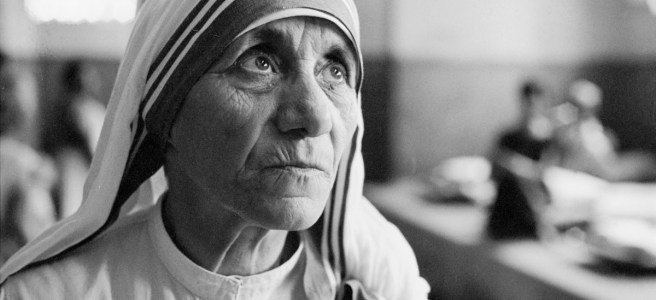
It turned out that the hesitation that lingered the longest was my relationship with the saints. I understood the good in honoring them and respecting them and asking them for prayers. But there was part of me that was quite intimidated by these Holy men and women, people who had done something that seemed so remote and unattainable. I was intimidated to the point that it took a couple of years past my Confirmation before I even read a complete book of writings by Saint Teresa of Calcutta, my confirmation saint. 

The sense of intimidation has faded over time, and my interest in and gratitude for the saints has increased. These days I find myself frequently asking for their prayers and pondering their words and their lives in a way that buoys up my faith. 

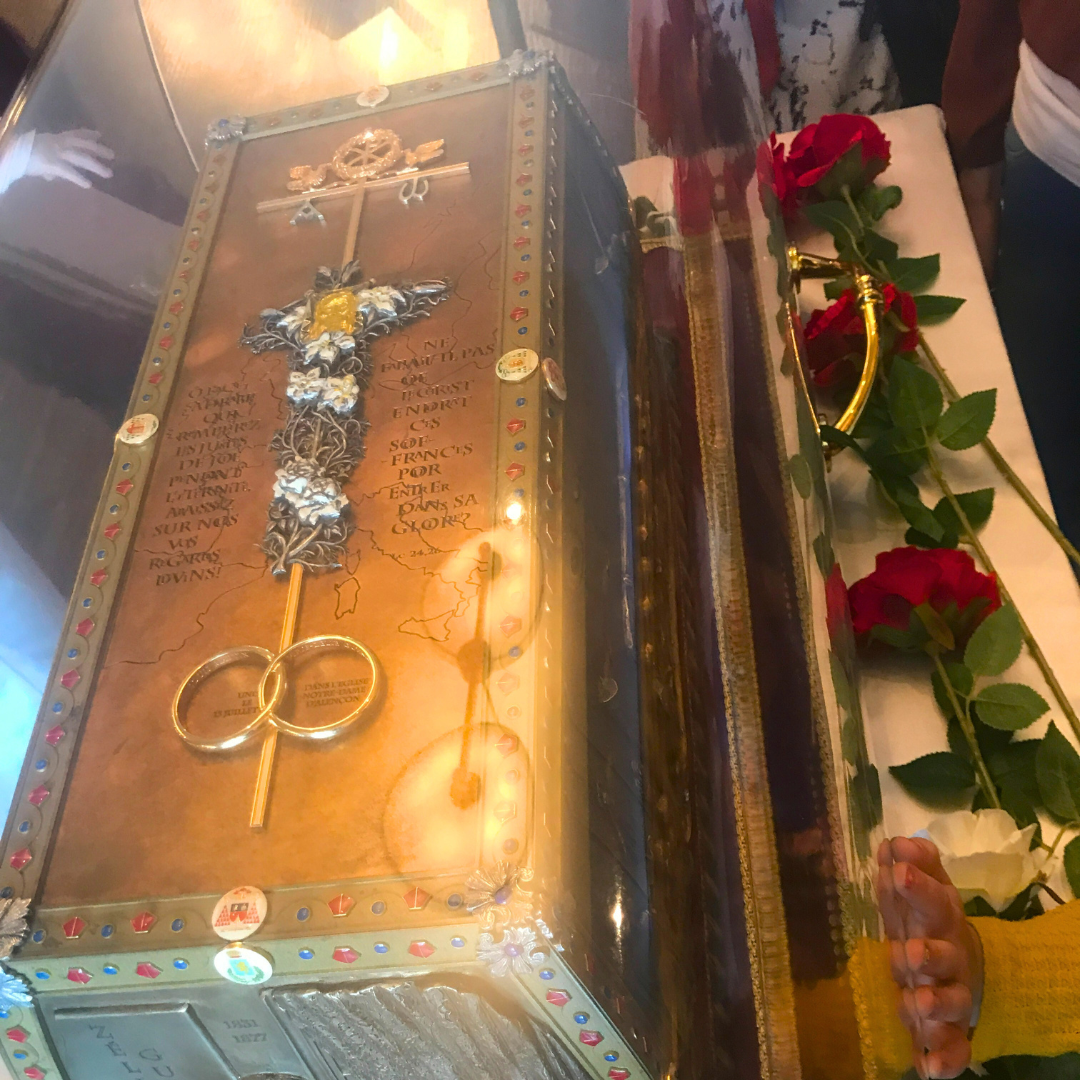
And so, it felt like an important step for our family when we learned that the relics of Saint Thรฉrรจse and her parents Saints Zรฉlie and Louis Martin would be visiting the National Shrine and Museum of Saint Thรฉrรจse for a couple of weeks, just an hour from our home. Especially since our youngest daughter is named Zelie. 

We arrived as the reliquary of Saints Zรฉlie and Louis Martin were being carried from on building to another, and we all immediately could tell that this was going to be a special experience. 

There was a deep reverence throughout the church and museum, among all the pilgrims who had come to draw near. We learned that the reliquaries held the bones of this family of saints, and we touched the glass and prayed beside them. 

Saints Zรฉlie and Louis Martin are particularly special to our family because of their witness in marriage and because of the way they raised their children to love the Lord. We asked for their prayers for the grace to follow in their footsteps. 

null

Another thing I noted, that particularly stood out to me as a convert, was that relics are another gift of the faith that we can experience tangibly. I fell in love with the Sacraments as I converted, the fact that we can taste the Eucharist, that we can feel the waters of Baptism, that we can hear Godโ€™s forgiveness in Confession. My Christianity moved from intangible to being something I could experience with my mind, my soul, and my body as well.   

Click to tweet:
Relics are another gift of the faith that we can experience tangibly. #CatholicMom

null

It is easy to be disappointed in ourselves when we continually fall short of living our faith fully. It is easy to feel disillusioned with the Church when the people within it disappoint us, sometimes deeply. But in the relics we have real, tangible evidence of people who have done it, who have let Godโ€™s love in so fully that there wasnโ€™t room for anything else. Being close to the relics of Saint Thรฉrรจse and her parents reminded me that it can be done, that it has been done, that we are not alone in the journey toward heaven.   

All the disappointments in ourselves or others faded and our whole family left reminded and encouraged that we are not alone, and that we have a heavenly family praying for us and encouraging us along the way.  

null

Sign up here to receive an email whenever we publish a new post!

How Saint Zรฉlie Helped Me Stop Comparing Myself to Other Moms

This letter is free for you to read, but it wasnโ€™t free for me to produce. If youโ€™re interested in supporting the work of This Catholic Family, I would be honored if you would prayerfully consider upgrading your subscription. Or, you can always throw a little change in the tip jar here.

Today is the feast day of Saint Zรฉlie Martin, and while I am no liturgical living professional, this is one of the feast days I always like to mark with a little something special.

A little bit of background on Saint Zรฉlie. She and her husband Louis were both on a path toward religious life when they met each other and learned that God had asked them both to the vocation of marriage together. They had nine children, four of which who died while very young. Her surviving five children all went into religious life, the most well-known of which is St. Thรฉrรจse of Lisieux. She saw a lot of hardship. She and her husband are a great example of a holy marriage. She ran her own very successful lace business as well.

I learned about St. Zรฉlie’s canonization and named our fourth baby Zelie in honor of her. Since then, St. Zelie has held a very special place in my heart, one that I lean in to and understand a bit more with each passing year of life, in particular as I grow in my understanding of my vocation as a mom.

The Temptation to Compare

Ever since becoming a mom eleven years ago, I have been fighting some sort of comparison battle inside my mind and my heart, all while trying to figure out my own identity as a mother. In the early years, the question of what should a Christian mom look like? loomed large. When I converted, I substituted the word Christian for Catholic and continued to ask.

Some of the churches we attended and people we hung out with had stronger messages for us than others. You need to stay at home, you need to homeschool, you need to coupon, you need to clean with vinegar, you need to bake your own bread, you need to not have a job, you need to have a side gig that contributes to your income, you need to remember all the liturgical things, you need to pray the rosary every day with your children, you need to keep a lovely home…these messages and more swarmed, faster and faster, louder and louder. Some of the messages contradicted other messages entirely.

Social media did not help.

Photo by Andrea Piacquadio on Pexels.com

Why We Recruit

Now, not all the moms I compared myself to were actively recruiting their lifestyle as the absolute only way to be a Catholic or Christian mom, they were often just sharing from their passion and joy, which is a lovely thing to behold. Some, however, were. Some of the messages were more implicit in the church or online community, but still there.

And I think I get why we as humans are sometimes tempted to take what works for us and prescribe it for others, especially in motherhood. Motherhood is so intimate, so vulnerable, and so personal. We don’t want to mess it up. It isn’t comfortable to look around us and feel like we’re the only ones doing what we’re doing. The moms I know, myself included, are often questioning our decisions on a pretty regular basis. Is it the right call to stay home? Is it the right call for me to work? The right call to homeschool/private school/public school? And the list goes on.

It can feel a lot less lonely to be part of a pack. Finding or recruiting people with likeminded philosophies says “You do what I do, and that affirms that I picked the right thing. Then I’m doing it the right way.”

A Different Path

My suggestion isn’t that we stop talking about or sharing the things we’ve found helpful, or the mothering style that brings us joy. My suggestion is that we avoid saying that the way God has asked us to live out this vocation is the way that God is asking all women to live out this vocation. And, for those of us on the receiving end, that we reframe how these messages impact us.

Turns out, St. Zรฉlie didn’t stay home full time. She also had in-house help. She ran a business. Her kids began their education at home for a time. Learning about St. Zรฉlie’s life helped me see that she didn’t live like any one cookie cutter Catholic mom box, and she became a Saint. Her life helped me feel free to live the unique Catholic motherhood I am called to each day.

For me, that has looked like staying home when a new baby is very young, but eventually returning to work. My jobs are usually in education, and allow me a similar schedule as the kids. The professional fulfillment makes me a better wife and mom at the end of the day. I am a creative person, and I need a creative outlet. Mostly, that outlet comes in finding time to write. I write short and long essays for the web, and I write fiction books for young readers. Sometimes I play with watercolor markers. Sometimes I read. I am also an introvert. That means I need to carve aside time to be alone. My family can tell if I’ve gone too long without a little stretch by myself, and it is okay that some alone time is important to me. When those things are in place, all the family stuff…the family dinners, the bedtime stories and prayer, the request for a push on the swing, all of that is better and richer and more vibrant because I am embracing and respecting who God made me to be as a person and therefore as a mom.

This realization, that we have never been meant to do it one specific way, completely changed my view. I was able to admire and respect the Catholic moms with particular approaches or particular strengths. Hooray for the liturgically awesome mom! The aesthetic home mom! The daily rosary mom! The homeschooling mom! And hooray for me and the mom I am too!

It was incredibly freeing to be able to separate the idea that I have to do what other moms do, and to celebrate the diversity of Catholic motherhood that exists. It was exciting to realize that doing Catholic motherhood in the way that matched the way God made me and my unique family was not going to look like a carbon copy of another family, another Catholic mom, but that all these things could be very, very good.

Some Questions For The Journey

As mothers, we can too often absorb the message of unhealthy self-denial. Yes, of course we are supposed to deny ourselves in terms of offering ourselves up for the good of another. But we also are meant to become fully who God made us to be, and the things God has put inside our hearts are intrinsically good. Intrinsically unique. And they are meant to shine.

Here are some questions to consider as we all continue on the journey toward embracing and growing into the person God made us to be.

When do you feel most alive as a person, woman, and mother? Under what circumstances do you see the world in full color? When does your heart feel so full it might just burst? When are you most grateful? What things do you long for, and what might those longings teach you about yourself? What might a life look like for you and your family that integrates your uniqueness? Whether your have felt pressure from yourself or from others, what steps can you take to let go of that now?

None of us are meant to be copies of another woman, another Catholic mom. We are all meant to be glorious and beautiful in our uniqueness. We are meant to celebrate each other, to lift each other up.

Like snowflakes, no two of us are the same.

St. Zรฉlie, pray for us.

Amen

Want to Read More From This Catholic Family?

Sign up here to receive an email whenever we publish a new post!

Measuring Success in a Busy, Messy Family


While spending time with my husband and brother recently, I said: โ€œI donโ€™t know if either of you know this, but I can sometimes be a bit rigid.โ€ They laughed, because itโ€™s true. I laughed, because itโ€™s true. It was a good, lighthearted moment.

But now, a few days later, when reflecting on that rare time spent together (my brother lives several states away and was with us for a brief visit), I realize that even my ability to say that, and then to laugh about it, is actually a marker of a significant amount of growth over the past couple of years.

Desiring Control

Some of the pieces of my past have led me to tend toward wanting to control as many variables as possible in my life. Things not going according to plan used to have the ability to send me into a spiral of anxiety. Iโ€™ve been doing a lot of work to dig deep into these things in order to not pass them along to my children.

I used to measure success by how many things I accomplished on my to-do list, and whether the kids and I got everything done by sticking to my self-imposed schedule.

planner

Emphasizing the Wrong Things

Iโ€™ve been learning, sometimes through fire, that all those things, like getting tasks accomplished when I hoped, or even getting everything done at all, puts an overemphasis on the things of this world, including time, productivity, and what I perceive to be โ€˜goodโ€™ behavior from my kids. I was in danger of sometimes falling into the trap of thinking โ€œMy kids are well behaved, so I must be doing a good job as a mom.โ€

It didnโ€™t leave a lot of room for flexibility, or mistakes, or, the most important of all, all of our journeys to, hopefully, sainthood.

Shifting Focus

My ultimate goal as a mother is to help my children grow into the people God created them to be. To become the saint God intends them to be.

So Iโ€™ve been working very hard to flip my normal tendencies on their head. How about, instead of seeing a conflict between the kids as some kind of failure, I see it as an opportunity to teach them how to apologize, forgive, and then make amends. To take a moment of sin or selfishness and support them in facing it head on and doing the hard work to overcome it.

Sticking to a schedule or having everything go exactly according to plan is of such small importance compared to their souls.

kids arguing

A New Way to Measure Success

At the end of the day, Iโ€™m working toward measuring success in an entirely different way than I have in the past. Instead of asking if everything went according to my plan, Iโ€™m trying a new question.

And that question is this: โ€œDid I support my children in their journey toward becoming the people God created them to be?โ€

Even if the kids fought every ten minutes. Even if the kitchen is a mess. Even if we only got math done and nothing else for homeschool. Even if Iโ€™m exhausted. I want to see my kids in heaven. I want them to go off into the world one day loving God and seeking Him all the days of their lives. That is, unequivocally, the most important thing.

There are so many messages bombarding us mothers these days about what “good” motherhood looks like. It can be so easy to fall into the trap of comparing, of pushing to do more, of measuring up to some standard of success someone else has set for us or that weโ€™ve set for ourselves.

Click to tweet:
I want to see my kids in heaven. I want them to go off into the world one day loving God and seeking Him all the days of their lives. #catholicmom

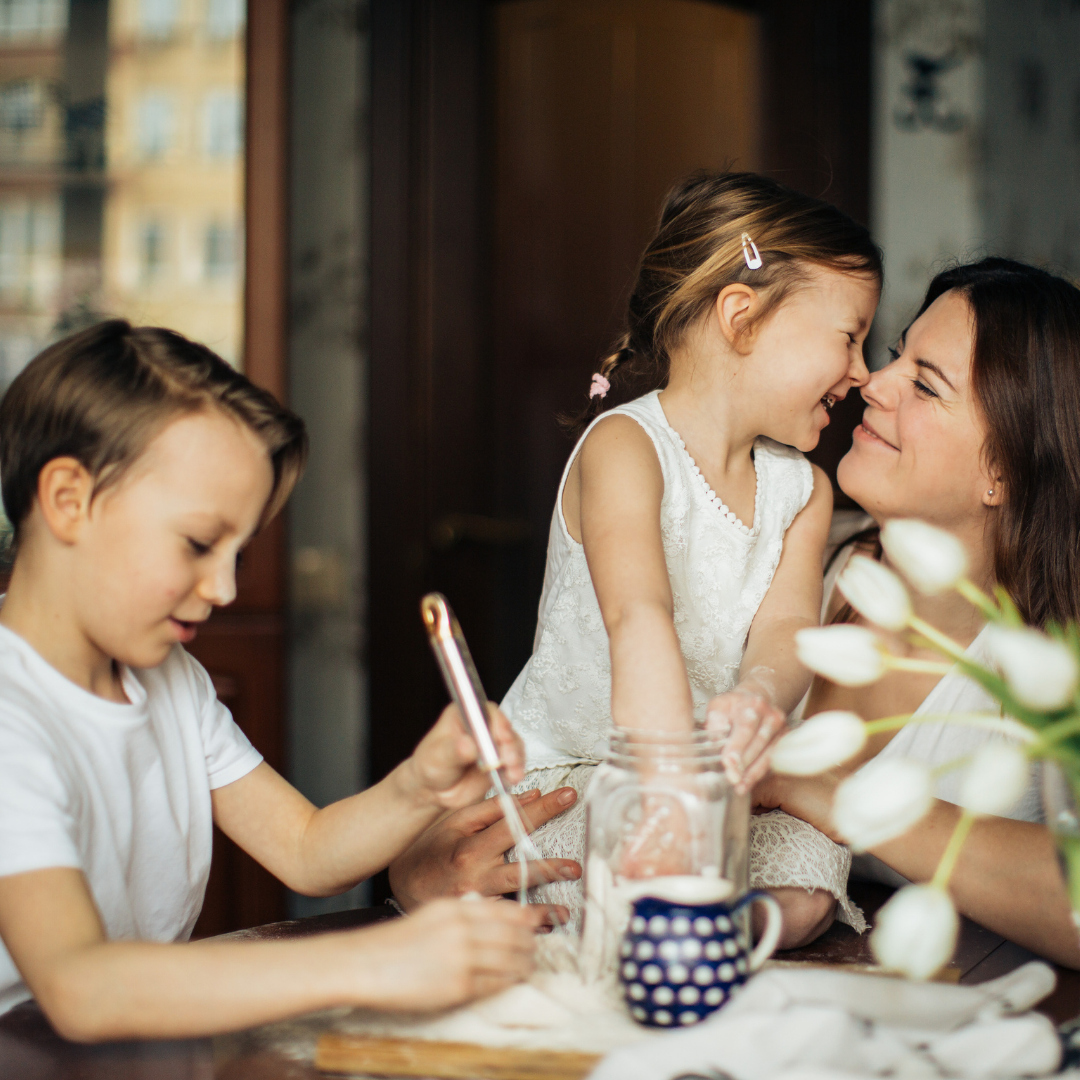
mom cooking at the table with kids

An Example in the Saints

If anyone else struggles with rigidity, or the great tendency to view the immediate moment as the most important thing, please know you arenโ€™t alone. Itโ€™s hard, when weโ€™re in this skin and inside of time, to maintain a view of the eternal.

Even Saint Zรฉlie, mother of St. Thรฉrรจse of Lisieux, had bad days. In one of her letters, she writes: โ€œOh well, thatโ€™s the day so far, and itโ€™s still only noon. If this continues I will be dead by this evening! You see, at the moment, life seems so heavy for me to bear, and I donโ€™t have the courage because everything looks black to me.โ€ 

But she also said this: โ€œFor me, our children were a great compensation, so I wanted to have a lot of them in order to raise them for Heaven.โ€ And she did raise her children for heaven. 

That is success as a parent. That is the ultimate goal. May we ask God for the grace to see each and every day in light of the eternal, and do the same.

Note: This article originally appeared on Catholic Mom.

Purchase Lorelei’s Books Here:

Meet Saint (Maker) Savaryn! (& Reflections on 2020, too)

When Covid started, I kept seeing all these people getting dogs. I was like “JP, all these people are getting dogs because they’re stuck at home hahaha, how interesting is that. We will clearly never get a dog because we’ll be too busy resuming our jet-setting lifestyle as soon as this is over. Also, dogs poop all over the yard.”

And then…with 13 days to go in this difficult year, a puppy arrived at our home and joined our family. Turns out, never say never has become quite the theme in my life, in many more ways than one.

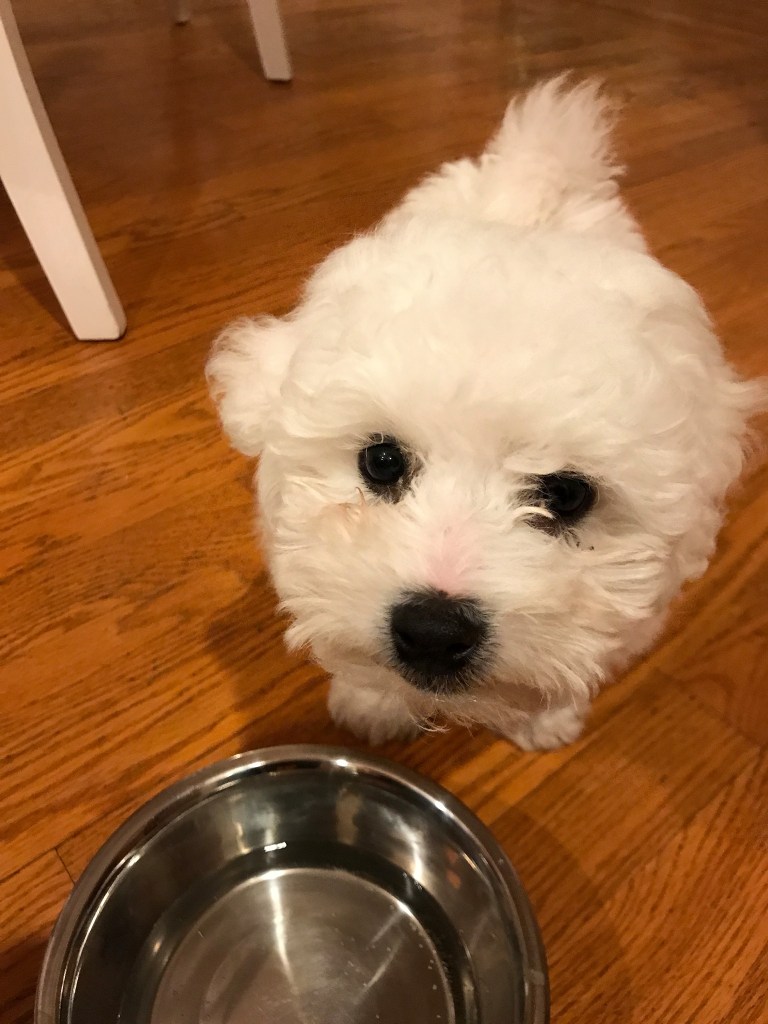
Meet Saint Maker Savaryn!

We call him Saint, but his full name is Saint Maker because he will help us grow in virtue. Also, every time we call his name, which is a lot, it’s a reminder of our main objective- to become Saints ourselves!

Saint is a fluffy cuddle ball who loves pretending he is a great hunter, cuddling, licking peoples’ faces, and sometimes tinkling on our floor.

I am not a dog person, but I’m slowly warming to him. I like seeing the kids take him outside to go to the bathroom. I don’t completely mind when he’s tired at night and rests his little warm fuzzy self on my lap. JP has promised to brush his teeth daily so he doesn’t get stinky dog breath as he gets old.

JP is very sweet with him, too. He grew up with dogs and loves them even more than I realized. It’s cute to see my full grown husband walking around with the little fluffball Saint. They’re already becoming good friends.

Reflections on the Year

There have been less distractions this year- in terms of places to go, things to do, people to see. And it’s given me so much time to look at the life right in front of my face with clarity. Because of this, one of my biggest take home messages of the year has interestingly been an intense reaffirmation of how often the most worth-it things are not the easiest.

Growing in holiness is hard, raising children is hard, writing a book is hard, loving selflessly is hard, homeschooling is hard. But they are are really, really important things that I value, and this year, I found myself often reevaluating how I can be more intentional in all of these areas. Each is an act of love, in a very particular way, so, really, with all of these things so very present, and my own flaws so very exposed, the question has truly become: how can I love better? Especially inside the domestic church that is my home.

I’m much more impatient than I would like. I grow weary quickly with my family. I can have unrealistic expectations or not give someone the benefit of the doubt. I’ve fought battles against my own insecurities this year, particularly with writing. Once- when realizing I had to undertake a huge revision on my second book- a really, really important one that would make the difference between getting the book right or not- JP found me on the floor of our closet crying a little. This story mattered so much but I didn’t know if I was good enough to do what needed to be done. I was so scared! But, in time, I stood up, pushed through the uncomfortable feelings and got to work, one word at a time. And now I’m on the other side of that revision and am so very proud and excited to share that book with the world!

Which brings me to another big takeaway of 2020. Life isn’t about avoiding uncomfortable feelings at all costs, or even about avoiding suffering. Both of those things are part of life, and this year has given us all a lot to be uncomfortable with, or to bear as suffering. We cannot avoid those things, even in a ‘normal’ year, but in 2020 we all had to confront it on a global scale. What do we do when uncertainty hits? What do we do when we suffer? How can we take those things and use them for good-or to make the world a better and more hopeful, loving place?

Happy New Year

I wish everyone who reads this blog a Happy New Year. I almost was going to wish everyone a smoother 2021, but I think it’s better to wish everyone a 2021 that brings us all closer to God, to Love, to living as Gift of Self. God knows what we need to be holy, and it’s our job to accept whatever he brings.

Even if he brings you a puppy that likes to tinkle on your floor. ๐Ÿ™‚

-Lorelei

Leaning into the Saints as a Catholic Convert

I love learning about the Catholic Church. We’ll be celebrating my 5-year confirmation anniversary in the spring, and the more I’ve lived the faith and studied it, the more I fall in love. It might sound silly, but many times it feels like I’m stepping into the warmest hug in the safest arms when I go to Mass, or study theology, or even see the effects of my faith slowly but surely overcoming my own tendencies towards selfishness and sin. The depth, the beauty, the history, the Truth–it’s all there and it often leaves me in awe.

There were a couple of areas of faith that were a bit more difficult for me as I made my transition. Understanding Mary’s role in the church took a bit more time. And so did my appreciation of the Saints. I used to tell JP that the Saints intimidated me, half as a joke and half as a serious comment.

For some reason, the Saints seemed so out of reach. It was tough to think that people existed who walked this earth let God fill them so much that there wasn’t room for anything else. Meanwhile, I felt so far from that. I lose my patience so easily, and tend to seek my own comfort, and am prone to anxiety and worry about things I can’t control. I feared that I’d read something by a Saint and be frightened off…of what, I don’t exactly know. But I didn’t trust that it would be helpful, at least not for a while.

My Walk with Saint Teresa of Calcutta

In the end, I want to grow in holiness no matter how uncomfortable it feels, so I decided it was time to read my first official work by a Saint. Since Mother Teresa of Calcutta (now Saint Teresa) was my confirmation Saint, it made sense for me to start there. I received a couple of books for my confirmation, and they’d been staring at me from my bookshelf for far too long. I read Where there is love, there is God over the course of about two weeks. It’s more a collection of things Saint Teresa wrote and said than a book she wrote from start to finish, but I got such an intimate glimpse into the person she was through it. I could see her simple, yet poignant theology in the stories she repeated, in the phrasings she came back to time and time again.

A few points that have particularly woven their way into my heart:

Humility is to accept humiliations. Wiping my baby’s diaper. Letting someone say something short to me without saying anything back. I had never really thought of humility like that before, and it was refreshing and rang so true.

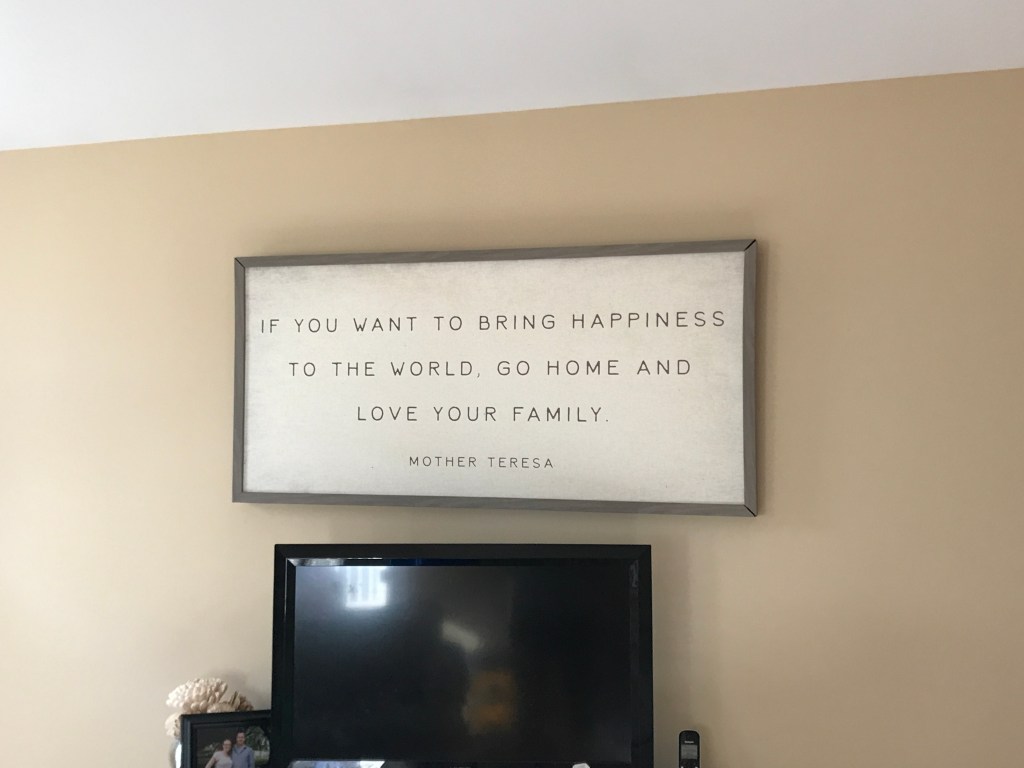
Love starts in the family. This was especially meaningful to me. I struggled for many years if staying home to raise my kids was ‘meaningful enough’ work according to some mysterious earthly standard. We have a framed piece of art in our living room with a quote from Mother Teresa, and we look at it every single day.

Seeing her broader perspective on this sort-of Theology of the Domestic Church, encouraged me in the truth I’ve been coming to accept more and more as time goes on: that my work here is vitally, beautifully important. Jesus says that when you feed the hungry and clothe the naked, that you’re doing it to Him. Saint Teresa helped me grow to understand that the little children living under my roof are the hungry one and the naked one too, and that by loving them, I’m also loving Jesus.

I also see my own sin the most at home in my family life, because I show it the easiest here. They’re the ones I lose patience with, or snap at if I’m stressed out. Because my interactions with them are such a clear mirror to my heart, they’re also the ones who give me the best chance to become a Saint. They’re the ones who I can learn to love well and patiently and fully, no matter what. They’re the ones I can most often offer dignity to in the big things and small, because they’re the ones I’m most often with.

Jesus thirsts. On the cross, Jesus said “I thirst.” While I’ve learned there have been different approaches to understanding His words, Mother Teresa’s is my favorite. Those words are displayed in each chapel of the Missionaries of Charity. Mother Teresa’s saw Jesus’s “I thirst” as a deep expression of how much he desires each and every one of our love, our souls, our all. And, therefore, she concluded, every act of love that we do is, in some mystical way, quenching the thirst of Jesus on the cross. It begs the question: have I quenched Jesus’s thirst today?

For love to be real, it has to hurt. This isn’t about staying in an unhealthy or unsafe situation, but it is about self-sacrifice and what it means and what it takes. We have the ultimate example of Jesus on the cross, because that was His love, full and true, given for us. And it hurt. My opportunities to love until it hurts are frequent but so much smaller than that- getting up when I’m exhausted to comfort a crying child, admitting that I was wrong and apologizing for it. The world has it so backwards when it comes to love- the world tells us that love should make us feel good, that it should serve us well. But it’s really the other way around. Realizing that to truly love means that I hurt because selfishness and sin is being put to death in me, well, it changes everything. I’ve been familiar with this way of looking at love for a while, but Saint Teresa put it so beautifully, and it made such an impression on my heart.

Do small things with great love. I think many of us have heard this quote from Saint Teresa a time or two. My three year old asked God to help her become a Saint yesterday, and a few minutes later I asked her to pick up a blanket from the floor and put it on the couch. She wasn’t sure she wanted to help, but I had the thought that she could probably understand what the idea of “small things with big love” meant. So I told her that one way to become a Saint was to start doing small things with really big love. Like even picking up that blanket for her mother. If she does that little thing with big love, then she’s letting God’s love into her heart more and more. Mother Teresa’s life was marked by some really big moments, but it was filled with many more small moments where she fed a hungry person, or washed a dirty person, or smiled at someone who needed to be seen. Even washing a dish or sweeping the floor can be done with love. That was a challenge to me, in a good way. It’s something small but significant that I can do in the dozens upon dozens of small, seemingly insignificant tasks set before me through the day.

Simple, Yet Profound

The funny thing is, Saint Teresa didn’t even feel close to God for most of her life. She felt his absense from her, but loved him with all of herself regardless of that. She used that sense of absence to unite herself with the lonely and abandoned in the world and to fuel her love.

And her theology was fairly simple compared to some. JP is reading the Summa Theologica right now, and it’s quite a bit heaftier both in weight and in wording than what I just read. But I think that’s one of the really amazing things about the Saints. Saints have been made from all kinds of people, all over the world, with such a diverse array of experiences. The Saints didn’t all start out holy, but they proved that it can be done. Here, now, while we live on earth. If they could do it, then maybe there’s hope that we can, too.

Turned out, reading Saint stuff wasn’t that scary at all. In fact, it was lovely, and challenging and inspiring. I haven’t fully decided who I’ll read next, but I’ve got my eye on Saint Zelie. We named our youngest after her, and I know I’m inspired by her life as a worker, mother, and wife. I think we have a lot in common, I’d love to gain some deeper insights into the person she was.

-Lorelei

Purchase Lorelei’s Books Here:

Son Rise Morning Show Interview!

This Catholic Family had the privilege to participate in an interview with the Son Rise Morning Show about our recent article on Why I Pray To Saints.

It was a pleasure to be interviewed for the show, and here’s a link to the podcast. This Catholic Family’s interview takes place at 78:30.

Son Rise Morning Show Podcast

-Lorelei

Purchase Lorelei’s Books Here:

Why I Pray To Saints

Praying to Saints is one of those big dividing lines between the Catholic and Protestant worlds. I was very against it as a Protestant. But what I found as I first began to explore the Catholic faith, is a lot of the confusion stems from different definitions of the same word, and an answer that can be found in Scripture about whether or not those in heaven can hear us at all.

The Meaning of The Word

‘Prayer’ is the word a Protestant uses when they talk to God. There is a connotation of worship when a Protestant uses the word ‘prayer’. This is why, as a Protestant myself, I firmly believed prayer was something reserved for our communication to God alone. I certainly didn’t want to worship anyone other than God, and therefore I wouldn’t be found praying to Saints or to anyone else in heaven.

When a Catholic uses the word ‘prayer,’ and are talking about prayer to God, then yes, we mean the same exact thing.

But I think the misunderstanding stems from a second use of that very same word. Because when a Catholic is “Praying to a Saint,” he or she is asking for someone in heaven to pray for us, just as we would ask a friend at church to pray for us. We are not worshipping Saints, or attributing anything divine to them. But, since they are already in heaven and are without the distractions of this life, Saints are actually great people to intercede on our behalf. Yes, we should and do pray directly to God, Jesus and The Holy Spirit. We begin and end all our prayers addressing the Trinity. But, just as we ask our friends on earth to pray for us, so, too, do we ask our friends in heaven.

Can They Hear Us?

This was another big one for me. Okay, sure, if we define Praying to Saints as simply asking for their prayer on our behalf, it isn’t such an odd practice. But, all that is a moot point if those in heaven can’t hear us.

A big scripture for me that addressed this issue was Revelation 5:8.

“Each of the elders held a harp and gold bowls filled with incense, which are the prayers of the holy ones.”

This verse makes it at least clear that those in heaven are aware of our requests to God, as they are holding up the bowls. Whether or not we ask the Saints specifically, I found it inarguable that they know our prayer requests, and also play an active role in presenting them to God. By offering the bowls up, they are in fact interceding for people on earth.

This is not to mention that those throughout all of Early Church history found it acceptable, and good, even, to ask for the intercession of the Saints in heaven. I found myself time and time again on my own personal journey, assenting the Early Church knew what it was doing.

Because of My Weakness

Another reason I pray to Saints is because of my own weakness.

I have three little kids running around at home. I’m often busy, and sometimes overwhelmed. It is really difficult for my brain to simmer down.

But I know the Saints are there. They don’t have those burdens. They can fervently intercede for me while I’m changing the baby, or while I’m at the grocery store, or tending to a scraped knee. I can pray then, too. But I fully admit I am weak in the area of praying without ceasing. All to often, I’m consumed by the task at hand and I simply don’t remember. It is a discipline I know I need to improve. The Saints, I hope, intercede for me on that issue as well. But, in the meantime, I know they are there, and the prayers of the faithful are powerful prayers indeed. I know I am in good hands.

Conclusion

There are many Catholic things I never thought I’d do. I’ll share more on that another time. Praying to the Saints is definitely one of them. But I am so thankful now for the souls in heaven that can intercede for me in my weakness.

I talk to St. Anthony when something is lost. I talk to St. Teresa of Calcutta about social justice issues. I talk to Mary, our Lord’s Mother, about being a mom, and raising kids. And I talk to Jesus about all that stuff too. Because by being Catholic, it isn’t always either or. This is another example of the very awesome Catholic “Both And.”

Just another of the many things I am thankful for as a convert to The Church.

Resources

Praying to Saints

Intercession of the Saints

Purchase Lorelei’s Books Here:

Finding A New Mother In Mary

Before I was Catholic, I focused on Mary during the holiday season. I mostly thought about her, pregnant and heavy laden, making the long journey for the census just before her baby was to be born. Tired, searching for a place to rest. Giving birth in a dirty, humble place. Holding the infant Jesus in a night where shepherds and angels and the light of a star paid Him heed. I had the honor of being in late stage pregnancy twice during the Advent season. I was very comfortable thinking about Mary then.

But I didn’t think about her much otherwise. Thoughts about Mary were safe during Advent and Christmas. But, like the tree and decorations we put up in our home, my thoughts of Mary, too, were boxed up and put away at the end of the season, until the following year. Mary belonged in a nativity scene, not in my life.

A Growing Admiration

All of that necessarily changes when one is on a journey to the Catholic Church. Mary plays such a key role in our salvation story, and Catholics aren’t afraid to acknowledge it. I know, based on the Bible and the teaching of The Church, that Mary is in heaven, and prays for us. I also know that Jesus listens carefully to what his mother requests of Him. Her role as the New Eve, the Ark of the New Covenant, her Immaculate Conception, her lifelong obedience and holiness, also are things I worked through as I prepared for Confirmation.

finding-new-mother-mary

It became easy to realize there was much more to Mary than what I had previously thought. It became easy to be thankful for how precious a role God gave Mary, from the moment of her own conception. It became easy to admire her.

But, as I am learning, admiring someone is not the same thing as being in a relationship.

Baby Steps

As a teen, spending time with my mother wasn’t as high on the priority list, though that has long since changed. But in some ways, I think I still relate to Mary in that way. I know she loves me and is there for me, but I don’t often make time with her a priority. Some of the Rosary’s I’ve prayed have ended up being the most powerfrul prayers of my life, prayers that were clearly answered, and graces that were abundantly given.

So why don’t I do it more?

Perhaps it’s some tendency leftover from my Protestant days. The Rosary isn’t often one of the first prayers I go to, and even though it doesn’t take incredibly long, I often struggle at the time commitment a Rosary takes. I have been praying Hail Mary’s more often in my day to day life, which I think is a good baby step. But it feels too tiny sometimes, when I know the beautiful graces given to me through Mary on the occassions I have spent time intentionally turning to her.

But I also know Mary has a lot to offer me if I would not only spend time talking to her, but also listening.

I have so many wonderful mother figures in my life. There’s my mom, who has been with me since the beginning. I also have a step-mom, and a mother-in-law, as well as many other women who have been influential in my life.

But as much as these women have allowed me to talk and share my heart with them, I find I often learn the most when I listen to the wisdom they have to give me. And Mary has so very, very much wisdom to offer. Through her example in Scripture, through her presence in the ways she has appeared to many throughout history, offering Truth and encouragement and building our faith as a Church. This weekend, we are celebrating the 100th anniversary of Fatima, and that is just one of many examples of her intervention in our world. And I’m sure she would speak to my own heart, if I only would quiet myself and listen.

Many Mothers

I think a person has room for many mothers. Women who love, guide, and shape us. Who intercede for us. Who listen to us. Who offer us comfort. And I firmly believe Mary should be at the top of the list of Mothers in our lives.

On this Mother’s Day, it is my prayer that as I celebrate the earthly mothers in my life, I would also move closer to embracing my heavenly Mother, Mary. That I would allow her guidance and wisdom more and more into my own daily existence. That I would not take the blessing of having a heavenly Mother for granted. And that I would look to emulate her, and ask for her intercession to become even a small portion of the woman and mother she was to Jesus and is to The Church. For God’s grace to emulate her in holiness. And to know she is there for me, loving me, and waiting for me to spend some time.

-Lorelei

We Want to Know: What is your relationship with Mary like? How do you relate to her as a Mother?

P.S. If you found this post interesting, and would like to read more on This Catholic Familyโ€ฆ hit up that follow button on the top left of our page, or follow us on Facebook. Weโ€™d love to have you back again!


Purchase Lorelei’s Books Here: