Doctors, It’s Time to Understand Fertility Better

The fact that I know more than many OB/GYNs about the science of fertility is a problem.

By now many have seen the Washington Post article, which chastises the ignorant women of the world for listening to the dangerous spoutings-off of TikTok folk who lambast the dangers of hormonal contraception and urge women to use the…gasp rhythm method, which is proven to fail and will result in untold unintended pregnancies and therefore also more abortions.

I wish I could have read that article and assumed the best. I wish I could have assumed that they had cherry picked a doctor who would feed them quotes perfect for clickbait and that this was an isolated ridiculous article in a sea of medical professionals who obviously do better.

But, as a woman, I’ve lived through too much of my own experience to deny the fact that this OB/GYN represents a lot of medical professionals out there who believe it is either contraception (for smart people who care about being responsible contributors to society) or the rhythm method (for the ignorant uneducated rest.)

Three Scenarios

One: I was seventeen years old and mentioned that my menstrual cramps were fairly painful each month. I was not sexually active, and yet I was put on a daily birth control pill to manage my menstrual symptoms. Did I understand what that pill was doing to my natural hormonal cycle each month? No. Did I gain weight and experience other side effects while I was on it? Yes

.

Then, in college, I was still not sexually active and was prescribed the Depo-Provera shot to address similar period symptoms. I was told this would stop my periods altogether! Miracle of miracles I could be free! What resulted was months and months of constant spotting, and one scenario where I experienced significant bleeding out of the blue and at a very inopportune time. I also felt extremely weird not having my cycle regularly. It was almost as if something inside me knew that my body wasn’t working as it should…

I couldn’t even count the number of women I know who share a similar story. At best, putting women who are having issues with their menstrual cycle on a pill is putting a band-aid on a larger issue.

In most other health situations that I can think of, doctors observe a patient’s symptoms, then systematically work toward figuring out the root cause so they can treat the root cause and resolve the issue for their patient. I have pondered the questions for years of why fertility symptoms are treated by default so often with the band-aid method. Hormonal contraception does not actually treat the root cause of many cycle irregularities, and doctors aren’t actually treating women when they don’t know enough about fertility to research root causes and work to solve them. Women deserve better.

Two:  I was four children in by this point, and had been seeing the same midwife team for a while for my general care between pregnancies. I had talked to them about the fact that I practice fertility awareness for my family planning. I know I had used those exact words because I intentionally opted out of the more religiously affiliated “Natural Family Planning” or NFP phraseology when answering their questions.

Months later, I showed up to a regular check-up appointment and the nurse doing my intake goes: “Are you still using the rhythm method?”

I wish I could have gone back and been more assertive about it, but I think I was so surprised at the moment and caught off guard that I awkwardly corrected her. But the fact is that my chart was inaccurate.

That moment also speaks to one of the main issues with the Washington Post article: that many people who literally specialize in women and childbirth and fertility don’t understand that the rhythm method is not the only option besides contraception. They live in a dichotomous world that doesn’t exist.

I’m assuming that many failures of the medical institution are at play here. The accountability probably lies partly with the individual practitioners who don’t do their research. Some of it might lie with medical colleges who likely don’t offer enough class time to the ins and outs of a woman’s cycle.

But the fact that I know more than a lot of these doctors is a big ole mix of frustrating and exhausting too. We’ve been practicing fertility awareness since about 2016 and we’ve had exactly two children in that time, both of whom we were open to having. The fact that I have not gotten accidentally pregnant in the four years since having our youngest is not a surprise to me, nor is it a stroke of good luck. I know each month when my body is getting ready to ovulate and increasing in estrogen. I know when ovulation is imminent and LH is surging. And I know when ovulation has passed because my progesterone rises.

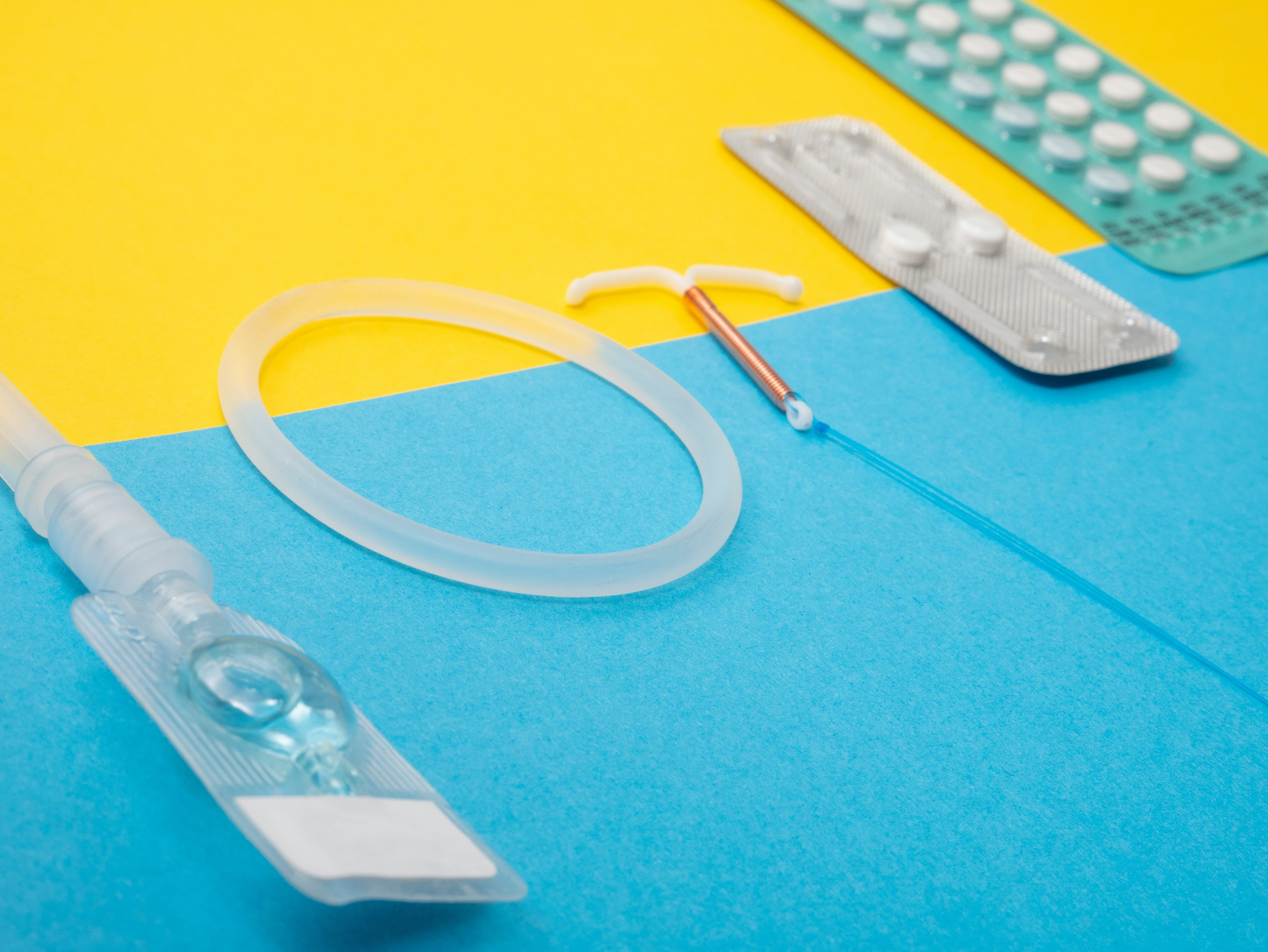
The real, actual world that we exist in involves the options of contraception, the rhythm method, and any number of fertility awareness approaches that leverage the science of fertility. These approaches can not only assist families in avoiding pregnancy (at rates that match contraception) but also in achieving it if that is their goal (which can sometimes help women avoid needing more intensive fertility interventions.)
Three: My daughters. I am raising three girls in this world, and that has me thinking a lot about what we do to help young women understand what their bodies are doing.

As a girl myself, I was taught that fertility is a mysterious thing, that women menstruate about every 28 days and ovulate around day 14. I was taught that that is about all you can know about it. Girls today, in many cases, are still being taught these same things though they are all inaccurate.

I know that I will be looking for doctors for my girls who have put in the work to understand that a woman’s fertility is a good and healthy thing and who will help them understand and appreciate how their bodies function.

How helpful would it have been to learn that you can know when your period is going to start because your basal body temperature drops? I use the Oura ring and I can simply look at my BBT graph on the app to know what’s about to happen. It would have alleviated so much anxiety of getting caught off guard with a period starting when I forgot to bring the necessary supplies to school that day. Heck, it would have been helpful to simply have been told that cervical fluid is a normal, healthy thing to have and that there is a hormonal reason why the amount of fluid changes throughout the month.

We can do better in educating young women to read the language of their bodies, and to start off from the foundation that their fertility is healthy and good.

The Worst of All

But most of all, the Washington Post article is concerning because it frames women’s fertility as a problem to be solved. A burden to bear. A mystery that women are foolish to even try to solve without the help of a pharmaceutical product.

And I can’t help but think that is so incredibly backwards and harmful to women. Part of being a woman is being built with the potential to create new human life inside us. I straight up tell my daughters that our ability to do that is a superpower. That we can co-create with God to add more people made in His image to this earth. It’s awesome. It’s a gift. It is something to be understood, not something to be treated.

Women who seek to understand their fertility are not using the rhythm method. We are not uneducated or ignorant. In many cases, we know more than our doctors about how the science of fertility works and we choose to work with our bodies, not against them to navigate planning our families. We are healthier for it.

I’ve said it before and I will say it again- fertility is among the only, if not the only bodily system that we artificially suppress even when (and sometimes especially when) it is functioning exactly as it should. We live in a time when we understand more about fertility than ever before in human history. We know the hormones involved and the physical symptoms of those hormones, both of which we can track!

Since the flawed charting at my appointment, I have switched to a practitioner who can look at my monthly charts and make sense of them alongside me. Someone who won’t ever offer me IUDs or the pill or the depo shot. It sometimes takes effort or a bit of extra drive time to find medical professionals who understand fertility well or who respect the choice to work with our bodies in a more natural way, but it is so very worth the effort.

I am hoping and asking other medical professionals, especially those who work with women, to at the very least read up on this subject. There are so many resources that are easy to find. The patient knowing more than the doctor is troubling. I urge those in the medical field to do better. And please do not take the Washington Post article as sound medical advice. No, I would not recommend the rhythm method. But the real ignorance lies with the doctor who says that’s the only option besides contraception that women have.

This letter is free for you to read, but it took time and energy to produce. If you’re interested in supporting the work of This Catholic Family, I would be honored if you would consider upgrading your subscription. Or, you can always buy me a coffee here.

-Lorelei

Navigating Aging While my Daughters Look On

This letter is free for you to read, but it wasn’t free for me to produce. If you’re interested in supporting the work of This Catholic Family, I would be honored if you would prayerfully consider upgrading your subscription. Or, you can always buy me a coffee here.

As I write this, I’m in my late thirties and I’m beginning to notice some signs of age when I look in the mirror. There are a few gray hairs, there are lines on my face that didn’t used to be there. My skin is sagging in places where it never used to sag. There are moments where I see a little glimpse of my grandma in the mirror more than the younger versions of me.  

And as I notice these changes, I also am ever aware of the three little girls in my home who watch the things I do, the things that I say. Girls who are getting their roadmap for how to live, for how to be a woman, from me—their mom. 

null

Something that I noticed about myself immediately was that my first thoughts about my aging body were that I need to hide it, I need to fix it, I need to do something about it. I think a lot of that gut reaction comes from the culture I live in. It’s a culture with an entire industry focused on erasing the signs of aging, that’s obsessed with eternal youth. Anti-wrinkle, anti-aging, anti-dark spots, anti-gray hair. The messaging is so loud that I didn’t even have to try for it to embed itself in my mind.   

Something that was really helpful for me was to become aware of those internalized reactions, and instead of accepting those messages as true, to question them. To pause a moment and wonder: how do I wish my daughters would think about themselves when they reach this stage of life?

Whatever the answer, I had a strong feeling that I needed to retrain myself so I can model graceful and grateful aging for them somehow. 

null

I know that we are a body and soul composite, and our bodies are deeply a part of who we are as beings made in the image of God. Our bodies matter. They matter in many ways, especially because our bodies are how we experience the world around us, how we live our story. And when I started thinking about our bodies as the keepers of our stories, I began to find a new way to look at the signs of aging in myself.   

That, in turn, is helping me talk about aging with my daughters.  

As an example, one of my daughters recently pointed to the crinkle lines beside my eyes and asked why I have lines there. I leaned over and smiled and showed her that when I smile, my skin folds into little rays shooting out from the corners of my eyes. I told her that our faces show our feelings, and, after a long time, they remember our feelings, too. The lines around my eyes means that I’ve smiled a lot, and my face remembers it. My face helps to tell my story.  

Another time, another daughter asked me about my stretch marks. I was able to tell her that my body had to make room for each of the four babies I made, and that my stretch marks show that part of my body’s story, a part that I’m grateful for every single day.  

I think graceful aging can mean different things to different people, but I do know deep down that age is something to be proud of. Not everyone gets to grow old, and I don’t want to pass along the message that we absolutely need to hide our age, or fix it, or do something about it. 

Click to tweet:
I want my daughters to one day look at their aging faces and to be kind. To be grateful for the stories their bodies tell. #CatholicMom

In thinking about how I want my daughters to react when they begin to see signs of their own aging in the mirror, more than anything, I realized, I want my daughters to one day look at their aging faces and to be kind. To be grateful for the stories their bodies tell. And I hope to help them along that path, and to help myself, by modeling that now and giving them a different message than the anti-aging industry proclaims. I want them to remember their mother looking in the mirror and smiling, and talking about her wrinkles, and showing gratitude for all the things her body has done and continues to do. And I hope they choose to do the same. 

null

Sign up here to receive an email whenever we publish a new post!

-Lorelei

How Saint Zélie Helped Me Stop Comparing Myself to Other Moms

This letter is free for you to read, but it wasn’t free for me to produce. If you’re interested in supporting the work of This Catholic Family, I would be honored if you would prayerfully consider upgrading your subscription. Or, you can always throw a little change in the tip jar here.

Today is the feast day of Saint Zélie Martin, and while I am no liturgical living professional, this is one of the feast days I always like to mark with a little something special.

A little bit of background on Saint Zélie. She and her husband Louis were both on a path toward religious life when they met each other and learned that God had asked them both to the vocation of marriage together. They had nine children, four of which who died while very young. Her surviving five children all went into religious life, the most well-known of which is St. Thérèse of Lisieux. She saw a lot of hardship. She and her husband are a great example of a holy marriage. She ran her own very successful lace business as well.

I learned about St. Zélie’s canonization and named our fourth baby Zelie in honor of her. Since then, St. Zelie has held a very special place in my heart, one that I lean in to and understand a bit more with each passing year of life, in particular as I grow in my understanding of my vocation as a mom.

The Temptation to Compare

Ever since becoming a mom eleven years ago, I have been fighting some sort of comparison battle inside my mind and my heart, all while trying to figure out my own identity as a mother. In the early years, the question of what should a Christian mom look like? loomed large. When I converted, I substituted the word Christian for Catholic and continued to ask.

Some of the churches we attended and people we hung out with had stronger messages for us than others. You need to stay at home, you need to homeschool, you need to coupon, you need to clean with vinegar, you need to bake your own bread, you need to not have a job, you need to have a side gig that contributes to your income, you need to remember all the liturgical things, you need to pray the rosary every day with your children, you need to keep a lovely home…these messages and more swarmed, faster and faster, louder and louder. Some of the messages contradicted other messages entirely.

Social media did not help.

Photo by Andrea Piacquadio on Pexels.com

Why We Recruit

Now, not all the moms I compared myself to were actively recruiting their lifestyle as the absolute only way to be a Catholic or Christian mom, they were often just sharing from their passion and joy, which is a lovely thing to behold. Some, however, were. Some of the messages were more implicit in the church or online community, but still there.

And I think I get why we as humans are sometimes tempted to take what works for us and prescribe it for others, especially in motherhood. Motherhood is so intimate, so vulnerable, and so personal. We don’t want to mess it up. It isn’t comfortable to look around us and feel like we’re the only ones doing what we’re doing. The moms I know, myself included, are often questioning our decisions on a pretty regular basis. Is it the right call to stay home? Is it the right call for me to work? The right call to homeschool/private school/public school? And the list goes on.

It can feel a lot less lonely to be part of a pack. Finding or recruiting people with likeminded philosophies says “You do what I do, and that affirms that I picked the right thing. Then I’m doing it the right way.”

A Different Path

My suggestion isn’t that we stop talking about or sharing the things we’ve found helpful, or the mothering style that brings us joy. My suggestion is that we avoid saying that the way God has asked us to live out this vocation is the way that God is asking all women to live out this vocation. And, for those of us on the receiving end, that we reframe how these messages impact us.

Turns out, St. Zélie didn’t stay home full time. She also had in-house help. She ran a business. Her kids began their education at home for a time. Learning about St. Zélie’s life helped me see that she didn’t live like any one cookie cutter Catholic mom box, and she became a Saint. Her life helped me feel free to live the unique Catholic motherhood I am called to each day.

For me, that has looked like staying home when a new baby is very young, but eventually returning to work. My jobs are usually in education, and allow me a similar schedule as the kids. The professional fulfillment makes me a better wife and mom at the end of the day. I am a creative person, and I need a creative outlet. Mostly, that outlet comes in finding time to write. I write short and long essays for the web, and I write fiction books for young readers. Sometimes I play with watercolor markers. Sometimes I read. I am also an introvert. That means I need to carve aside time to be alone. My family can tell if I’ve gone too long without a little stretch by myself, and it is okay that some alone time is important to me. When those things are in place, all the family stuff…the family dinners, the bedtime stories and prayer, the request for a push on the swing, all of that is better and richer and more vibrant because I am embracing and respecting who God made me to be as a person and therefore as a mom.

This realization, that we have never been meant to do it one specific way, completely changed my view. I was able to admire and respect the Catholic moms with particular approaches or particular strengths. Hooray for the liturgically awesome mom! The aesthetic home mom! The daily rosary mom! The homeschooling mom! And hooray for me and the mom I am too!

It was incredibly freeing to be able to separate the idea that I have to do what other moms do, and to celebrate the diversity of Catholic motherhood that exists. It was exciting to realize that doing Catholic motherhood in the way that matched the way God made me and my unique family was not going to look like a carbon copy of another family, another Catholic mom, but that all these things could be very, very good.

Some Questions For The Journey

As mothers, we can too often absorb the message of unhealthy self-denial. Yes, of course we are supposed to deny ourselves in terms of offering ourselves up for the good of another. But we also are meant to become fully who God made us to be, and the things God has put inside our hearts are intrinsically good. Intrinsically unique. And they are meant to shine.

Here are some questions to consider as we all continue on the journey toward embracing and growing into the person God made us to be.

When do you feel most alive as a person, woman, and mother? Under what circumstances do you see the world in full color? When does your heart feel so full it might just burst? When are you most grateful? What things do you long for, and what might those longings teach you about yourself? What might a life look like for you and your family that integrates your uniqueness? Whether your have felt pressure from yourself or from others, what steps can you take to let go of that now?

None of us are meant to be copies of another woman, another Catholic mom. We are all meant to be glorious and beautiful in our uniqueness. We are meant to celebrate each other, to lift each other up.

Like snowflakes, no two of us are the same.

St. Zélie, pray for us.

Amen

Want to Read More From This Catholic Family?

Sign up here to receive an email whenever we publish a new post!

Carving Time For Rest

As an introvert mom to four and Catholic school teacher, I know two things to be true. I love working with youth and being a mom. I also know that I am often overstimulated, and that in order to do my job and my parenting well, I need to set aside regular time to rest.

Easier said than done in the day-to-day hustle and bustle, but when I don’t rest, many of my less-than-amazing traits shine through. The impatience, the feeling overwhelmed, the irritability. The need has always been there, but rest has looked different at different phases of life for me. There hasn’t been a magic rest recipe that has worked well all the time. There have been times when I have tried to rigidly schedule rest, but I found that certain days I need certain things more than others, and sometimes the scheduled “rest” didn’t match what I needed at all, and therefore it felt more like a burden than anything else.

null

So I let go of the rigidity, and recently, here is what I’ve done that I’ve found helpful. And I hope some of you may find it helpful, too.

I started by making a list of things that recharge me. Things that, for me, constitute as rest. Some items on the list were a hot bath, reading a book, enjoying a nice glass of wine with my husband, writing or creating something, taking a walk, prayer, journaling, just sitting in a quiet space, taking a nap, doing a workout, and so on.

And then, rather than sticking to some regimented schedule of predetermined rest activities, I allow myself the freedom to choose what would best help me in that given moment. I do this by taking care to be mindful throughout the week of how I’m feeling. Am I overstimulated? Maybe I need to let my husband take care of making dinner so I can go enjoy a quiet bath when he gets home from work. Am I low energy? Some days, I might cure feeling tired with an energetic workout. Others, I may shut my eyes for a little while for a nap.

I’ve learned that right now a lot of my rest involves accepting the introvert inside me and stepping away from people for a little while, whatever that looks like. When I do that, I’m much better for everyone when I return.

One thing that remains relatively constant is setting aside regular time to pray. This often happens early in the morning, before the rest of the house has stirred. It’s not natural for me to get up at 5:00 AM, or even 5:30, but it is the best chance I have at quiet before the day begins for everyone else in my home. I do this four or five times per week, and it acts as an anchor to my days.

Click to tweet:
It can be very easy for us moms to push aside our need for rest, to put the needs of others above our own. #CatholicMom

It can be very easy for us moms to push aside our need for rest, to put the needs of others above our own. I often smile when I think that even God rested, and I feel the value of rest in my soul when I see how much better I am for those I love and serve when I prioritize resting too.

Rest will not look the same for every person, and it probably won’t look the same every day, but if we can take time to recognize the things that recharge us, and allow ourselves to take the time when needed, then I trust that we are better equipped to live our calling in whatever phase of life God has us in today.

null

(Note: This article originally appeared on Catholic Mom)

When The Idea of Homemaking Makes You Cringe A Little Bit

As someone who has spent most of my life in the Evangelical world, and who has spent the last few years in the Catholic world, ‘homemaking’ is something I’ve heard often in both places. There are books written about homemaking and podcasts about it. People talk about it—and we seem to all know what the idea of homemaking means.

When I think of the word homemaking, it conjures up images of throw pillows, and softly slung blankets across the arms of chairs. Fresh baked muffins and clean floors. Cute little artsy things on the walls and mantel that were probably purchased from Target or Hobby Lobby. A friend and I were talking recently about how even those more ‘surface’ level connotations are kind of difficult to swallow sometimes, especially if there are stains all over your pillows and couches from grubby little fingers, or if you don’t enjoy hanging cutesy things on the walls.

But there are some deeper connotations, too, and I wonder if other women feel the same way.

It’s not that I don’t want to make my house a home, it’s that I don’t want to feel like ‘home’ has to look a certain way for me to fit my identity as a Catholic Christian woman.

We stopped homeschooling in January, and that has been the best thing for our family. I haven’t always been a stay-at-home mom. I’m currently the owner of a mobile children’s bookshop and an author of middle-grade novels, but I’ve also been a teacher. Our home has looked different in all of those seasons, but I don’t think that at any point it has been any more or less a home.

null

Sometimes my husband does the laundry. Never do either of us iron any of our clothes unless we’re going to a wedding. I can’t sew anything more than a button. I am horrible with yeast. Do not ask me to make anything that requires ‘rising’ because it will not work. But these are all things that I’ve felt, at one time or another, has been presented as the proper way to make a home by women in faith communities, both Evangelical and Catholic.

I think it may be helpful for us to reframe our idea of what homemaking means. To broaden it, and give it room to breathe. To create space for the diversity of women of faith, our unique gifts and strengths, and the different phases of our lives.

What about leaving the floor for later and going outside to play with your kids? That’s homemaking too. Really, really good homemaking. What about letting the grubby little fingerprints on the fridge go so you can sit down with a coffee and read a book? That’s homemaking, because our peace of mind impacts everyone else. What about letting go of the expectation that we need to entertain our kids all the time to the point that we burn out, and accept that creating a stable home with a predictable routine is also making a home?

Click to tweet:
A pretty house can be an indicator of a true home, but it also can cover up struggle. #catholicmom

null

While I personally love a good throw pillow, having seasonal throw pillows does not make a home. I am a big fan of creative ways to display pumpkins in the fall, but having decorative pumpkins is not in any way the essence of homemaking either. I’ve seen too many situations that look amazing on the surface, but when you peel back a few layers, you see a lot of brokenness and hurt. A pretty house can be an indicator of a true home, but it also can cover up struggle. And when we equate these superficial, first world Christian Woman expectations with being a Good Catholic Mother, then I think that leaves room for us to hide the struggles, or puts pressure on us to do things that may not be our strengths.

In the end, true homemaking is about a safe, and joy-filled, and peaceful home where hearts are safe to grow into what God made them to be.

That’s it, that is homemaking. That is making a home.

I’d love to hear what you think about homemaking—if it’s a concept you’ve embraced (which is great, if that’s you!), if it’s a word that you also struggle with, or if you just have never carried the emotional burdens like I have (haha). I’d love to know your thoughts.

null
This article originally appeared on CatholicMom.

Why I Don’t Use Birth Control, and What I Do Instead

This letter is free for you to read, but it wasn’t free for me to produce. If you’re interested in supporting the work of This Catholic Family, I would be honored if you would prayerfully consider upgrading your subscription. Or, you can always throw a little change in the tip jar here.

The topic of contraception has been very much in the spotlight lately, perhaps more than usual, and it seemed like a good time to share a bit more about how we navigate family planning in our marriage in the hopes that it will be helpful. It feels especially fitting to share this during NFP week this year!

Please note that nothing in this article is meant as a substitute for official training in NFP methods. It is intended as an introduction and brief overview. If you’re interested, please reach out to me or connect with one of the resources below to learn more. I will also be using the terms NFP and fertility awareness interchangeably in this post, since they are both terms to describe the same thing.

Why I Don’t Use Birth Control

To start, I utilized hormonal contraception, as some of us are prescribed to do for other things, long before I used it for contraceptive purposes, and long before I ever imagined I’d be Catholic. There are religious reasons that contributed to why we decided to stop using this form of contraception, but I’m going to steer clear of those here and focus on the other reasons why I stopped, which are plentiful as well.

You don’t have to do more than a simple Google search to get a list of side-effects of hormonal contraception. The list is long. I had a lot of the side-effects. It wasn’t great.

I also started to question the concept of hormonal contraception in the first place. My fertility is a healthy, functioning part of my body, and I couldn’t think of any other heathy, functioning parts of a person’s body that we artificially and long-term suppress. We usually treat conditions in which our bodies are sick, or not functioning like they are supposed to. Why was I acting like my fertility was something that needed treatment vs. something to be understood?

This is all not to mention my general discomfort in putting artificial hormones into my body on a consistent basis for years at a time. Or the fact that hormonal contraception puts the responsibility for not getting pregnant squarely on the woman’s shoulders, which didn’t feel equitable.

I kept questioning why there wasn’t anything better out there? Something that was, perhaps, respectful of my fertility, and let me understand my body so I could make effective decisions on when I did or did not want more children?

Good News

Turned out, there is something better out there. Fertility Awareness, or as it is also known, NFP.

(I will immediately add the disclaimer that I am not going to be talking about an app that tracks your fertility. You can use an app if you want to help record your data, or you can do it on paper, but apps themselves cannot tell you accurately when you are and are not fertile. More on what you can do to know that information below.)

A bit of background. My husband holds a PhD in biomedical science. I have a Master’s degree, and work as an author. I am of the opinion that fertility awareness is something that would benefit so many women, but is not discussed among family planning options nearly as much as it should be. It’s also incredibly easy to do for most women. Once you learn it, it becomes part of your routine and doesn’t take much time at all.

A bit of data. When used accurately, fertility awareness is statistically as effective as an IUD or perfect use of the pill. Sources at the bottom of this post.

Fertility Awareness teaches a woman to understand her body, which can help her achieve pregnancy or avoid it. Anecdotally, we have been utilizing Fertility Awareness since 2016, and have had 2 children intentionally and have avoided pregnancy the rest of the time with success.

How Does It Work?

We use a combination of sympto-thermal and Marquette methods for tracking my fertility. Here’s a sample month, starting on day 10 of my cycle until the end.

A sample partial month of fertility charting

3 Things To Note:

  • At the very bottom you can see the letters L, H, and P. I use the Clear Blue Fertility Monitor starting a few days into my cycle (the monitor prompts you on which day you need to begin to test). It reads L for low, when it does not detect estrogen. It reads H for high when estrogen is detected, and this lets me know that my body is preparing to ovulate and I’m potentially fertile. It reads P for peak when it detects luteinizing hormone, which means that ovulation is imminent. This is wildly helpful for family planning purposes whether or not you are hoping to get pregnant, for obvious reasons.
  • The information in the middle of the chart (The colored bars, circles, etc.) relate to cervical fluid changes and other related pieces. Cervical fluid changes in consistency leading up to ovulation, and you can see peak cervical fluid (the yellow bars) just before my monitor reads peak, which is wonderful corroboration.
  • And finally, my favorite piece, are the lines and dots at the top, which track my BBT or basal body temperature. You can use an actual thermometer for this, or there are rings and wristbands you can use to digitally track this for you. Basically, your resting temp (after 3-4 hours of sleep), taken before you get up and move around, can help confirm if you’ve ovulated. In this sample chart, my temp is consistently below a certain point until just after peak. That rise lets me know that I’ve ovulated, and it is caused by an increase in progesterone after ovulation. I am past fertility on the evening of the 3rd day of the temp rise in this chart because the unfertilized egg is gone. If you are pregnant, this temp will actually stay high, and can be an early way to know if you’ve conceived. If you are not, it will drop back down as progesterone drops and your period approaches. I can not only confirm ovulation via my BBT, but I can also know with a high level of certainty when my cycle is about to start and I’m never caught off guard.

Fun fact- The amount of time between a new cycle starting and ovulation can vary greatly! It can be impacted by travel, sickness, interrupted sleep, stress, etc. With Fertility Awareness you never have to stress out if your period doesn’t arrive on its usual schedule. You can know from the data that you ovulated late, and therefore that it will be a longer cycle overall.

But, the other part of that fact is your luteal phase- from ovulation to a new cycle starting, doesn’t vary much. It’s pretty consistent within a day or so no matter what. If you have a really short luteal phase (shorter than 10 days often), it may be time to check with your doctor though to make sure that your progesterone levels are normal.

If this is something that you are interested in learning more about, please feel free to message, comment, or email. Or check out the resources below for training. Paying attention to my body and recording this data has become such a natural, small, easy part of my daily rhythm. I have pretty regular cycles, but Fertility Awareness can also be for those who have irregular cycles too. It can even be a tool to help you figure out what’s going on in there instead of putting a band-aid on the problem.

Why Check out Fertility Awareness/NFP?

And now, a bit of my personal story. Since using Fertility Awareness, I feel like I know my body better, and that I am respecting how my body works, which is very empowering. There is nothing wrong with my body and my fertility, and changing from suppressing it to understanding it has been amazing.

This is a team effort. If you have a partner or a husband, they can get involved in many ways, from recording the data, to running the monitor each morning. It also increases communication between couples on a regular bases about their family planning goals, which is a beautiful, healthy thing.

I also have friends who, through Fertility Awareness, were able to identify hormonal issues that would have likely led to miscarriage if they were not addressed (often, low progesterone). They were able to get medical care and remedy those issues and not lose their children from a preventable cause.

Now that I’m here and have seen the benefits, I would never in a million years go back. I’m happy to answer specific questions too if you have them! Feel free to get in touch.

Resources:

Sympto Thermal: Sympto Pro, The Couple to Couple League

Marquette (instructors are all RNs): Marquette

Overall: Lumina Health Services

Book: Taking Charge of Your Fertility (Not a Catholic book, I skipped over the portions that dealt with areas that would be in conflict with my faith, but the overall book was very helpful.)

Effectiveness of methods:

Effectiveness of IUD and Pill: https://www.cwcobgyn.com/blog/the-pill-vs-an-iud-which-to-choose#:~:text=Both%20the%20pill%20and%20IUDs,failure%20to%20take%20it%20regularly.

Effectiveness of Fertility Awareness: https://www.factsaboutfertility.org/wp-content/uploads/2014/09/SymptoThermalPEH.pdf

-Lorelei

Babies and Dreams

As someone who is a wife, mom of four, and who also writes books for children, I get asked a lot how I “do it all.”

And on the surface, I do a lot of different things, wear a lot of different hats. However, I don’t do it all, and I don’t do everything all the time. There are ebbs and flows to this season of life. Times where I must lean into one thing and lean away from the other. As I’m writing this, my kids are running around the house with a frantic energy that will likely lead to tears from someone any moment. But I do think that it’s important for us to talk about how much is possible as a mother, especially if you love being a mom and also have big dreams of some kind—whether they be creative, or business related, or both.

null

There’s this idea in our culture that babies and dreams are two separate entities entirely. You can be a mom, or you can pursue your passions. There’s the notion that we must set our dreams aside during the years that we are raising little people. While there is a need to be flexible, and to make space for flexibility that raising kids requires, I’ve found it more than possible to have a family and pursue my dreams.

And I think you can too.

My experience has also been one of exuberant support. My husband helps me troubleshoot and make space for the more intense periods of work that come with deadlines and revisions. We’ve adjusted work schedules, negotiating babysitting and help cleaning the house. There were times, before I ever knew I’d make any money selling my books, where we just found ways to fit writing time in, even if it meant a quick trip to a coffee shop in the evening. I’ve written from the driver’s seat of my minivan, and I’ve written while pizza cooked in the oven. My work right now is not often luxurious, and my time is not plentiful. But it is life-giving for my soul to be able to lean into this passion at this stage of life.

I’ve learned that when I’m not able to pursue writing in any way, when weeks go by without any filled pages, that my cup is empty, and I’m not as good for my family as I am when my creative well is full. When I write, I lose track of time, lost in magical worlds and the journeys my characters undertake. When I write, I feel like I’m doing one of the things I was made to do. Kind of like how I feel when reading my kids a bedtime story, or watching them learn about and lean into the things they love. They are both a part of who I was made to be, and I feel closer to God in both my roles as a mother and an author.

null

If anything, pursuing my dream while I have kids at home has pushed me to do my absolute best. I know my children are watching, and I want to make them proud.

Click to tweet:
Your work has value, just as your motherhood has value. The messages about some sort of inherent contradiction between babies and dreams are a lie.

Over the past few years, I’ve often drawn inspiration from St. Zélie, mother to St. Thérèse of Lisieux. She and her husband Louis were canonized together, and in that they represent for me an example of a strong, supportive marriage. Zélie raised holy children, and in that is an example to me of motherhood. She also owned her own lace business, and in that she is an example to me of a woman contributing to her family and doing the thing that she loved.

For anyone who has big dreams but has been too nervous to pursue them, or for anyone who is going after their dream with kids at home, please know you are not alone. It took me ten years before I got brave enough to even try, to even acknowledge that this is part of what I was created to contribute to this world. Your work has value, just as your motherhood has value. The messages about some sort of inherent contradiction between babies and dreams are a lie.

And while it isn’t always easy, at least for me, it’s certainly been worth it.

null

-Lorelei

Five Home and Decor Ideas for Catholic Moms

I’ve been finding great joy lately leaning into my “Catholic Mom-ness.” The list below is built of little, thoughtful things beyond the crucifixes and rosaries that are often found in a Catholic home. They have made me smile time and time again in the middle of the noise that is raising and homeschooling our four kids.

Enjoy!

St Zelie motherhood t-shirt

St. Zelie Motherhood T-Shirt

One of my favorite Saints of all time is St. Zelie Martin. In fact, I admire her so much that we have a daughter named Zelie! So when I found this shirt, containing one of Zelie’s quotes that has most inspired me as a parent, I had to put it on my Christmas list this year. The fabric is so soft, which is an added bonus! Available on Etsy and CaelistiCo.com.

20220117 LSavaryn 2

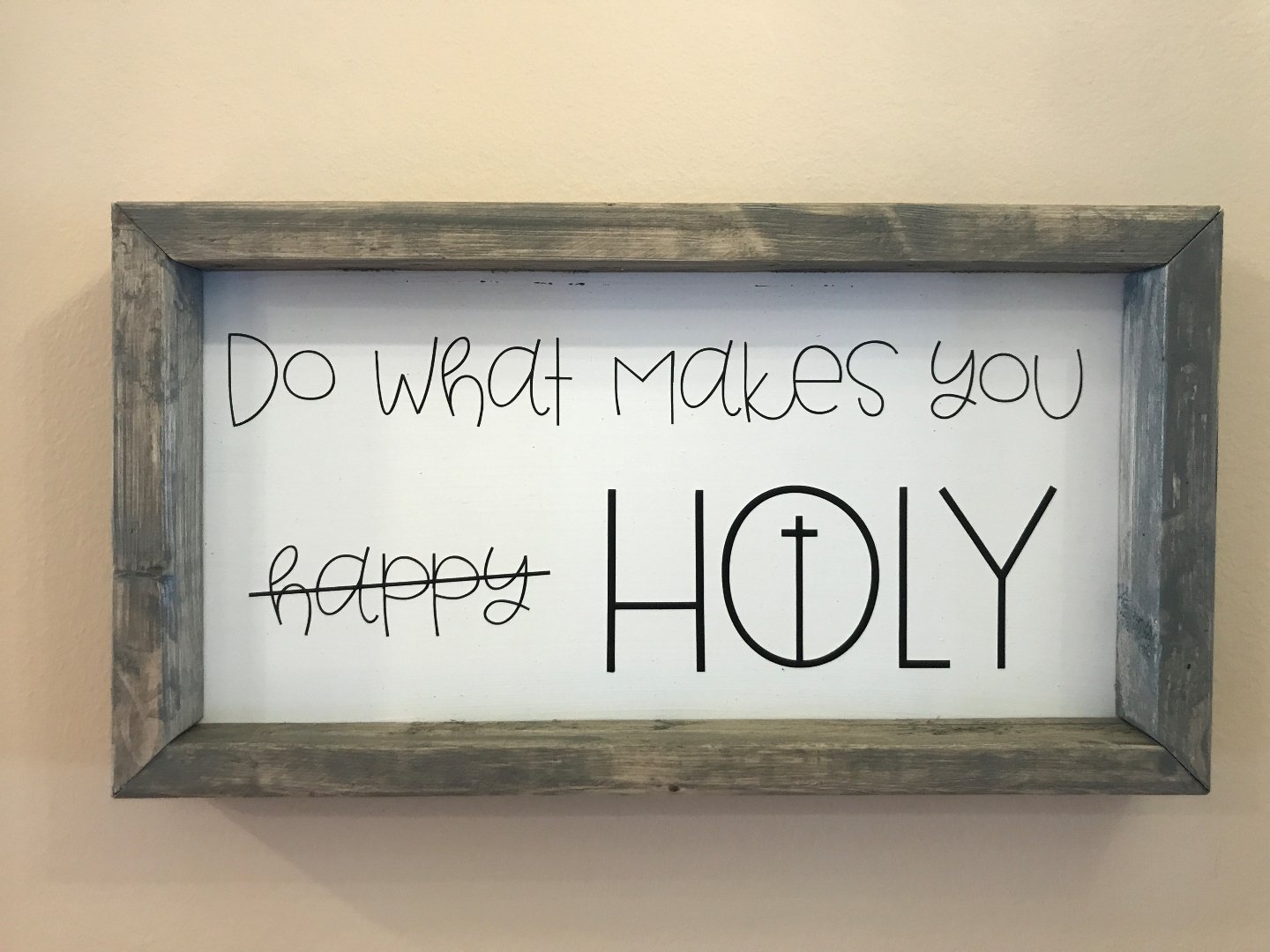
Do What Makes You Holy Wall Art 

Our culture promotes the god of happiness pretty much everywhere we look. “This toy will make you happy, this skin cream will make you happy, this car will make you happy.” We’re trying very hard to teach our kids that the only thing that will truly make them happy is God, and growing into the person He created them to be. We’ve hung this wall art in a prominent position in the hall that everyone passes by multiple times a day as a sweet yet poignant reminder.

Hardy Design Boutique, a lovely Catholic shop on Etsy, offers this sentiment as a keychain, sticker, and sometimes wall art as well.

For $5, Rosebud Print Design also offers a printable download of this beautiful truth that you can frame yourself.

Raising Saints Requires More Coffee

Raising Saints Requires More Coffee Mug 

I use this mug from Cause Of Our Joy Studio almost daily! It reminds me of the truth that I am raising my children for God, but that it is a big task, and that coffee can be helpful. And when things get a bit overwhelming, it makes me smile and brings me back to the most important things.

20220117 LSavaryn 3

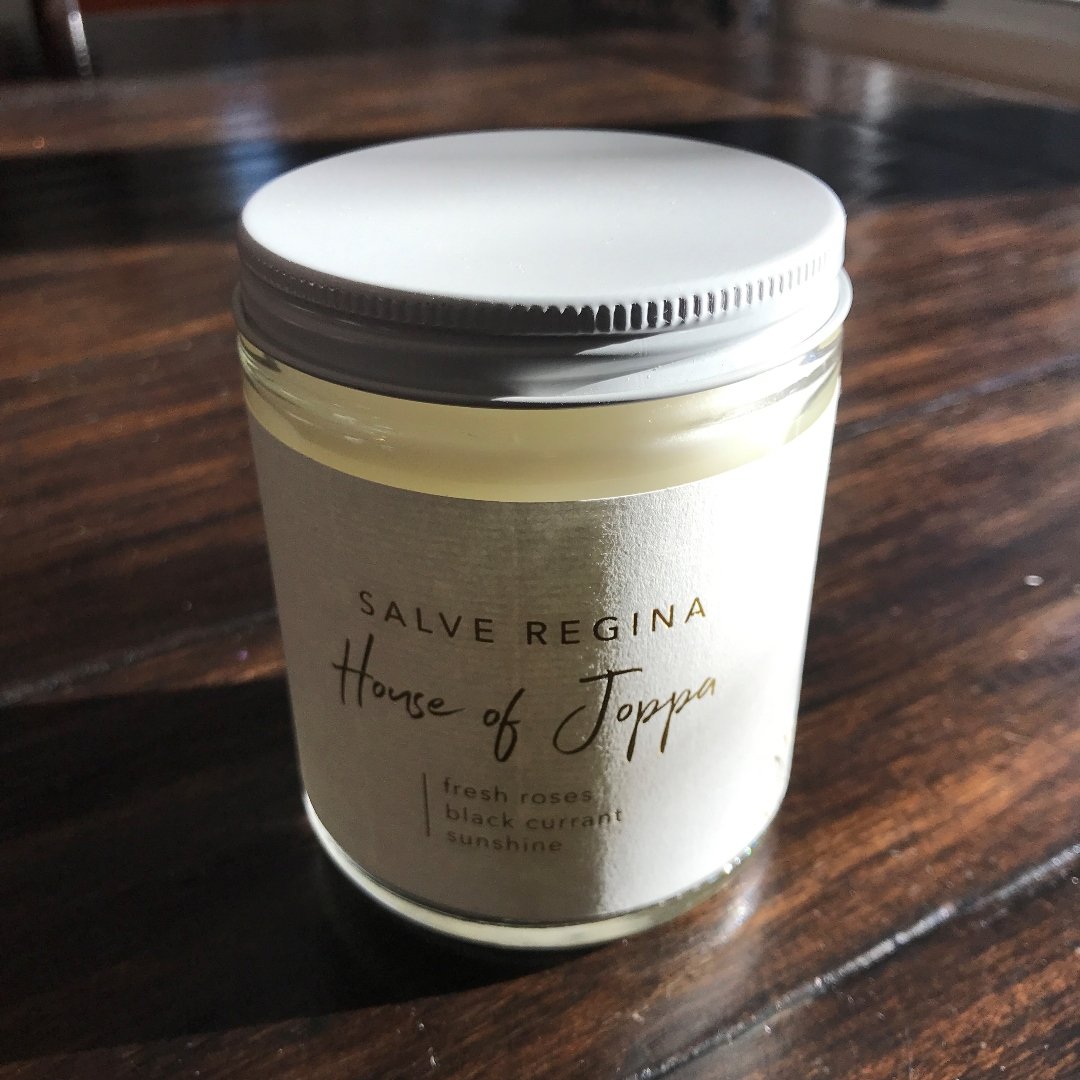
Salve Regina Candle 

I think we moms can sometimes tend to brush aside self-care in favor of giving everything to our families. I got this candle from House of Joppa recently in order to remind myself that part of being a good mom is making sure I take care of myself, too. It has become my frequent companion when the 2-year-old is napping and I take a bit of time to sit and read. Little moments can become luxuries with intentional details like the gorgeous scent of this candle, built of roses, black currant, and sunshine.

There are so many fun and innovative ways to embrace Catholic living, direct from amazing Catholic creators! #catholicmom

20220117 LSavaryn 1

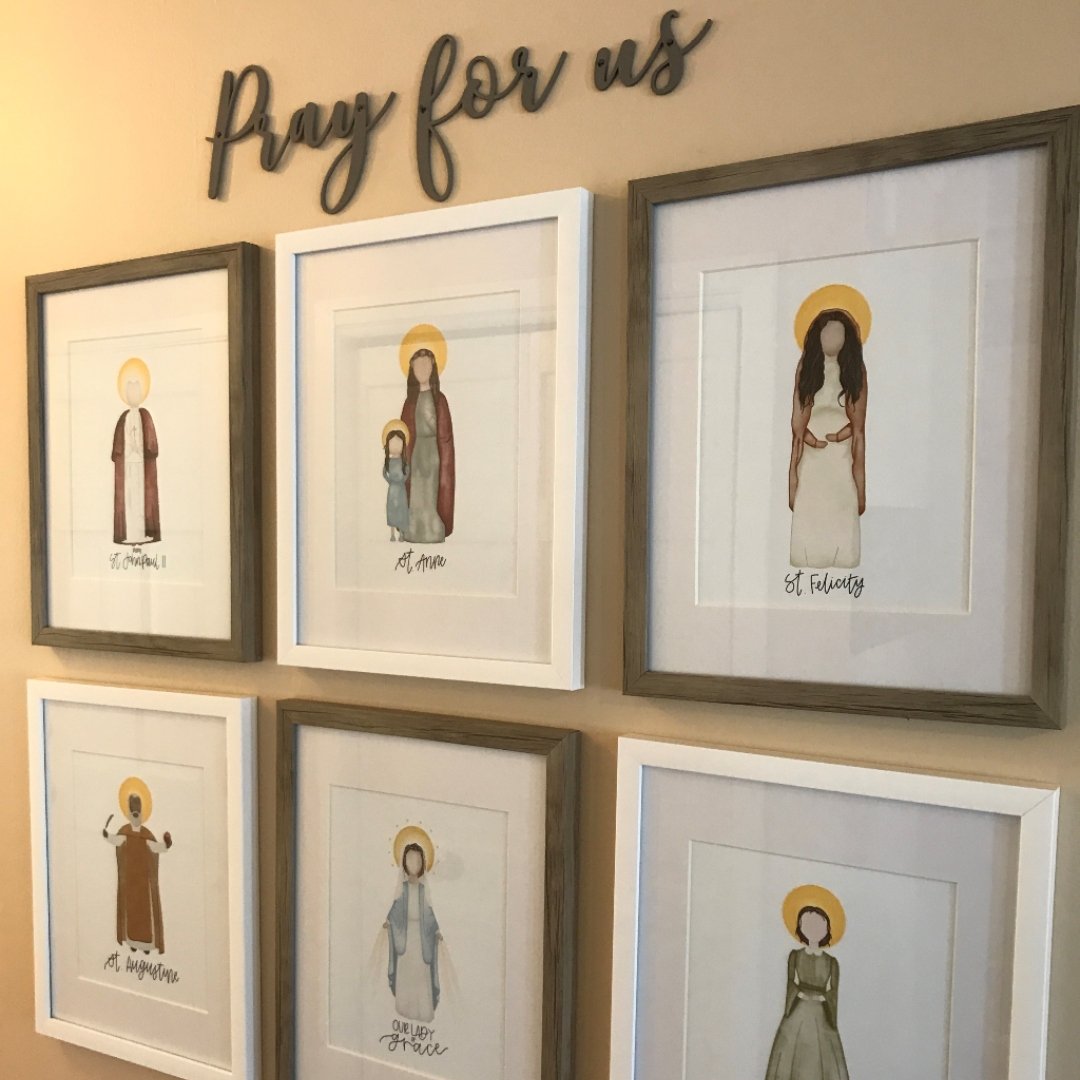
Saint Wall Art

If you’re looking for fresh artistic representations of the saints to display in your home, then MrsTorresCreates on Etsy might just be the shop for you. Each member of our family has either a first or middle name after a saint, and we ordered a beautiful colored print of each saint from this shop to frame and put on the wall of our house, with a metal “Pray for Us” sign directly above it. I love classic representations of the saints as well, but these paintings fit so nicely with the aesthetic of our home, and I was delighted to find the great variety of saints the artist has available.

There are so many fun and innovative ways to embrace Catholic living, direct from amazing Catholic creators! These are only a few, but they’ve made a difference in our home in the best of ways.

Note: This article originally appeared on Catholic Mom.

Measuring Success in a Busy, Messy Family


While spending time with my husband and brother recently, I said: “I don’t know if either of you know this, but I can sometimes be a bit rigid.” They laughed, because it’s true. I laughed, because it’s true. It was a good, lighthearted moment.

But now, a few days later, when reflecting on that rare time spent together (my brother lives several states away and was with us for a brief visit), I realize that even my ability to say that, and then to laugh about it, is actually a marker of a significant amount of growth over the past couple of years.

Desiring Control

Some of the pieces of my past have led me to tend toward wanting to control as many variables as possible in my life. Things not going according to plan used to have the ability to send me into a spiral of anxiety. I’ve been doing a lot of work to dig deep into these things in order to not pass them along to my children.

I used to measure success by how many things I accomplished on my to-do list, and whether the kids and I got everything done by sticking to my self-imposed schedule.

planner

Emphasizing the Wrong Things

I’ve been learning, sometimes through fire, that all those things, like getting tasks accomplished when I hoped, or even getting everything done at all, puts an overemphasis on the things of this world, including time, productivity, and what I perceive to be ‘good’ behavior from my kids. I was in danger of sometimes falling into the trap of thinking “My kids are well behaved, so I must be doing a good job as a mom.”

It didn’t leave a lot of room for flexibility, or mistakes, or, the most important of all, all of our journeys to, hopefully, sainthood.

Shifting Focus

My ultimate goal as a mother is to help my children grow into the people God created them to be. To become the saint God intends them to be.

So I’ve been working very hard to flip my normal tendencies on their head. How about, instead of seeing a conflict between the kids as some kind of failure, I see it as an opportunity to teach them how to apologize, forgive, and then make amends. To take a moment of sin or selfishness and support them in facing it head on and doing the hard work to overcome it.

Sticking to a schedule or having everything go exactly according to plan is of such small importance compared to their souls.

kids arguing

A New Way to Measure Success

At the end of the day, I’m working toward measuring success in an entirely different way than I have in the past. Instead of asking if everything went according to my plan, I’m trying a new question.

And that question is this: “Did I support my children in their journey toward becoming the people God created them to be?”

Even if the kids fought every ten minutes. Even if the kitchen is a mess. Even if we only got math done and nothing else for homeschool. Even if I’m exhausted. I want to see my kids in heaven. I want them to go off into the world one day loving God and seeking Him all the days of their lives. That is, unequivocally, the most important thing.

There are so many messages bombarding us mothers these days about what “good” motherhood looks like. It can be so easy to fall into the trap of comparing, of pushing to do more, of measuring up to some standard of success someone else has set for us or that we’ve set for ourselves.

Click to tweet:
I want to see my kids in heaven. I want them to go off into the world one day loving God and seeking Him all the days of their lives. #catholicmom

mom cooking at the table with kids

An Example in the Saints

If anyone else struggles with rigidity, or the great tendency to view the immediate moment as the most important thing, please know you aren’t alone. It’s hard, when we’re in this skin and inside of time, to maintain a view of the eternal.

Even Saint Zélie, mother of St. Thérèse of Lisieux, had bad days. In one of her letters, she writes: “Oh well, that’s the day so far, and it’s still only noon. If this continues I will be dead by this evening! You see, at the moment, life seems so heavy for me to bear, and I don’t have the courage because everything looks black to me.” 

But she also said this: “For me, our children were a great compensation, so I wanted to have a lot of them in order to raise them for Heaven.” And she did raise her children for heaven. 

That is success as a parent. That is the ultimate goal. May we ask God for the grace to see each and every day in light of the eternal, and do the same.

Note: This article originally appeared on Catholic Mom.

Purchase Lorelei’s Books Here:

The Night I Wore Make-Up After Months Without

The other night, JP and I were doing something that required us to leave the house, and, since leaving the house is a special occasion these days, I decided to put on a bit of make-up, which hasn’t happened, I don’t think, since maybe Thanksgiving? I heard a speaker once talk about how long make-up lasts and I realize now that everything I put on my face that night was probably expired and I’ll likely be breaking out in a rash at any moment…but it’s hard to justify buying new make-up when you only wear it a few times a year!

Anyway. Felicity came into the bathroom where I was finishing up. I thought she’d be like “wow mom you look so pretty.” Or “wow mom you look so fancy!” Instead, she crinkled up her nose and said “why do you have so much make-up on your face?”

This, my friends, was an interesting moment. I’ve worked very hard to teach my children that the way God made us is good. And that it’s okay for us to express ourselves with color or fashion. But that we shouldn’t use those things because we feel like who we are isn’t good enough, they should just be for fun.

I grew up with a mom who was coming into her own in the 1980’s, so I saw her wear pretty heavy make-up every day, and touch it up often before we went anywhere. I’ve always had a bit of a different relationship with make-up than that, but one side-effect of the pandemic for me has been that I pretty much stopped using make up at all. I had reduced my usage significantly over the past several years, especially during my pregnancies when I just didn’t feel good enough to do anything ‘extra’ at all. But when Covid hit, it made it easier for me to think about the role I wanted make-up to play in my life as a whole. I also started using the Curly Girl method (albeit loosely) for my hair, and have been enjoying embracing my natural waves!

But back to make-up, from a cultural perspective, I think it’s interesting that women in America often ‘paint’ their faces when they go out in public. Just the general routine of that is interesting to think about, especially when men don’t wear make-up at all. Though, if we lived in a different country in a different century, wealthy men would have worn make-up out in public all the time! I’ve also had conversations with people who thought they should be perfectly put together for their husbands each day, and that put together meant doing their hair and make-up fully. That’s always felt a bit odd to me because I feel like somewhere in there is the assumption that there’s something wrong with my normal face and hair.

In the end, I just told Felicity that I felt like adding some color, but that it honestly felt a bit weird for me, too! She said she likes my non-make up face because that feels more like her mom’s face. Her warm, snuggly mom that she sees every day. And, oh my heart. The face she sees reading her a bedtime story, or cooking dinner, or teaching her math, is just my straight up normal face. And she loves it. And that’s super cool.

I don’t do it perfectly, but I’m working hard on loving myself as I am, so my children grow up loving themselves as they are, too.

So here’s me. And my normal face. 🙂

-Lorelei

Purchase Lorelei’s Books Here: