Learning to say “I Forgive You”

Struggling to Say It

Growing up, the words “I’m sorry” and “I forgive you” didn’t always come together. I think my parents, particularly when dealing with me and my brother, did their best to teach us how to get along and make things right when someone was offended. But one of the things that strikes me the most when looking back, is that repentance and forgiveness wasn’t necessarily modeled to us, at least not regularly and consistently for me to remember that as a pattern of family life.

I think that’s partly why, as an adult, it was really hard for me to say I was sorry, and even harder for me to say “I forgive you” after someone had apologized to me. This was especially true when it came dating and early marriage. I remember times, sitting in the car with my husband driving, when he had apologized for something and I just sat there, staying silent. I literally felt the heat of anger inside of me as I made him wait a long time for those words. Even when he pointed out my reluctance and that it ws hurtful to him, my mouth did not want to open. I still don’t fully understand why it was so hard for me to offer that to someone I loved, other than some selfishness in me felt it would be more just to make him suffer.

Confession and Forgiveness

Another piece of my journey in this area that’s been helpful has been the Sacrament of Reconciliation. Five years ago, as I neared the culmination of my conversion to the Catholic faith, I began to understand and deeply appreciate the value of examining my conscience-saying I was sorry, and literally, audibly, hearing forgiveness offered to me by the Priest, who is really standing in Jesus’s place. Trusting you’re forgiven is one thing. Hearing that mercy spoken to you out loud is certainly another. Confession has changed me, and continues to do so. I know now very deeply how it feels to know you are forgiven by hearing it said. I know how much it has the power to heal.

My husband had grown up in a home when repentance and forgiveness came easy, or readily, at least. And he couldn’t understand why it was so hard for me to offer forgiveness to him. I’ve had to work really, really hard over the years to say “I’m sorry” as soon as I understand I’ve caused hurt to someone, and to say “I forgive you” honestly and quickly after an apology is offered to me. We are now teaching this to our kids and modeling it intentionally with our own actions in and out of the home.

Because here’s the thing: Our entire faith is based on an ocean of unmerited grace. It doesn’t really matter what someone has done to me or how I’ve been offended. If I believe in Jesus and his sacrifice on the cross and his power over death, and his doing all of that to offer reconciling grace to me and everyone else who has ever existed or will ever exist, that significantly changes how much of a right I have to hold a grudge.

In some cases, offering forgiveness and also letting go or setting boundaries might be the appropriate choice. But I also think there is something to be said for the healing power of forgiveness not only for the person being forgiven but also for the person who forgives. Forgiveness can help heal the offender, but it also heals the offended. And if the Creator of the Universe has chosen to not only forgive us, but has suffered greatly to do it, then how freely should I open my arms to others and forgive them?

If we truly understand the former, then the latter isn’t even really a question.

Lent is a beautiful time of year in the Church for so many reasons. The continued call to conversion through almsgiving, fasting, and penance helps prepare our hearts for Easter in such a special way. If you haven’t been in a while, or even if you have, perhaps it’s time to go to Confession. To find a few quiet moments this Lent to examine your heart and say you’re sorry and turn yourself back to love.

And then, of course, to receive an absolute ocean of unmerited grace. A grace that has the power to fill us, and flood out into the whole entire world as we forgive others, too.

-Lorelei

Purchase Lorelei’s Books Here:

Bringing Christmas Into Lent

Lent is almost upon us! This time of year brings with it so many wonderful memories and feelings for me. To start, five years ago, Lent meant my final period of preparation before becoming Catholic. It was my first major liturgical season fully embracing the traditions and history and beauty of Catholicism. It’s a season of penance, and waiting, but also of hope that is to come. That feels extra significant this year because last year everything began closing down during Lent, and we had to celebrate Easter in our homes. This year we have hope that as summer comes things will start to look a bit less like they have been, and that we’ll be moving closer towards what they will be.

Connecting Christmas

One of my favorite parts of the Christmas season is picking up the mail and opening Christmas cards from family and friends. I love seeing family pictures, beautiful holiday illustrations, annual updates, silly stories. Some cards come from those we’ve known our whole lives, while others have been more recent additions. But no matter who it’s from, a holiday card brings a smile to my face and reminds me of all the people we have to be thankful for. We display the cards in the dining room, adding to the collection as the weeks go by.

Our family has started a tradition, one that allows us to pull the Christmas season with us along into the new year, and particularly into Lent. Instead of recycling the cards we received or storing them in a bin, we now place them in a little basket in our bedroom where we do bedtime routine, right in the spot where we read stories, sing songs, share snuggles, and lift up prayers with the kids each night.

Now that Lent is upon us, we will pull out a card each night and share a bit about our relationship and care for the person or family who sent us the card. Then we pray for that family together. We’ll do this for as many nights as it takes for us to pray for them all.

Another variation on this idea would be to gather your family and make a list of people and families that you care about, and choose one from that list each day during Lent to pray for, too, no Christmas cards required.

There are so many beautiful ideas for liturgical living during the season of Lent. I’ve grown fond of selecting a Lenten discipline that adds something to my spiritual life in recent years, and this has been such a simple, yet joyful addition to the devotions of the season for our family as a whole. During a year where there has been less ‘togetherness’ than we’re used to, it feels especially profound to draw near to those we love in prayer in this intentional way.

-Lorelei

Purchase Lorelei’s Books Here:

The Night I Wore Make-Up After Months Without

The other night, JP and I were doing something that required us to leave the house, and, since leaving the house is a special occasion these days, I decided to put on a bit of make-up, which hasn’t happened, I don’t think, since maybe Thanksgiving? I heard a speaker once talk about how long make-up lasts and I realize now that everything I put on my face that night was probably expired and I’ll likely be breaking out in a rash at any moment…but it’s hard to justify buying new make-up when you only wear it a few times a year!

Anyway. Felicity came into the bathroom where I was finishing up. I thought she’d be like “wow mom you look so pretty.” Or “wow mom you look so fancy!” Instead, she crinkled up her nose and said “why do you have so much make-up on your face?”

This, my friends, was an interesting moment. I’ve worked very hard to teach my children that the way God made us is good. And that it’s okay for us to express ourselves with color or fashion. But that we shouldn’t use those things because we feel like who we are isn’t good enough, they should just be for fun.

I grew up with a mom who was coming into her own in the 1980’s, so I saw her wear pretty heavy make-up every day, and touch it up often before we went anywhere. I’ve always had a bit of a different relationship with make-up than that, but one side-effect of the pandemic for me has been that I pretty much stopped using make up at all. I had reduced my usage significantly over the past several years, especially during my pregnancies when I just didn’t feel good enough to do anything ‘extra’ at all. But when Covid hit, it made it easier for me to think about the role I wanted make-up to play in my life as a whole. I also started using the Curly Girl method (albeit loosely) for my hair, and have been enjoying embracing my natural waves!

But back to make-up, from a cultural perspective, I think it’s interesting that women in America often ‘paint’ their faces when they go out in public. Just the general routine of that is interesting to think about, especially when men don’t wear make-up at all. Though, if we lived in a different country in a different century, wealthy men would have worn make-up out in public all the time! I’ve also had conversations with people who thought they should be perfectly put together for their husbands each day, and that put together meant doing their hair and make-up fully. That’s always felt a bit odd to me because I feel like somewhere in there is the assumption that there’s something wrong with my normal face and hair.

In the end, I just told Felicity that I felt like adding some color, but that it honestly felt a bit weird for me, too! She said she likes my non-make up face because that feels more like her mom’s face. Her warm, snuggly mom that she sees every day. And, oh my heart. The face she sees reading her a bedtime story, or cooking dinner, or teaching her math, is just my straight up normal face. And she loves it. And that’s super cool.

I don’t do it perfectly, but I’m working hard on loving myself as I am, so my children grow up loving themselves as they are, too.

So here’s me. And my normal face. 🙂

-Lorelei

Purchase Lorelei’s Books Here:

Learning to be Present

I’ve had a presence problem for a long time. Even before the strange and troubling events of this past year, I’ve been very good at being distracted. At spending a lot of my attention listening to the running commentary inside my head.

I need to do this. I didn’t do that. What if this happens. What if this big risk I’m taking fails. What if I fail as a parent. My house is a mess. How is there possibly a mountain of laundry already. Why can’t the kids put anything away. Will I ever stop doing the dishes. I am always doing the dishes. Did someone just sniffle? Did we catch something at church because that’s the only place we’ve been going. What’s for dinner when do I need to put dinner in I think I need chocolate oh no the kids ate all my chocolate.

Exhausing, right?! Maybe you can relate, maybe you can’t, but I felt like my brain was on one constant speed-like I was driving with the windows down on the highway all the time.

I’m a planner by nature. I like to mitigate risks and maximize efficiency. It’s taken me five months, but I finally finished reading a book that has actualy helped me to slow down, make room for all my worries and feelings, and be more present in the moment. It helped a lot when my debut was launching, and has helped even more in the day-to-day life since!

The book is called The Happiness Trap, and you can purchase it here:

I love how the book is written in a linear, easy to follow and understand format. It has exercises you can do throughout. And I was able to take it in bite-sized pieces over time, which helps when you are juggling many things and balancing many plates.

There are three areas where I’ve found it’s been most helpful:

1- The running commentary in my head. I’m doing a better job at making room and accepting uncomfortable feelings. This leaves me more space to be present in the moment with my kids. To catch Zelie in a playful mood and play a silly game by the stairs. To color with Mary. To notice the concentration on August’s as he learns to draw his favorite super hero from a tutorial. To catch how Felicity’s hair falls over her cheek as she’s mixing batter for cookies. My commentary is still there, and still loud often, but I’m noticing more moments in my life and am less distracted.

2- I learned that avoiding bad feelings at all costs isn’t actually a healthy goal. A lot of self-help books seem super focused on being positive and eliminating bad feelings. This book did the opposite. It made sense for me to learn to accept that life will come with negative thoughts and feelings, but that I don’t have to place judgment on them, or even try to avoid them. I can accept them for what they are- negative thoughts. They don’t have to have any more value or worth than any of the other thoughts inside my head. Their existence doesn’t make them true or not true. And I can make decisions that align with my values no matter what my thoughts are thinking.

3- Creating a life I value. As I read the book, I realized I had done some important things to create a life that aligns with my deep values already. I was willing to take on a lot of discomfort to make it through four pregnanacies, and also to pursue the scary unknown of writing a book. But I honed in more on the specific things that I deeply value, and have worked on aligning more decisions with those vs. making decisions by default or because of fear. One of the big consequences of that has been that I’ve reduced my presence on social media. I still have a FB page for this website and for being an author. But I deactivated my personal account. So far, that’s been a healthy choice for me.

Precious Little Moments.

If you find yourself listening to the running commentary in your own mind, struggling with negative thoughts or worries or fears, if you are feeling like your life is somehow a mismatch for the things you feel are truly important, this might be a good resource to check out! I have a long way to go, and this is something that’s a life-long process, but it’s definitely helped this constantly-thinking momma, and I think it could be helpful to others too!

-Lorelei

Purchase Lorelei’s Books Here:

What We’re Teaching Our Children About Prayer

A Thin Foundation

Growing up, I didn’t really have a strong foundation in the area of prayer, or how it worked, or what it really meant. I knew in a general sense that prayer was talking to God, and that it often meant asking Him for something, or giving thanks. A lot of times I saw people pray for things they wanted to happen that didn’t come true, even though they prayed for it really hard.

That kind of thin, shapeless theology ended up causing trouble for me as a young adult. I didn’t understand how my prayers would even matter a little bit to a God who had so many bigger problems to deal with. I also didn’t think prayer really worked, so I went through the motions of praying at church and with family. And when alone, I didn’t really pray at all.

Fast forward to raising children and becoming Catholic. I understand prayer a lot differently now, I think, in part, because I understand God differently. As such, in our home, we’ve become much more intentional about how we pray, and what we teach our children about it, which can be boiled down to three main ideas.

1: Share Anything On Your Heart

This is one aspect of prayer that I understand better because I’m a parent. We teach our kids that they can literally come to God with anything on their hearts. As such, our kids often pray really beautiful, honest, and vulnerable things. And sometimes they pray that they would grow up to become super heroes and rock stars, too.

We teach them this because, as parents, I don’t care what my kid is feeling, I am ready to hear their heart. Any thought they have that they want to share, I will kneel on the floor in a heartbeat and lean in close. I want them to know I am a safe space for the vulnerable places inside them, or the joyful places, or the silly ones. God is the absolute best Father, and I am certain that He leans close too, no matter what we have to say.

2: God Gives What We Ask…Or Something Better

I think prayer can sometimes fall into operating like a slot machine, where we want the answer we want and right when we want it. We can get disillusioned if we get something else instead, or if we receive silence. Which is why we also teach our kids that God always, always, answers our prayers. And if he doesn’t give us what we ask for, he will give us something better.

Now, this doesn’t mean if you ask God for a lollipop that He’ll give you an entire candy store, although He could! What it does mean is that God knows our needs far better than we do, and we need to trust that He can and will only give us what is good for us.

I think, if I let them, my kids would eat pure sugar for breakfast, lunch, and dinner. They might think that sounds amazing. They might think doing that would be the very best thing. But I know a bit about growth and nutrition and blood sugar, and, because I know what’s good for them, I can’t let them have candy any time they want. I have to say no and offer them an apple instead.

God might answer our prayers a different way than we asked it. But He is Good, and just like as a parent I understand that certain things are good or bad for my children that they might not understand or see, God knows which things are good or bad for us too, and He will never give us something that isn’t truly good.

3: The Role of Suffering in Prayer

Which brings me to this. We also teach our kids that sometimes God might allow us to suffer. We live in a world that is fixated on comfort, and often strives to avoid suffering at all costs. But our Catholic faith doesn’t even come close to teaching that comfort is best. Sure, we can and should hope for better things to come, but we also need learn to accept what He gives. Sometimes, there might be a thing that is broken inside us that will hurt while it mends. Growing in holiness comes with the pain of releasing attachment to sin. We don’t deserve comfort, even though sometimes we are gifted it generously, and for that we can and should be grateful.

But our goal isn’t comfort. Our goal is sainthood, whatever it takes. We need only to look at the cross to see how suffering is redemptive. The most loving God saved us through it.

The Three Things

Let’s especially remember, as we head into a new year after a year that brought so many hardships on a global scale, to ask God for whatever’s on our hearts, trust that His answer is good, and to accept what He gives, even if it means we need to accept the call to suffer. These are three big things I’ve learned about prayer as a parent and a Catholic. And I pray that my kids will hold onto these truths both now while they’re children, and as they grow up in the faith.

Lorelei

Purchase Lorelei’s Books Here:

Meet Saint (Maker) Savaryn! (& Reflections on 2020, too)

When Covid started, I kept seeing all these people getting dogs. I was like “JP, all these people are getting dogs because they’re stuck at home hahaha, how interesting is that. We will clearly never get a dog because we’ll be too busy resuming our jet-setting lifestyle as soon as this is over. Also, dogs poop all over the yard.”

And then…with 13 days to go in this difficult year, a puppy arrived at our home and joined our family. Turns out, never say never has become quite the theme in my life, in many more ways than one.

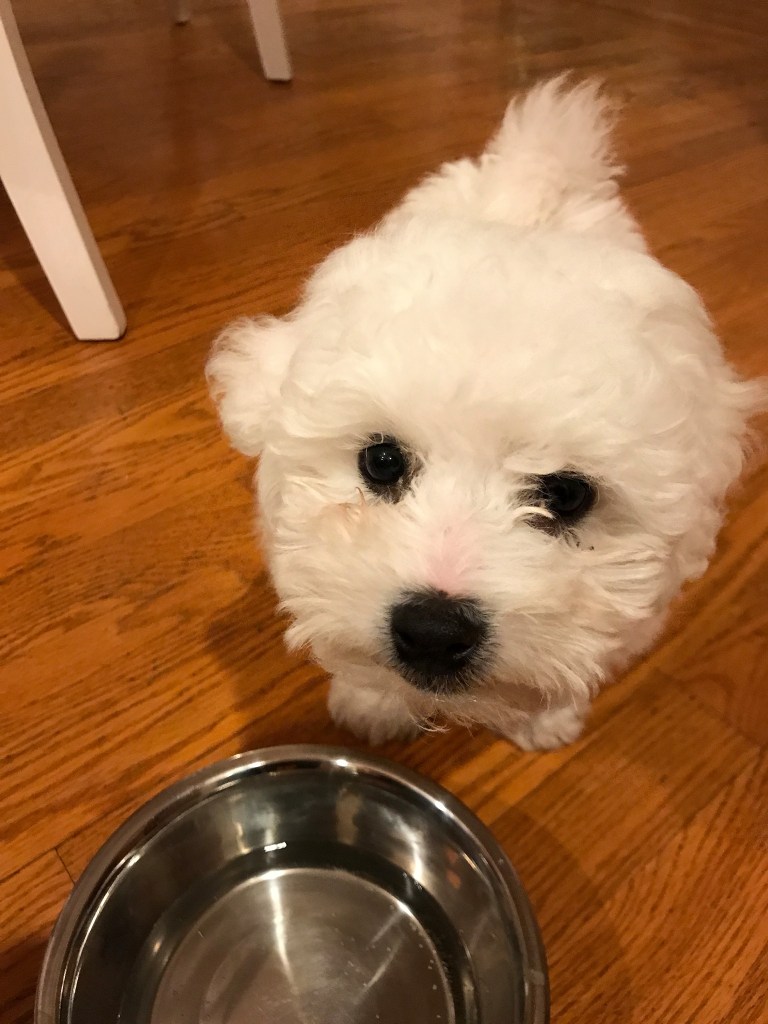
Meet Saint Maker Savaryn!

We call him Saint, but his full name is Saint Maker because he will help us grow in virtue. Also, every time we call his name, which is a lot, it’s a reminder of our main objective- to become Saints ourselves!

Saint is a fluffy cuddle ball who loves pretending he is a great hunter, cuddling, licking peoples’ faces, and sometimes tinkling on our floor.

I am not a dog person, but I’m slowly warming to him. I like seeing the kids take him outside to go to the bathroom. I don’t completely mind when he’s tired at night and rests his little warm fuzzy self on my lap. JP has promised to brush his teeth daily so he doesn’t get stinky dog breath as he gets old.

JP is very sweet with him, too. He grew up with dogs and loves them even more than I realized. It’s cute to see my full grown husband walking around with the little fluffball Saint. They’re already becoming good friends.

Reflections on the Year

There have been less distractions this year- in terms of places to go, things to do, people to see. And it’s given me so much time to look at the life right in front of my face with clarity. Because of this, one of my biggest take home messages of the year has interestingly been an intense reaffirmation of how often the most worth-it things are not the easiest.

Growing in holiness is hard, raising children is hard, writing a book is hard, loving selflessly is hard, homeschooling is hard. But they are are really, really important things that I value, and this year, I found myself often reevaluating how I can be more intentional in all of these areas. Each is an act of love, in a very particular way, so, really, with all of these things so very present, and my own flaws so very exposed, the question has truly become: how can I love better? Especially inside the domestic church that is my home.

I’m much more impatient than I would like. I grow weary quickly with my family. I can have unrealistic expectations or not give someone the benefit of the doubt. I’ve fought battles against my own insecurities this year, particularly with writing. Once- when realizing I had to undertake a huge revision on my second book- a really, really important one that would make the difference between getting the book right or not- JP found me on the floor of our closet crying a little. This story mattered so much but I didn’t know if I was good enough to do what needed to be done. I was so scared! But, in time, I stood up, pushed through the uncomfortable feelings and got to work, one word at a time. And now I’m on the other side of that revision and am so very proud and excited to share that book with the world!

Which brings me to another big takeaway of 2020. Life isn’t about avoiding uncomfortable feelings at all costs, or even about avoiding suffering. Both of those things are part of life, and this year has given us all a lot to be uncomfortable with, or to bear as suffering. We cannot avoid those things, even in a ‘normal’ year, but in 2020 we all had to confront it on a global scale. What do we do when uncertainty hits? What do we do when we suffer? How can we take those things and use them for good-or to make the world a better and more hopeful, loving place?

Happy New Year

I wish everyone who reads this blog a Happy New Year. I almost was going to wish everyone a smoother 2021, but I think it’s better to wish everyone a 2021 that brings us all closer to God, to Love, to living as Gift of Self. God knows what we need to be holy, and it’s our job to accept whatever he brings.

Even if he brings you a puppy that likes to tinkle on your floor. 🙂

-Lorelei

When Saying “Yes” Hurts

Mother Mary’s humble yes sent shockwaves through all of creation and set into motion the part of God’s salvation story that His people had been waiting on for such a long time.

My own tiny yesses pale in comparison to Mary’s. And while sometimes saying yes has ushered a period of excitement and joy in my own life, I have found that, oftentimes, saying yes also hurts.

I find encouragement in the joys of obedience, to be certain. But, even more than that, I find so much comfort and strength in uniting my little yesses to the yes of the Mother of our Lord, especially when the fiat isn’t joyful, or when it brings pain.

In many ways, Mary’s yes must have hurt. At the start, her unplanned pregnancy brought with it the potential for serious consequences- not only for her marriage, but even for her life. And later, she watched her son as he was treated like a criminal, crucified, and killed before her very eyes. Mary has the most beautiful mother’s heart of all. It could not have been easy to watch her son in so much pain, and to also know that she had to say yes yet again in that moment for what God had started to be fulfilled. The first yes that Mary gave to the angel found its fulfillment in the silent and continued yes of watching her son suffer for the salvation of all.

A Few Examples of “Yes”

Over the past five years and thanks to Mary’s example, a couple of my small yesses have helped me lean more into our Holy Mother, particularly when saying yes has been painful in some way.

To start, I am a Catholic convert. Saying yes to becoming Catholic was one of the most joy-filled, beautiful moments of my life. But it also hurt. We lost some friends and were cut off from our social supports at the Protestant church we left. We had many strained discussions with others who didn’t understand what we were doing and weren’t interested in learning why, but who were genuinely worried for our salvation. It’s a bit harder to get connected at a Catholic parish than a Protestant church, and the first year or so as a Catholic felt quite lonely. Especially as someone coming from a position of caution when it came to devotion to Mary, in my struggles as a brand new Catholic I leaned into her and started viewing her as my mother, too. I spent time staring at the Pieta in our Adoration room, and understood better that pain is not always something to be avoided. In fact, pain and suffering is often important. Even more than that, pain is the very thing that led to our redemption.

Another important yes in my life came after my Confirmation, when my husband and I felt the call to openness to life yet again. We had two beautiful children, and, in them, the family I had imagined I would have ever since I was a little girl. God’s gentle question, asking me to consider bringing more life into the world wasn’t a small ask. Pregnancy, for me, brings incredible physical and mental strain. I am prone to hyperemesis gravidarum, which often means nausea medication throughout my pregnancy, and sometimes means hospitalization. In the case of my youngest, it meant feeling like a stranger in my skin, nauseous every waking hour for the full nine months, my only relief coming in the hours I was able to fall asleep. At this point in my life, I consider my pregnancies to be the source of my greatest suffering, and also my greatest blessings.

I leaned even harder into Mary during those slow, difficult hours that made up the days that made up the weeks of my pregnancy. I learned even more about redemptive suffering. My agony was literally bringing life into the world.

On the other side of it, I met two children I never knew I would have. My third child, Mary, is a spunky, joy-filled delight. And Zelie is a toddler who loves hugs and does the silliest dances just to make us laugh. Those were difficult yesses for me to make, but the rest of our lives will be all the more beautiful for it.

Our yes can look like the examples I gave, but they can look many different ways as well. Sometimes our yes might not necessarily be the act of taking something on. Our yes might be tear-stained acceptance of a loss. It might be want for something, or a longing unfilfilled. Those yesses are exceptionally special as well, because they are a yes to suffering, particularly in a way where the reward may not be seen or known this side of heaven.

Yes Leads to Redemption

The problem of pain isn’t new. It’s a problem as old as the fall of man. There are some times, like in the examples I shared, when we see the redemption in the pain during our lives here on earth. There are other times when we may not. Those are the times when we must say yes to a greater trust in our faith that the world we see and touch and hurt in today isn’t the end of the story. Mary can help us there, too. She saw her son die, and she saw her son raised. She witnessed mankind’s greatest redemption. But she is also our Mother, and she witnesses our pain with the same tender care and compassion as she witnessed the pain of her son on the cross.

She whispers gently to us that saying yes may not be easy. But our yes, no matter how big or how small, is a beautiful, vital part of God’s redemption story. She assures us that we are never alone in our journey to be faithful. Even if, and especially when, it hurts.

-Lorelei

Purchase Lorelei’s Books Here:
The First Day I Chose to Go to Mass

This December marks the five year anniversary of the first time I ever went to Mass by choice.

I had been to Catholic Masses before…as a baby, for my own baptism and that of my brother. I had been to funeral Masses. A few weddings. I had begrudgingly and awkwardly joined JP’s very devout family at Mass when we visited them so as not to cause ripples.

But there was something very different about the first time I decided I wanted to go to Mass, the first time I chose it for myself.

The Pre-Conditions

First of all, the conditions to led me, a once anti-Catholic evangelical, to seek out a Catholic Mass in the first place.

I had gone from a very fervent young Christian, to a disillusioned young adult inside the walls of various Protestant churches over a number of years. I was struggling to reshape the faith of my childhood into something with the depth required for my adult experiences. My own journey of faith began as a strong believer when I was a child and teen, but transitioned to a life as a near-agnostic in my early 20’s. That shift called into serious question the Protestant doctrine of “Once Saved Always Saved” because my own experience proved that one can start out with true belief but deny it later on. Our foray through a variety of denominations brought me to doubt individual interpretation of Scriptiure- if it’s that clear, why do all these churches disagree on issues both big and small? I grew weary of the hyper-emotional structure of worship, and the expectation that I developed equating a good church service with feeling emotionally fulfilled.

To top it off, no one could tell me what the early Church looked like, just as I was beginning to suspect that the Americanized version of Protestant Christianity wasn’t it. I wasn’t sure if what I was looking for even existed, and if it didn’t, I didn’t think I could remain in good conscience a sola-scriptura, once-saved-always-saved, American Protestant for much longer. Or, if this was all that Christianity was, I didn’t know if I would remain a Christian at all.

Cue me, sitting on my sofa, realizing that among these and many other things, I was possibly starting to think like…gulp…a Catholic. I hungered for a connection to the history of my faith. I wanted something deeper than an emotionally-driven experience could offer. I wanted sound theological depth.

I didn’t really know how to bring this up to JP because I had persuaded him away from actively practicing his Catholic faith early in our marriage. But I sprung the question on him one snowy night in downtown Racine while we were out at dinner. I asked, simply: “Do you want to go to Mass?” Shocked, JP shared with me that he had been praying for our unity in private, and had himself felt like he was being led back to the Catholic Church.

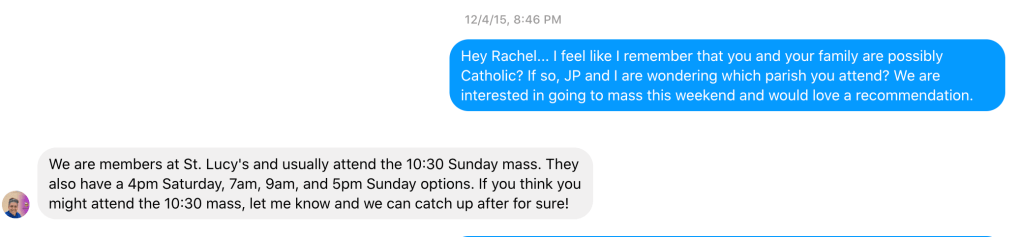
We got home from dinner and I sent a message to one of my friends, who I suspected might be Catholic:

The Mass Itself

Two days later, on December 6th, JP and I led our (then) two children through the doors of St. Lucy Parish in Racine, Wisconsin for the 10:30 Mass. Even though I had been to Masses here and there, I didn’t really know what to expect, and I wasn’t entirely sure what to do throughout the different components. But, on that Sunday, my experience in a Catholic church that early Sunday in December was markedly different from any Mass I had been to before.

I had chosen to be there. And, at last, my heart was open to what I might find.

I don’t remember a ton of specifics, other than the distinct feeling that if what I was looking for existed anywhere at all, it likely existed here. The very Church I had sometimes ignored and other times argued against, certain that it was filled with irrelivant, extranneous, anti-Biblical teachings, now might just be my only chance to remain in the Christian faith.

I do remember that there were many families with young children sitting altogether in the pews, which impacted me because at the church we went to a the time, we sent our kids to Sunday School in different rooms. I remember that there wasn’t any sense at all that this service was designed to cater to me, another marked contrast to the hip coffee-house, welcoming committees of the Protestant churches we had recently attended. The music was traditional. The components themselves were somewhat foreign, and yet oddly familiar too. I caught in them some echoes of the fragments that Protestant churches have held onto- Scripture readings, an act of contritian, Communion. But here, inside the Catholic Mass, they weren’t fragments of some lost, greater whole. I remember trying to piece together how it was I grew to be so anti-Catholic in the first place, when it was clear I knew so little about it.

The Aftermath

My friend met us after Mass and, after expressing my continued interest, she helped us get connected with RCIA at St. Lucy’s. We enrolled immediately. Inside the walls of that little RCIA room, I asked every question my heart had been wrestling through, knownig that I had to leave everything on the table. Based on what I had seen in multiple Christian churches over nearly 30 years, if the answers couldn’t be found in the Catholic Church, then they probably couldn’t be answered by anyone, and the Christian faith was a sham. One week later, we attended my last church service at the Protestant Church we had been a part of. I have many friends who love Jesus who remain Evangelical, but I could no longer look at it the same way as I once had.

And the rest, as they say, is history. That early December night, where the snow fell like wisps of cotton outside the restaurant window, when I asked JP if he wanted to go to Mass, was less than four months away from the day I’d stand in front of a full Cathedral in St. Paul Minnesota. Easter Vigil, 2016, when I was confirmed into the Catholic Church.

Protestant churches do a really good job of making new guests feel welcome. They greet you, connect you with a small group, offer you donuts and coffee. They give you great concert-quality music and an inspiring message. My first intentional visit to a Catholic Mass didn’t contain any of those things to the same extent I had been used to before. But I didn’t need any of that to be drawn in to the Catholic Church, at least not once my heart was open to it. The Mass drew me in, not with bells and whistles and trends and the promise of friendship with other people like me. It drew me in with beauty, and history, and, above all, rock-solid Truth.

-Lorelei

Purchase Lorelei’s Books Here:

Five Fun Advent Traditions to Try This Year!

Advent is fast approaching! (whaat?!?!)

I’m not the queen of liturgical living, but over the course of the past few years we’ve built in some family traditions that help us really focus on on the Advent season in some simple yet meaningful ways. In what has been a challenging year, I’m really looking forward to keeping these sweet little traditions going in the Savaryn household.

Today, I’ll be sharing some of those ideas with you! If you’re looking to add something manageable and meaningful to your own Advent season, this might just be the place to start.

The Giving Manger

We have a slightly different set, but this has become a favorite for all the kids. We start with an empty wooden cradle. Then, the goal during Advent is to make Jesus’s bed as soft as we possibly can. We do this by adding pieces of straw for acts of love throughout the season. If the kids sacrifice something for the good of the other, show kindness or selflessness, generously give, etc., then they participate in making a soft bed for Jesus’s arrival on Christmas morning.

I love this, especially in light of the teachings of Saint Teresa of Calcutta that I read recently. It reminds me of her devotion to the thirst of Jesus on the cross, and how acts of love help to quench that thirst. We’re serving baby Jesus with this family preperation, but the spirit is the same.

Purchase Here: The Giving Manger

Advent Wreath

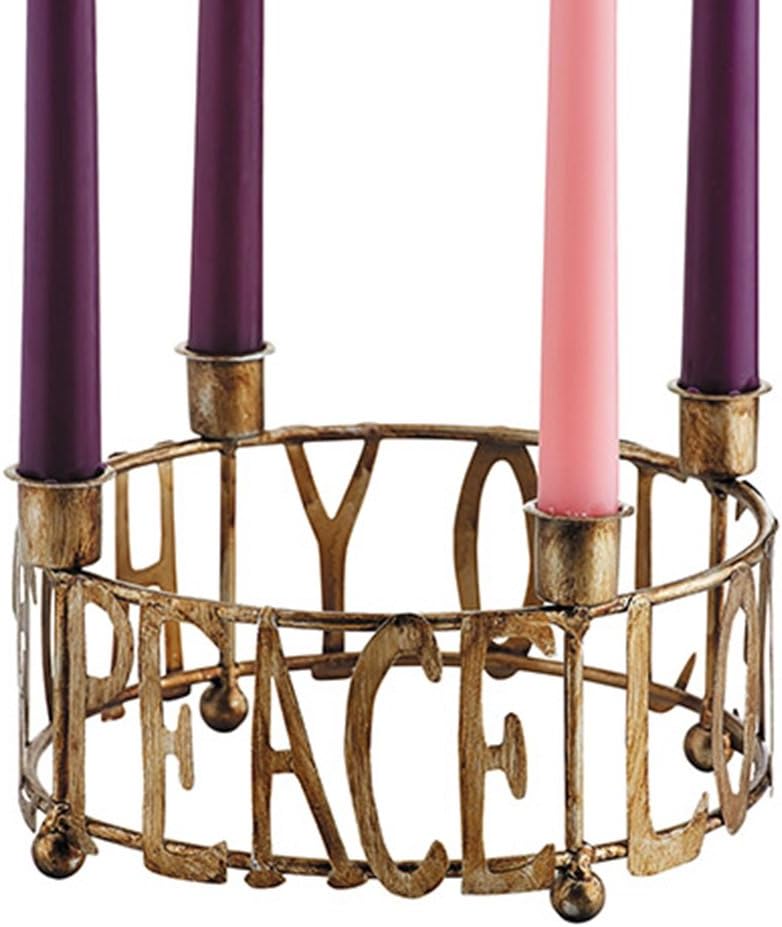
While we eat most meals family-style in the kitchn, we love to set up an Advent Wreath in our dining room and eat a family dinner there each Sunday during this liturgical season.

We’ve tried a few brands of candles and have had the best luck with the ones at the link below. I’v also linked to the same wreath we have, which I think has a timeless quality and goes with many decorative styles.

Purchase Here: Advent Candles, Advent Wreath

Brother Francis: The Days of Advent

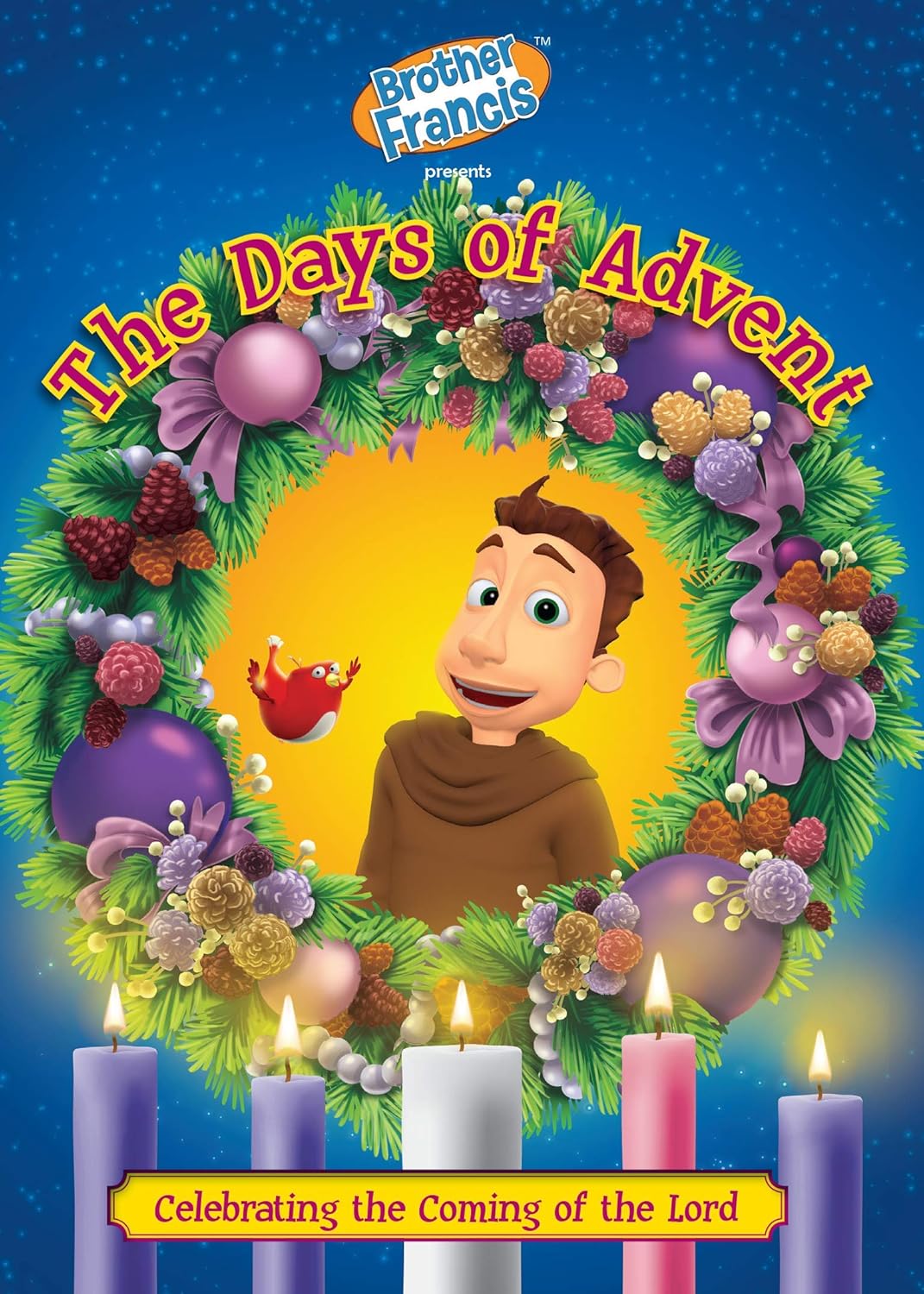
The Savaryn household loves Brother Francis! We generally are able to access this adorable and informative video series on Formed.org, but for those who don’t have a parish subscription, you can also buy episodes and specials on DVD. There are episodes on Easter, Mass, Prayer, Stations of the Cross, and many more!


The Days of Advent includes 25 short, thoughtful reflections to take the entire family through the season. We like to watch these after dinner and before bedtime routine starts. Even if you miss a night here or there, it’s still a worthwhile tool to keep everyone’s hearts and minds focused on the reason for the season.

Purchase Here: The Days of Advent

Saint Nicholas

When I was a kid, it was hit or miss if my parents remembered St. Nicholas day in early December. As a Catholic Convert, we’re making an active effort to make the Saints a part of our regular family life. For me, this means making sure my kids know the full story of St. Nick, and why we put our shoes out and celebrate his feast day on December 6th.

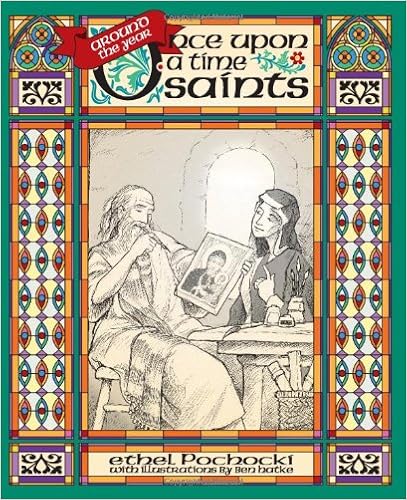
This year, a friend of mine introduced Once Upon A Time Saint books to me, and I immediately fell in love! We had been hoping to celebrate more feast days during the year, with special attention to Saints that we’re named after, or ones that we have special devotions too, and this book has helped a lot! I love it because it highlights a few Saints each month and tells their story in the form of a lovely, engaging story, appropriate for the whole family to share around the fire (especially at this time of year!) Why not read up on the story of Saint Nicholas with your own kids before they set out their shoes?

Purchase Here: Around the Year Once Upon A Time Saints

The Changing Nativity

This has been a really fun tradition to grow into! I love the Willow Tree nativity set, but you can use any nativity set that you already have and love.

We display the set on the mantle in our living room, but during Advent, Jesus, Mary and Joseph haven’t arrived yet. Their pieces are set up somewhere else in the house, far away, and they journey through the house and closer to the nativity scene as Christmas approaches. We also set up the wise men in a far-off location (they start moving after we reach Christmas, and arrive on Epiphany.) We love unboxing the precious pieces and setting them up together, and the kids love finding where the Holy Family and the wise men are each morning once they start to move! The only thing weird about the Willow Tree nativity is that you can’t separate the Mary from Baby Jesus, so we’ve just made do or substituted in a pregnant mother Willow Tree carving for the lead up to Christmas morn.

Purchase Here: Willow Tree Nativity, Willow Tree Three Wise Men

What About You?

And that’s it! Do you have an Advent family tradition that you hold close to your heart? Feel free to share in the comments below!

Links to purchase the items on this post are affiliate links from Amazon, through which I earn a small commision.

-Lorelei

Purchase Lorelei’s Books Here:

Leaning into the Saints as a Catholic Convert

I love learning about the Catholic Church. We’ll be celebrating my 5-year confirmation anniversary in the spring, and the more I’ve lived the faith and studied it, the more I fall in love. It might sound silly, but many times it feels like I’m stepping into the warmest hug in the safest arms when I go to Mass, or study theology, or even see the effects of my faith slowly but surely overcoming my own tendencies towards selfishness and sin. The depth, the beauty, the history, the Truth–it’s all there and it often leaves me in awe.

There were a couple of areas of faith that were a bit more difficult for me as I made my transition. Understanding Mary’s role in the church took a bit more time. And so did my appreciation of the Saints. I used to tell JP that the Saints intimidated me, half as a joke and half as a serious comment.

For some reason, the Saints seemed so out of reach. It was tough to think that people existed who walked this earth let God fill them so much that there wasn’t room for anything else. Meanwhile, I felt so far from that. I lose my patience so easily, and tend to seek my own comfort, and am prone to anxiety and worry about things I can’t control. I feared that I’d read something by a Saint and be frightened off…of what, I don’t exactly know. But I didn’t trust that it would be helpful, at least not for a while.

My Walk with Saint Teresa of Calcutta

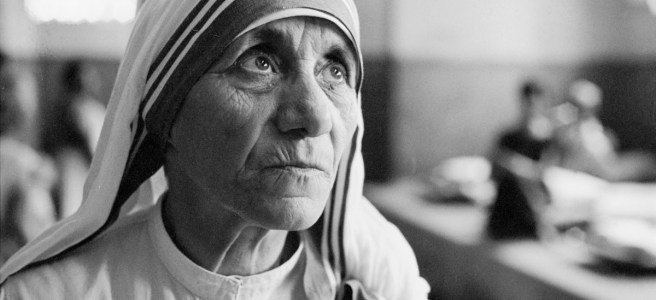
In the end, I want to grow in holiness no matter how uncomfortable it feels, so I decided it was time to read my first official work by a Saint. Since Mother Teresa of Calcutta (now Saint Teresa) was my confirmation Saint, it made sense for me to start there. I received a couple of books for my confirmation, and they’d been staring at me from my bookshelf for far too long. I read Where there is love, there is God over the course of about two weeks. It’s more a collection of things Saint Teresa wrote and said than a book she wrote from start to finish, but I got such an intimate glimpse into the person she was through it. I could see her simple, yet poignant theology in the stories she repeated, in the phrasings she came back to time and time again.

A few points that have particularly woven their way into my heart:

Humility is to accept humiliations. Wiping my baby’s diaper. Letting someone say something short to me without saying anything back. I had never really thought of humility like that before, and it was refreshing and rang so true.

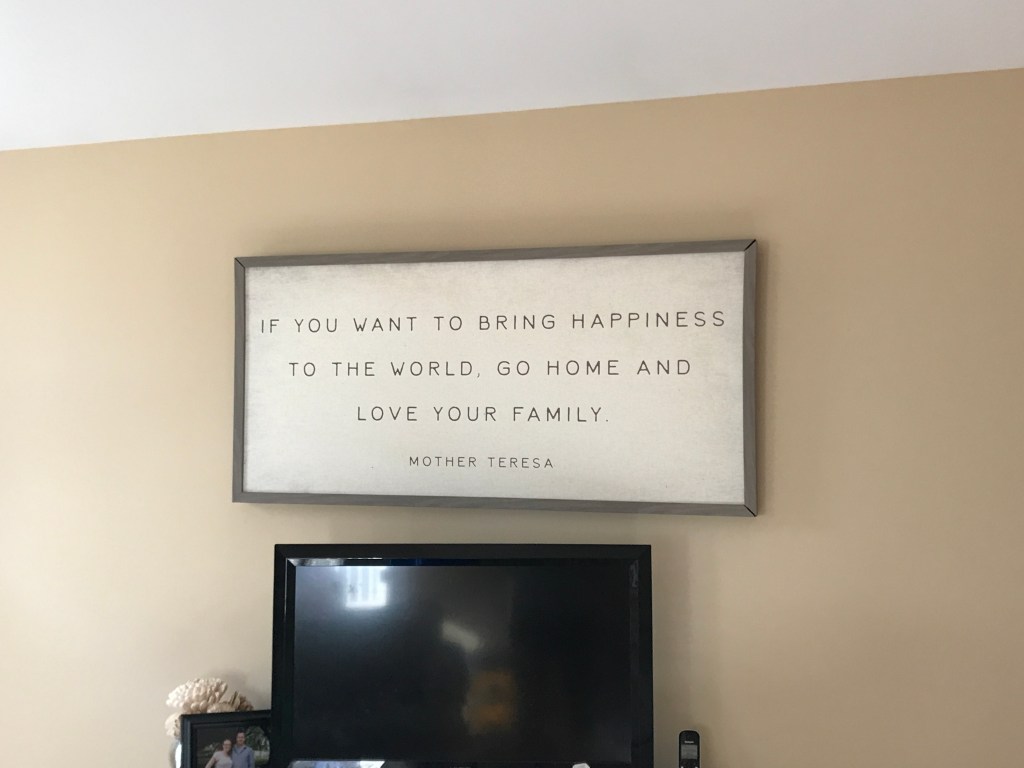
Love starts in the family. This was especially meaningful to me. I struggled for many years if staying home to raise my kids was ‘meaningful enough’ work according to some mysterious earthly standard. We have a framed piece of art in our living room with a quote from Mother Teresa, and we look at it every single day.

Seeing her broader perspective on this sort-of Theology of the Domestic Church, encouraged me in the truth I’ve been coming to accept more and more as time goes on: that my work here is vitally, beautifully important. Jesus says that when you feed the hungry and clothe the naked, that you’re doing it to Him. Saint Teresa helped me grow to understand that the little children living under my roof are the hungry one and the naked one too, and that by loving them, I’m also loving Jesus.

I also see my own sin the most at home in my family life, because I show it the easiest here. They’re the ones I lose patience with, or snap at if I’m stressed out. Because my interactions with them are such a clear mirror to my heart, they’re also the ones who give me the best chance to become a Saint. They’re the ones who I can learn to love well and patiently and fully, no matter what. They’re the ones I can most often offer dignity to in the big things and small, because they’re the ones I’m most often with.

Jesus thirsts. On the cross, Jesus said “I thirst.” While I’ve learned there have been different approaches to understanding His words, Mother Teresa’s is my favorite. Those words are displayed in each chapel of the Missionaries of Charity. Mother Teresa’s saw Jesus’s “I thirst” as a deep expression of how much he desires each and every one of our love, our souls, our all. And, therefore, she concluded, every act of love that we do is, in some mystical way, quenching the thirst of Jesus on the cross. It begs the question: have I quenched Jesus’s thirst today?

For love to be real, it has to hurt. This isn’t about staying in an unhealthy or unsafe situation, but it is about self-sacrifice and what it means and what it takes. We have the ultimate example of Jesus on the cross, because that was His love, full and true, given for us. And it hurt. My opportunities to love until it hurts are frequent but so much smaller than that- getting up when I’m exhausted to comfort a crying child, admitting that I was wrong and apologizing for it. The world has it so backwards when it comes to love- the world tells us that love should make us feel good, that it should serve us well. But it’s really the other way around. Realizing that to truly love means that I hurt because selfishness and sin is being put to death in me, well, it changes everything. I’ve been familiar with this way of looking at love for a while, but Saint Teresa put it so beautifully, and it made such an impression on my heart.

Do small things with great love. I think many of us have heard this quote from Saint Teresa a time or two. My three year old asked God to help her become a Saint yesterday, and a few minutes later I asked her to pick up a blanket from the floor and put it on the couch. She wasn’t sure she wanted to help, but I had the thought that she could probably understand what the idea of “small things with big love” meant. So I told her that one way to become a Saint was to start doing small things with really big love. Like even picking up that blanket for her mother. If she does that little thing with big love, then she’s letting God’s love into her heart more and more. Mother Teresa’s life was marked by some really big moments, but it was filled with many more small moments where she fed a hungry person, or washed a dirty person, or smiled at someone who needed to be seen. Even washing a dish or sweeping the floor can be done with love. That was a challenge to me, in a good way. It’s something small but significant that I can do in the dozens upon dozens of small, seemingly insignificant tasks set before me through the day.

Simple, Yet Profound

The funny thing is, Saint Teresa didn’t even feel close to God for most of her life. She felt his absense from her, but loved him with all of herself regardless of that. She used that sense of absence to unite herself with the lonely and abandoned in the world and to fuel her love.

And her theology was fairly simple compared to some. JP is reading the Summa Theologica right now, and it’s quite a bit heaftier both in weight and in wording than what I just read. But I think that’s one of the really amazing things about the Saints. Saints have been made from all kinds of people, all over the world, with such a diverse array of experiences. The Saints didn’t all start out holy, but they proved that it can be done. Here, now, while we live on earth. If they could do it, then maybe there’s hope that we can, too.

Turned out, reading Saint stuff wasn’t that scary at all. In fact, it was lovely, and challenging and inspiring. I haven’t fully decided who I’ll read next, but I’ve got my eye on Saint Zelie. We named our youngest after her, and I know I’m inspired by her life as a worker, mother, and wife. I think we have a lot in common, I’d love to gain some deeper insights into the person she was.

-Lorelei

Purchase Lorelei’s Books Here: