

This letter is free for you to read, but it wasn’t free for me to produce. If you’re interested in supporting the work of This Catholic Family, I would be honored if you would prayerfully consider upgrading your subscription. Or, you can always buy me a coffee here.
I am over seven years past my Catholic confirmation, and I did not really know much or think much about the relics of the Saints until recently. JP and I had been listening to The Exorcist Files, a great podcast that is engaging catechesis on the experiences of an official Catholic exorcist and the theology behind spiritual warfare and the demonic. The Priest, Fr. Carlos Martins, is also known as “The Relic Guy,” and in one episode, he shared how the relics of the Saints can be a useful tool in combating demons as they can cause demons considerable distress.
This prompted me to want to learn more about relics!
What Are Relics?
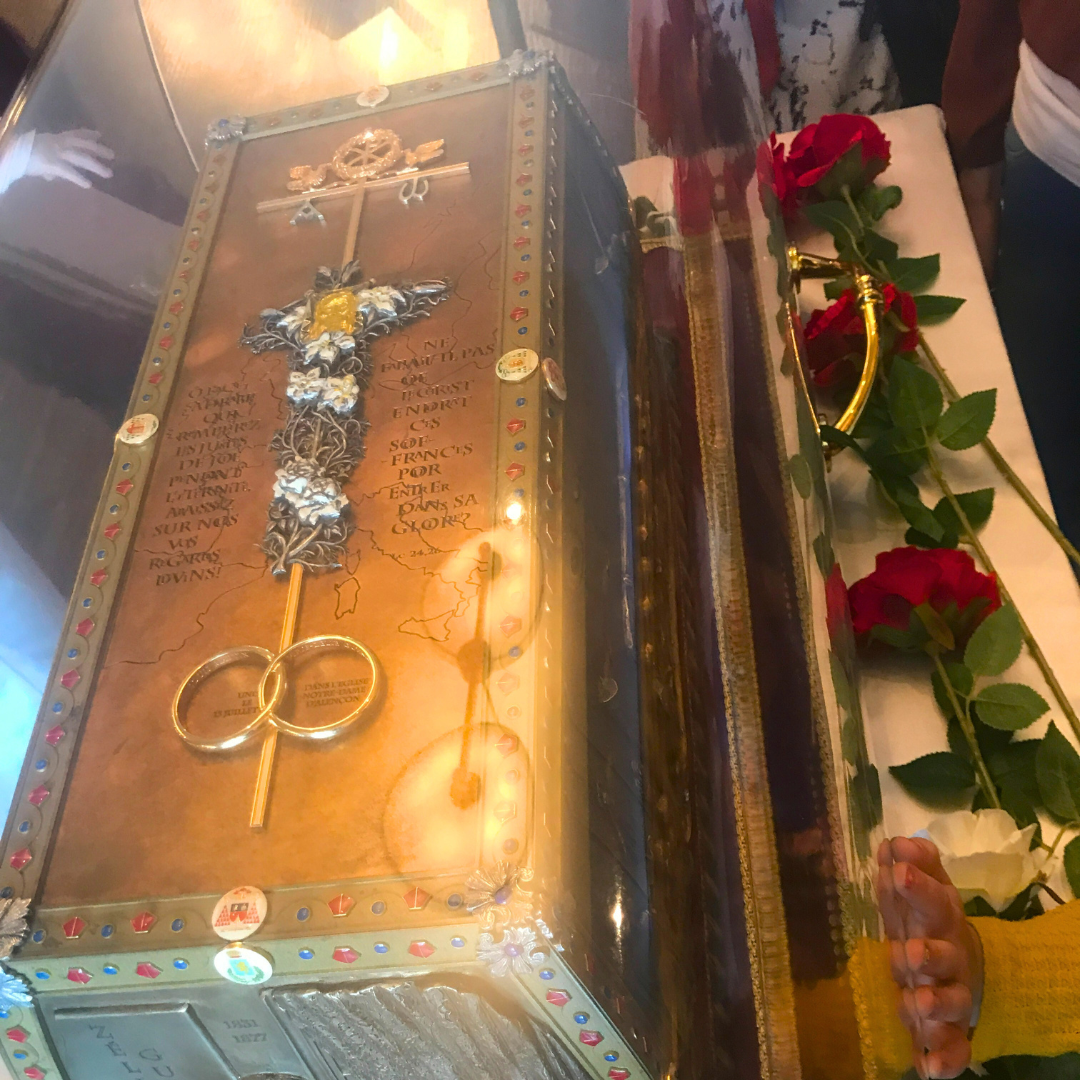
In brief, a relic of a Saint is either part of a Saint’s body, or something they owned, or something they touched. There are three degrees of relics:
1st Class Relics: These are parts of the body of a Saint (bone or flesh, for example)
2nd Class Relics: These are possessions that the Saint owned.
3rd Class Relics: These are objects that have been touched to a first or second class relic, or they can be objects that the Saint touched.
An interesting tidbit is that every Catholic church should have at least one relic inside the main altar! Might be worth checking with your local parish Priest to see if he knows whose relic your parish has.
Biblical References to Relics
I was also very interested to learn that there are many examples of relics being objects that God uses for His glory in several instances of the Bible. In 2nd Kings 13:20-21, we see a man being buried. He is cast into the grave of Elisha and upon touching Elisha’s bones (a first class relic), the man revives.
In Acts 5:15-16, people go out onto the streets hoping that even Paul’s shadow will fall upon them so they can be healed.
In Acts 19:11-12, handkerchiefs and aprons that Paul had touched (3rd class relic) were taken off to people who were sick or possessed and they were healed.
There are others, but even those three passages show us that God sometimes uses relics as a tool in healings. The relics themselves are not magical, nor do they have any power on their own, God is the one who heals, but his grace can reach us through the Saints in a mysterious way.
How We Ended Up With A Relic of St. Anthony
My kids love to bring home items from the “Free to Take” table at our parish. This often means we’re coming home with prayer cards, or pictures of the Divine Mercy, or little trinkets from religious organizations that send out things in the mail. One day this summer, I was rifling through a drawer in our kitchen that contained many items from the “Free to Take” table, and I found a relic of St. Anthony preserved inside a metal frame!

Imagine my surprise! Now, the relic is a very small piece of fabric, and is very likely a 3rd class relic- something that has been touched to a first or 2nd class relic, but it’s still really cool! We ask St. Anthony for prayers to God for things that we’ve lost pretty often, so it seems especially fitting that I “found” this relic that was right under our noses for a while!
Do Relics Matter?
At the end of the day, any healing or good that comes to us in this world is from God, but I do think it’s pretty awesome that God uses holy men and women, and even sometimes the objects that they owned or touched, to be a vessel for His grace. It’s another way to take something spiritual and to connect it with our tangible experience here on earth. Remembering the Saints and their lives and how they followed God so closely is becoming more and more of an inspiration to me as time goes on.
-Lorelei



 This Catholic Family: Catholic Womanhood, Family, and Conversion