Strong But Not Superhuman

The Swells and Crests of Life

We had a period of time this fall into early winter where things were relatively calm. I remember thinking to myself during that time, Remember to appreciate this. Be thankful for this.

Because I’ve been around at least long enough to know that life comes in seasons, in swells and crests, and that something would come to stir up our temporarily calm seas.

Mary was in the hospital for two nights just before Christmas, and RSV spread through the rest of the family for most of Christmas break.

Then, in January we caught our breath.

In February, we lost my aunt to suicide, and we are still recovering from that loss. The pain continues to come in waves. There are good days, and there are difficult days. The air leaves my chest and my stomach sinks every time I go in the basement and see a pile of boxes there. All her stuff. Filled with clothes and baking supplies and art that I have no idea what to do with and no clue if or when or how I will be ready to see it, to touch it, to use it again.

Coming to terms with the pain she felt, our own powerlessness to do anything to change it, and the hope that my prayers can help her still all make for a complicated mix of emotions. I can’t control when the grief hits. And when it does, it isn’t always convenient.

And it just seems like right now there is an abundance of regular but personal and professional business that make finding balance more tricky than it is at other times. I’ve wanted to have time to write more on the blog, but it’s been difficult to find the words to say amidst all the sadness.

I’m struggling with knowing the best direction to take my novel, and in discerning if it’s time to let it rest for a bit and start something new. It’s tough for me to leave a thing unfinished, in any area of life. And it’s also tough for me when there is no clear end point. I can’t say for certain when it will be ‘done.’

We are making some positive, needed, good changes, like moving to a bigger home to account for the growing number of people in our family. I’ve started being asked to speak even in different states, which is super cool and exciting.

Managing Self-Care

But compartmentalizing is tricky for me. It’s tough for me to keep everything in it’s own separate baskets in my mind and things tend to spill over. Today, I wrote an outline for myself to make sure I’m managing my self-care. Blocking time to write, to read, to exercise, to sleep. To make sure I respect the rhythm of my own body and the way God has made me. I recharge my batteries by having time alone. By writing. By reading. And by prayer. If I don’t make it a priority, then I can go too long without making it happen, get caught up in the current, and I start to feel anxious.It was good to take time to actually write out those priorities.  And it’s amazing what a quiet hour by myself can do for my peace of mind and ability to be present for my family.

The long and short of it is, I need to remember to give myself a break! I can’t be All The Things All The Time to All The People. I can’t read an article while Mary is crawling on my lap. I can, however, set aside time specifically for Mary crawling on my lap and other kid related endeavors, and also set aside different time to read that article.

I am strong, but I am not a superhero. And I think consistently trying to do more than one thing well at one time is a way to drain this momma fast.

If I need some time to grieve, I need to take some time to grieve. Not grieve AND feed the kids dinner. Not grieve AND coach a teacher. I need to open up time to just let myself grieve, at least at some point during that day. And respect it. Likewise, I can’t write a super cool blog post AND interact with my kids (with any level of patience). I can work on house hunting/building stuff, but not at the same time as I pack my lunch.

It sounds so simple, but it is something I try and do so often! Not only am I going to do this one thing, but I’m going to do more than most other normal people and try and do more than one thing at the same time and then take pride in the fact that I am able to be so productive and efficient!

But at the end of the day, I just make myself tired.

So this is a good, recurring lesson for me. We won’t ever be able to finish All The Things when all is said and done. And learning to let myself take a slower pace, or set something aside for a while will only help maintain some much-needed balance. During the times when the seas are calm, but also when they are rougher too.

-Lorelei

What helps you keep balance when things get busy? Have you had seasons of your life where you learned new ways to keep a healthy perspective?

Purchase Lorelei’s Books Here:

10 Tips for Those Entering The Catholic Church This Easter

Two years ago this Easter Vigil, I entered the Catholic Church. Here are 10 things I found helpful when approaching my own Confirmation. I hope they are helpful to any of you out there who will be Confirmed this year! Several of the items on this list are helpful for us all to remember, no matter how many years we have been a part of the Catholic faith.

1. Go to Confession

This is a good idea for anyone as we come up to Easter. Let us make sure we are turning towards God in our lives, with our choices and our heart, so we are ready to receive Him and celebrate the joys of Easter Sunday. Let us bring our struggles before God, and let him help us change. Let us get right with our God.

2. Go to as Many Services as You Can

The days leading up to Easter Sunday can be a profoundly spiritual experience for someone entering the Catholic Church. If you can attend the Triduum services, that is amazing. It helps put our faith into context as we approach this most significant celebration. It gives you time to pray, to connect with God, and to prepare your heart.

3. Look Around

When you stand in front of the congregation on Easter Vigil in the moments after you are anointed with oil and confirmed into the Catholic Church, take a moment to look around you. Take a moment to appreciate that you are in full union with the Church established by Jesus himself 2,000 years ago. The Church that has remained connected to its history and its source through apostolic succession. You are connected, in the most powerful way on earth, to the roots of your Christian faith.

4. Take Pictures

I am so thankful to have pictures from the night of my Confirmation. I can just see the joy on my face. It takes me right back there, right back to that moment when I knew I was finally, and fully home- as much as I am going to be before heaven. Whatever your path to get here, it’s worth recording and remembering and celebrating. It’s a hugely significant moment in your life. Document it.

Lorelei_Savaryn_Easter_Vigil
Yay Catholic!!!

5. Reflect

When my own Confirmation approached, I took some time to look back and was so, so thankful for all the bits and pieces along the way that led me to find peace, and Truth, and such a firm foundation. So, take some time. What was your path like to get here? Was it smooth, difficult? Did you wrestle through doubts or did you walk a path of peace? Where do you see God’s hand leading you? Who were the people who helped you along the way? How would you tell your story? However you got here, it’s beautiful. It’s amazing. Give it the weight it deserves, and be sure to give thanks.

6. Get Connected with Other Converts

One of the things that helped me the most,both when things were good and when things were difficult in my transition to the Catholic Church, was being connected with other converts. Regardless of how similar or different our backgrounds were, I found I had so much in common with those who walked the path before I did, in so many ways. This gave me encouragement and strength. It still does to this day. This connection can take many forms. I read stories of converts in books like Journey’s Home. I joined the Coming Home Network, which provides resources, articles, and community online and in print for those of us making our way back to Rome. Watch Journey Home episodes on EWTN. Keep an eye open for other converts in your parish. We all share a common bond. Let’s continue to walk alongside each other even after Confirmation.

7. Go Big

One of the most fun things for me around the time of my Confirmation was getting caught up on my Catholic “Swag.” I was so excited to receive some Rosaries. We got a Mary statue for our backyard. Bought some books on the Saints. Put up a legitimate crucifix in our home. Holy water font. Had things blessed by a priest. I gotta be honest, the weeks leading up to Easter still get me excited and I just bought this Nerdy Catholic Tee (not making fun of it- that’s what the company is called!)

mockup-57853159.jpgMy lovely, but cradle Catholic husband asked me what on earth that meant. When we become Catholic, we call it Crossing the Tiber. And this shirt is awesome. So, if you are feeling inspired, add some of those items to your own life and home. They are tools to help us keep our faith in our hearts and minds at all times. They are tools to help us reflect, remember and pray. And, at least in my case at the time, I had some serious catching up to do.
8. Study up on Easter Vigil

Friends, if you have never been to an Easter Vigil service before. It is amazing and beautiful and symbolic and The. Best. It is also long. It will help so much if you can take some time to understand what is happening and why at each part of the service. Here’s a primer on the USCCB website. I found I was able to embrace the beauty of the Catholic Church once I understood what it was. You will be able to get the most out of the service if you do too.

9. Be Patient

If you are already connected to your parish community- great! If you don’t yet feel connected, I encourage you to keep pressing on. Sometimes it takes time to get to know people in a Catholic parish. This is a huge, global church. Depending on the background you are coming from, and depending on the parish you attend, many things might be different from what you’re used to. There might not be an active home/small group structure, there might not be donuts and coffee after Mass. But there will be people there that you will connect with. It might just take some more time. Two years in, JP and I have found some very dear friends in our parish, and in the Catholic community in our town. We recognize people at Mass on Sunday and stay for a bit and chat. It didn’t happen overnight, but somewhere between year 1 and year 2 we got there. We weren’t feeling lonely anymore. Not only do I now know I’m spiritually home, but going to Mass actually feels like home in the way of the fact that our parish family is there with us too. Be patient. Connection will come.

10. Celebrate!

Whether you will be alone with your sponsor at Mass on Easter vigil, or if there will be pews filled with people who have come alongside you on that day, Confirmation is something to celebrate. Celebrate in whatever way is right for you. A dinner before Mass, some time in Adoration, taking a walk, announcing it to the world. Stay true to yourself, but celebrate. Celebrate the beauty of Easter, the beauty of our faith, and the beauty of crossing the bridge into full unity with the Catholic Church.

-Lorelei

Purchase Lorelei’s Books Here:

Morning Air Interview: “Being Gift in a Take World”

Hello friends!

Lorelei was interviewed this week for Relevant Radio’s Morning Air program about her recent article: “Being Gift in a Take World.”

Check it out by clicking here! She’s the first guest right at the beginning of the show.

Thanks!

-JP and Lorelei

Purchase Lorelei’s Books Here:

3 Awesome Tools To Help Children Engage in Mass

Engaging Kids In Mass

We love that our kids are in Mass with us on Sundays, but it’s always helpful to find tools that help them understand more of what is going on and that support them as they grow in their ability to engage.

Below are three tools This Catholic Family has found that do just that.

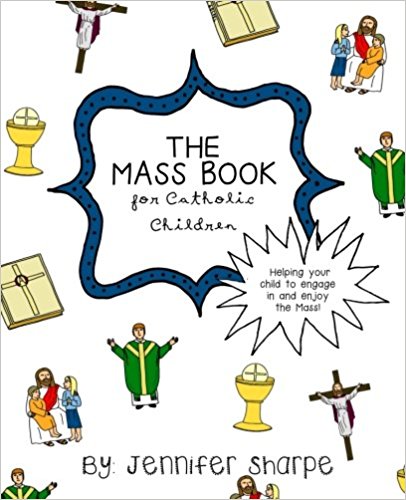
1- The Mass Book For Catholic Children, by Jennifer Sharpe.

51gohkzvDxL._SX404_BO1,204,203,200_

This guided journal has been very helpful for our six-year-old.

She isn’t yet an advanced reader, but there are many components of the book she can use now, as well as some that she could grow into. I love how both writing and drawing are incorporated. For example, she can write in a prayer intention for the day and also draw a depiction of the gospel reading. Some of Felicity’s other favorite parts are coloring the vestments on the Priest and tallying the number of times “Jesus Christ” is said in Mass. The checklists for preparing to enter Mass and for preparing to leave Mass are also great tools.

Felicity is a very active girl, both in movement and in using her brain. Felicity says The Mass Book for Catholic Children helps her have fun and gives her something to do during Mass, but in a way that also helps her pay attention.

As a teacher, I know many children need concrete tools rather than just observation to help them develop a deep understanding of a concept, event or topic. This book is a great way to help support children as they grow in their understanding of our faith.

2- My Mass Kit

My kids love to play pretend. We have princess costumes, firefighter costumes, builder costumes, and all sorts of tools for imagination fun. Dress up and games of pretend helps them internalize the real world, and find their place in it through play.
product_weeDiscover_mymasskit_1_grande_7c08d718-3874-4bea-96d4-6d118d20d025_1024x1024.jpg

Now, they can use this sturdy kit to reenact what they see happening each Mass, and gives them a way to internalize Mass through playing pretend. We love to talk about what each of the different items is used for. One of our favorite Mass Kit memories is when JP’s siblings were over and the kids lined us up to distribute communion. Such a great tool!

3- Our Example

This one is totally free. 🙂 When our children see us looking forward to and engaging (as much as we can with young kids) in Mass, it sets an example for them to follow. Our lives and actions speak louder than our words, and our attitude towards Mass and participation in it will stick with them in a very powerful way.

Conclusion

We hope you found these tools helpful! It’s always good to give kids tangible ways to connect with their faith. One of our deepest prayers is that our kids will grow up with a living and active faith of their own. Incorporating these things into our family life is one way we are helping build for them a solid foundation.

-Lorelei and JP

Purchase Lorelei’s Books Here:

Lorelei’s Guest Appearance on the Catholic Vitamins Podcast!

Hello This Catholic Family Friends!

Lorelei was recently interviewed by the podcast Catholic Vitamins. She was able to speak with Deacon Tom and his wife Dee and share her story home to the Catholic Church. Deacon Tom and Dee are a wonderful couple, and it was a pleasure to get to know each other a bit and share about being Elated in her conversion to the Catholic faith.

Check out the link here!

-Lorelei

Purchase Lorelei’s Books Here:

Being “Gift” In A “Take” World

The Disease of What’s Best for Me

There is a disease rampant in our world today. A disease called “What’s Best for Me.”

Entertainment programs are filled with tips on how to make our lives better. How to get the best deal. How to make ourselves look good. How to advance in our careers. How to make more money. How to improve our existence.

And we absorb that culture, particularly if we live in a part of the world where we are saturated with it. Unless we actively counteract the messages we receive, they absorb into us, and we end up reflecting the approach of the world instead of the approach of our faith. Unlike what we see and read and hear every day, happiness isn’t found in improving our lives and seeking our benefit. The Catholic Church teaches that happiness is found in seeking to improve the lives of others, through a sacrificial donation of self.

To Will the Good of Another

At the core of this question is the idea of love.

To love, according to the Catholic Church, is to “will the good of another.” (Catechism of the Catholic Church, 1766). That’s it. It sounds so simple.

If we are married, love is to will the good of our spouse. If we are parents, to love is to will their good too. Whatever phase of life, to love is to will the good of those we encounter.

It rings so true when we hear it, but it’s so different from the culture we live in! And it is less easy to apply to our relationships each and every day than it seems. But if we live our faith, if we put our energies into absorbing the truths the Catholic Church teaches, living as gift becomes more and more natural, more and more a part of how we function and view the world. Our lives become all the more beautiful for it.

Being Gift in Choosing Life

Our parish Knights of Columbus just distributed baby bottles for us to collect change in, and that will go towards Right to Life causes. The tragedy of abortion is great in our world, and this is another example of where so many have bought into the lie of What’s Best for Me so much, that they are willing to support the legal right to end a human life.

The reality is that women have this awesome opportunity to live our lives as gift in a way unique from men. We give our bodies as a sacrifice to grow and nurture life. And pregnancy and raising children is, indeed, a big sacrifice.

But we have an amazing example of bodily donation as gift for another in Jesus.

Jesus lived as the ultimate and perfect self-gift. His own words, which we hear at each and every Mass, are: “This is my body, given for you.” He gave his whole self for us, and it’s a beautiful parallel to what happens when a woman sets aside her own comfort to bring life into the world.

“This is my body” is such a popular phrase in pro-choice culture. But they distort the beautiful meaning of the phrase. Those who fight for legal abortion say, “This is my body, and I get to do what I want with it. No one has the right to stop me.” Jesus says, “This is my body, and I am going to give of myself fully to turn the power of sin on its head and to heal the world.”

There is a clear winner between the two uses of that phrase. In goodness, in beauty, and in the truth of what our bodies are meant to be.

Living as Gift is life-giving. Living for self is life-taking, sometimes in the very real and literal sense in issues like abortion. But also, in the sense that each time we choose self over another, we take the essence of life – truth, beauty, love, from those we wound with our sin.

Living as Gift within Marriage

I spent more years than I’m proud of watching the popular TV show, The Bachelor.

That show sends the message that love is meant to make us feel good. That it’s exciting and thrilling. There is the unspoken belief that love will be like that forever. Like a fairy tale, it will make me feel good forever.

It sets up extremely unrealistic, unhealthy expectations. Nothing about even the concept of that show is willing the good of the other – one person dating upwards of 20 men or women at one time is not good for anyone involved. That’s one of the reasons I won’t watch the show anymore.

It’s distorted. It’s sending a lie about love. It perpetuates a belief that I can do what’s best for me, no matter how many people get hurt in the process.

If we understand what the Church teaches about love and Catholic marriage, the idea of Gift is one of the keys to living a marriage that stands as witness to God’s love for humanity. This occurs when the husband and wife are living as Gift to each other in all areas of the marriage.

When we encounter any situation with our spouse, and we ask the question “Am I doing this for his/her good?” we are letting God into our decision with our spouse. Before we say that sharp word, before we lose our patience, before we assume the worst, we can think about our partner’s good.

This applies in a special and beautiful way to our sexuality, too. Catholic teaching on sexuality isn’t meant to be repressive, and it isn’t without reason. The things we are not allowed to use/do in Catholic marriage – contraception, climax without intercourse, pornography, etc., are all forms of believing the “What’s Best for Me” lie. Contraception says “I’m going to give myself to you, but I’m not going to give myself fully.” Climax without intercourse says “I’m going to take from you, rather than give myself to you.” And pornography says “I’m going to take pleasure without giving anything at all.”

But when we live as Gift, when we respect the whole person of our spouse, including our fertility, when we give mutually and fully to each other, each and every time, that is where the beauty lies. The joy of sex isn’t in finding the best way to feel good for ourselves. It’s in mutually seeking the good of the other in an all-encompassing and powerful way. A way that mirrors the life of the Trinity and foreshadows heaven.

A Disease of Humanity and the Cure

Reaching for goals and working to improve are all positive things. But when those things are distorted, and we start pursuing our own betterment even when it is to the detriment of others, then we do have a problem. When we seek our own comfort first, or own best first, when we forget to be Gift to those around us, then we have become sick.

If we live with a What’s Best for Me mindset, we will never be as happy as we could be. We will never have the peace we could have. We will never find the joy. We weren’t meant to be satisfied with the things of this world. We were meant to be satisfied with God. It follows that living life as God intended will bring us the greatest true fulfillment.

The ultimate way we can serve God is by living our lives as a gift in gratitude to our Creator. All of the above examples help to lead us in that direction. The realization that our lives are, ultimately, not our own, that each and every day is a gift from God helps us release any false control we have tried to cling to. None of this is ours. Life is gift from God. It’s meant to be lived as Gift to God and others.

The Me First disease is more than just an American problem. It’s a humanity problem. A result of original sin, when Adam and Eve were the first to believe the lie that eating the fruit was what was best for them and their own personal goals and advancement.

But the Church gives us this beautiful remedy to the sickness. The remedy for the poison that is What’s Best for Me is a firm commitment to What’s Best for You, to living life as Gift. It turns selfishness to selflessness, greed to generosity, and taking to giving. Living life as gift reverses the darkness of sin and let’s God’s light shine through. That is a powerful witness to a world that has absorbed a dangerous lie.

For more information on living life as “Gift,” please see John Paul II’s Theology of the Body, or check out Theology of the Body for Beginners by Christopher West.

Note: This article was originally published on Catholic Stand.

What’s The Purpose of Penance?


This letter is free for you to read, but it wasn’t free for me to produce. If you’re interested in supporting the work of This Catholic Family, I would be honored if you would prayerfully consider upgrading your subscription. Or, you can always throw a little change in the tip jar here.

When a Catholic goes to Confession, several things happen. We come with contrition and confess our sins. We receive the absolution. Then, the Priest assigns us our penance. But while we may know what to expect, it’s also immensely important to understand why we are doing these things.

I’ve written extensively about why I absolutely Love Confession, but I haven’t written in-depth about penance and its purpose and value. This post is an attempt to do just that.

What is Sin?

At its core, sin is turning away from God. It’s an active decision on our part. It’s us saying “No, God, I won’t do things your way. I know better than you.” Sin can happen in big ways (mortal sin, which breaks our relationship with God) and in small ways (venial sin, which wounds it).

All sin is sickness for our souls.

What is Penance?

Penance is something for the confessor to do after Confession ends, on their own, and hopefully as soon as possible. Sometimes it’s a prayer or a series of prayers. Sometimes it’s something related to an issue the confessor struggles with. It could look many different ways, and could take varying amounts of time. Some of my personal favorite penances have been ones that directly related to an area where I struggle.

But, regardless of what penance looks like it is always, always, a way to repair the harm that sin has caused in our lives.

It is meant to help us turn our hearts back to God. Just as our sin was an active choice turning away from God, penance is an active choice turning back to God.

Do I have to do penance to be forgiven?

This is something that is often misunderstood, even by Catholics. Once the Priest offers absolution during Confession, we are forgiven. The grace is there because of Jesus. Not because of anything we can do. So, no, penance is not required for forgiveness to occur.

But then, if we’re already forgiven, why do we need it?

Medicine For The Soul

Just as sin wounds (or breaks) our relationship with God and makes our souls sick, penance is medicine that helps us turn our hearts back towards our Creator. Confession removes that sin from our shoulders. Penance helps us move towards a more holy future.

As such, whether our penance is prayer, or something specific to an area we struggle, we should not approach penance with the attitude of simply ‘checking something off a list.’

If we do penance with a disengaged heart, the purpose of penance isn’t served. Penance is a way to turn our hearts back to God, it’s a prescription for healing, and, much like any other medication, it’s up to us to use it. If we’ve gone to Confession with a truly contrite heart, it follows that we would want to continue on that path of obedience and progression towards holiness by following through on our penance as soon as possible, and by using that as a springboard to help spur us on towards a closer walk with God.

It’s a beautiful medicine we are offered, and it is to the benefit of our souls to take it.

-Lorelei


Purchase Lorelei’s Books Here:

Purchase Lorelei’s Books Here:

The Hidden Blessing in Waiting to Tell My Story

The Dream

Things I thought would happen after I told people I was becoming Catholic:

People would ask “why,” then sit, leaning forward, eyes wide as I told the whole story. The story of all my misconceptions, and all the truth and beauty I’d found. They’d ask questions to better understand, and they’d start seeking answers for themselves.

Lines would form outside RCIA.

Things would be said. Things like: “Wait, that’s actually what the Catholic Church believes? That’s nothing like I thought. That sounds awesome. How can I learn more?”

The Reality

Well… as excited as I was… things didn’t happen like I dreamed. I laugh about it now. Things didn’t even come close.

Things were said. Words were used like ‘concern,’ ‘different gospel,’ and ‘not Christian.’ The occasional, and very welcome ‘I’m happy for you” was said as well.

But few people asked ‘why.’ Very few people were curious to hear the story of how I’d come to this place. It was a story I wanted so badly to tell.

I wanted to share with everyone all the answers I had found to questions that had burned inside me for years.

I was so excited. But how would I tell my story? And to whom? I would be lying if I said I wasn’t discouraged at that time. I finally had something I wanted to shout from the rooftops. But at times it felt like there was no one around for miles and miles.

So, I changed my proverbial tune.

I started the Protestant Interrupted blog to document the process, and to process the process as I went through it. I had JP’s family, and some of my own, as a sounding board. But a lot of the journey was walked through relatively alone, for both JP and I.

I love writing. And I found I loved writing about my faith. So, after Confirmation, I continued to write. We transitioned to this blog and I shared my story in snippets over the course of several months. At first to a couple of dozen people, give or take. Then, to a few more.

I tried to find local avenues to share my story. But the doors there didn’t open like I had hoped. So I continued to write about my faith.

And I stopped worrying about it. I developed something akin to patience (at least in this area), and I just wrote what was on my heart, when my heart needed to share. There was a lot of peace in that as I began to trust God to use my words in whatever way he chose.

An Unexpected Roof

But then, I received an unexpected email. It was The Coming Home Network  gauging my interest in being a guest on the EWTN program The Journey Home. I sent back an email, and waited a couple of months. The CHN was publishing my written conversion story in their newsletter at the end of the year. That was cool in and of itself. It was a way for me to share my story with others who were following or had followed a similar road.

I felt so thankful for that. Those stories were huge for me on my own journey, and I hoped my path would be an encouragement to others as well.

But then I got another email. The Coming Home Network wanted to set up a date for me to fly out and film the show. We filmed in December and the episode aired December 18, 2017.

How This Happened

Let me be very clear. None of this is because of me.

It’s because I trusted God and didn’t push things when the timing wasn’t right. I wasn’t scrambling, I wasn’t stressed, I wasn’t pushing any doors open that weren’t meant for me.

It’s because God’s timing is better than my own. He had something in mind for my story, that I couldn’t have even imagined.

It’s because God knew it would be wise to let me settle into the faith a bit, as the distance and time helped give me perspective on all that happened, and to be better able to reflect. To see that I wasn’t actually ever alone. God was in it every step of the way, from my infancy and on into forever.

And so here I sit, in awe and in gratitude that He chose to use my story in any way at all.


Better This Way

And it was better this way.

I received the opportunity to tell my story to those to whom God desired for me to tell it, in His timing.

To a number of people I still can hardly wrap my head around.

Many people have reached out and responded in ways and in numbers I never thought I would hear.

It’s helped solidify a person’s decision to be confirmed this Easter.

It’s laid lingering questions to rest.

It’s encouraged lifelong Catholics who love learning more about their faith.

It’s brought hope to those who have family separated from the Church.

I take this as a lesson to be frustrated less and trust more (and faster) in the future. With, like, everything.

For me this was a lesson in patience, and in getting over myself as quickly as possible so God can do his thing. Even if The Journey Home had never happened, I know God would have used my story any way he saw fit, and that it would have been good. It would have been good if the only people to hear it were my kids, and it built up their faith as they grew. It would have been good if it encouraged one person in RCIA at some point in the future through the blog. It would have been good if the blog was just a gift from God to me, a way to thank Him for all He’s done.

With God, nothing is wasted.


Open Hands

This whole process has helped me continue onward with open hands. Open to however God wants to use me, in whatever way He sees fit. Maybe I’ll teach CCD next year. Maybe I’ll be a guest from time to time at our parish RCIA. Maybe I’ll get a few more emails from people who have a question about the faith. I will for certain continue to write.

And I’ll do it all in peace because I will continue to trust in God to lead the way. For His timing is perfect, and His blessings abound.

-Lorelei

Purchase Lorelei’s Books Here:

Why Are Catholic Sermons So Short?

This letter is free for you to read, but it wasn’t free for me to produce. If you’re interested in supporting the work of This Catholic Family, I would be honored if you would prayerfully consider upgrading your subscription. Or, you can always buy me a coffee here.

They’re so Short!

Something that was always strange to me as a Protestant attending Mass was how short Catholic sermons are. Well, technically we call what happens when the Priest speaks after the gospel reading a homily, but homily isn’t a word seen too often outside the Catholic realm.

The priests seemed to have varying degrees of preparation in their message, and it varied from a minute to about ten minutes at most. It varied greatly in level of depth. Sometimes it was more an encouraging word than a message at all.

I thought, what’s the deal with this?

At every single non-Lutheran Protestant Church I attended, there was a sermon. And the sermon was comparatively long. 20 minutes was normal. Some could go over 30. If the sermon was good, I left church feeling challenged and uplifted. If it was just okay, I might have been disappointed.

Expositional Preaching vs. The Homily Objective

There is a big movement right now in the non-liturgical Protestant realm towards expositional preaching. Where a pastor delves deep into a passage of scripture, often going through entire books of the Bible in an extensive sermon series. The pastor delves into the historical, cultural context, along with the original language and preaches on what he or she concludes after that extensive study.

This makes sense in the Protestant world because in Protestant churches, the sermon is the pinnacle of the service. Everything, the music, the offering, the reading (if there is one before the sermon itself), builds up to the sermon. The sermon is, structurally, the main event.

The homily, on the other hand, is meant to be an application of the readings for the day.

More in-depth study of the Bible is available to Catholics, (and should be used!), in a variety of different formats. There are Bible Studies, books, and video and online resources for in-depth delving into scripture. The readings for each day are thematically connected, and resources are readily available each day from a variety of different sources that delve into the readings. It’s been amazing to learn how connected the Old Testament is to the New via utilization of these resources. Here’s a link to one.

But the Mass isn’t ever going to be a place for lengthy, expositional study of Scripture.

But why???

Simply put, in a Protestant service, everything builds up to the sermon.

But in Catholic Mass, everything builds up to something else.

The Eucharist

Christian Mass, and living the Christian faith, from the time of the earliest Christians, focused heavily on Holy Communion. Another word we use for that as Catholics is The Eucharist. The earliest Christians called it that too.

In many Protestant Churches, communion is served once a month, or twice a month in some instances, but this wasn’t always the case in the history of our faith.

As a Catholic, though we need to be in attendance on Sundays, there is actually Mass held every single day. And at every single Mass, the Eucharist is there.

josh-applegate-301321
Photo by Josh Applegate on Unsplash

The preparations for the Eucharist begin in concrete form after the prayers of the faithful.

Then, the liturgy of the Eucharist begins and takes us to the completion of the Mass.

Why is that important?

It’s important because Catholics, like the early Christians, believe Christ is truly present in Holy Communion. We believe we actually receive Jesus: body, blood, soul and divinity when we receive the Eucharist.

We believe this is one of the most intimate ways we can interact with our Creator while we walk on this earth. We believe there is grace there. We believe receiving the Eucharist on a regular basis helps strengthen our walk of faith, helps unite us to other Christians, and that, among other things, it helps us turn our hearts to God. We believe that just as Jesus took the form of a man, that he is with us still, in the form of bread and wine. That he instituted the Eucharist at the Last Supper. That he meant what he said in John 6.

When we kneel before the Eucharist, we kneel before our Savior.

Weirdness

As someone who grew up in a Protestant world, the things I just wrote would have been weird and offensive.

Communion was merely a symbol in my Protestant realm. It was more casually passed out, and more casually received. I ultimately concluded that this Catholic practice was so weird to me because it was unfamiliar. But just because I had never heard of something before, didn’t mean it wasn’t true. Imagine someone living a Pagan existence in a remote location of the world. The Gospel would sound pretty strange to them at first. But that doesn’t mean it isn’t true.

When deciding where my faith would land, I researched a lot of things extensively. Especially this. And I found only solid evidence that the earliest Christians, those closest to Jesus held that exact same belief as the Catholic Church about Holy Communion. That belief as Communion as a symbol was considered heresy. This may not be the case everywhere, but the churches we attended didn’t delve regularly into Church history. Especially not Church history on the Christian beliefs surrounding Communion.

I’ll probably dive more into this in another post, but if it was good enough for Jesus’ disciples, and their disciples after, and on and on through apostolic succession, then it was good enough for me.

Conclusion

So that’s why Catholic sermons, or homilies, are so short. Some are longer than others, and some Priests spend more time crafting them than others do. But Priests are really busy guys. They spend time visiting the sick, and being instruments of grace through the sacraments.

Besides, the sermon isn’t the main event. Jesus is. And, long homily or not, he meets us there, every single Mass, loving us and offering to us himself in the bread and the wine.

-Lorelei

Want to hear more from This Catholic Family?

Join us on Facebook!

Purchase Lorelei’s Books Here:

Are Catholics Just Going Through The Motions?

The Protestant Worship Experience

As a Protestant, worship took on many forms. But corporate worship in the context of a church setting was typically an emotional experience.

The worship leaders, of which I was one, sang sometimes with eyes closed, hands raised, voice impassioned and face exuding feeling.

catholics-going-through-motions-lorelei-savaryn

There was this connotation that in sincere worship, one felt something. We were reaching out to God in song. Sometimes we smiled, sometimes we cried, but we wore our emotions on our sleeves. Worship music was, in many cases, tied to an outward expression of feeling.

In America, this is how Protestant worship often functions. Not in all denominations, as there are several denominations that follow a more liturgical structure to the service, but in enough that it has become a common Protestant norm in many cases.

The Catholic Mass

Contrast that with the worship we see during Catholic Mass. There’s a stereotype that has become aimed at those more traditional services, but I think especially towards Catholics in regard to the sincerity of Catholic worship.

catholic-going-through-motions-savaryn.jpg

Part of this comes from the fact that the Mass is more structured. Things happen every single time in the same order. If we switched things up or changed things around or added to it or left things out, it wouldn’t be the Mass. It’s the same every time out of necessity. The Mass knows what it is. Christians have been celebrating the Mass since the beginning of our faith. It doesn’t change.

Also, in Mass, people are kneeling, sitting, and standing, saying things at the same time, and in general, we don’t look or sound too excited.

So the question becomes: If we don’t look the part, are we engaged in worship?

Gather round, my friends, whilst I tell you a story.

When I was a worship leader in the Protestant Church, particularly during the period of my life where I was questioning my faith, I looked the part. I raised my hands at the right times, I crunched my face up, I closed my eyes, I smiled. All at the right times, all designed to give the impression of impassioned worship.

Each time I did that, I hoped to draw others in to impassioned worship as well, regardless of how I was feeling. But there were times when I was singing those words and doing those things when I didn’t even think I believed in God. Or at least not a personable God as Christians know him.

And no. one. knew. it.  At that time, I was too scared to tell anyone I was having serious doubts. I was too scared to step down, even though I knew I should, because I knew I would have to answer the inevitable “why’s?” that would follow.

I was, quite literally, putting on a show. Not to bring glory to myself, but to cover the darker reality that was hiding underneath.

Today, when you see me at Mass, my face is probably, more often than not, neutral. My hands are not raised in the air unless I’m inviting the congregation to join in while singing as a cantor.

But, even though outwardly I am less emotional and more stoic, my heart is much closer to God while I worship during the Mass than it was in those months of doubt and darkness when I appeared otherwise to everyone around me.

So, Which Is It?

Is it possible that the things we recite in Mass sound so boring and our faces look so stoic because our hearts really aren’t engaged? Sure. I’m sure there are people in each Mass whose hearts are far from God. But I spent a decent amount of time looking the part in a public position in my Protestant church, and my heart was far from God too.

When I go to Mass, I still have a lot to learn. But there are many things I know and appreciate. I know when we are quoting Revelation when we sing. I know the meaning of the Creed and believe it with all my heart. I know why we kneel, sit, and stand when we do. Those postures all help put my heart in the frame of mind for prayer, for listening, and for worship.

And sometimes, quietly, and to myself, I wipe a tear from my eye during Communion as I am so moved by God’s love for humanity. You just probably won’t see it, because you’ll be in quiet contemplation and prayer yourself.

The point of this is to say worship does not necessarily have to be tied to an emotional experience. And we shouldn’t be so quick to judge those who connect with God in a different way than we do. And we can’t assume that just because a person looks a certain way, or looks like they are feeling a certain thing, that they are. And we can’t assume that just because a person looks disengaged, that he or she is.

So no, Catholics, are not just going through the motions. We worship through the liturgy. And our worship looks different than the Protestant Churches in America who express their love for God with outward feeling and passion. God cares about our hearts. Not about how high we raise our hands or how much we bounce up and down with a worship song.

I’ve found such peace in worshipping through the Mass. And I will never again trade calm sincerity for false fervor.

-Lorelei


Purchase Lorelei’s Books Here: