Navigating Aging While my Daughters Look On

This letter is free for you to read, but it wasn’t free for me to produce. If you’re interested in supporting the work of This Catholic Family, I would be honored if you would prayerfully consider upgrading your subscription. Or, you can always buy me a coffee here.

As I write this, I’m in my late thirties and I’m beginning to notice some signs of age when I look in the mirror. There are a few gray hairs, there are lines on my face that didn’t used to be there. My skin is sagging in places where it never used to sag. There are moments where I see a little glimpse of my grandma in the mirror more than the younger versions of me.  

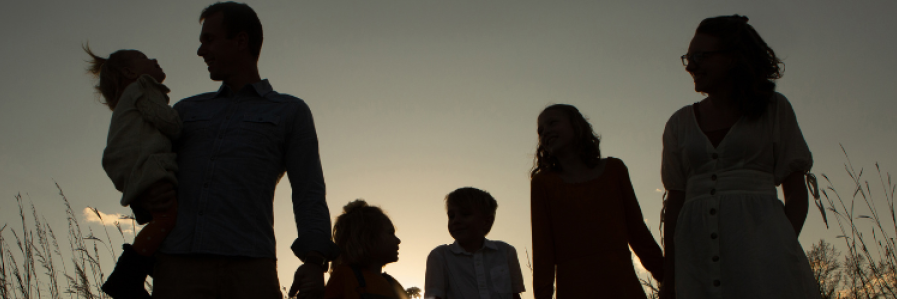
And as I notice these changes, I also am ever aware of the three little girls in my home who watch the things I do, the things that I say. Girls who are getting their roadmap for how to live, for how to be a woman, from me—their mom. 

null

Something that I noticed about myself immediately was that my first thoughts about my aging body were that I need to hide it, I need to fix it, I need to do something about it. I think a lot of that gut reaction comes from the culture I live in. It’s a culture with an entire industry focused on erasing the signs of aging, that’s obsessed with eternal youth. Anti-wrinkle, anti-aging, anti-dark spots, anti-gray hair. The messaging is so loud that I didn’t even have to try for it to embed itself in my mind.   

Something that was really helpful for me was to become aware of those internalized reactions, and instead of accepting those messages as true, to question them. To pause a moment and wonder: how do I wish my daughters would think about themselves when they reach this stage of life?

Whatever the answer, I had a strong feeling that I needed to retrain myself so I can model graceful and grateful aging for them somehow. 

null

I know that we are a body and soul composite, and our bodies are deeply a part of who we are as beings made in the image of God. Our bodies matter. They matter in many ways, especially because our bodies are how we experience the world around us, how we live our story. And when I started thinking about our bodies as the keepers of our stories, I began to find a new way to look at the signs of aging in myself.   

That, in turn, is helping me talk about aging with my daughters.  

As an example, one of my daughters recently pointed to the crinkle lines beside my eyes and asked why I have lines there. I leaned over and smiled and showed her that when I smile, my skin folds into little rays shooting out from the corners of my eyes. I told her that our faces show our feelings, and, after a long time, they remember our feelings, too. The lines around my eyes means that I’ve smiled a lot, and my face remembers it. My face helps to tell my story.  

Another time, another daughter asked me about my stretch marks. I was able to tell her that my body had to make room for each of the four babies I made, and that my stretch marks show that part of my body’s story, a part that I’m grateful for every single day.  

I think graceful aging can mean different things to different people, but I do know deep down that age is something to be proud of. Not everyone gets to grow old, and I don’t want to pass along the message that we absolutely need to hide our age, or fix it, or do something about it. 

Click to tweet:
I want my daughters to one day look at their aging faces and to be kind. To be grateful for the stories their bodies tell. #CatholicMom

In thinking about how I want my daughters to react when they begin to see signs of their own aging in the mirror, more than anything, I realized, I want my daughters to one day look at their aging faces and to be kind. To be grateful for the stories their bodies tell. And I hope to help them along that path, and to help myself, by modeling that now and giving them a different message than the anti-aging industry proclaims. I want them to remember their mother looking in the mirror and smiling, and talking about her wrinkles, and showing gratitude for all the things her body has done and continues to do. And I hope they choose to do the same. 

null

Sign up here to receive an email whenever we publish a new post!

-Lorelei

Looking For Liturgy

This letter is free for you to read, but it wasn’t free for me to produce. If you’re interested in supporting the work of This Catholic Family, I would be honored if you would prayerfully consider upgrading your subscription. Or, you can always throw a little change in the tip jar here.

I used to love the events my youth group put on in middle and high school. I started attending events regularly around the time I was twelve. Overnight summer camp, the fall lock-in, winter ski retreat, and more. I had this little chalkboard in my room and I would often create a countdown for each event, sometimes starting over 100 days out. These youth events were times in my year that were always encouraging, always edifying, and were a beautiful part of the rhythm of my life.

Photo by Bich Tran on Pexels.com

I recently told JP about this, and he said: “Oh, you were looking for liturgy!”

I had never thought about it that way before, but it struck me as definitely true.

In my Catholic faith, we use the word liturgy when we are referring to the whole complex of official services, all the rites, ceremonies, prayers, and sacraments of the Church (New Advent). Another way of looking at the word liturgy is to think of rhythm. Liturgy is the pattern of our worship. It is the rhythm to our faith.

The longer I live, the more I’m convinced that humans are wired for liturgy. Pattern and rhythm bring us comfort. We do best when our life has a rhythm and an order to it. We struggle when we are thrown off our daily routine, or maybe even moreso when we are forced to navigate something like a major life change and we must create all our rhythms anew.

But when we are in the rhythm of life, our mind doesn’t have to work hard to navigate all the details of every single moment. During a routine drive to work we may be able to listen to a podcast or notice the beauty of the sky or the trees because our brain doesn’t have to focus on not getting lost.

Photo by Craig Adderley on Pexels.com

We know the way, and that frees us.

This has also held true for me as I practice a formally liturgical faith.

I used to believe the stereotype that Catholics were just going through the motions by following the same procedures over and over again. The same Mass. The same prayers.

But my experience living the liturgy has been so much richer, so much deeper than that. The rhythm of the Mass has embedded itself in me, and because I live that rhythm my mind and heart and soul are free to enter deeply into the presence of God. Repeated prayers like the Hail Mary create an opportunity to enter into meditation and deep reflection on the life of Jesus in the Gospels.

Catholic liturgy has been so very good for my soul.

Photo by Pixabay on Pexels.com

And maybe that’s a better way to look at liturgy overall than how I used to view it. Just because someone follows a rhythm, doesn’t mean their heart isn’t in it. In fact, it may be a very beautiful part of that person’s life. We’re wired for liturgy, for routine, for rhythm. I think we all find liturgy of some kind, in at least some parts of our lives because we are drawn to it.

Turns out that little teenage me was drawn to the rhythms of my faith, and grown-up me is still drawn to them too.

Feel free to reflect or share:What do you think about liturgy, or people who practice a more liturgical faith? Where do you see liturgy in your own life?

-Lorelei

What’s The Purpose of Penance?


This letter is free for you to read, but it wasn’t free for me to produce. If you’re interested in supporting the work of This Catholic Family, I would be honored if you would prayerfully consider upgrading your subscription. Or, you can always throw a little change in the tip jar here.

When a Catholic goes to Confession, several things happen. We come with contrition and confess our sins. We receive the absolution. Then, the Priest assigns us our penance. But while we may know what to expect, it’s also immensely important to understand why we are doing these things.

I’ve written extensively about why I absolutely Love Confession, but I haven’t written in-depth about penance and its purpose and value. This post is an attempt to do just that.

What is Sin?

At its core, sin is turning away from God. It’s an active decision on our part. It’s us saying “No, God, I won’t do things your way. I know better than you.” Sin can happen in big ways (mortal sin, which breaks our relationship with God) and in small ways (venial sin, which wounds it).

All sin is sickness for our souls.

What is Penance?

Penance is something for the confessor to do after Confession ends, on their own, and hopefully as soon as possible. Sometimes it’s a prayer or a series of prayers. Sometimes it’s something related to an issue the confessor struggles with. It could look many different ways, and could take varying amounts of time. Some of my personal favorite penances have been ones that directly related to an area where I struggle.

But, regardless of what penance looks like it is always, always, a way to repair the harm that sin has caused in our lives.

It is meant to help us turn our hearts back to God. Just as our sin was an active choice turning away from God, penance is an active choice turning back to God.

Do I have to do penance to be forgiven?

This is something that is often misunderstood, even by Catholics. Once the Priest offers absolution during Confession, we are forgiven. The grace is there because of Jesus. Not because of anything we can do. So, no, penance is not required for forgiveness to occur.

But then, if we’re already forgiven, why do we need it?

Medicine For The Soul

Just as sin wounds (or breaks) our relationship with God and makes our souls sick, penance is medicine that helps us turn our hearts back towards our Creator. Confession removes that sin from our shoulders. Penance helps us move towards a more holy future.

As such, whether our penance is prayer, or something specific to an area we struggle, we should not approach penance with the attitude of simply ‘checking something off a list.’

If we do penance with a disengaged heart, the purpose of penance isn’t served. Penance is a way to turn our hearts back to God, it’s a prescription for healing, and, much like any other medication, it’s up to us to use it. If we’ve gone to Confession with a truly contrite heart, it follows that we would want to continue on that path of obedience and progression towards holiness by following through on our penance as soon as possible, and by using that as a springboard to help spur us on towards a closer walk with God.

It’s a beautiful medicine we are offered, and it is to the benefit of our souls to take it.

-Lorelei


Purchase Lorelei’s Books Here:

Purchase Lorelei’s Books Here:

Finding A New Mother In Mary

Before I was Catholic, I focused on Mary during the holiday season. I mostly thought about her, pregnant and heavy laden, making the long journey for the census just before her baby was to be born. Tired, searching for a place to rest. Giving birth in a dirty, humble place. Holding the infant Jesus in a night where shepherds and angels and the light of a star paid Him heed. I had the honor of being in late stage pregnancy twice during the Advent season. I was very comfortable thinking about Mary then.

But I didn’t think about her much otherwise. Thoughts about Mary were safe during Advent and Christmas. But, like the tree and decorations we put up in our home, my thoughts of Mary, too, were boxed up and put away at the end of the season, until the following year. Mary belonged in a nativity scene, not in my life.

A Growing Admiration

All of that necessarily changes when one is on a journey to the Catholic Church. Mary plays such a key role in our salvation story, and Catholics aren’t afraid to acknowledge it. I know, based on the Bible and the teaching of The Church, that Mary is in heaven, and prays for us. I also know that Jesus listens carefully to what his mother requests of Him. Her role as the New Eve, the Ark of the New Covenant, her Immaculate Conception, her lifelong obedience and holiness, also are things I worked through as I prepared for Confirmation.

finding-new-mother-mary

It became easy to realize there was much more to Mary than what I had previously thought. It became easy to be thankful for how precious a role God gave Mary, from the moment of her own conception. It became easy to admire her.

But, as I am learning, admiring someone is not the same thing as being in a relationship.

Baby Steps

As a teen, spending time with my mother wasn’t as high on the priority list, though that has long since changed. But in some ways, I think I still relate to Mary in that way. I know she loves me and is there for me, but I don’t often make time with her a priority. Some of the Rosary’s I’ve prayed have ended up being the most powerfrul prayers of my life, prayers that were clearly answered, and graces that were abundantly given.

So why don’t I do it more?

Perhaps it’s some tendency leftover from my Protestant days. The Rosary isn’t often one of the first prayers I go to, and even though it doesn’t take incredibly long, I often struggle at the time commitment a Rosary takes. I have been praying Hail Mary’s more often in my day to day life, which I think is a good baby step. But it feels too tiny sometimes, when I know the beautiful graces given to me through Mary on the occassions I have spent time intentionally turning to her.

But I also know Mary has a lot to offer me if I would not only spend time talking to her, but also listening.

I have so many wonderful mother figures in my life. There’s my mom, who has been with me since the beginning. I also have a step-mom, and a mother-in-law, as well as many other women who have been influential in my life.

But as much as these women have allowed me to talk and share my heart with them, I find I often learn the most when I listen to the wisdom they have to give me. And Mary has so very, very much wisdom to offer. Through her example in Scripture, through her presence in the ways she has appeared to many throughout history, offering Truth and encouragement and building our faith as a Church. This weekend, we are celebrating the 100th anniversary of Fatima, and that is just one of many examples of her intervention in our world. And I’m sure she would speak to my own heart, if I only would quiet myself and listen.

Many Mothers

I think a person has room for many mothers. Women who love, guide, and shape us. Who intercede for us. Who listen to us. Who offer us comfort. And I firmly believe Mary should be at the top of the list of Mothers in our lives.

On this Mother’s Day, it is my prayer that as I celebrate the earthly mothers in my life, I would also move closer to embracing my heavenly Mother, Mary. That I would allow her guidance and wisdom more and more into my own daily existence. That I would not take the blessing of having a heavenly Mother for granted. And that I would look to emulate her, and ask for her intercession to become even a small portion of the woman and mother she was to Jesus and is to The Church. For God’s grace to emulate her in holiness. And to know she is there for me, loving me, and waiting for me to spend some time.

-Lorelei

We Want to Know: What is your relationship with Mary like? How do you relate to her as a Mother?

P.S. If you found this post interesting, and would like to read more on This Catholic Family… hit up that follow button on the top left of our page, or follow us on Facebook. We’d love to have you back again!


Purchase Lorelei’s Books Here:

Catholic Stand Article Up!

Here’s my latest Catholic Stand article: Thanks!

Easter Chocolates, Slavery, and Our Responsibility as Christians

Purchase Lorelei’s Books Here:

Existence and Jesus: What Are The Odds?

I sit here, smack dab in the middle of Holy Week, anticipating the approaching daylight, but still knowing we have the darkness of Good Friday and Holy Saturday to pass through on our way to it.

And I am in awe. In awe of the fact that we exist. We are on a ball floating in space, constrained in the exact position necessary to sustain life due to the gravity of the sun and a bunch of other factors I probably will never understand. We exist in a universe of black holes, and asteroids and fiery balls of light. The whole thing could have been, and perhaps, according to the odds, should have been, chaos.

But it isn’t.

No… not only does out planet sustain life, but it sustains intelligent life. There is chaos, yes, but there is also an astounding level of order in our world to the largest magnitude and the smallest degree. The chaos is subdued, and here we are. What are the odds?

You know something else that has me in awe, every single day of my life? The fact that over 2,000 years ago a man walked this earth and claimed to be God. That man was crucified for his claims and he died.

His followers claimed he rose again.

What are the odds his claim was true?

This man, Jesus, was clearly, and only, one of three things. He could possibly have been a liar. Just a normal man making grandiose, yet fictional, claims about himself. He could possibly have been insane. A God Complex to the highest degree. The third option, is he is who he said he was.

Based on the nature of the claims, I suggest it is actually pretty important for us humans to figure out which one of those three options is true.


What do we do with the historical information surrounding the life of this man? What do we do with the ancient prophecies his life fulfilled? What do we do with the fact that ten of his twelve original disciples were martyred for their belief in him? And the many, many more martyrs in the times that followed up until now? Were they, too, all crazy or liars? What do we do with the eyewitness corroborative accounts of the things this man said and did? What are the odds the eyewitness accounts would hold up to both scrutiny and history? What do we do with the fact that this religion, despite a multitude of efforts stomp it out, still exists, thousands of years later? What do we do with the billions of lives changed over the course of history because of this man’s teachings?

What are the odds…

Well… according to the odds, we humans shouldn’t exist. But we do.

So… if we exist against all odds, perhaps looking into the claims of the Christian faith isn’t that far fetched at all. Perhaps the Christian faith is more than just stories and morals. Perhaps the Christian faith contains something so surprising, and so True, it will knock your socks off.

Perhaps there is unfathomable depth there, and incomprehensible beauty there, and abiding peace to be found there. Perhaps He who holds everything in this universe together, against all odds, did something so significant for you, that it could change every breath you take every moment forward for the rest of this life and onward into eternity.

So… what are the odds you will take another look at the God Man Jesus? Whether you’ve believed passionately, or nominally, or not at all-ly… let’s give the claims of this man the scrutiny they deserve. Fair warning: Those who believed His claims were true? They were forever, immensely changed.

If you’re willing, Easter is a great time to start.

Here are some resources to being learning about the Christian faith. And, as always, feel free to ask a question via comment or email. We would love to be a part of your journey in any small way. And, if you live in our neck of the woods, we’d be pleased to have you join us on Easter morning.

Mere Christianity, C.S. Lewis

Orthodoxy, G.K. Chesterton

The Case for Christ, Lee Strobel

-Lorelei


Purchase Lorelei’s Books Here: