The Hidden Blessing in Being Interrupted

A few days a week, I get to a point where I ask (usually in exasperation): “Why can’t I even just finish a single thought?!”

It’s often after hours of homeschooling the kids, trying to place online grocery pick up, folding a basket of laundry, sending a few emails, feeding the children, in a flurry that often feels like a juggling act in a domestic circus. I will freely admit that I sometimes don’t juggle very well. I stare at a few pieces of laundry, sitting folded on the couch nearly all day while the rest of the basket sits untouched. An email languishes, half-composed in my inbox. I’m still in my pajamas at lunchtime because I waited, ever so naively, for a peaceful moment to sneak away.

My brain is even more fragmented than the physical world around me. Four kids at four different developmental stages all ask me different questions and need different things on a near-constant rotation. Someone could scream at any time, or excitedly slam a door, or hurt themselves and need my support.
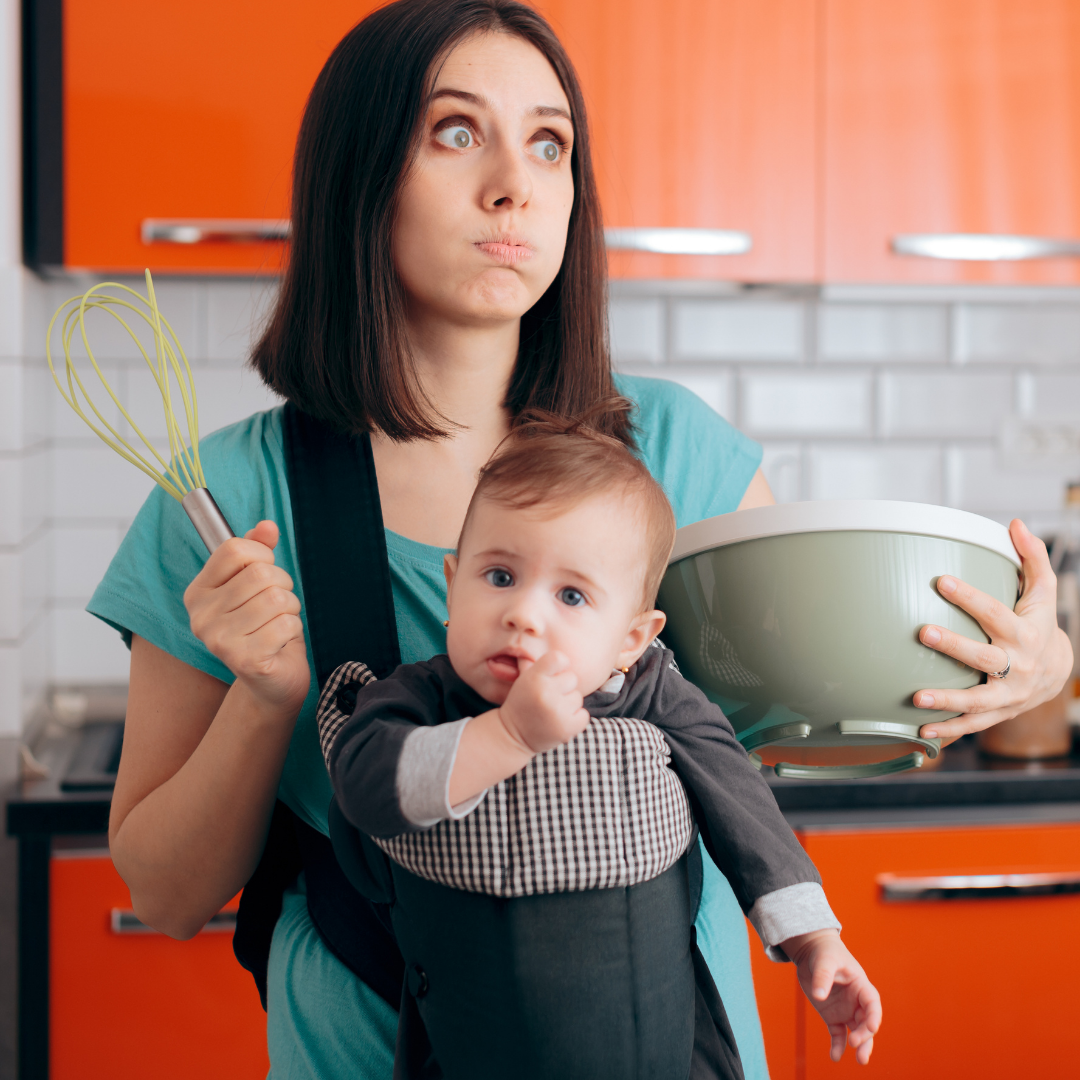
overwhelmed mom cooking while holding baby in a carrier

Once, last month, after planning a very nice Advent activity that got interrupted about five bajillion times, I asked, in front of my children, “Why do I even bother?”

The answer came only seconds later, and I’m glad I ended up saying both the question and the answer out loud.

And the answer was this: “Because I love you. That’s why I bother.”

We all had a moment of exhale after that, and we kept forging on, as we always do.

Sometimes the interruption is to show me something they’re proud of.

Sometimes it’s to ask about something they’re curious about.

Sometimes it’s because they need help with something.

To be sure, not all interruptions even have the potential of being pleasant. A tattle, a fight born out of selfishness, those are the really tough ones for me. How can we just finish talking about being loving and then go off and do selfish things? But even those, no matter how much my heart pinches when I see it, are chances for me to help my kids (and myself) turn back to love.

I’m not very good at accepting interruptions, at least not at the frequency I receive them these days. I like to start tasks and finish them, but the truth is, many of the tasks my kids interrupt aren’t truly emergencies. They aren’t things that are vital for me to complete in any given moment. Truly, sometimes the most important thing is closing my laptop and leaving that email unfinished so I can look at my son’s newest Lego build, or my daughter’s picture. It’s just not always easy, in the moment of the interruption itself, to see it.

Click to tweet:
Interruptions can be good. And, at least once, a great interruption saved us all. #catholicmom

I think back over 2,000 years ago when God made what could probably be considered the biggest interruption of all. He literally interrupted time with Himself incarnate. Some people were ready for the interruption, and accepted it gladly. For others, it took a while. For still others, it was hard to accept it at all, and still is to this day. But that great interruption paved the way for humanity to be restored in union with God, through the person of Jesus.

I’m so, so glad, even with all the varied spectrum of reception, that God bothered. And He bothered because He loves us. I hope my kids continue to bother too, because I want to see their creations. I want to hear their hearts. I want to put band-aids on their wounds. I want to keep trying to do cool things with them, even if it doesn’t go as smoothly as I hoped.

Interruptions can be good. And, at least once, a great interruption saved us all.

May we all strive to look a bit more kindly on interruptions this new year, as there are sure to be plenty. May we see the opportunity hidden inside them, and learn to let go of ourselves and lean into what they might have to teach us.

mom on computer and phone with baby on lap

Note: This article originally appeared on Catholic Mom

Purchase Lorelei’s Books Here:

My Goal for This School Year

Homeschool Beginnings

I started homeschooling our school-aged children in March, 2020. I know I am not alone in this timing, though we had planned to start homeschooling in the fall, so I had a bit of a jump on researching curriculum and thinking through what this shift might look like for our family.

I also have a background as an elementary school teacher. I have strong opinions on instructional strategies, and the ways that kids learn best, and I trusted that would serve me well in teaching my own students. It certainly helped me to have confidence in the tools we were using and how I supported the structured learning now going on in our home. But what I didn’t expect was how my background as a teacher would add some struggle and stress into what I hoped would be a (generally) peaceful, enriching time with my kids.

Pressures from the Past

Most of my teaching was done in schools where standardized test-taking was emphasized, partly due to school ratings and funding tied into scores. Most of my students were coming into my classroom “behind,” according to those tests. There was a lot of pressure to catch my students up, and have them make about a year and a half’s progress during their time in my classroom. This had many side effects for me as a teacher and impacted the environment my students were expected to learn in. Some of these I counterbalanced well in order to provide my students with a place where they felt safe to explore and make mistakes and remember to love learning. But as a teacher, under the surface, I felt a lot of anxiety and pressure and like I was climbing a steep mountain without a harness or a rope.

Unfortunately, this carried over into my first year of homeschooling. If we were a bit off-pace for the day, or if the toddler just wasn’t having it, I felt pressure to still somehow “get it all done.” Sometimes that stress rubbed off on my kids. I remember reminding myself, many times, that we weren’t behind, and that one of the reasons, among many, that I chose to homeschool was the flexibility in pacing that it offered. I also remember failing to act as though any of those things were true, and many moments where I didn’t serve my kids or their learning as well as I could due to the anxiety that I carried.

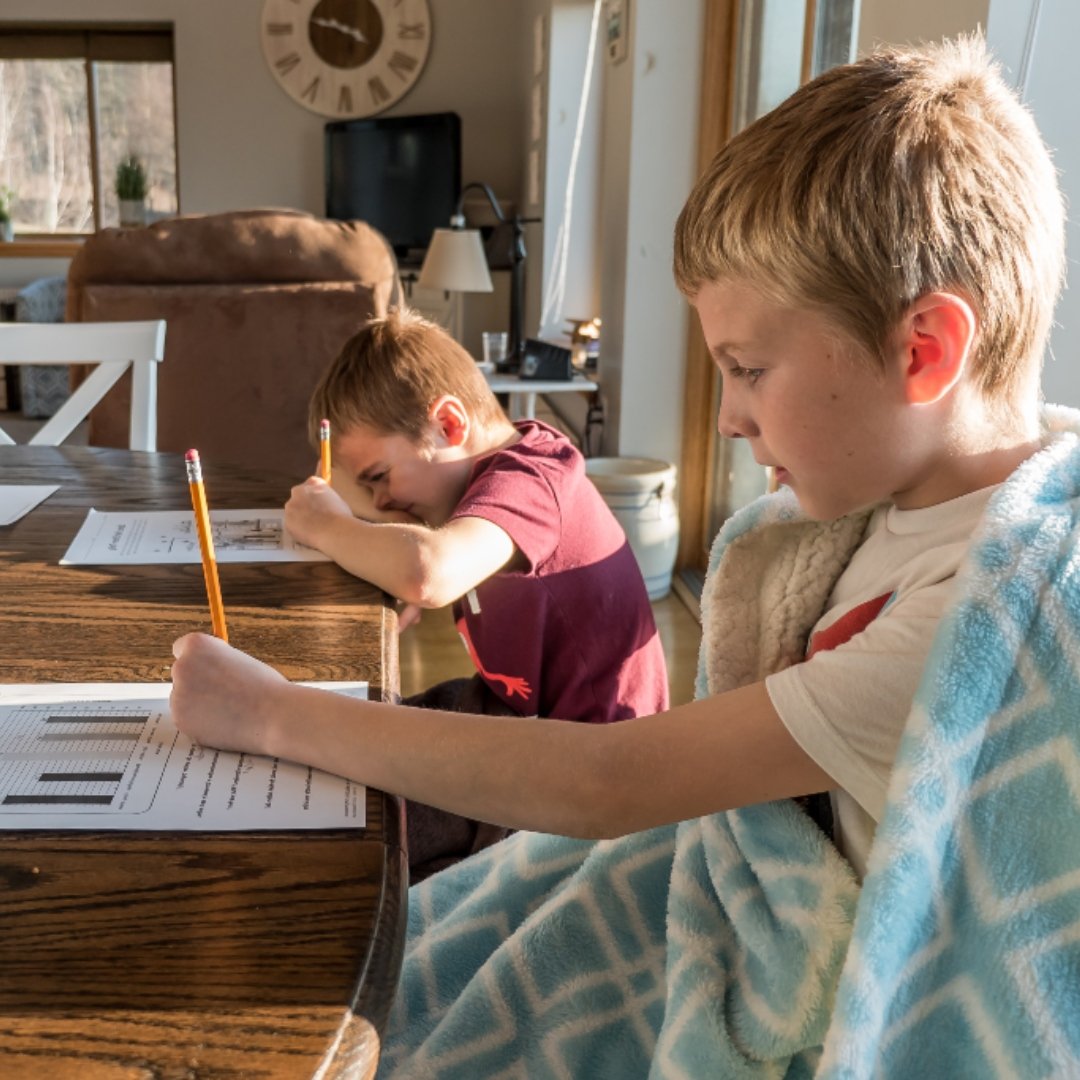
2 boys doing schoolwork at kitchen table


Love Them Well

After going year-round since we started, minus extended breaks for vacations or holidays, we took our first big break from school during July and part of August. As we’re gearing up to start again, I’ve taken some time to think about the goals I have for our technical “second year” of the homeschooling life.

Turns out, I could only come up with one. One single goal that I hope will frame my decisions as my children’s mother and teacher, and move us closer to the homeschooling life I hope to have.

And the goal is this: to “Love them well.”

If my kids can begin and end each homeschool day knowing I love them, and if I can remember that teaching them love is the most important thing, then I think all the academic stuff will turn out okay. If school takes a bit longer than usual, or if our 2-year old makes progress a bit tricky, we can navigate that through the lens of love. If a concept is difficult for someone and it means one lesson takes two days, that’s fine. We can navigate that through the lens of love. I don’t expect that I’ll all of a sudden become the perfect homeschooling parent, but I know this will help us smooth some of the bumps we faced getting started, and I’m looking forward to viewing our days through this goal.

New Beginnings

It’s been tough to break some of the pressures and anxieties of being a classroom teacher in a struggling school, and it makes me sad to think that I probably hid that pressure better from my students than I sometimes do from my own children. But love has conquered so many worse things than this, and God, the ultimate source of love, can help me slow down, see what my kids need in the moment, and give them that grace and room to breathe, or for things to come up, or for us to just have an off-day and come out of it unscathed.

I’m going to write this goal down and remind myself of it often, and see what happens after framing our homeschool life like this after a while as I work to let go of the stressors of the past and focus in on the sweet children right before me now.

Whether you homeschool, or if your kids go to school elsewhere, I’d love to know what your goals are for the upcoming school year!

-Lorelei

(Article originally appeared on CatholicMom)

For Moms Who Feel Like They’re Failing

The Many Faces of Failing

Well, I lost my patience. Again. The kids were absorbed in playing a game and forgot to take our puppy out. Then he went to the bathroom on the floor. As the lone adult in the house for nine hours each day, I know I should be able to be the mature one and maintain my calm, but sometimes I fail. I take in a slow deep breath and prepare to make amends, feeling as shattered as my kids’ hearts at my sudden harshness.

I loaded the dishwasher as fast as I could while my youngest screamed for more candy. I had already given her the chocolate chips as a distraction so I’d have time to finish this one chore. But I got distracted by another kid asking a question and by the time I got back to it, the tot was screaming and holding an empty bowl up to me in chocolate smudged hands. Completely overstimulated, my hands start shaking and I’m not quite sure how I’ll get it all done.

Sometimes, I yearn for quiet. Not a stolen moment here or there, but quiet I can count on. I want to be left alone long enough to take a long shower, or read a full chapter of a book, or think a single complete thought without interruption. In and of itself that isn’t bad, but the surge of guilt I feel over even having those feelings becomes its own kind of failing, too.

Often, in the middle of all these failures, I’m completely overwhelmed by the fact that there are four tiny souls in my care and it’s a huge part of my work on this earth to help them get to heaven. I know that I want better for them. I know they deserve better. I look at pictures of our Holy Mother and feel so far from being like her that I have to turn away.

What Do We Do When We Feel Like We’re Failing?

When my book came out, I would hyper-focus on negative reviews and dismiss the good ones, even though there are so many more good reviews than bad! It became necessary for me to stop reading reviews as a whole so I could keep a healthy balance as I wrote the next things. If only I could stop reading my successes and failures in the same way and live in some mythical land of neutral ignorance.

But we can’t just avoid our weakness or our triumphs in some assumed ignorant bliss — we have to live them all. And we have to reckon with what they mean.

So, what do we do when we feel like we’re failing?

To start, my many failures make it abundantly clear that I’m not a saint yet. I sin, I am flawed, parts of me are broken. I’m not fully the person God made me with the potential to be.

I think we can do two things once we have that realization. We can think that we never can be saints, that sainthood is reserved for the Mother Marys, and Thérèses, and Lucys, and that we’ll never quite make the cut.

I like to think that most days, when the dust settles, I look toward an option two. Option two is the voice that tells me there have been many quiet saints made of mothers throughout time, most of whom we’ve never even heard of. It tells me that this calling can purify me and build me into an example of holiness for my sake and the sake of my children. It’s the option that tells me I’m not a saint yet.

My kids see me struggle. They see me kneel down and ask for forgiveness for being impatient, or raising my voice, or assuming the worst.

Perhaps one of the most important things is that my children see me not give up. They need to see me go to Confession, they need to see me say I’m sorry and work to make amends. They need to see me practicing the faith and receiving the Sacraments and working every day to open myself up more to Grace.

Because, when all is said and done, they’ll have their own paths to sanctification. Maybe it will be smooth sailing and Grace will flow in them and through them from an early age, filling them to the brim. But maybe it will be more of a rocky road.

And if their path includes stumbling and picking themselves up, over and over, then maybe, just maybe, they’ll remember their mom struggled and never gave up, too.

So, to all the moms who feel like a failure. Let’s keep going. Let’s show repentance and penance and let’s show redemption. Let’s let our children see us lean into our faith when we struggle. Most saints are made, not born that way.

Our little future saints need examples to follow, not only in the great saints of the Church. They also need to see it inside the walls of their home. God has been so faithful to convert so many hearts, I have to trust that he can take what mine has to offer and mold it into something beautiful and fruitful, too.

-Lorelei

Also Published on CatholicMom (May 2021)

The Night I Wore Make-Up After Months Without

The other night, JP and I were doing something that required us to leave the house, and, since leaving the house is a special occasion these days, I decided to put on a bit of make-up, which hasn’t happened, I don’t think, since maybe Thanksgiving? I heard a speaker once talk about how long make-up lasts and I realize now that everything I put on my face that night was probably expired and I’ll likely be breaking out in a rash at any moment…but it’s hard to justify buying new make-up when you only wear it a few times a year!

Anyway. Felicity came into the bathroom where I was finishing up. I thought she’d be like “wow mom you look so pretty.” Or “wow mom you look so fancy!” Instead, she crinkled up her nose and said “why do you have so much make-up on your face?”

This, my friends, was an interesting moment. I’ve worked very hard to teach my children that the way God made us is good. And that it’s okay for us to express ourselves with color or fashion. But that we shouldn’t use those things because we feel like who we are isn’t good enough, they should just be for fun.

I grew up with a mom who was coming into her own in the 1980’s, so I saw her wear pretty heavy make-up every day, and touch it up often before we went anywhere. I’ve always had a bit of a different relationship with make-up than that, but one side-effect of the pandemic for me has been that I pretty much stopped using make up at all. I had reduced my usage significantly over the past several years, especially during my pregnancies when I just didn’t feel good enough to do anything ‘extra’ at all. But when Covid hit, it made it easier for me to think about the role I wanted make-up to play in my life as a whole. I also started using the Curly Girl method (albeit loosely) for my hair, and have been enjoying embracing my natural waves!

But back to make-up, from a cultural perspective, I think it’s interesting that women in America often ‘paint’ their faces when they go out in public. Just the general routine of that is interesting to think about, especially when men don’t wear make-up at all. Though, if we lived in a different country in a different century, wealthy men would have worn make-up out in public all the time! I’ve also had conversations with people who thought they should be perfectly put together for their husbands each day, and that put together meant doing their hair and make-up fully. That’s always felt a bit odd to me because I feel like somewhere in there is the assumption that there’s something wrong with my normal face and hair.

In the end, I just told Felicity that I felt like adding some color, but that it honestly felt a bit weird for me, too! She said she likes my non-make up face because that feels more like her mom’s face. Her warm, snuggly mom that she sees every day. And, oh my heart. The face she sees reading her a bedtime story, or cooking dinner, or teaching her math, is just my straight up normal face. And she loves it. And that’s super cool.

I don’t do it perfectly, but I’m working hard on loving myself as I am, so my children grow up loving themselves as they are, too.

So here’s me. And my normal face. 🙂

-Lorelei

Purchase Lorelei’s Books Here:

What We’re Teaching Our Children About Prayer

A Thin Foundation

Growing up, I didn’t really have a strong foundation in the area of prayer, or how it worked, or what it really meant. I knew in a general sense that prayer was talking to God, and that it often meant asking Him for something, or giving thanks. A lot of times I saw people pray for things they wanted to happen that didn’t come true, even though they prayed for it really hard.

That kind of thin, shapeless theology ended up causing trouble for me as a young adult. I didn’t understand how my prayers would even matter a little bit to a God who had so many bigger problems to deal with. I also didn’t think prayer really worked, so I went through the motions of praying at church and with family. And when alone, I didn’t really pray at all.

Fast forward to raising children and becoming Catholic. I understand prayer a lot differently now, I think, in part, because I understand God differently. As such, in our home, we’ve become much more intentional about how we pray, and what we teach our children about it, which can be boiled down to three main ideas.

1: Share Anything On Your Heart

This is one aspect of prayer that I understand better because I’m a parent. We teach our kids that they can literally come to God with anything on their hearts. As such, our kids often pray really beautiful, honest, and vulnerable things. And sometimes they pray that they would grow up to become super heroes and rock stars, too.

We teach them this because, as parents, I don’t care what my kid is feeling, I am ready to hear their heart. Any thought they have that they want to share, I will kneel on the floor in a heartbeat and lean in close. I want them to know I am a safe space for the vulnerable places inside them, or the joyful places, or the silly ones. God is the absolute best Father, and I am certain that He leans close too, no matter what we have to say.

2: God Gives What We Ask…Or Something Better

I think prayer can sometimes fall into operating like a slot machine, where we want the answer we want and right when we want it. We can get disillusioned if we get something else instead, or if we receive silence. Which is why we also teach our kids that God always, always, answers our prayers. And if he doesn’t give us what we ask for, he will give us something better.

Now, this doesn’t mean if you ask God for a lollipop that He’ll give you an entire candy store, although He could! What it does mean is that God knows our needs far better than we do, and we need to trust that He can and will only give us what is good for us.

I think, if I let them, my kids would eat pure sugar for breakfast, lunch, and dinner. They might think that sounds amazing. They might think doing that would be the very best thing. But I know a bit about growth and nutrition and blood sugar, and, because I know what’s good for them, I can’t let them have candy any time they want. I have to say no and offer them an apple instead.

God might answer our prayers a different way than we asked it. But He is Good, and just like as a parent I understand that certain things are good or bad for my children that they might not understand or see, God knows which things are good or bad for us too, and He will never give us something that isn’t truly good.

3: The Role of Suffering in Prayer

Which brings me to this. We also teach our kids that sometimes God might allow us to suffer. We live in a world that is fixated on comfort, and often strives to avoid suffering at all costs. But our Catholic faith doesn’t even come close to teaching that comfort is best. Sure, we can and should hope for better things to come, but we also need learn to accept what He gives. Sometimes, there might be a thing that is broken inside us that will hurt while it mends. Growing in holiness comes with the pain of releasing attachment to sin. We don’t deserve comfort, even though sometimes we are gifted it generously, and for that we can and should be grateful.

But our goal isn’t comfort. Our goal is sainthood, whatever it takes. We need only to look at the cross to see how suffering is redemptive. The most loving God saved us through it.

The Three Things

Let’s especially remember, as we head into a new year after a year that brought so many hardships on a global scale, to ask God for whatever’s on our hearts, trust that His answer is good, and to accept what He gives, even if it means we need to accept the call to suffer. These are three big things I’ve learned about prayer as a parent and a Catholic. And I pray that my kids will hold onto these truths both now while they’re children, and as they grow up in the faith.

Lorelei

Purchase Lorelei’s Books Here:

Why Didn’t God Just Take Away the Tree?

I love having conversations with the kids about our Catholic faith. Their insights and questions astound me and amaze me time and time again, and it’s such an honor and a privilege to engage with them.

Recently, while doing a short follow-up at bedtime to our most recent faith formation lesson, in which our six-year-old son learned about original sin and the fall of man, he asked a simple, yet profound question:

“Why didn’t God just take away the tree?”

The tree, of course, that he’s referring to, is the tree of the knowledge of good and evil as described in Genesis. His sweet reasoning was that if God had just taken away the tree, then Adam and Eve would never have sinned, and humanity would have saved ourselves a whole lot of trouble.

I realized very quickly that my son was really asking a much, much bigger question than he even realized at the time.

How do we even read the story of The Fall anyway?

I’ll pause here a moment to share my own journey with the book of Genesis. I was raised Protestant, and was taught to believe the Bible was both historically and literally true in all its components. That sort of thinking made it hard for me to reconcile certain parts of the Bible, like the two seemingly-conflicting accounts of creation in Genesis chapters 1 and 2. As I came into adulthood, it caused me to struggle to see the Bible as something more than a book of children’s stories. And, in the end, that type of firm adherence to literal interpretation across the board, was one of the many reasons I became Catholic.

There’s a great video here by Fr. Mike Schmitz that helps explain how the Bible is meant to be read, emphasizing the fact that the Bible is actually a collection of books by many different authors that are all true- but that are not all meant to be historically and literally true in every instance. The appropriate way to read a Bible would be to see it as a book made of books of different genres and purposes. While the accounts of creation in Genesis are historically true (in the sense that at some point God started time and brought the world into existence), they weren’t intended to be a literal telling of how that happened.

I like to say this when talking with my children about the different parts of the Bible- that some parts, like the gospels, were recorded as historical and literal truths about the life of the person Jesus. Some books, like the Psalms, are songs and poems. And some parts, tell us what happened, but weren’t meant to tell us exactly how.

The story of creation in Genesis and the depiction of the fall fit that what but not the specific how definition. For example, as Catholics, we are not bound to believe in a literal talking snake, but we are to believe the deeper truth of the fall of man and original sin, as taught in the Catechism.

Back to the Tree

Okay, so back to my conversation with my son.

What he was really asking, in the question of “Why didn’t God just take away the tree?” boiled down to what love means and what is required for love to be possible in the first place.

Let’s start with God. God is love, completely and fully. So, when God decided to create, He brought forth nature, he brought forth animals. And then, at some point in the vast spectrum of the process that was creation of the known universe, He did something different. He made an animal, but with something more. He gave that animal the capacity to love, just like Him. Until then, he had nature that followed the laws of science. He had animals that followed the laws of their instincts. But we are made in His image, particularly in His capacity to love. This is what sets us apart from squirrels and bears and donkeys. We can choose to go against our urges and instincts, we can do things that have absolutely no benefit to us or even to our survival, in the name of love.

Why Does that Matter?

Next, let’s imagine an Eden without the tree of the knowledge of good and evil. Adam and Eve live in peace and harmony, and all of mankind follows, right? Sure. They would have been perfectly contented little creatures.

But God didn’t make us to be perfectly contented little creatures. He made us for love.

And what is required for love?

Love requires and demands the freedom to choose.

Without choice, then we can’t really love. Without choice, we’re robots. We’re submissive. We do the will of God not because we want to but because we must.

If God had taken away the proverbial tree, he would have taken away Adam and Eve’s free choice to choose Love or to turn away from it. And then they wouldn’t have been able to really, truly, love at all.

The tree had to be there. And by the tree, I mean the choice. The choice had to exist. For love to be real, you have to have the option to say: “No, I don’t want that.” “I choose my good over your good.” Or, in the best case scenario, “I choose your good, regardless of what that means for me.”

We do it all the time, even still to this day. How many times during a day are we faced with that very same decision. I can be short with my kids or I can be patient. I can get irritated at the person in front of me in line who is taking forever, or I can be gracious. On a larger scale, I can offer myself as a gift to my husband and my children, my neighbors, strangers and friends, or I can choose self-preservation and selfishness.

Back at the beginning and resonating through time to our very moment in this world today, that choice contains so much power.

It’s what makes love possible in the first place.

The Bedtime Chat

Of course, with my son, I didn’t quite go into all of this depth just yet. He’s six, and, God-willing, we’ll have time. But we did talk about the tree, and what it means. We talked about God and how he desires more than anything for us to love Him and other people and the world. And if he had taken away the tree, if he had taken away that choice, then our original parents wouldn’t have been able to really love Him or anyone or anything at all.

The story of The Fall is a sad story, but it’s so very, very important. It’s only the beginning of a much bigger, much more beautiful story of Love, giving all of Itself for all of us. The story we are all a part of, even to this day.

And I can’t wait to have more conversations with my kids about it as we live our our lives in the domestic church we call home.

-Lorelei

Purchase Lorelei’s Books Here:

What We’ve Been Up To

It’s been a while, my friends.

A lot has happened since my last post. For one, the grieving process of losing my aunt the way we did took a lot out of me. Still does, sometimes. I struggled to think of ways I could write encouraging or even true posts on our family blog, and the words just weren’t coming like they usually did, at least in this way. So I gave myself some grace and some much needed time.

But, interestingly enough, words did come in other, different ways. I had been pursuing publication with my first manuscript, but the summer after we lost Jeannine I came up with a new story. A story written for children but that also, in the strange way that stories do these things, helped me walk the path of my own grief, too.

That story is going to be published by Penguin Random House’s Philomel Imprint on September 1 of this year (2020). It’s called The Circus of Stolen Dreams, and I can’t wait to share it with the world.

That was one of the big things that has happened since I wrote here last. You can learn more about my journey as an author by visiting my author website, www.loreleisavaryn.com

The other big thing is after 9 months of constant nausea, I gave birth to Zelie Rose, our 4th child. She has also been keeping us busy!

For those wondering where we got her name, St. Zelie Martin is one of my favorite Catholic Saints. She is St. Therese of Lisieux’s mom. I admire her greatly, and am so excited to have had the opportunity to name a child after her.

For anyone keeping track, yes, all of our children are named after Saints (some with multiple meanings to our family). Even the two kids we had before my conversion to Catholicism got, by some divine intervention, Saint names. So now we have Felicity, August, Mary, Zelie. And of course my husband John Paul. The running joke in our house is that there isn’t a Saint Lorelei yet, so I’ll just have to become the first one. (No pressure! Ha!)

I hope to be back here more often and writing more about our faith and family life. I’ve missed sharing and writing, and am happy to be ready to return!

-Lorelei


Purchase Lorelei’s Books Here:

Lorelei on The Christian Circle Podcast: Raising Children in the Catholic Faith

I (Lorelei) had the pleasure of being interviewed for The Christian Circle Podcast on Raising Children in the Catholic Faith. It was lovely speaking with the host, Pamela Fernandes on the subject.

I hope to get the chance to visit again! Click here to take a listen, as well as to read a bit about behind the scenes. We hope you enjoy. 🙂

-Lorelei

Purchase Lorelei’s Books Here:

3 Awesome Tools To Help Children Engage in Mass

Engaging Kids In Mass

We love that our kids are in Mass with us on Sundays, but it’s always helpful to find tools that help them understand more of what is going on and that support them as they grow in their ability to engage.

Below are three tools This Catholic Family has found that do just that.

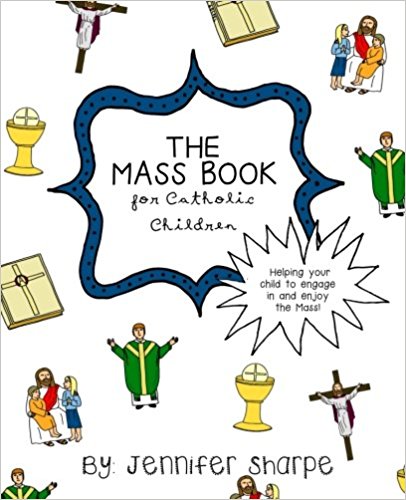
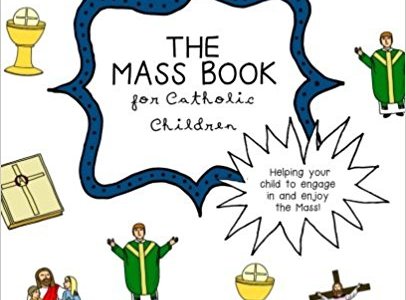
1- The Mass Book For Catholic Children, by Jennifer Sharpe.

51gohkzvDxL._SX404_BO1,204,203,200_

This guided journal has been very helpful for our six-year-old.

She isn’t yet an advanced reader, but there are many components of the book she can use now, as well as some that she could grow into. I love how both writing and drawing are incorporated. For example, she can write in a prayer intention for the day and also draw a depiction of the gospel reading. Some of Felicity’s other favorite parts are coloring the vestments on the Priest and tallying the number of times “Jesus Christ” is said in Mass. The checklists for preparing to enter Mass and for preparing to leave Mass are also great tools.

Felicity is a very active girl, both in movement and in using her brain. Felicity says The Mass Book for Catholic Children helps her have fun and gives her something to do during Mass, but in a way that also helps her pay attention.

As a teacher, I know many children need concrete tools rather than just observation to help them develop a deep understanding of a concept, event or topic. This book is a great way to help support children as they grow in their understanding of our faith.

2- My Mass Kit

My kids love to play pretend. We have princess costumes, firefighter costumes, builder costumes, and all sorts of tools for imagination fun. Dress up and games of pretend helps them internalize the real world, and find their place in it through play.
product_weeDiscover_mymasskit_1_grande_7c08d718-3874-4bea-96d4-6d118d20d025_1024x1024.jpg

Now, they can use this sturdy kit to reenact what they see happening each Mass, and gives them a way to internalize Mass through playing pretend. We love to talk about what each of the different items is used for. One of our favorite Mass Kit memories is when JP’s siblings were over and the kids lined us up to distribute communion. Such a great tool!

3- Our Example

This one is totally free. 🙂 When our children see us looking forward to and engaging (as much as we can with young kids) in Mass, it sets an example for them to follow. Our lives and actions speak louder than our words, and our attitude towards Mass and participation in it will stick with them in a very powerful way.

Conclusion

We hope you found these tools helpful! It’s always good to give kids tangible ways to connect with their faith. One of our deepest prayers is that our kids will grow up with a living and active faith of their own. Incorporating these things into our family life is one way we are helping build for them a solid foundation.

-Lorelei and JP

Purchase Lorelei’s Books Here:
When Grown Ups Get Embarrassed (A Lesson in Parenting)

It’s been a while since I’ve been straight up embarrassed in public. Though I lean introvert, I can typically handle social situations in an appropriate manner.

This week, I was reminded how awful it feels to be embarrassed in front of others.

We were at the pool for Lissie’s swim lessons. I was sitting on the edge of the wading section, keeping an eye on Auggie (who was wearing a lifejacket), and also trying to keep the baby from freaking out at her lack of freedom while strapped in her carseat.

We’d been attending swim lessons all summer. 14 times to be exact. And I had spoken with a lifeguard a few weeks back about where I needed to be in relation to my son while he swam. I was told I needed to be at the edge of the pool, which is where I was.

I was surprised, therefore, that a lifeguard approached me at the last lesson pretty agressively and told me I needed to be within arm’s reach of my son.

I told him I thought I was doing the right thing, but it wasn’t a problem and promptly waded over to tell Auggie to stay close to me.

But then the lifeguard didn’t stop. He kept explaining the rule to me, loudly, even though I didn’t fight him on where he wanted me to be.

There were a lot of people at the pool.

I felt embarrassed.

I know he was trying to do his job and keep everyone safe, but it’s a weird moment when you think you are following the rules, but then someone keeps explaining it to you like you don’t get it for some reason or are going to fight him on it, even though you’re not.

I’ve never liked getting in trouble. I made it through school without a single detention. I cried once when I got a tally mark against me for talking in 2nd grade. I also cried when a very nice police officer pulled me over for speeding the one time I got a ticket.

I really, really, don’t like being singled out in public for a negative reason. And I think there is a much more respectful way to correct behavior, in both public and private situations.

Dignity and Teaching

I learned very early on in my urban teaching experience that my students responded a lot better to redirection if I did it privately, without embarrassing them.

There are a couple of kids I specifically remember. Kids who other teachers had a hard time getting to listen. Kids who often got phone calls home or one way trips to the office. But not with me. Why? Because the other teachers would scold them publicly, in front of their friends. And they would talk back in an attempt to save face.

When these same kids were approached quietly, privately, respectfully when the other students were working, things were different. They, more often than not, corrected their behavior, dignity intact.

I also tried as best as I could to assume the misbehavior was unintentional. There’s a big difference in approach between “Quit tapping that pencil on the paper- you know it’s distracting everyone!” and “You may not have realized this, but tapping your pencil that loudly makes it hard for me to focus on what I’m teaching. Is there a quieter way you could get your wiggles out?”

Understanding kid’s innate desire to be treated with dignity helped my teacher game more than I ever could have known. Kids felt safe in my classroom. They knew I respected them as people. And they were able to learn and trust that they were in good hands.

Dignity and Parenting

How many times a week does a kid get their behavior corrected? Judging by my own parenting experience, a lot.

I think it was good for my kids to see the pool incident happen. We talked about it on the way home. About how I wanted to say some not nice things to him, but didn’t, and how hard it is to control our tongues. We also talked about how he was in charge of the pool, and how I needed to be respectful of him, even though it was difficult.

We talked about how I just wanted to leave, and how I understand there have been times in the past when they have felt the same way, embarrassed by something so much that they wanted to go home.

I hope this helped, particularly our five-year-old. She is a child of Big Feelings. I hope it helped her see that grown-ups have Big Feelings sometimes, too. That we feel embarrassed sometimes. That we need to respect the people in charge, too.

I also hope this helps me remember to be sensitive to those moments when my kids are embarrased. To those moments when they feel like they aren’t in control of their life. When they are misunderstood. I think I was better at remembering these things in the context of a classroom than I am in the context of my kids at home. I don’t know why this is. Maybe because I don’t always get a ‘prep time’ each day when I can re-focus and re-charge. JP and I get a few hours while the kids sleep each night, but it’s not like there is ever any extended separation from the environment of home like there was when I left school each day and didn’t have to return until the following morning. It’s more constant each day at home. But it’s not an excuse to forget.

Thank You, Mr. Lifeguard

I didn’t like it when it happened, but that brief and uncomfortable encounter at the pool had a lot to teach me, and hopefully, helped me connect with my kids in a deeper way. It was a good reminder to me of what it feels like to have someone assume the worst intentions in you, and to publicly call you out on it.

I think it’s a good thing when we can take an uncomfortable situation and learn something from it. I’m thankful to that lifeguard. Though I didn’t appreciate his approach, I know he was trying to do his job well. His approach gave me an important reminder about how I handle things with the people I’m in charge of as their momma, and was yet another reminder of the importance of maintaining the dignity of those we encounter. No matter how big, or how small.

-Lorelei


Purchase Lorelei’s Books Here: