When Waiting Hurts

Her lace and ribbon white dress is hanging in the closet next to her veil. It is waiting.

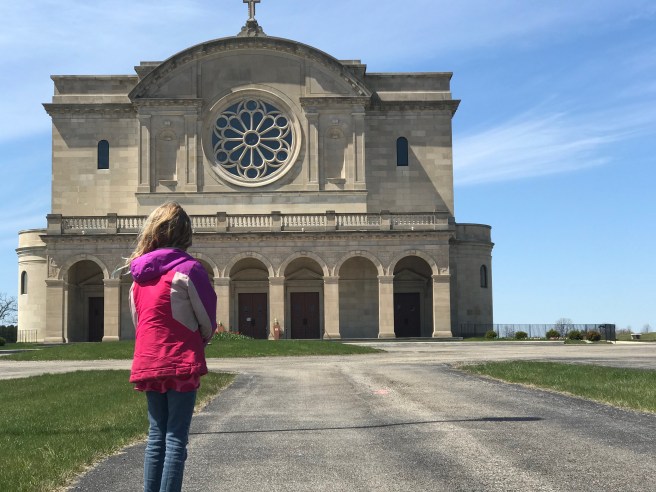
The Eucharist rests in the tabernacle behind the altar of our beautiful church, St. Rahael the Archangel. It is waiting.

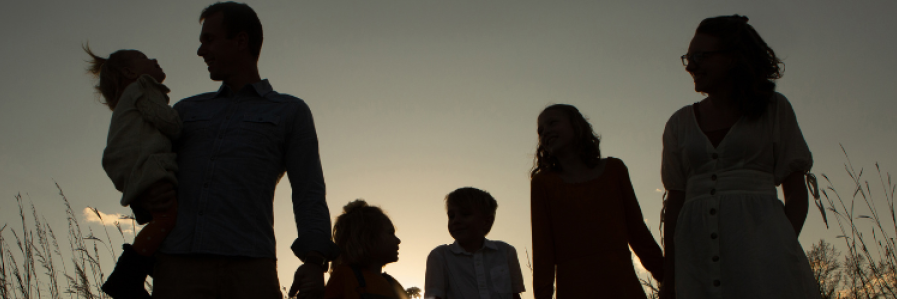
I’ve never been a person who does well when things don’t go as planned. I’ve gotten better as I’ve grown older, but I still like to know what to expect. And I like things I can count on. Our family has been spared some of the more devastating effects of the pandemic thus far, but today was one of the harder ones for the family, and for Felicity in particular.

Today was supposed to be Felicity’s First Holy Communion. She is waiting.
IMG_2326

What We Miss

I was 30 years old before I received my First Holy Communion. But for almost all of that time, I didn’t know what I was missing. I viewed communion as a symbol, something to help us remember a long ago event that was important to the foundation of the Christian faith.

Felicity understands differently, at a much earlier age than I did. And so she felt the delay of receiving her First Communion in a significant way.

For anyone who does not share our Catholic faith and might be wondering why this such a big deal, here’s a little bit of background on what we believe.

The Eucharist, or Holy Communion is the source and summit of our Catholic Faith. It is the centerpiece, the main event of every Mass. The readings, the songs, the prayers, they all lead up and point toward the Eucharist, where we believe Jesus is truly and fully present.

We take John 6 literally, and we believe Jesus instituted the Eucharist at the Last Supper. And that he conferred authority to his disciples to do the same. And that they conferred their authority to their disciples. And so on and so on until we reach the men serving as Priests today.

We believe Holy Communion is a miracle. And that Christ is truly present in it- body, blood, soul and divinity. It is a Sacrament. It confers immense grace.

So while we are away from Mass, we don’t eat crackers and juice at home. Because we don’t believe Communion is a symbol of an event that happened a long time ago. We believe that when we participate in Mass, we slip outside of time and, in a mysterious way, are joining in with the very first Communion Jesus shared with his disciples, and in Jesus’s one time sacrifice on the cross.

For Those Who Wait

There are so many who have had to wait for things during this time, and we are praying for all those who are feeling the ache of waiting for something dear to their hearts. We pray for those who long for the Sacraments, and those who don’t have access to them as often as we usually do here where we live.

In lieu of First Communion, Felicity and I went to have an ice cream cone together, and just talked for a bit about the day. Then we drove to church and looked at the flowers, and said hello to Jesus from outside. We know He is with us in our hearts, but there is something so very, very precious to a Catholic who not only can receive Jesus spiritually, but also physically and tangibly through the Eucharist as well.

The uncertainty of the timing of when it will be Felicity’s turn weighs on me as her mother as I feel her disappointment today. But Jesus waited 30 years for me to find my way home, and much longer for many others. I’m certain we can bear the burden of waiting for a much shorter amount of time to receive him in this special way.

Sending prayers for all those who are delayed in receiving any of the precious Sacraments, and for all those who are impacted by the virus, in big ways and small.

-Lorelei

Emerging From the Fog

Lent is always an appropriate time to reflect on suffering, and over the past 12 months, This Catholic Family has had some rough times.

I’ve shared a few times about the loss of my aunt to suicide in February 2018. The grief from that, and the slow path toward healing, has been a part of the fog that made it hard to write at times on this website. I poured a lot of my energy over the past year into writing a fiction manuscript about a young girl who experiences a loss, and finds her way to healing. Using words in that way for that time helped a lot.

The other fog we experienced has been for a much happier purpose.

ThisCatholicFamilyBabyNumber4

We found out in December that we are expecting Baby Savaryn Number 4! New life is the happiest of news, but for our family, we also knew it would be difficult for a while. I, to varying extents during my pregnancies, suffer from hyperemesis gravidarum. This is extreme nausea and vomiting during pregnancy. A condition that used to be fatal for some mothers, and is slowly gaining more publicity in our current times for its devastating impact on an expectant mother’s health while she suffers.

This time, despite proactively taking nausea medication and planning for my care, I ended up incredibly sick. As it amped up, I wasn’t able to be in the kitchen, or prepare food, or eat much. It felt like I was on a boat with severe seasickness 95% of the time I was awake. Movement and smell made it worse. Relief only came when I slept. Then, I hit a point where I couldn’t keep anything down and hadn’t had something to eat or drink in over 18 hours. I had to go to the hospital, where I ended up being admitted for three days until they could rehydrate my body and until I could eat and drink on my own without getting sick with the help of some additional medication.

I was this sick with my son, who will turn five soon, and I had much better medical care this time than I did with him, but it was still one of the hardest things I’ve ever gone through inside my own body. And when it was at its worst, it was very hard for me to see the light beyond all the darkness in the struggle to survive moment by slow moment.

Friends came through and brought us food, and there were so many praying, and my husband was good about reminding me that this would all be worth it.

It was still so difficult to lose myself, even for a little while.

The Hope and the Grace

But in suffering, there is grace.

I was fed by the Eucharist during my suffering, and I weakly attempted to unite my own suffering with that of Christ. In many ways, I do not feel like I suffered ‘well.’ But I also knew Jesus would carry me through, and that if I was willing to walk this path for Him, that he would not forsake me.

On the first Sunday I was home from the hospital, I was still confined to my bed, and the family had to go to mass without me. I hear the door open as they returned home, and in moments, my two oldest children entered my room with their hands folded in front of them in quite reverence.

JP soon followed, and produced that which had fed my soul so many times during this sickness.

A priest at our parish had helped JP bring Jesus in the Eucharist to me right where I was, and I was able to receive communion, right there, in my bed. When I couldn’t get to mass, Jesus came to me.

And there is such hope in new life too. Sometimes it’s hard to wrap our heads around the idea of redemptive suffering. That something good can come out of something hard.

It has helped more than a little to know there is such a clear and redemptive reason I went through all I did. I am bringing a new life into our family and into the world. At 18 weeks now, and finally feeling much better, I can feel our little one kick. I can speak to this baby, as it now can hear my voice. I can reflect on the phrase ‘this is my body, given for you,’ in a new and profound way. I can understand just a little bit better, in some small, small way, how Jesus gave his body for us, and the love that must have been there for him to go through his passion.

Let the Sun Shine In

The fog is clearing away from the difficult year we have had, and the very, very, dark and cold and grey winter. The days are getting longer. The sun is shining a bit more. And our family is soon to embark on a vacation to the beach, a much needed bit of togetherness and warmth and light.

-Lorelei

Purchase Lorelei’s Books Here:

Why Are Catholic Sermons So Short?

This letter is free for you to read, but it wasn’t free for me to produce. If you’re interested in supporting the work of This Catholic Family, I would be honored if you would prayerfully consider upgrading your subscription. Or, you can always buy me a coffee here.

They’re so Short!

Something that was always strange to me as a Protestant attending Mass was how short Catholic sermons are. Well, technically we call what happens when the Priest speaks after the gospel reading a homily, but homily isn’t a word seen too often outside the Catholic realm.

The priests seemed to have varying degrees of preparation in their message, and it varied from a minute to about ten minutes at most. It varied greatly in level of depth. Sometimes it was more an encouraging word than a message at all.

I thought, what’s the deal with this?

At every single non-Lutheran Protestant Church I attended, there was a sermon. And the sermon was comparatively long. 20 minutes was normal. Some could go over 30. If the sermon was good, I left church feeling challenged and uplifted. If it was just okay, I might have been disappointed.

Expositional Preaching vs. The Homily Objective

There is a big movement right now in the non-liturgical Protestant realm towards expositional preaching. Where a pastor delves deep into a passage of scripture, often going through entire books of the Bible in an extensive sermon series. The pastor delves into the historical, cultural context, along with the original language and preaches on what he or she concludes after that extensive study.

This makes sense in the Protestant world because in Protestant churches, the sermon is the pinnacle of the service. Everything, the music, the offering, the reading (if there is one before the sermon itself), builds up to the sermon. The sermon is, structurally, the main event.

The homily, on the other hand, is meant to be an application of the readings for the day.

More in-depth study of the Bible is available to Catholics, (and should be used!), in a variety of different formats. There are Bible Studies, books, and video and online resources for in-depth delving into scripture. The readings for each day are thematically connected, and resources are readily available each day from a variety of different sources that delve into the readings. It’s been amazing to learn how connected the Old Testament is to the New via utilization of these resources. Here’s a link to one.

But the Mass isn’t ever going to be a place for lengthy, expositional study of Scripture.

But why???

Simply put, in a Protestant service, everything builds up to the sermon.

But in Catholic Mass, everything builds up to something else.

The Eucharist

Christian Mass, and living the Christian faith, from the time of the earliest Christians, focused heavily on Holy Communion. Another word we use for that as Catholics is The Eucharist. The earliest Christians called it that too.

In many Protestant Churches, communion is served once a month, or twice a month in some instances, but this wasn’t always the case in the history of our faith.

As a Catholic, though we need to be in attendance on Sundays, there is actually Mass held every single day. And at every single Mass, the Eucharist is there.

josh-applegate-301321
Photo by Josh Applegate on Unsplash

The preparations for the Eucharist begin in concrete form after the prayers of the faithful.

Then, the liturgy of the Eucharist begins and takes us to the completion of the Mass.

Why is that important?

It’s important because Catholics, like the early Christians, believe Christ is truly present in Holy Communion. We believe we actually receive Jesus: body, blood, soul and divinity when we receive the Eucharist.

We believe this is one of the most intimate ways we can interact with our Creator while we walk on this earth. We believe there is grace there. We believe receiving the Eucharist on a regular basis helps strengthen our walk of faith, helps unite us to other Christians, and that, among other things, it helps us turn our hearts to God. We believe that just as Jesus took the form of a man, that he is with us still, in the form of bread and wine. That he instituted the Eucharist at the Last Supper. That he meant what he said in John 6.

When we kneel before the Eucharist, we kneel before our Savior.

Weirdness

As someone who grew up in a Protestant world, the things I just wrote would have been weird and offensive.

Communion was merely a symbol in my Protestant realm. It was more casually passed out, and more casually received. I ultimately concluded that this Catholic practice was so weird to me because it was unfamiliar. But just because I had never heard of something before, didn’t mean it wasn’t true. Imagine someone living a Pagan existence in a remote location of the world. The Gospel would sound pretty strange to them at first. But that doesn’t mean it isn’t true.

When deciding where my faith would land, I researched a lot of things extensively. Especially this. And I found only solid evidence that the earliest Christians, those closest to Jesus held that exact same belief as the Catholic Church about Holy Communion. That belief as Communion as a symbol was considered heresy. This may not be the case everywhere, but the churches we attended didn’t delve regularly into Church history. Especially not Church history on the Christian beliefs surrounding Communion.

I’ll probably dive more into this in another post, but if it was good enough for Jesus’ disciples, and their disciples after, and on and on through apostolic succession, then it was good enough for me.

Conclusion

So that’s why Catholic sermons, or homilies, are so short. Some are longer than others, and some Priests spend more time crafting them than others do. But Priests are really busy guys. They spend time visiting the sick, and being instruments of grace through the sacraments.

Besides, the sermon isn’t the main event. Jesus is. And, long homily or not, he meets us there, every single Mass, loving us and offering to us himself in the bread and the wine.

-Lorelei

Want to hear more from This Catholic Family?

Join us on Facebook!

Purchase Lorelei’s Books Here:

My Experience on EWTN’S The Journey Home

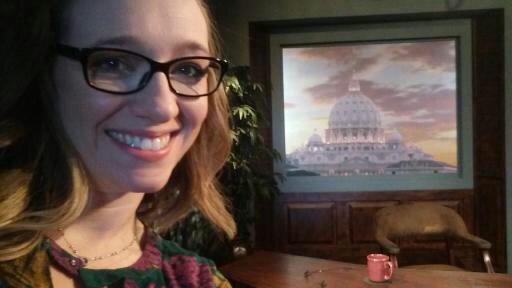
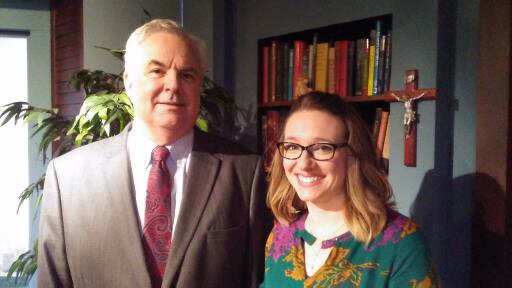
A few weeks back, I hopped on an airplane and headed to Columbus, Ohio to film an episode of ETWN’s The Journey Home, hosted by Marcus Grodi.

I was met at the airport by Scott Scholten and his wife Barb. Scott produces and directs the show, and they also have a special B&B apartment in the basement of their home to host many of The Journey Home’s guests.

I had read other articles about people who had been on the show, and was very excited to see the famous “Guest Book,” where many notes and signatures from guests of the program reside. It was a surreal moment adding my name to that list, especially considering that two years ago, I was closer to leaving Christianity entirely than I was to becoming Catholic.


And let me tell you this, the Scholten’s are experts at hospitality. I was so blessed to be able to stay in their incredibly comfortable accommodations. Every little detail was attended to, and I was made to feel like a member of their extended family.

1511189820655
There was also a Mother Angelica mug, out of which I just had to drink my evening tea 🙂

We had lovely conversation over dinner and breakfast the next morning, and then it was off to Mass at this beautiful, quaint, historical Catholic church near the Coming Home Network headquarters, where we would film the show.

I caught sight of Marcus Grodi in the back of the church and we made a quick wave ‘hello’ to each other during the giving of the peace. I knew from my hosts as well as other guest posts about the show that Marcus doesn’t spend much time with guests before the filming begins. He wants to get to know each guest and his/her story for the first time genuinely during the taping.

1511192397074
They filmed 2 shows this day, back to back. I was up first.

Walking onto the set was also very surreal. I had seen this set before in the shows I had watched. There were some people who were very important and encouraging to me on my faith journey who had sat on the same side of the desk I would sit on soon. Scott Hahn, Jennifer Fulwiler and Steve Ray were a few that immediately came to mind. But there are many others.

1511189832287
Well hello there, Mr. Desk.

The show used to be filmed live, and still tapes as though it is. There are no re-do’s, just a 2 minute break in the middle. It was a bit intense to think about at first, but everyone is so kind and welcoming. I was definitely on high alert and excited, but once we started filming it felt more like a conversation. I didn’t forget about the cameras and people in the shadows of the lights, but Marcus Grodi is a very gracious host, and it was easy to tell him my story.

1511192017588.jpg

He listened so well. I don’t remember everything I said, but I do remember there were a couple of things he brought up at the end to help a point I had mentioned earlier come full circle. He asked great questions to help me elaborate on some things. You can tell Marcus is a pro. I told my story pretty much from birth to life after conversion, and felt like the time flew by. We then answered a couple of email questions, filmed a short promo, and that was it!

1511198741529

After filming, some of the Coming Home Network folk took me and the other guest out to lunch, then it was back to the airport and home again. It was a whirlwind, but one I will never forget.

I also don’t think it will ever cease to amaze me that my story is now counted among those that made a huge difference to me as I prepared to enter the Catholic Church, and even still after. Those stories were a lifeline as I wrestled through questions, dealt with loneliness and difficulty in the transition from our Protestant Church, and as I rejoiced in the Truth I had found resided within the Catholic faith.

I hope you will have the chance to watch my Journey Home. It airs Monday, December 18th, 2017 at 8pm Eastern/ 7pm Central on EWTN. If you don’t have EWTN, you can live stream it here online.

Encores will air:

Tuesday, December 19th, 1am Eastern

Friday, December 22nd, 1pm Eastern

Or Watch the whole episode below!

My written conversion story is also featured in the Coming Home Network’s newsletter this month, and can be found here.

-Lorelei

Do you have any questions about my conversion story? Or whose conversion stories have impacted you in your faith walk?

Purchase Lorelei’s Books Here:

Finding Peace Amidst Chaos In Adoration (Catholic Stand)

(The article below originally appeared on Catholic Stand. Click here to read.)

Letters To God

While sorting through a bin of items from my childhood, I came across several pages of prayer journals. In different phases of my life, I would write my prayers to God in letter form. The letters are written in such familiar language, as though I was writing a letter to a best friend. They made me smile. Some of my letters were written during normal times where nothing extraordinary or desperate was happening. Others were written during relatively difficult periods of time. But they were all very honest and trusting. They were also all handwritten, which means I made the effort to steal away and share my heart with my God.

In particular, these letters reminded me that I am currently far from the place where make such a concerted effort to pray. I pray, yes. But they are shorter, more fleeting prayers: praying with the kids before bed, praying a Hail Mary during the day. There is a place for those prayers inserted into the daily routine, to be sure. But there is also, I think, a need and a place to slow ourselves down and let the world melt away and connect with our Creator on a more intentional level.

How Quickly We Forget

I have to smile and shake my head a bit at how, despite all the changes in technology and industry and convenience, human nature really changes very little. For example, the Israelites witnessed God parting an entire sea to save them from the pursuit of Pharaoh and sustained them with manna. They so soon forgot, however, and built idols made of gold. Similarly, I forget so easily the balance, peace, and joy that is in my life when I intentionally spend time with God.

I know, historically, that the times where I am the most peaceful, the most grounded, and have the most perspective are the times in my life when I make time to pray. There was the summer I babysat several days a week and, while the kids napped, I would spend the time in devotion. There was the spring I went through a break-up and met God daily in my sorrow. There were many times when nothing in particular was going on, and I just acknowledged it was important and made the time.

But then I get comfortable. I let my priorities subtly, yet consistently shift. In those phases of life, when fleeting prayers are all that sustains me, something significant is out of balance. I am quicker to anger. I am more easily burdened by the stressors of life. I lose perspective on what is truly important. The Israelites and I? We have more in common than I’d like to think.

Making God Time A Priority

I am always going to be busy, though as the years go on the business takes on different forms. In high school, it was extracurriculars, and calculus homework. In early married life it was graduate school and learning how to be a teacher. Now, it’s three children aged five and under who are always hungry and who leave a trail of toy wreckage in their wake.

My husband recently (and gently) pointed out that I have many Martha-like tendencies. I spin many plates. Most of them necessary. I spin the plates of meal planning, house-keeping, playing with the kids, writing, and planning ahead so our family has what we need. Anxiety doesn’t rule my life, but there is more of it that I’d prefer when I am always focusing on the plates I spin, instead of looking up beyond the plates, to the One who created these gifts in my life. The gifts of food to eat, and a home to keep, and children to love, and a brain that loves to create and plan.

Amidst the business, there must still be time for God. Yes, he is there with us in the chaos. But he is also there, waiting for us to spend time with Him. He is there, in the quiet of our bedroom, or backyard, or coffee shop. He is there, in the Eucharist at each and every Catholic parish. He waits for us there in a full and real and tangible way.

Finding Adoration

Prior to becoming Catholic, I had access to God in many beautiful ways and many beautiful places through my Christian faith.

But one of the many significant gifts I have access to now through being Catholic, is the gift of Adoration. When I am weary, when I am burdened, I can go to my parish, and sit with my Savior. After our Mary/Martha conversation, I knew I was past due for some time sitting at my Savior’s feet.

So I went to Eucharistic Adoration. I entered to the scent of incense, a symbol of the prayers of the people rising up to God. I didn’t go with any specific agenda, or prayer requests in mind. I just wanted to slow down and remember what it felt like to be with God.

Through the brief time I was able to spend in Adoration, I found it was difficult to slow down my ever quickly moving mind. I realized it’s probably pretty tricky for God to get through to me sometimes when my own brain is moving a million miles an hour. I need to remember to slow down. I didn’t have any lightning bolt revelations, or earth-shattering clarity. But I did have rest. How beautiful is it that God is always there waiting for us? He is there in Adoration, in the Eucharist, in all those created in His image, in the world He set into motion in a universe filled with stars, voids, gravity, and light.

He is so patient with us. He finds us where we are, and makes Himself available for us to come to him. Where he veils himself in something so humble as the bread and the wine. Which, when I think about the immensity of God, isn’t that different from when He veiled His glory in the body of a human man.

It humbles. It inspires awe.

And so, I will go again to the feet of my Lord until I remember how to slow down my mind, to sit and to be, and to let Him fill me with his peace and His love. Then, I know, I will be able to accept with peace whatever it is that may come my way. Perhaps next time, I will once again bring a notebook and a pen, and remember what it is to share my ordinary and extraordinary burdens and joys with my God. And then to put the pen down, be still, and remember what it is to listen and to soak in His love for me.

-Lorelei

Purchase Lorelei’s Books Here:

On Beautiful Churches

The Original Problem

I used to have a problem with ornate churches. I used to think the money would have been better spent elsewhere. I verged, at times, on offended.

Then, I realized, I’ve worshipped in very expensive buildings that weren’t so aesthetically pleasing. Yes, Cathedrals cost a lot more than the average mega-church, but they are both expensive. I’ve also worshipped in some churches that probably weren’t as expensive. I’ve worshipped outside, which is as cost-efficient as you can get. This article isn’t an attempt to argue that worship can’t occur in a variety of settings. It’s an explanation of how I’ve come to love beautiful churches, and to understand the value they hold for the practice of my faith.

The Real Presence

But why is there value in beautiful churches? As Catholics, we believe Jesus himself is present in a very real way in the Eucharist. That’s a good place to start.

During my conversion, I read a book called Jesus Shock by philosopher and Catholic convert Peter Kreeft. He argued that only belief in the True Presence could have built such beautiful churches. Only belief in the fact that those churches would be housing the presence of God himself resulted in the aesthetic beauty and astounding architecture of the Basilicas and Cathedrals of the world.

I believe it was Peter Kreeft who also wrote about beautiful churches, and how they help make up for the scandal of the manger. I had never before thought of the manger as scandalous, but our Savior, the God of all things was born into the most humble of places, amidst animal dung and slop. How scandalous indeed. Beautiful churches that house the presence of our living God in the bread and wine provide a much more fitting place for God to reside in the form of the Eucharist. It provides a contrast to the humble state in which Jesus entered the world as man.

Looking Up

At our current parish, there are a number of amazing stained glass windows that let in the light. At certain Masses at certain times of day, the sun shines its light directly through some of them. It is awe inspiring. I find myself often at Mass, throughout the liturgy, looking up.

I think that’s part of the point. Beautiful churches draw our thoughts and minds heavenward. To help us physically and tangibly connect with the heaven-earth intersection that occurs during the Mass. The incense, the music, the vestments, the tabernacle. They all are helpful in this regard, too. We are a body/soul composite. And all those physical components, including the architecture of the church, help frame and focus our minds on the things of God.

Conclusion

My husband and I visited Paris briefly several years back. We toured Notre Dame Cathedral, with the eyes of tourists. Interested in the architecture and history. I never once thought about the Eucharist that entire trip. I hope to be able to go back someday with the eyes of a Catholic. I think I will appreciate it in a way I wasn’t able to before.

Because before, when I walked into a Cathedral I saw interesting architecture but was concerned of the financial waste. I walk in now and see love. Love of God and his True Presence in the bread and the wine.

I don’t need to be in a Cathedral to worship, but I appreciate beautiful churches now.

-Lorelei


Purchase Lorelei’s Books Here: