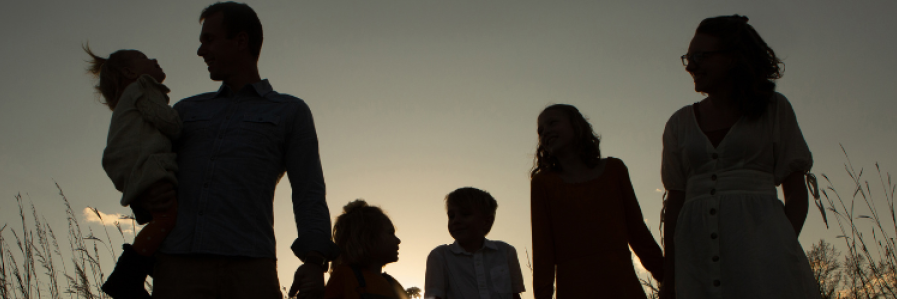
How Postpartum is Going This Time Around

My Postpartum History

I’ve had a lot of family and friends checking in on me since sweet Zelie was born. It’s been so nice, and it’s something I try my best to do when my friends and family have a baby as well.

This is because of my history with postpartum depression and anxiety, which I first identified after August (our second) was born, and when things were pretty severe. I’ve chronicled a bit of my postpartum experiences here.

So now, with our 4th baby clocking in at 5.5 months old, I think I can say with confidence that this has been my best posptartum ever.

*cheers*

Hooray!!! And, indeed, I think this is something worth celebrating. But the reason it has been my best postpartum isn’t because I haven’t dealt with any issues, but it’s because I feel like I knew what supports I would need and prioritized putting things into place ahead of time so I had the best chance possible of being a happy momma with my new baby.

Disclaimer

I very much believe that mental health is really important for moms to consider and to talk about when preparing for and living in the postpartum days.

However, I would never presume that what has worked for me will work for all moms, or even another mom. What I do hope is to share one example of one mother’s journey towards taking care of her mental health during her postpartum period. And in this way, to provide an encouraging example of someone who lived through postpartum depression and anxiety, who came out the other side, and who was able to successfully manage postpartum with future children.

2019.08.25- Savaryn_Racine_Family_Portraits-2865
Photo Credit: vJoy Photography

My Strategy

This pregnancy was definitely my hardest both physically and mentally. I had nausea for the entire 9 months, to the point that I took medication for it each time I ate a meal. Feeling so much discomfort inside my own body, and for so long, definitely started to take its toll. I was feeling pretty sad, and found myself just going away to break down and cry sometimes. So, during my third trimester, I communicated with my midwife team, and we started me on a low dose of an antidepressant (sertraline). And…it helped me get through the rest of the pregnancy in a healthier mental state.

Medication

Once Zelie was born, we planned on me increasing my dose of sertraline from 25 mgs to 50 mgs. This is due to my strong history of postpartum anxiety and the fact that I decided I’d just rather be happy and able to enjoy my time with my baby instead of waiting to spiral into anxiety and only then getting help. I’m quite sure my postpartum struggles have a large chemical/hormonal component, and I can confidently say that with sertraline’s help, I enjoyed the newborn weeks with Zelie. It is a lovely, exhausting blur, but I didn’t feel overwhelmed or unable to function. I usually stay on an antidepressant postpartum for about 6 months, and then taper off.

Communication

I have had some anxiety this time around even with our good preparations. The biggest spike was when I returned to my day job half time, and transitioned to the change in pace and leaving Zelie with a babysitter. During those times I worked really hard to communicate with JP what I was feeling, and also to keep in mind that this spike was likely due to the transition, and would not last forever. And we did fall into a new rhythm after a few weeks.

Postpartum Doula

This required some advance budgeting on our part, but we again utilized a postpartum doula to help with the first weeks after JP went back to work. Ashleigh at Guiding Mothers, who we also had help us after Mary was born, joined us again. And, like the Mary Poppins she is, she helped care for Zelie so I could do some self-care. She also cooked bulk freezer meals for us, helped with laundry and tidying up, joined me on errands, and provided much needed emotional support. It was so nice to know I had that break and that help coming as we transitioned to having 4 children.

Exercise

Doing a 20 minute work-out about every other day helps boost my mood, so making that a priority and having JP or the other kids help with the baby while I do it also is something very important that I prioritize to take care of myself.

Breaks

Whether it’s a trip to Starbucks to work on writing, reading a book, taking a bath, etc. When I need a break, I let my family know and I take a break. I don’t feel guilty about it, because a mom who has time to recharge her batteries is a better mom for her kids, at least in my case. Sometimes it’s funny how even a short period of time of knowing I’m going to be uninterrupted and do something I specifically enjoy, can have a long lasting impact.

Co-Sleeping

I know this is an area that divides many a parent and expert alike. However, I’ve found that I am in a better mood when I sleep better, and sleeping better, for me, means sleeping next to my child so I can easily nurse her in the night and so we both drift back off to sleep. For Zelie’s first 5 months, we’ve slept on a firm mattress on the floor in our bedroom, without any heavy blankets. I sleep in what’s known as the “C” position with her, which both protects her and makes nursing easy. I’m cozy, she’s cozy, and we both wake up less and to a lesser extent than we did when I slept separately with Felicity. I’ve co-slept to some degree with my youngest three children. Others I know have used co-sleepers next to the bed, or the pack-n-play with a bassinet attachment. We’ve used some of these too as we transition the babies to sleeping alone over time, but co-sleeping for the first few months has helped me.

2019.08.25- Savaryn_Racine_Family_Portraits-2862
Photo Credit: vJoy Photography

Overall

Overall, I’m very thankful for the relatively few bumps we’ve had along this postpartum journey. I’m thankful for the friends and family who have been checking in, and for our family’s commitment to being proactive so I could really be present as we welcomed Zelie into our family.

-Lorelei

Purchase Lorelei’s Books Here:

How To Save A Life: Suicide Prevention Day, 2018

National Suicide Prevention Lifeline: 1-800-273-8255

Donate to the American Foundation for Suicide Prevention: https://afsp.org/

Grieving Suicide

Grieving my 47-year-old aunt Jeannine’s suicide has been different than any other grief I have experienced in my time on this earth. It is heavy, it is dark, it is slow, it is hard.

179215_10150133498660815_7861219_n
Me and Neen before.

She left so many things behind. Family, friends, loved ones. We all must live now with a story that ended in a nightmare. We hurt for our grief, but we also hurt for the pain Jeannine felt in those final minutes. We want the chance to go back in time, to take some of that pain off her shoulders. To write a different ending.

Sometimes suicide grief is weird. I’ve had so many thoughts and emotions. Anger, compassion, pleading, confusion, an insatiable hunger for answers. I’ve been mad at the inanimate objects that were in her apartment because they witnessed her die and did nothing. I’ve had to think long and hard about which of the items that were in that room I wanted to keep. A million weird things have passed through my head as I frame our life ‘after.’

164506_10150133496305815_3208601_n

She left so many things behind. Her gemstones, her clothes, her records, her movies, her furniture, her art, her jewelry, her dishes, cookie cutters, board games, pictures, books.

And journals.

We have an abundance of journals. Part of my grieving process has been, in small pieces, to read her heart on those pages. At first, I wanted answers. Sometimes, I was mad. Now I am trying to understand.

You see, to many who knew her, Jeannine was a bright spot of sunlight on a cloudy day. She paid attention to the little things. She saw people, and helped make their day better. She cooked delicious food, and baked, and made her own amazing chocolates. She loved being silly. She planned elaborate trips for me and my friends on multiple occasions to visit her in NYC. We laughed a lot. We had deep conversations.

1931061_525286017297_277_n

I, like many others, had no idea my aunt was chronically depressed.

But there it is, on the pages of her journals. She wondered what was wrong with her, why she was always so tired. She thought cruel things about herself and her self-worth. More than once, she considered ending her life.

38903_455957185814_5234190_n.jpg

And no one knew she was depressed. Not even herself.

I haven’t read a page yet where she connected her struggles to depression. She wanted to snap herself out of it, she felt like she was watching her life go by, she was really, really sad a lot of the time and thought it was because something was intrinsically wrong with her. But, except for to a very few people on extreme occasions, she put on a smile and lit up the room.

My Why

I’ve journaled in the past, on and off, but particularly when I’ve been going through a struggle. When I look back on my journals during those difficult times, I am struck by how similar her journals sound to mine. Like, eerily similar.

And it’s hard not to wonder what the difference was, that I came out of it okay and Neen lost her life. Was it that I identified it as depression? That I had someone close to me who saw the problem? But I isolated myself and put a happy face on plenty, too. Was it that my depression was more situational/hormonal, and hadn’t been following me for decades? That I had years of relief between relatively short depressive seasons and for her it was relentless?

In the end, for my aunt, we know it was the perfect storm of trauma on a terrible, awful night. All the wrong pieces came together in the absolute worst possible way, and she was left without hope.

In light of this, or, perhaps to try and make some sense of it, I’m going to briefly describe my own experiences with depression in the hopes to shed some light on the variety of faces depression can take. No matter how many pages of journal I read, I will never have all the answers about why my aunt didn’t survive her depression. But I can work to understand my own experiences, and be a voice that breaks the silence.

Depression Three Times

In my adult life, I have had three seasons of depression. As mentioned above, mine have been either circumstantial or hormonal/body chemistry related. Here is a summary of what those seasons looked like form me.

1- Between the ages of 20 and 21, I worked at a small company in a small office with three men. The owner of the company was also a man, and the only woman I interacted with there was his wife. The three men who worked in the office asked me inappropriate questions about intimate things, and joked about inappropriate sexual things while I was working, or eating lunch with them, or whenever.

I scheduled a meeting with the boss and his wife to share that the work environment had gotten uncomfortable for me. They listened intently and I left that meeting believing I now had some advocates on my side.

The next time I went to work, the men apologized. But only days later, I got a call from the wife of the boss telling me I was being let go.

The quality of my work hadn’t changed, and the company was pretty busy, which was why they had hired me as extra help. The only thing that had changed was I spoke up about their inappropriate sexual comments at work.

After that, I suffered low moods, some hopelessness, and feelings of being helpless. Within a couple of months, my life had moved onto other things, and there was much in my life that was going well, and the depression subsided on its own.

2- After giving birth to my children, I had mild to severe postpartum depression, and it was a bit different with each child. It varied from low mood and pervasive sadness after Felicity was born, to very, very scary thoughts of self-harm after August was born. I felt like I was watching my life through a pane of glass and couldn’t get in. I didn’t think I was good for my children. I thought the world would be better without me.

After we diagnosed the postpartum depression, I took Zoloft for approximately 6 months in combination with therapy, and reading books about postpartum. I followed all the directions for how to take care of myself and I began noticing an improvement after I had been on the medication for 2-4 weeks. Things started feeling better, I was able to smile and enjoy my children again, and I knew I would be okay. I wrote in detail about my experience with postpartum depression and anxiety here. 

3- Three years ago, a woman broke into my home while I was alone with our then two children. I was on the phone with 911 for just under 6 minutes before they arrived, hiding in an upstairs bedroom as I watched this person peep around my backyard and ultimately gain entry. When they police came, she was in my kitchen. To this day I don’t know what her intentions were, but I do know that I was home alone with my young kids, without any means of defending myself while someone who was drunk, or high, or both was in my house.

After that happened, I exhibited many symptoms of PTSD. Functioning at work became difficult. Seeing an unfamiliar face in my neighborhood caused a panic. Unexpected loud noises did the same. I slept better once we installed a home security system.

I ended up having to leave a job that was highly-stressful even when I was functioning at 100%. It was hard to leave. I felt like I was letting a lot of people down, and that didn’t help. My thoughts, for a time, grew dark and scary. We were going to buy a gun for home protection. I told my husband not to. I was worried about myself with a weapon like that in my home.

As weeks and months passed from the traumatic event, my depressive symptoms again subsided. Besides that very unique traumatic incident that I couldn’t have controlled, our life was in a very good place. I was able to weather the storm of acute stress probably in part because of that. But, having experienced scary depression prior with the postpartum issues, it was a very unwelcome return to that place for even a relatively short time.

The Other Side

Writing a lot of that feels very weird now, because I am in such a different mental space now, and in general. I’m not someone who struggles with chronic depression, but I have struggled at different times, and in different ways each of those times.

But I am so thankful I survived, because it wasn’t a guarantee. And I now understand what depression is, so even when something happens that is triggering, I can label what is happening and I know where to reach out for help if I need it.

And I wonder how many people could be saved by having access to tools to help them identify what is happening?

It’s been hard not to play the what-if game with Jeannine.

What if she had understood that her depression wasn’t something innately wrong with her as a person?

What if she had been able to put a name to all the things she was feeling and was able to get help?

What if she had taken an anti-depressant?

What if people just simply talked about it more so she would have had a chance to recognize the overlap between others’ experiences and her own?

Walking Wounded

For those of us who have suffered a suicide loss, we walk this earth wounded every day.

I did keep some of her personal belongings, and they now sit in my home. I am thankful to be able to remember her with those items, but I often think how they don’t belong here. They belong with her, in her apartment, with her there to look at them each day.

I’ve also been appointed the personal representative of her estate. There are a lot of things to do with that. Legal things, tax things, things that remind me daily how I wish things had turned out different. I even play out different scenarios in my head while driving or sitting after the house has gone quiet late at night. I imagine what would have happened if I had seen her deactivate her Facebook page the minute she did it and called to check in. If she had answered her phone. If there could have been a different ending to this story.

13626603_1034662683286057_298395395319840747_n.jpg

Jeannine walked wounded every day, too. It’s there, plain as day on the pages of her journals. And so many of us here also walk wounded because of depression.

Breaking the Silence

It’s so important to break the silence. Breaking the silence is a way to start a conversation, to end stigma, to open up avenues of support. And maybe, a way to save a life.

-Lorelei

Purchase Lorelei’s Books Here:

Skinny Vs. Strong. Managing A Postpartum Body While My Young Daughter Watches

I purchased a bathroom scale for the first time in my life just over a month ago. It actually was kind of a difficult decision. I’ve never been super focused on the number on the scale. I know what a healthy weight range is for me, and, realistically I know I’ll end up back there someday. But, also realistically, I know I am like many women who do not recognize the shape of the woman they see in the mirror after giving birth. I jokingly refer to it as my period of “deflation,” but it is difficult to know the way you feel inside and the way your body looks are not in union. It’s difficult when your pants can’t make it over your widened hips. It’s difficult when you still, 2 months after giving birth, can’t fit your wedding ring all the way on your finger.

I think a lot of us probably feel that way. I gained 18 lbs more weight during this pregnancy than with the previous two. And the reason for that is actually something to celebrate. I was incredibly nauseous for the first 20 weeks, but a new medication helped enough that I didn’t get sick as often. With the first two kids, I lost weight during the first trimester. With one of them, it was nearly 10% of my bodyweight. That didn’t happen this time. And, as a result, I naturally gained more. So, the extra weight is, in many ways, good news.

Holding All The Things

And I know that I am doing much better now this third time around at being gracious to my postpartum body than I have in the past. My body grew, sustained, and gave birth to human life, which is freaking amazing. But I think I can love and appreciate my body for its ability to do that, and also accept that it is still in a period of transition. That pregnancy and postpartum are both times where our bodies change dramatically. I can say- “Ok. It sucks that I have to rotate between 4 shirts right now that look appropriate,” and also stare at my daughter and say “Woah. This amazing little creature was formed inside of me.

I can know this, and also sometimes I just really just want to wear my wedding ring, and have more than one pair of pants that fits. I can feel frustrated when that pair gets majorly spat up on, and I have to give them an emergency wash with not enough time, and then spend an evening out doing pub trivia with damp pant legs.

I can hold all of those things and accept that they all are valid. I can sit with dichotomy. I can grant that pregnancy and postpartum are both times that require patience and grace. Yes I can.

Getting A Move On

Exercise is one of the key components to my treatment plan for Postpartum Depression/Anxiety this time around. Being active helps my mood, and enables me to manage the stressors of each day more effectively. I also know it will help to tone and strengthen me. And lose the baby weight. So, once I was cleared to move, I started a manageable yet effective workout program, interestingly titled Bikini Body Mommy. I make it like an appointment each day that I cannot miss. And the program isn’t how it sounds. The lady who runs it is a mom of 4, who looks normal, and is working on strengthening her body as well. It’s very focused on acceptance, and being strong and healthy. Just being honest – its much easier to go through this program during my postpartum period than it would be to watch a perfectly toned 0% body fat Jillian Michaels or Other Hyper Toned Woman tell me to get a move on, or that I can handle 10 more reps or something. I’ll take the mom with the kids in the background of her videos, who deals with the same stuff I do when trying to get a workout in thank you very much.

Anyway… the Bikini Body Mommy 90 day challenge has set intervals where you take your weight and measurements.

I like seeing progress, and I like things I can quantify. I wanted to engage in the program with fidelity, and so, I bought the scale. I bought the tape measure. And began.

I am now nearly 30 days into the program, and I am seeing progress and change. I’m feeling stronger and more energetic. All of which are good things. But I am also keenly aware that my 5 year old daughter is watching everything happen. And I am aware that how she sees me handle this time will teach her a lot about what she should think about her own body.

The Little Eyes Upon Me

Even if my own brain is screaming in excitement when I see the scale dip down a bit, or I notice that or that hints of a waist are beginning to reappear (and those abs are in there somewhere, I just know it), I am consciously, painstakingly careful about the words that I let out of my mouth, and of the way I let my daughter hear me talking about my body. To some extent, I have always been this way around her. But now, especially now, I am more careful than ever.

She, my precious girl, is so confident. She is so secure. She knows she is lovely. I want to build upon that, and teach her to be gracious to herself when her body goes through change. Because women’s bodies go through a lot of change in a lifetime. We are meant to expand and retract. We are meant to grow life, and give life. Our metabolisms speed up and slow down. Our bodies change monthly as our fertility cycle repeats time and time again. Our bodies are not and never will be stagnant. And I want her to know that when she, too, goes through those inevitable changes in her body, that health and strength can be the rocks she can stand on.

So here’s what we’re doing right now.

Right now, my daughter sees me exercise 6 days a week, for about 20 minutes at a time. Sometimes she joins in with me, and we talk about how strong we feel, or how we can feel our muscles working. She knows exercise is a priority. She knows that for kids, running, and playing, and anytime she is moving is good exercise. And that she’s welcome to join in with mommy. And let me tell you, that girl can plank.

Right now, I let her see me sweat. It’s ok that it is hard work. It took mommy’s tummy a long time to stretch out to grow the baby, and it’s ok and normal that it takes work and time to help get those tummy muscles un-stretched out and strong again.

Right now, I’m careful how often she sees me step on that scale. She knows that it is one way I can track how mommy is getting healthy. But I don’t make it a focus.

Right now, (and always and forever because I need food to live,) she sees me eat. Regular food. And treats. This momma cannot a day without chocolate go. But she sees me eat healthy portions, and she hears me talk about filling up on good-for-you foods first with vitamins that will make us strong, and then leaving a little room left for a treat afterwards.

Right now, (and hopefully forever,) she does not and will not hear me complain about feeling flabby, or misshapen. Truthfully, I am a bit flabby due to the extra skin. I had 8 lbs 10 oz of humanity fit inside my abdominal region. The flabbiness is simply a reality of the situation. But, though I may be tempted to feel like I am, I am not misshapen. I grew a human. This is the shape my body has after giving birth to said human. It is differentshapen if anything. But the prefix “mis” means wrong, and there is nothing wrong with a body looking like this after doing what it did.

Right now, even if I may not particularly like what I see, she does not see me look disapprovingly in the mirror, or pinch or grab the stretched out parts of myself. She does, however, see me take my progress photos, and she knows I am taking them so I can keep track of how strong I am getting, and so I can see my muscles grow.

Right now, she knows it is more important to be healthy than to be skinny. She knows this because I ask her from time to time, and she always gets the answer right. And I hope and pray she continues to believe it. Because it is the absolute, and total truth. She also knows all women are shaped differently, and we all are different shaped at different times of our lives. And that all of that is normal, and good.

When Others Say Things

I was glad tonight when a woman approached me and said “Look at you, all skinny already,” that Felicity was out of earshot. However, she was in earshot when her daddy recently, and briefly, forgot the deal and said “Look at mommy, isn’t she getting so skinny?!” I said, “No, daddy, I am getting healthy, and strong.” And Felicity echoed the same, acting almost as if her daddy was silly to have spoken in that way.

That a girl.

JP didn’t mean to do anything wrong- he was trying to pay me a compliment and acknowledge all the hard work I’ve been doing. But, he’s also man whose body has pretty much stayed the same since high school. Having never been a woman, he doesn’t fully get what we are doing here. But he also realized the mistake and corrected his own language as well. Nice recovery. Positive message reinforced.

Teaching Me

In some ways, I am also helping to teach myself how to think more healthily and graciously during this time. I have to frame my own thoughts better in order to make sure that the words I say match the message I want Felicity to hear. And, the little ways I’ve seen her repeat back to me the things I have spoken let me know that, at least as far as this goes, we are doing okay. She’s talked about how long it takes to grow a baby and stretch out, and that getting un-stretched out takes a long time too. She cheers me on when I am working out, yelling “You’re getting stronger mommy!” Yes, sweet girl. Yes I am. Thanks for the compliment.

These things are music to my ears. These things keep me going, and encourage me to continue on this path.

The path to health. To continued happiness. To being content right where I’m at. Even if I have a few more evenings with damp pant legs in my near future. We’ll get there. After all, these things take time.


Purchase Lorelei’s Books Here:

The Invisible Struggle: My Journey Through Postpartum Depression and Anxiety, Then and Now

One of the biggest things I’ve learned through my own journeys through postpartum depression and anxiety is how good we humans can be at looking like we are okay. That’s partly why if I know you, and you have had a baby recently, there’s a good chance I will do my best to check in and ask you how you are doing. And, based on my own history, I might ask you more than once to make sure things haven’t changed, or to give you another chance to tell someone if something is wrong and you’ve still been keeping it to yourself. And if I’ve missed any of my friends because you seemed to be doing fine, I’m sorry. I know better.

And that’s also why I feel it’s important for me to be honest about my own experiences. I hope that women will be able to talk about postpartum issues easily and without shame and get the help that they need before things get too serious.

You see, this isn’t my first time at the postpartum depression/anxiety rodeo. But, there are some very significant differences in how things are going for me this time, versus how they went for me before.

The first time I had significant postpartum issues that required intervention was after the birth of our son, August. The second, right now, after the birth of our little Mary.

Then, 

I stayed silent. Even after I knew something was terribly wrong, I kept it inside for weeks.

Now,

I started seeing a psychologist 2 months prior to Mary’s birth. She taught me strategies for dealing with depressive feelings and anxiety that I could later put to use if needed. I knew I had a significantly higher risk of dealing with depression/anxiety this time because I had experienced it before. I didn’t want to be silent if it happened again.

Then,

Postpartum anxiety and depression hit me like a freight train. I was having panic attacks, which I had never experienced before. I was driving erratically.I felt like I was stuck behind a wall and couldn’t access my own life. I was spending time thinking about the least traumatic ways to make myself disappear. All very abnormal for me, and all very scary. And I didn’t see it coming.

Now,

We knew exactly what to look for, and didn’t take it lightly. JP and I monitored my mental state regularly after the baby’s birth. I kept my counselor updated. I was honest. When, early on, I had some depression, and now, when I’m still dealing with anxiety, the conversation had already been started.

Then,

My treatment plan included me needing to take Zoloft for approximately 6 months. I also did every. single. thing. that I was told would help me recover. I saw a counselor, I exercised, I made myself shower, I started eating right, I let family help. Looking back, I don’t think if it were up to me doing it for myself, that I would have had the strength to do what I needed to do to heal. But as I read about depression, I learned about the effects of a depressed parent on her children. And so I took the medication for their sake. I did what I was supposed to do to recover for their sake. And, after a few weeks, little bits of my normal self began to peek through.

Now,

My treatment plan started before Mary’s birth with developing a relationship with my psychologist. I still see her regularly. I also began implementing all the things I learned the first time around, and the new tools I’d acquired as early as I could. I’m using a light therapy box and taking extra vitamins. Once I was cleared to exercise, I started to exercise. I journaled so I could track my mood and anxiety levels right from the get-go. We hired a postpartum doula to help with cooking, cleaning, laundry, and baby care. My mom comes to help for 3 days every other week. And when I started having symptoms, I put into place the strategies I learned from counseling. I wasn’t hit by a freight train this time around. I knew what to do, and was already getting the support I would need. So, overall, things have been less scary and less severe.

Then,

I considered myself fully recovered by the time my son was 7 months old. I put a lot of hard work into that recovery. And, thankfully, postpartum depression and anxiety is not a chronic issue. It might be reoccuring, depending on whether or not we have any more children, but it is not something you live with forever. And I held on to that hope that first, long, dark time through. Thankfully, it was true. I was totally back to my normal, functioning self. Morning had broken.

Now,

I don’t know how long I have until I will be fully recovered. I’m hopeful that based on the timing of my recovery the first time, that my body chemistry will level itself out by mid-summer, maybe sooner, especially with all I’m doing to help the healing process. I’m managing right now without medication, but I’m needing to keep things really simple. I know from experience that if I try and do too much on a given day, my anxiety will be worse. I know if I don’t get enough sleep, or can’t make up sleep with a nap my anxiety will be worse. I know if I don’t exercise, it will be worse. And, because of how I’ve been able to manage my symptoms much more effectively this time around with this treatment plan, and because we know that pace of life is a huge contributing factor in how well I do on a given day, we’ve had to make a difficult decision to extend my leave from work while I make sure I continue to recover well. This time I’m able to know that I want to recover fully and as soon as possible not only for my children, but also, for myself.

Beyond The Surface

Having postpartum depression and anxiety has helped me to desire to look more deeply in situations where people that might otherwise appear to be fine. We often put our best face forward for the world to see, and that best face can hide some deep pain or struggle underneath. I want to give a couple of personal examples of that, in the hopes that it can continue to remind me and others to extend compassion, and to encourage vulnerability.

Anyone who spotted me driving in the car last week with the kids would have seen what appeared to be a woman, simply driving. But they wouldn’t have known that I overscheduled myself on that day, and we were running late to get Felicity to theater class. In reality, we were going to be 2-3 minutes late. Which for normal Lorelei wouldn’t be a huge deal. But the hustle of trying to get there on time when I had attempted too much triggered my anxiety. I was working very hard to stay calm with the kids, but I assigned more blame on their lack of speed getting ready than I should have. My mind was racing as I tried to utilize the strategies I had learned to keep from panic taking over. And someone looking very closely would have noticed that as I drove, my hands were shaking.

Also this week, friends of mine on Facebook would have seen this picture of JP and I waiting for a concert to start:

16681836_10100652365133687_428422449057818422_n
Don’t we look so happy and excited?!

Cute pic. But what this picture doesn’t show is that not even ten minutes later, one of the opening acts came on, and the way the music was mixed was very heavy on the bass. It was so much bass that my insides were shaking. And my thoughts started racing… I thought the building was going to come down, or that something inside my body would stop working from all the shaking. There were people on all sides of me and I felt trapped. I tried to breathe, and tried to ground myself, and stick it out, but I just couldn’t.

None of those thoughts were rational. But that’s how anxiety works. So I used another strategy. I removed myself from the area, and sat out that act’s entire set in the concourse where the sound was much more muted. I told JP I was worried if the main act had that level of bass that I would struggle to be in there during their concert. Thankfully, their sound mix was very different and we were ok. But… the point is, that picture of me didn’t tell the whole story of the night. I didn’t put nearly running out of the area in a panic as my Facebook status for the evening.

I hope to be able to continue to be honest about what I’ve been through with others. Perhaps it will help someone feel less alone. Perhaps it will help someone make a decision to reach out. Because postpartum stuff is nothing to mess around with. Suicide is way up there with other leading causes of maternal death. But, taken seriously, it is so, so very treatable. And you totally get yourself back after you’ve done the hard work to recover, whether that be taking medication for a while, or excercising, or therapy, or any combination of the many, many tools available that help you get yourself back from the darkness.

Other Resources

Below are 3 resources I have taken advantage of at different points in my own postpartum journey, and that I found to be very helpful.

This Isn’t What I Expected. This is an amazing book that helped to normalize my experiences, and start me on the path of having tools to recover. It also has a whole chapter devoted to helping husbands know how to help their wives.

Postpartum Progress. This website contains stories from women about their postpartum experiences. It also has articles and links to resources for help.

Postpartum Support International. A hotline that connects women to resources for help.

Purchase Lorelei’s Books Here: