Emerging From the Fog

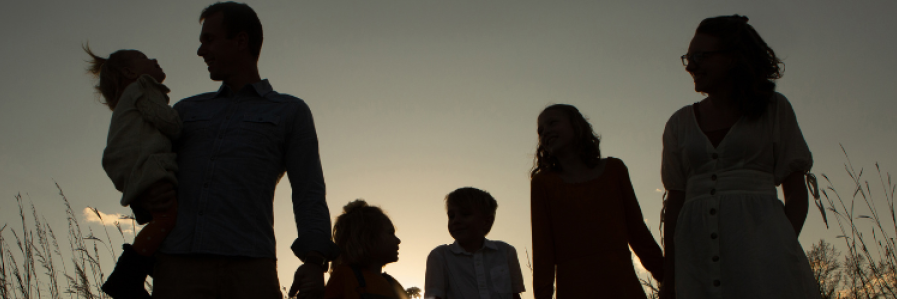
Lent is always an appropriate time to reflect on suffering, and over the past 12 months, This Catholic Family has had some rough times.

I’ve shared a few times about the loss of my aunt to suicide in February 2018. The grief from that, and the slow path toward healing, has been a part of the fog that made it hard to write at times on this website. I poured a lot of my energy over the past year into writing a fiction manuscript about a young girl who experiences a loss, and finds her way to healing. Using words in that way for that time helped a lot.

The other fog we experienced has been for a much happier purpose.

ThisCatholicFamilyBabyNumber4

We found out in December that we are expecting Baby Savaryn Number 4! New life is the happiest of news, but for our family, we also knew it would be difficult for a while. I, to varying extents during my pregnancies, suffer from hyperemesis gravidarum. This is extreme nausea and vomiting during pregnancy. A condition that used to be fatal for some mothers, and is slowly gaining more publicity in our current times for its devastating impact on an expectant mother’s health while she suffers.

This time, despite proactively taking nausea medication and planning for my care, I ended up incredibly sick. As it amped up, I wasn’t able to be in the kitchen, or prepare food, or eat much. It felt like I was on a boat with severe seasickness 95% of the time I was awake. Movement and smell made it worse. Relief only came when I slept. Then, I hit a point where I couldn’t keep anything down and hadn’t had something to eat or drink in over 18 hours. I had to go to the hospital, where I ended up being admitted for three days until they could rehydrate my body and until I could eat and drink on my own without getting sick with the help of some additional medication.

I was this sick with my son, who will turn five soon, and I had much better medical care this time than I did with him, but it was still one of the hardest things I’ve ever gone through inside my own body. And when it was at its worst, it was very hard for me to see the light beyond all the darkness in the struggle to survive moment by slow moment.

Friends came through and brought us food, and there were so many praying, and my husband was good about reminding me that this would all be worth it.

It was still so difficult to lose myself, even for a little while.

The Hope and the Grace

But in suffering, there is grace.

I was fed by the Eucharist during my suffering, and I weakly attempted to unite my own suffering with that of Christ. In many ways, I do not feel like I suffered ‘well.’ But I also knew Jesus would carry me through, and that if I was willing to walk this path for Him, that he would not forsake me.

On the first Sunday I was home from the hospital, I was still confined to my bed, and the family had to go to mass without me. I hear the door open as they returned home, and in moments, my two oldest children entered my room with their hands folded in front of them in quite reverence.

JP soon followed, and produced that which had fed my soul so many times during this sickness.

A priest at our parish had helped JP bring Jesus in the Eucharist to me right where I was, and I was able to receive communion, right there, in my bed. When I couldn’t get to mass, Jesus came to me.

And there is such hope in new life too. Sometimes it’s hard to wrap our heads around the idea of redemptive suffering. That something good can come out of something hard.

It has helped more than a little to know there is such a clear and redemptive reason I went through all I did. I am bringing a new life into our family and into the world. At 18 weeks now, and finally feeling much better, I can feel our little one kick. I can speak to this baby, as it now can hear my voice. I can reflect on the phrase ‘this is my body, given for you,’ in a new and profound way. I can understand just a little bit better, in some small, small way, how Jesus gave his body for us, and the love that must have been there for him to go through his passion.

Let the Sun Shine In

The fog is clearing away from the difficult year we have had, and the very, very, dark and cold and grey winter. The days are getting longer. The sun is shining a bit more. And our family is soon to embark on a vacation to the beach, a much needed bit of togetherness and warmth and light.

-Lorelei

Purchase Lorelei’s Books Here:

Why Are Catholic Sermons So Short?

This letter is free for you to read, but it wasn’t free for me to produce. If you’re interested in supporting the work of This Catholic Family, I would be honored if you would prayerfully consider upgrading your subscription. Or, you can always buy me a coffee here.

They’re so Short!

Something that was always strange to me as a Protestant attending Mass was how short Catholic sermons are. Well, technically we call what happens when the Priest speaks after the gospel reading a homily, but homily isn’t a word seen too often outside the Catholic realm.

The priests seemed to have varying degrees of preparation in their message, and it varied from a minute to about ten minutes at most. It varied greatly in level of depth. Sometimes it was more an encouraging word than a message at all.

I thought, what’s the deal with this?

At every single non-Lutheran Protestant Church I attended, there was a sermon. And the sermon was comparatively long. 20 minutes was normal. Some could go over 30. If the sermon was good, I left church feeling challenged and uplifted. If it was just okay, I might have been disappointed.

Expositional Preaching vs. The Homily Objective

There is a big movement right now in the non-liturgical Protestant realm towards expositional preaching. Where a pastor delves deep into a passage of scripture, often going through entire books of the Bible in an extensive sermon series. The pastor delves into the historical, cultural context, along with the original language and preaches on what he or she concludes after that extensive study.

This makes sense in the Protestant world because in Protestant churches, the sermon is the pinnacle of the service. Everything, the music, the offering, the reading (if there is one before the sermon itself), builds up to the sermon. The sermon is, structurally, the main event.

The homily, on the other hand, is meant to be an application of the readings for the day.

More in-depth study of the Bible is available to Catholics, (and should be used!), in a variety of different formats. There are Bible Studies, books, and video and online resources for in-depth delving into scripture. The readings for each day are thematically connected, and resources are readily available each day from a variety of different sources that delve into the readings. It’s been amazing to learn how connected the Old Testament is to the New via utilization of these resources. Here’s a link to one.

But the Mass isn’t ever going to be a place for lengthy, expositional study of Scripture.

But why???

Simply put, in a Protestant service, everything builds up to the sermon.

But in Catholic Mass, everything builds up to something else.

The Eucharist

Christian Mass, and living the Christian faith, from the time of the earliest Christians, focused heavily on Holy Communion. Another word we use for that as Catholics is The Eucharist. The earliest Christians called it that too.

In many Protestant Churches, communion is served once a month, or twice a month in some instances, but this wasn’t always the case in the history of our faith.

As a Catholic, though we need to be in attendance on Sundays, there is actually Mass held every single day. And at every single Mass, the Eucharist is there.

josh-applegate-301321
Photo by Josh Applegate on Unsplash

The preparations for the Eucharist begin in concrete form after the prayers of the faithful.

Then, the liturgy of the Eucharist begins and takes us to the completion of the Mass.

Why is that important?

It’s important because Catholics, like the early Christians, believe Christ is truly present in Holy Communion. We believe we actually receive Jesus: body, blood, soul and divinity when we receive the Eucharist.

We believe this is one of the most intimate ways we can interact with our Creator while we walk on this earth. We believe there is grace there. We believe receiving the Eucharist on a regular basis helps strengthen our walk of faith, helps unite us to other Christians, and that, among other things, it helps us turn our hearts to God. We believe that just as Jesus took the form of a man, that he is with us still, in the form of bread and wine. That he instituted the Eucharist at the Last Supper. That he meant what he said in John 6.

When we kneel before the Eucharist, we kneel before our Savior.

Weirdness

As someone who grew up in a Protestant world, the things I just wrote would have been weird and offensive.

Communion was merely a symbol in my Protestant realm. It was more casually passed out, and more casually received. I ultimately concluded that this Catholic practice was so weird to me because it was unfamiliar. But just because I had never heard of something before, didn’t mean it wasn’t true. Imagine someone living a Pagan existence in a remote location of the world. The Gospel would sound pretty strange to them at first. But that doesn’t mean it isn’t true.

When deciding where my faith would land, I researched a lot of things extensively. Especially this. And I found only solid evidence that the earliest Christians, those closest to Jesus held that exact same belief as the Catholic Church about Holy Communion. That belief as Communion as a symbol was considered heresy. This may not be the case everywhere, but the churches we attended didn’t delve regularly into Church history. Especially not Church history on the Christian beliefs surrounding Communion.

I’ll probably dive more into this in another post, but if it was good enough for Jesus’ disciples, and their disciples after, and on and on through apostolic succession, then it was good enough for me.

Conclusion

So that’s why Catholic sermons, or homilies, are so short. Some are longer than others, and some Priests spend more time crafting them than others do. But Priests are really busy guys. They spend time visiting the sick, and being instruments of grace through the sacraments.

Besides, the sermon isn’t the main event. Jesus is. And, long homily or not, he meets us there, every single Mass, loving us and offering to us himself in the bread and the wine.

-Lorelei

Want to hear more from This Catholic Family?

Join us on Facebook!

Purchase Lorelei’s Books Here:

On Beautiful Churches

The Original Problem

I used to have a problem with ornate churches. I used to think the money would have been better spent elsewhere. I verged, at times, on offended.

Then, I realized, I’ve worshipped in very expensive buildings that weren’t so aesthetically pleasing. Yes, Cathedrals cost a lot more than the average mega-church, but they are both expensive. I’ve also worshipped in some churches that probably weren’t as expensive. I’ve worshipped outside, which is as cost-efficient as you can get. This article isn’t an attempt to argue that worship can’t occur in a variety of settings. It’s an explanation of how I’ve come to love beautiful churches, and to understand the value they hold for the practice of my faith.

The Real Presence

But why is there value in beautiful churches? As Catholics, we believe Jesus himself is present in a very real way in the Eucharist. That’s a good place to start.

During my conversion, I read a book called Jesus Shock by philosopher and Catholic convert Peter Kreeft. He argued that only belief in the True Presence could have built such beautiful churches. Only belief in the fact that those churches would be housing the presence of God himself resulted in the aesthetic beauty and astounding architecture of the Basilicas and Cathedrals of the world.

I believe it was Peter Kreeft who also wrote about beautiful churches, and how they help make up for the scandal of the manger. I had never before thought of the manger as scandalous, but our Savior, the God of all things was born into the most humble of places, amidst animal dung and slop. How scandalous indeed. Beautiful churches that house the presence of our living God in the bread and wine provide a much more fitting place for God to reside in the form of the Eucharist. It provides a contrast to the humble state in which Jesus entered the world as man.

Looking Up

At our current parish, there are a number of amazing stained glass windows that let in the light. At certain Masses at certain times of day, the sun shines its light directly through some of them. It is awe inspiring. I find myself often at Mass, throughout the liturgy, looking up.

I think that’s part of the point. Beautiful churches draw our thoughts and minds heavenward. To help us physically and tangibly connect with the heaven-earth intersection that occurs during the Mass. The incense, the music, the vestments, the tabernacle. They all are helpful in this regard, too. We are a body/soul composite. And all those physical components, including the architecture of the church, help frame and focus our minds on the things of God.

Conclusion

My husband and I visited Paris briefly several years back. We toured Notre Dame Cathedral, with the eyes of tourists. Interested in the architecture and history. I never once thought about the Eucharist that entire trip. I hope to be able to go back someday with the eyes of a Catholic. I think I will appreciate it in a way I wasn’t able to before.

Because before, when I walked into a Cathedral I saw interesting architecture but was concerned of the financial waste. I walk in now and see love. Love of God and his True Presence in the bread and the wine.

I don’t need to be in a Cathedral to worship, but I appreciate beautiful churches now.

-Lorelei


Purchase Lorelei’s Books Here:

5 Things A Catholic Can Do To Help A Protestant Feel Comfortable at Mass

Having a Protestant friend visit Mass may seem like a big deal, or not, depending on you and your friend. But I know, as a Protestant, there was a lot that confused me during Mass, and I often didn’t feel super comfortable. The following things all would have been helpful to me as a visitor, and I hope they are able to help others as well. Because Mass can be a rich faith-building experience for Catholics and other visiting Christians alike.

1- Explain what the Holy Water/Baptism font is and why we stick our fingers in there and cross ourselves.

Hint: It is not a bird bath. But seriously, just a simple explanation that we utilize the font to remember our own baptism, and cross ourselves, which I write more about here, as a recognition of the Trinity, will go a long way in making that particular practice less odd to a visitor.

2- Show them how to use the Missalette (and find one for them).

What we do when during Mass becomes second nature for a practicing Catholic. But, as a former Protestant, speaking from experience, I was lost for a long time when attending Mass with JP’s family. Finding a Missalette for your friend, and showing them how to use it is one of the greatest kindnesses you can do for someone visiting Mass. They can then follow along with the readings, find the songs, follow along with the prayers, and the whole order of service. They will have something to guide them so they know what is coming next, and what words they should be saying during the Creed, for example, or at other times, like the Penetential Rite.

3- Prep them on when we will be standing/kneeling ahead of time.

Just as a general rule of thumb, explain that we will be kneeling in front of the Eucharist (which you might need to explain is Holy Communion. Also see #5 of this article.) Explain we will be standing when we pray and out of respect when we hear the Gospel. And explain we sit when we are listening. My article here goes into a bit more detail about what we do when and why, but a brief overview will help a Protestant friend at least be aware of the general purpose and timing of our bodily postures during Mass.

4- Encourage them to participate! 

There are so many ways a Protestant can participate in Mass. Things just might look a bit different, so might be worth going over.

Here are a few ways Protestants can comfortably participate in a Catholic Mass:

  • The Penetential Rite. Most Protestant churches I have been to have some sort of brief moment to acknowledge our sins. The Catholic version is more extensive, but is basically the same concept.
  • Listening to the readings
  • Listening to the homily
  • The Lord’s Prayer (we all have that one!)
  • The Creed (Protestants can totally recite the Nicene or Apostles Creed. It’s all stuff we agree on. Even the part at the end that says “One holy, catholic and apostolic church.” The word ‘catholic’ there is lowercase, and is referring to all of Christianity, the Universal Church, not only Catholicism.)
  • The petitions
  • Most of the songs. There are times when we sing a song to Mary, or sing about the Eucharist in a very Transubstation-oriented way, and they may prefer to stay quiet during those times. But so many of our hymns are theologically in agreement with all of Christianity. They may find they even recognize one or two from their own faith tradition!

5- Explain the Eucharist.

Briefly share why we kneel in front of The Blessed Sacrament. Share that it is because we believe it is truly Jesus in the form of bread and wine, and kneeling is an appropriate response to being in His presence. Give your Protestant friend grace, though, if they choose not to kneel. Obviously it is the True Presence whether they acknowledge it to be or not. But they don’t know it/understand it. It may even be an entirely new concept to them, as Protestant churches view Communion as symbolic.

I remember sitting in Mass with JP’s family as a Protestant, scooting forward in the pew so I could give the person behind me room to kneel, but myself not kneeling because I just didn’t get it yet. I wasn’t trying to be irreverant to Jesus. I just honestly didn’t know He was there.

Also, explain to them about who is able to receive Communion. That it is appropriate for those who believe in the True Presence, and are in a state of grace. Invite them to come up during Communion time, and to cross their arms over the body and receive a blessing. Encourage them that no one will think they are weird for staying back, or crossing their arms. In fact, they are showing respect for our faith by not receiving irreverantly, or feigning agreement in an area where they disagree.

Conclusion

If we have Protestant friends/relatives visiting us in Mass, these 5 things will go a long way from them feeling like outsiders, to being able to follow along and participate as they are comfortable. I know they would have been helpful to me as a Protestant. They were things I learned over time, but I spent many an awkward Mass as I tried to put the pieces together. Protestant services, especially contemporary ones, can be quite different than Catholic Masses, and helping bridge that unfamiliarity is a great step in helping our Protestant brothers and sisters to better understand all that is mysterious to them about the Catholic faith.

Purchase Lorelei’s Books Here: