How Rocks and Keys Helped Me Understand the Pope

When JP and I were dating, I would often come across his German Grandmother, Oma, at their large Savaryn family gatherings.

She knew I wasn’t Catholic. And, on more than one occasion she tried to get me to understand the Catholic faith by telling me that Jesus told Peter “On this rock I build my church,” and that meant Catholicism was true.

I remember thinking I had no idea how building churches on rocks made someone a Pope. But, she was a very cute elderly lady, so I wasn’t about to argue with her either. I just nodded my head and smiled, while inside wondering what on earth she was talking about.

Fast Forward

Well, it turns out Oma had something with that rock thing. She didn’t explain the entirety of the Catholic thinking to me, but I have since learned “On this rock I build my Church” actually means a lot more than I ever thought it could.

And understanding the Office of the Pope through a scriptural lens was one of the most helpful ways I learned what the Papacy meant to Catholics, and why I ultimately would accept the Pope as the Head of the Church.

Rocks

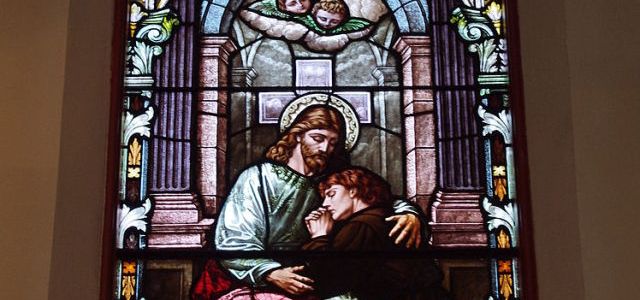
In Matthew 16:18, Jesus says to Peter:

“And I tell you that you are Peter, and on this rock I will build my church, and the gates of Hades will not overcome it.”

Many smarter and more eloquent people than myself have looked into this issue in great detail. This talk by Scott Hahn is incredibly thorough and well-researched.

But, the issue at hand is what on Earth Jesus is talking about, and what does he mean by a rock?

Oma was indeed wise in knowing that this is a linchpin in establishing the case for the Papacy. During my research into the Catholic faith, I learned that the most logical explanation for what “rock” is referring to, is that Jesus is indeed calling Peter the rock. And that Jesus is saying he will build his Church on Peter. Even Martin Luther knew it. And so do many, many Christian people, on both sides of the Reformation divide.

Luther, however, did not believe that Peter’s role was meant to be passed on. But, as I learned in the following section… that isn’t the case.

Keys

In Matthew 16:19, Jesus tells Peter:

“I will give you the keys of the kingdom of heaven; whatever you bind on earth will be bound in heaven, and whatever you loose on earth will be loosed in heaven.”

Old Lorelei would have thought: Nice. Peter gets some keys.

Now, I know there is a lot more meaning to that verse than I ever thought possible.

An important thing to remember when reading about Jesus in the Gospels is that Jesus was Jewish. Many of the things that he did and said would have had great significance for the Jewish people living in his time. And a lot of what Jesus did was fulfill things spoken of in the Old Testament.

When Jesus tells Peter that He is giving Peter the keys of the kingdom, He is actually referencing Isaiah 22.

15 Thus says the Lord, the GOD of hosts: Up, go to that official, Shebna, master of the palace, 16 Who has hewn for himself a sepulcher on a height and carved his tomb in the rock: “What are you doing here, and what people have you here, that here you have hewn for yourself a tomb?” 17 The LORD shall hurl you down headlong, mortal man! He shall grip you firmly 18 And roll you up and toss you like a ball into an open land To perish there, you and the chariots you glory in, you disgrace to your master’s house! 19 I will thrust you from your office and pull you down from your station. 20 On that day I will summon my servant Eliakim, son of Hilkiah; 21 I will clothe him with your robe, and gird him with your sash, and give over to him your authority. He shall be a father to the inhabitants of Jerusalem, and to the house of Judah. 22 I will place the key of the House of David on his shoulder; when he opens, no one shall shut, when he shuts, no one shall open. 23 I will fix him like a peg in a sure spot, to be a place of honor for his family;

We can really see the parallels here between what Jesus told Peter, and Isaiah 22:22, especially. Jesus wasn’t just telling Peter something random about giving him keys. He was giving Peter authority.

Historically, and Biblically, as in the example from Isaiah, he who held the keys was in a position of authority. The holder of the keys would be the one in charge of the kingdom when the King was away. And that’s what Catholics believe the office of the Pope is as well. When Jesus gave Peter the Keys to the Kingdom, he was setting Peter up to take care of the Christian Church on Earth until Jesus returns.

Furthermore, the Office of the Keys is an inheritable office. That means it was meant from the beginning to be passed on, one person to another, throughout history.  Obviously Peter didn’t live long enough to see Jesus return. Jesus knew that would happen, so setting it up as an Office of the Keys ensured it would be passed down from person to person, on and on through time. And the Jewish people living in Jesus’ time would have known exactly what He was referring to.

For me, this information meant that Jesus gave Peter a special role in the Early Church. And that Peter was in a unique, inheritable position of authority. It helped me very much to understand why Catholics have a Pope, and why Peter was the first one. This information led me on the path toward accepting that as how Jesus meant the Church to function from the get-go.

Relating to Protestantism

Another thing that helped me was thinking about this from the standpoint of Protestant church structure. Everywhere I went as a Protestant, there was a head Pastor, sometimes other Pastors, and also a board of Elders. The head Pastor never just unilaterally or flippantly made decisions about the church’s statement of faith. There would always be study, and consultation, and a lot of input into those decisions. As a member of those churches, I put my trust in the discernment of the pastoral staff at the time.

Likewise, no Pope is going to just be hanging out and say, “Well, today I think I’ll change this Church teaching,” or that they are somehow magically granted wisdom in an instant. It’s not that simple. Popes who are impacting Church teachings are incredibly studious, and utilize extensive council in all their decisions. Because everything has to jive. Church teaching cannot contradict Scripture, or Tradition, or the Magisterium.

Regardless of whether one is Protestant or Catholic, we all submit to a hierarchy of some sort. It’s just a much bigger hierarchy in the Catholic Church because of how big the Church is. But I think framing it that way helped me see that I have always submitted to the authority of someone… previously, my Protestant Pastors, and, in many ways, myself. So it wasn’t really that much of a stretch for me, once I understood and believed that the Office of the Pope had serious Biblical and historical merit, to submit to the Authority of the Church, and therefore of the Pope.

Wrapping Up

I know there were a number of other issues relating to the Papacy that I needed to look into as I began my journey into the Catholic Church. Things like Papal Infallibility (no, we don’t think the Pope is perfect), and the not-so-great Popes of ages past. And I will share my journey through those things at a later time.

However, I think the understanding of Jesus’ very intentional use in calling Peter the rock on which He will build His Church, and the significance of the Office of the Keys helped me get a long way past some of my key objections.

A huge part for me was also learning to let go of my perceived right to be the “Pope” of my own faith. I always submitted to Jesus, but there was a lot that I was trying to figure out on my own about what certain things meant, and I was always viewing Scripture through the lens of someone living in our time, today, with very little knowledge of the times in which Jesus lived and the significance of what he said and who he was speaking to.

I started to question why I, a lay person Christian, was so adamant about maintaing my own right to determine the Truths of my own personal faith? In light of the evidence of the Rock and the Keys, I could no longer justify my previous stance. If Jesus set The Church up to have a leader, and that leadership was intentionally an inheritable office… then I needed to accept the Papacy as legit.

The Church with its vast and extensive history has, collectively, an amazing depth of knowledge and understanding, supported by the Holy Spirit, that has protected Truth and will continue to do so partly through the Office of the Pope. It is such solid ground to stand upon. More than I probably even know.

Further Resources

Peter and the Papacy

Was Peter The Rock?

Scott Hahn on the Papacy

-Lorelei

P.S. If you found this post interesting, and would like to read more on This Catholic Family… hit up that follow button on the top left of our page, or follow us on Facebook. We’d love to have you back again!

Purchase Lorelei’s Books Here:

Why I Love Confession

One of the topics I get asked about most often by my Protestant friends is Confession. So here is a humble attempt to explain what the Sacrament of Confession means to me.

Let me start by saying I love Confession. Love it. It’s awesome. More on that in a moment.

And then, let me also start by explaining a bit about what Confession is not to me.

To me:

Confession is not a guilt-induced act that is forced upon me by a strict and rigid institution.

Confession is not my only means of being connected with God, nor is it my only means, in most cases, of being forgiven by God.

Background

My history with the idea of Confession, in any form, was rather shallow. I understood that I needed to ask Jesus to forgive me of my sins to commit to Christianity, but, honestly, I was a young kid and I didn’t really think much about what “sin” meant… not listening to my parents, spreading a rumor, being selfish… all things I knew were sin, but for the most part, I, personally, felt like I was doing pretty well overall. Also, many Protestant traditions believe that once you are a Christian, your past, present and future sins are forgiven. So I didn’t feel like there was a lot of motivation to think about my sin.

Also, growing up in different Protestant Churches, most of them would have a time of private confession at some point in the church service. It’s where the pastor or whoever was leading that part of the service would have everyone take a moment and think about their sin, and then pray for and thank God for His forgiveness.

To be honest, in my experience, nearly every time that happened whoever was leading the confession didn’t even give me enough time to begin to contemplate my own sin. The pause lasted for like 5 seconds. And… 5 seconds is inadequate for a true examination of conscience. So I usually just stood quietly and looked prayerful during that time. And still, I continued on not thinking much about my own sin.

I have since found out that the community confession time in many Protestant churches harkens back to the early Christians, but it isn’t really a full representation of what early Christians practiced. It’s more of a shadow of it. Though, I think most Protestants would agree that confessing one’s sins is important in some regard, the actual practice of it in many churches today doesn’t reflect the depth and purpose and history of Confession itself, or why it is important.

Sin

This is how I have come to understand sin. I have come to understand that God is offering, every moment of my life, to come alongside me and walk with me. Everywhere. And all the time. He never will leave me. Sin is where in my heart and my actions, I block God out of my life.

In Catholic Confession, prior to going to Confession, it is most appropriate to process through an Examination of Conscience. Many are based on the ten commandments, but there are others as well, for children, married people, single people, etc. It is a really thorough way to discover where I am not allowing God fully into my life. Even just the 1st Commandment examination… I reflect upon where in my life I am not putting God first. Where am I putting something or someone else in God’s place.

One thing I’m definitely not doing is  sitting around with my head in my hands in hopelessness over how sinful I am. It’s actually really helpful for me, and I can use those reflections to allow God into more of my life.

I’ve also come to understand sin as that which wounds our soul and our relationship with our Creator. God is there, all the time, but when I turn away from Him and do my own thing, it is bad for me… left unchecked, it will contribute to my walk with God becoming unhealthy over time… sick even. Many of humanity’s own classic tales reveal what happens when someone is overcome by sin in their own life. Ebeneezer Scrooge and his greed, the Beast and his lack of charity, the Grinch and his desire for revenge.

Sacraments

Catholics believe that Sacraments are ways that God makes tangible (something we can see, smell, taste, touch, or hear), something that is a spiritual reality. So, for example (briefly, because this is a whole ‘nother post), marriage is a Sacrament. It’s meant to be a tangible representation of Christ’s relationship with the Church. Something we can see, and, within the marriage itself, touch, that is meant to draw our minds towards heavenly truth.

Confession, is another Sacrament.

Confession Itself

This is where it gets good. This is the stuff.

I think it is easy for many to think about confession in a church service, or praying directly to God for forgiveness. Catholics also have a time of confession communally each Mass, and Catholics also can pray directly to God for forgiveness in most cases.

I also think it’s easy for Christians to acknowledge that we are to be the hands and feet of Jesus to the world around us.

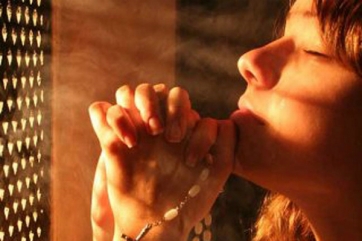
When I walk into the confessional, I am walking in and talking to the Priest, who is acting as the hands and feet of Jesus for me. Instead of silently admitting my sins in private or at church, or to myself alone, I get to verbally share about the areas in my life where I am struggling to let God in. I verbally ask for forgiveness.

And then I audibly hear I am forgiven.

And that is huge. God knows we are both spiritual and physical. I love that this Sacrament exists, and I can hear the truth of my forgiveness time and time again, audibly, from someone who is representing Jesus.

But that’s not all. The Priest then spends a bit of time talking to me about some of my struggles, and prescribes penance. That word is one that may cause someone who isn’t Catholic to go… Yikes! Danger! Or What is that?

Let me explain what penance is. Just as unrepentant sin can hurt our walk with God, and even make our souls sick, penance is a sort of medicine that helps me to turn back to God in the areas in which I struggle.

Example. If someone hurt me and I am struggling to forgive them fully, my penance for that might be to spend some time praying for those people. Penance is simply helping me turn back to God and let Him into more of my life, in the areas where I am blocking him out through my actions.

And I leave the Confessional full of the Holy Spirit, and so thankful for God’s redeeming work in my life. I leave with joy, and I always look forward to going. It helps keep me tuned into and focused on my Savior, and helps me be more aware to walk more closely with Him. More than ever before.

Summing Up

Here is what, to Lorelei, Confession is.

Confession is one of the many ways that I can receive God’s grace.

Confession is a tangible representation of my forgiven and restored relationship with God.

Confession is a Sacrament of healing, and of helping me walk more closely with God.

And that, is why I love Confession. 🙂

What about you? How do you relate to the Sacrament of Confession? Drop us a comment below to share your thoughts!

P.S. If you found this post interesting, and would like to read more on This Catholic Family… hit up that follow button on the top left of our page, or follow us on Facebook. We’d love to have you back again!

(Note: This post was originally published on Protestant Interrupted, where I journaled my conversion process to the Catholic Church. However, since practicing Catholics should be receiving the Eucharist at least once a year during the Easter season, and since we must be in a State of Grace to receive Holy Communion, Lent is a time when many people receive the Sacrament of Confession. Thought this would be a good time to re-share my take on this amazing Sacrament.)

Purchase Lorelei’s Books Here:

Finding Our Calcutta

Today marks my one year anniversary in the Catholic Church. I reflect more on my first year as a Catholic in my first Catholic Stand article, coming out before Easter. But today I want to spend some time reflecting on a specific person that has been an inspiration to me on my faith journey.

What’s In A Name?

When a person is Confirmed into the Catholic Church, he or she is asked to choose the name of a Saint to take on as they are confirmed. This Saint will be someone that this person admires, and desires to model his or her life after. A Saint that you feel connected to. Name changing at specific pivotal live moments happens several times in Scripture… we have Abram becoming Abraham, Simon becoming Peter, etc. It’s a beautiful tradition, and while you all still know me as “Lorelei,” last year on this day I also took on the name “Teresa.”

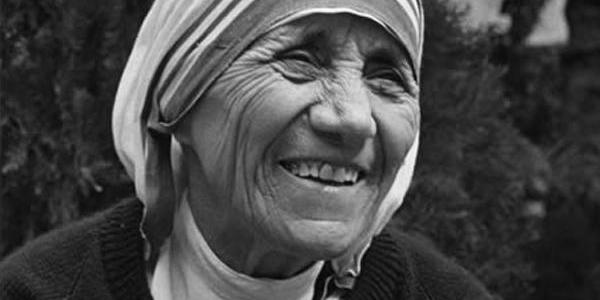
As in Saint Teresa of Calcutta. Known as Mother Teresa during her time here on earth.

Saint Teresa was someone I knew about during my formative years, but only vaguely. And then, more recently, when I became more aware of the social justice issues of our times, I felt more connected to her, and the heart that she had for the poor and underserved. Before I even entertained the idea of becoming Catholic, I had purchased a piece of art for our home that contained a quote from Mother Teresa.

There are a lot of things about Saint Teresa’s life that I can look up to, and strive to model. I can only hope to grow to a point that I can live as selflessly as she. Today I want to specifically write about one of my favorite quotes of hers. She said this in response to a nun wanting to follow in her footsteps and move to Calcutta. Saint Teresa gave her unexpected advice:

“Stay where you are. Find your own Calcutta. Find the sick, the suffering, and the lonely right there where you are — in your own homes and in your own families, in your workplaces and in your schools. You can find Calcutta all over the world, if you have the eyes to see. Everywhere, wherever you go, you find people who are unwanted, unloved, uncared for, just rejected by society — completely forgotten, completely left alone.” 

-Saint Teresa of Calcutta

It is difficult to always know how we are serving God in our day to day lives. But this is such a beautiful reminder that Calcutta is everywhere.

When I am teaching students, some of whom desperately need routine and structure, and all of whom need love, I am in Calcutta.

When I respond to my baby’s cries for me, I am in Calcutta.

When something I have written has been an encouragement to another soul, I, without even knowing it, am in Calcutta.

What else? Who are the people in our neighborhoods who are sad or lonely? Who are the people in the pews around us at church who need friends? The orphans and widows in our own communities… People at the grocery store, in traffic… the homeless person on the street corner. And also at home, our children, and our spouses.

Even just thinking about this I am realizing that there are a lot of opportunities to serve my Calcutta that I am missing. I am far too often engaged in my own head and thinking about my own things, that I miss many opportunities to make eye contact, to see and possibly fill a need, to be the hands and feet of Jesus to those I encounter, if even briefly.

And this serves as a good reminder, on my anniversary, to continue to work to consider the needs of others before myself. With the hope that every single soul I encounter continues on knowing they were treated with dignity.

Saint Teresa did that beautifully. And it is something I am convicted to improve in, and glad to strive towards. Confirmation has given me many graces, but connecting me spiritually with a Saint has been one of the most beautiful gifts.

So, while my official name continues to be Lorelei, I ask, on this day of my Confirmation Anniversary, that you pray for me and for us all to grow more like my Confirmation Saint, Saint Teresa of Calcutta. And also, that we all pray to remember to find the Calcutta that is all around us.

– Lorelei

P.S. If you found this post interesting, and would like to read more on This Catholic Family… hit up that follow button on the top left of our page, or follow us on Facebook. We’d love to have you back again!

Purchase Lorelei’s Books Here:

Why I Accept the Authority of the Catholic Church

One of the big concerns I had as a non-Catholic was that Catholics don’t believe in Sola Scriptura, or Bible Alone theology. Catholics accept the Authority of the Catholic Church on interpretation of the Bible, and to discern other Truths important to the faith though Tradition and the Magisterium.

I now view the Authority of the Church as the lens through with I view Scripture. And making sure that lens contains Truth is very important indeed. Which is why I don’t place my trust in myself. Because I don’t have to, and, I suggest, was never meant to in the first place.

What is Essential?

When I was Protestant, I enjoyed the idea that: “In the essentials, unity; in non-essentials, liberty; in all things love.” And now, as a Catholic, I still appreciate the sentiment. However, at some point during my conversion journey, I started asking these questions: Who decides what is essential? What gives them the authority to do so? Who decides what isn’t essential? What if we think something is a non-essential, that actually is an essential?

Case in point. There are some churches that believe infant baptism is essential. Others that believe adult or “believers” baptism is essential. Still others that don’t believe baptism is essential at all. Who is right? How can we be sure?

Most people, when they are talking about essentials, in essence, mean the Gospel. Which, is pretty much agreed upon by everyone. But, we can’t even agree on the implications of this essential. Some believe in Once Saved Always Saved… that you can’t lose salvation once you convert. Others believe that you have free will and could genuinely convert, but then choose to genuinely reject God at a later point in life. Again, who is right and how do we know?

I started thinking that all this hubbub about essentials and non-essentials goes against our common understanding that Absolute Truth is important. Is some Truth worth more than others? Did God allow any part of Scripture to be written where he was like… “meh, this part isn’t that important?” And, if its all important… why are we so keen on tiering the value of different Truths? And, how do we know we are weighting them correctly?

A Simple Message

I’ve also heard it said many times that people over complicate things when it comes to the Gospel. That it’s a really simple message, and is easy to understand.

In many ways I still agree with this. The Gospel, for example, was explained to me as a young girl. I understood it, and was able to accept it with my childlike, yet still very valid, faith.

But, as simple as the Gospel message is on the surface, I think it is also important to remember that we are talking about a God who is infinite. That compared to God, our minds work like babies. And that though, yes, many aspects of the Gospel and also the Bible as a whole can be understood by most with relative ease, the Bible is actually not a ‘simple’ book.

And what I mean by that is, yes, we can get a lot out of the Bible through personal study. And as Christians we should be in personal study, frequently. But, like any great book ever written, what you can garner from a surface-level understanding and what you can garner as you peel back the many layers are two different things.

And the Bible has many, many complex and beautiful layers.

And how do we ensure we are understanding those layers as they were meant to be understood? Herein begins my exploration of the problems involved in not having an authority.

Peeling Back the Layers

A few examples:

If we do not understand Jewish culture and practices, we could possibly misunderstand some things in Scripture. Specifically… we can read about the Last Supper in the Gospels, and have a decent, basic sense of what went on that night. However, we miss out on the deeper meaning of what Jesus was doing if we do not understand Judaism, as Jesus’ actions in the Last Supper were ripe with meaning for his disciples… who were all Jews. They would have understood Jesus’ actions and words in a much deeper way, simply because they understood the culture they were living in. It was a given for them. For us, 2,000 years removed from the Jewish culture of Jesus’ day… we are in danger of missing a lot.

If we do not understand the literary forms used in the Bible, we could misinterpret things. What was meant to be historical, what was meant to be allegorical, what is poetry, what is parable, what is symbol, what is fact? If we don’t understand the original language, and the specific meaning of the words Jesus chose… then we could be interpreting things wrong. John 6, and the Bread of Life Discourse is a prime example of this. Catholics use John 6 to substantiate our belief in the True Presence of Jesus in the Eucharist. Those who don’t subscribe to this belief, might argue that Jesus wasn’t being literal. That he was using symbolism. But, when you look back at the original language, and the reaction the people who heard Jesus speak had to what he was saying… it is very hard not to understand that Jesus meant what he said. Literally. We are reading the Bible in English, and sometimes imperfectly translated from the original languages. And therefore, if we don’t understand Greek and Hebrew… we, on our own, might be interpreting things incorrectly. (And which English translation are we to use anyway?!)

The same applies if we don’t understand the politics and history of the times in which books of the Bible were written. So many times books of the Bible relate to the historical context of the times. They mean certain things for certain people at a certain time in history. We can learn from and apply the purposes of many of these things to our world and life today, but we cannot assume that context is irrelevant. Again, we can lose meaning, or conclude meaning incorrectly if we are going at this on our own.

This was a difficult pill for me to swallow. Looking back, I think I didn’t want to believe that I couldn’t figure out the whole Bible on my own. Or that it wasn’t okay for me just to pick a theologian I liked and trust their interpretation. I had grown up believing that it was simple, and that I didn’t need an authority. Initially, realizing that I was wrong was difficult.

The Fallacy of Individual Interpretation

Most Christian people I speak with would agree that God has a specific intention and purpose for every word that he has, through human beings guided by the Holy Spirit, written in Scripture. That there is Absolute Truth. Yes, either God intended “This is my body” to be literal, or figurative. Not “either or” and definitely not both.

So, how do we know who has it right?

I believe I am paraphrasing a famous theologian and Catholic convert Dr. Scott Hahn when I say that I believe God is loving. And that a loving God wouldn’t leave us with an inerrant Bible, but only broken means to interpret it.

Most Christian, non-Catholic people that I speak with also firmly believe that the Holy Spirit guides Christians to interpret Scripture correctly.

But… with our general assent that God did, in fact, have a meaning in mind for what he allowed in the Bible, and the absolute fact that there are over 30,000 Christian denominations worldwide… we can only conclude one of two things.

1- That the Holy Spirit actually isn’t guiding us all to individually interpret things correctly… because this Christian believes in Calvinism, and this Christian believes in Arminianism. Because this Christian believes in believers baptism, and this Christian believes in infant baptism. Because this Christian believes in ordaining women, and this Christian does not. Because, because… If the Holy Spirit is genuinely guiding all those who are genuinely seeking him through their own personal interpretation of things… why are so many Christians coming to so many different conclusions? If this is the case, God gave us a Bible, and didn’t give us any way to know for certain what he meant! That doesn’t sound very loving to me.

2- The other option is Jesus never intended for us as individuals to carry the weight of correct interpretation on our shoulders at all. This would be the Catholic perspective. Catholics don’t believe that Jesus left us only a Bible. Which, he actually, definitely didn’t do, because the New Testament wasn’t even a thing for quite a while after Jesus’ life on earth. No, he didn’t leave us just a Bible. We believe he left us a Church. And that Church has been granted the discernment of the Holy Spirit through the ages, to correctly interpret the Bible.

Here’s Why

1 Timothy 3:15 states: “This is the church of the living God, which is the pillar and foundation of the truth.” Here’s a good article on the matter, but in essence, historically, prior to very recent Christian history, no one believed we should interpret the Bible individually. It was accepted and believed that Jesus promised the Holy Spirit would guide The Church to discern truth. The Church he himself established.

I don’t really think it’s that much a stretch for this to make sense. Christians believe that the Bible is inerrant. That God used dozens of authors, over hundreds and hundreds of years to give us an infallible book. God also gave the Church the Holy Spirit, with dozens of Popes over hundreds and hundreds of years to help the Church interpret that book infallibly.

John 16:13 says that when the Holy Spirit would come, He would guide us into all truth. Not just truth on the essentials (whatever those are determined to be), not just some of the truth, but all of it. He planned, from the very start, to give us a means to interpret Truth accurately.

We All Assent To Authority

Regardless if someone is Catholic or Protestant now, everyone assents to the authority of the Catholic Church on some issues.

For example… the Trinity is never mentioned in the Bible. Not once. But, interestingly enough, I was at a small group at my old Protestant church prior to my conversion, and the leader not only admitted that the Trinity isn’t in the Bible, but he acknowledged that we’ve trusted the Church to correctly form that doctrine for us. Now, I don’t think he was meaning to specifically reference the Catholic Church… but at the time the doctrine of the Trinity was formalized…. there was no Protestant Church. It was just Catholics everywhere. So, for all of us Christians that believe in the Trinity, we are assenting to the authority of the Catholic Church on that matter.

We also trust the authority of the Catholic Church with the Creeds of our faith. And we trust the Catholic Church to determine the Canon of Scripture (though Luther did have a few books removed during the Reformation… which in itself is another post).

At what point did God decide that submitting to the authority of the Church He established was no longer the way to do things, and that it was now up to the individual Christian to discern for him or herself what was true? I argue that He didn’t.

I honestly believe, based on the issues that Luther contended with at the time of the Reformation, and given the landscape of Christianity today- Luther would be Catholic. The issues he contended with aren’t issues anymore. He was right- the Church did need reforming at the time. And it did, most certainly, reform. And through it all, sound interpretation of our faith has been preserved. Even in times when there has been a corrupt Pope, or a heresy popping up, nothing doctrinally has been altered to the detriment of Truth. The bad Pope’s didn’t change things. The heresies were called out for what they were and snuffed out. Just like with the writing of the Bible, God is using fallible people to help preserve Infallible Truth.

Conclusion

The long and short of this post is to explain some of the reasoning behind why I accept the Authority of the Catholic Church.

I still read my Bible. Every day (much thanks to Lent for helping me solidify this discipline). But, when something comes up that I’m not sure about, I know where to go. There was just this sort of rabbit hole for me when I was Protestant that became very concerning. I was seeing people even within my own Church have different opinions on different issues in Scripture. How were they to know who was right? They may have taken their concern to the Pastor… well how were they to know the Pastor was interpreting things correctly? The Pastor might refer to a commentary or expository writing on that particular issue… but how were they to know that the author of that writing was interpreting things correctly? And on and on it goes… I’ve come to the conclusion that without a Pope, through whom the Holy Spirit works to protect Church teaching in matters of faith and morals, everyone is kind of their own. And that based on Scripture, that isn’t what Jesus was setting us up to be.

That’s why, ultimately, I saw no other way forward than to accept the Authority of the Catholic Church. Because I believe there is Biblical evidence that Jesus established a Church, and that He promised the Holy Spirit would preserve that Church in all Truth. And because I believe God keeps his promises.

– Lorelei

P.S. If you found this post interesting, and would like to read more on This Catholic Family… hit up that follow button on the top left of our page, or follow us on Facebook. We’d love to have you back again!

P.P.S. We’d love to hear your thoughts/comments on this or any other post. And thank you so much for reading!

Purchase Lorelei’s Books Here:

Jesus, You Know Me

I recently went to Confession.

The theme of this one was how I’m feeling exasperated, and impatient. How I’m struggling to maintaing peace because the baby is at a demanding phase where she only wants Mommy. And she doesn’t sleep for very long at a time during the day. And it’s just wearing me out, which causes me to not handle other things as well as I could.

Father listened, and nodded, and smiled as I shared.

My penance (which has nothing to do with my actual forgiveness… but is more medicine for my soul that helps me continue to move toward God) was simple. And it was that I take an amount of time to just be alone, by myself, to listen, and be in prayer.

Oh how I needed that.

My eyes welled up with tears, because here was a Priest, speaking on behalf of my Savior, hearing the things I was struggling with, and seeing right to the core of me. Knowing, I just needed some rest. That I needed quiet. And stillness.

To not have the putter putter of my baby’s little vocal engine interrupt my thoughts- even for a little while. That this exercise in self-care would better refresh me and enable me to continue the important work of raising her that God has asked me to do by being her mommy.

It’s an important lesson for me. I am doing no one any favors by running myself dry. And, yes, while I step away for a while, the baby may cry. But her daddy knows how to take care of her and she will be safe and loved until I return. But to have that time… time where my thoughts are clear and I can think a few complete thoughts in a row… of course this is what is good for me. But I was too deep in it to see it for myself. And, of course, Jesus was able to use the Priest in the Sacrament of Reconciliation to remind me of what would be good for me. Goodness that would spread into goodness for all my family. Of course. Of course. Because Jesus knows me so well.

Time and again, I am so thankful for Confession. Because, time and again, Jesus meets me there and loves me and forgives me and equips me to continue the good work he has set out for me to do. Because He who knit me together in my mother’s womb knows me better than anyone. And He meets us. In the confessional, in our prayer life, in little and unexpected moments. And, He meets us through the words of a Priest, that cut right through to the heart of an issue, and give one tired momma permission to grant herself some rest.

Lorelei

Purchase Lorelei’s Books Here: