
I Want You To Like Me (and why that’s a problem)

When I was a teenager, friends were very, very important to me. As they are for most adolescents. I remember keeping a journal, and writing in it a list of all the friends I had at the time. I like having friends, and I like having friends be happy with me.

Now, full disclosure, I was not a popular kid in school, if we are using popular in the sense of “cool.” I had this one shirt I loved in 5th grade that had a cartoon picture of two cuddly cats on it. It originally belonged to my grandmother, and I thought it was the best, so she let me borrow it. I wore that shirt to school with pride. In an era when name brands were starting to become a big thing- Gap, American Eagle, Abercrombie and Fitch… I was wearing cat shirts.

At this point, it may not surprise you to learn that I was also kind of a “nerd.” Which I’m sort of thankful for nowadays. I avoided a lot of drama by being nerdy. I wasn’t cool enough to get invited anywhere I could get myself in trouble. But, even though I was nerdy, I still cared a lot about what other people thought of me, and being different was often hard.

I think in many ways, it’s normal to want to be liked. No one is like “Man, I really hope people hate me today.” So, this is probably a universal thing.

But I think where my own struggle began is when I started to associate part of my own value as a person with how many friends I had at any given stage of my life. Like somehow how many people liked me somehow correlated with my value. Like I said, I like to keep people happy.

Friend Count

Now, there are seasons in life when it’s normal for one’s ‘friend count’ to go down. Situations in which you don’t actually lose friends, but when your normal peeps are inaccessible. Moving comes to mind. But I wasn’t really prepared for the shift that occurred when we transitioned to the Catholic Church.

We lost some friends because of our decision. We drifted away from others due to not seeing them at church on a weekly basis. And others, we thankfully were able to keep. But talking about the Catholic Stuff, which has become a huge part of our family life, still is a bit weird and awkward, and sometimes avoided altogether.

It’s difficult to not be able to talk about your faith openly with your friends, because you know they disagree with you. It feels like an entire part of my being, and theirs is not okay to bring up. And that’s really hard.

It’s difficult knowing that some people I know think I’m at best a bit misguided, and at worst a bit crazy for becoming Catholic. I know that reaction, because I’ve had it too towards other people who make what I think are odd decisions or hold what I think are incorrect beliefs. There are times when I’ve been like “man, I really like that person for a lot of reasons, but in this one regard I think they are a bit out there… too bad.” Becoming Catholic, to some people, means I’ve lost some street cred. It means everyone isn’t totally in love with every part of me, which, let’s be honest, they probably weren’t anyway to begin with. I may or may not have my fair share of flaws. And that’s something I should be expecting from people anyways. I know that’s my own weakness talking because the only One who is ever going to love me completely is God. I don’t need to seek to have that hole filled by people. It isn’t a fair expectation to make.

Another tricky thing about this, I think, is that women in particular base friendships on commonalities. You become friends because you have things in common. And then, when you have a friendship formed based at least partly upon a certain common thing… when that common thing changes, it adds some challenges.

And now, writing on a Catholic blog when many of my friends are firmly Protestant holds its own unique challenges.

And, I’m in this really interesting place because I know both Protestants and Catholics and people of other world views are reading what I write.

And I need to be authentic to my faith.

On Being “Safe”

It’s almost been like… it’s okay to many that I became Catholic if it has helped my faith walk, but I think maybe if we don’t talk about it too much or I don’t write about it too much then people can attempt to think I’m only Catholic in the “safe” ways to be Catholic. Like with the connection to history, and the liturgy, and the reverence. All the things that set the Catholic Church apart, but don’t offend people who disagree with the Church. And this has mostly come from me. I’ve been the one to emphasize how much I like the “safer” aspects of Catholicism. Because I don’t know how to bring up how much I love The Eucharist to a friend who doesn’t believe in the True Presence, or how much going to Confession or Adoration recently helped me refocus my prayer life, or how much I love praying the Rosary. Literally I know almost all those things sound weird or crazy to my friends that aren’t Catholic. I know, because that’s how I felt when I wasn’t Catholic. Catholics were to be loved on, but also kept at a safe distance… because they were a bit loco.

But… if I only write about those “safe” Catholic things, then I’m not really being true to myself, or the totality of my faith. I didn’t join the Catholic Church for only the “safe” reasons. I am fully Catholic. That means I believe in the Authority of the Catholic Church, and the Communion of Saints, and asking for the intercession of Mary and the Saints, all the Catholic teachings on Mary and Purgatory, and the True Presence in the Eucharist, and Confession, and that the Catholic Church is the Church Jesus founded during His time on earth. I am Pro-Life. I don’t support the use of contraception. I also believe that everyone, without knowing it, who has a genuine Christian faith is to some degree, though imperfectly, united with the Church Jesus founded.

None of this is a recipe for having everyone like me, or keeping everyone happy. And that is something, as I mentioned, that I have really struggled with since my youth.

As a former Protestant, I know that many of those aforementioned things sting when you aren’t Catholic. And that they bring up many, many thoughts and feelings and reactions.

I know hearing that the Catholic Church claims to be the Church Jesus founded stings, because as a Protestant I felt like people were telling me that my own faith was somehow not enough. Even if that isn’t what they meant, it felt awful to have someone tell me that there was a fuller version of Christianity out there that I didn’t agree with. It felt arrogant. It made me feel defensive. It made me mad.

I had no idea what my Catholic in-laws were talking about when they talked to me about things like the necessity of Mary being Ever-Virgin. I thought they were super weird, and had no frame of reference to understand why that would even be important. I cried a few times because I had no idea what these people were talking about.

The idea of accepting the Tradition of the Church on the same level as the Bible was offensive to me. I didn’t have any context for what it meant, and I had grown up my entire life hearing over and over again that The Bible is the sole authority for Christians on matters of faith.

The Nature of the Claims

I remember watching a video series by Protestant Pastor and Author Tim Keller on The Reason For God. The book and video series were awesome tools in my own faith walk as I discerned whether or not Adult Lorelei believed Christianity to be true. Keller met with a group of people who were not Christians, and explained Christianity to them in a series of videos. They then had free discussion, where they would ask him questions, and he would answer them in a loving, yet truthful manner. One discussion was on the exclusivity of Christianity, and the idea of why are the perameters so narrow in the sense of Christianity having a corner market on Truth. Mr. Keller responded, basically, by saying, that Christians aren’t being exclusive just to be exclusive. It’s an inevitable side effect of the “nature of the claims” of who Jesus claimed to be. And if Jesus was truly who He claimed to be, by the nature of His claims, the perameters become narrow.

I guess I could ask my Protestant friends to pardon the seeming exclusivity of the Catholic faith. If the claims are true that Jesus founded The Catholic Church, then, by the nature of the claims, all the Catholic stuff is going to be true- the safe and the non-safe issues. I don’t know how much of a help that would be, but it is one way to look at it.

Finding an Answer

I often ask myself… Why can’t I just focus only on the nice things… parenting, and marriage, and all the other safe ecumenical Christian topics? And I do enjoy writing about those things, and plan to continue. But, again, it comes down to authenticity. And the passion deep inside my soul to help reduce the misconceptions about that which divides us. So I need to write about All The Things. Not just the easy or comfortable ones.

I desire to get better at this. To get better at being fully myself, and allowing others to be fully themselves without feeling like I need to censor so much. And I do so much love writing about my faith. It just hurts to know that what I write might cause any amount of pain or discomfort in another. I think in some ways it is God allowing me to feel the pain he feels at the divisions within Christianity. He meant for us to be one.

So… how to live and write authentically when you know a lot of people close to you disagree with what you believe? I don’t think the answer is to stay away from the controversial stuff. Avoidance inhibits authentic relationships.

I suppose I could take the attitude of “they don’t have to click on it if they don’t like it,” but that isn’t who I am. I care… perhaps too much at times, and not enough at others. But I care about the feelings the things I write bring up in those that read it. But I hope I’m learning not to care so much that it impacts how I feel about my own value or worth. Or so much that I’m scared of sharing that which I believe to be Truth.

I think perhaps the answer is to be authentically me, but also try to write in a way that explains my thinking as clearly and graciously as I can, for those who read that aren’t coming from a Catholic worldview.

Imperfect Me

I think God allowed that side effect of our journey to Catholicism, at least in part, to help reveal an area of sin in my own life. That I care far too much and too often about keeping the peace, and being liked, to an extent that I tend to lose myself when I am in a position of being different.

And I know I won’t be perfect at this. I’ve lived long enough to learn that there is no way to have an opinion about something and also keep everyone happy. And writing is all about having an opinion and sharing it in ways that other people can relate to, or can learn from, or that helps people see things in a new way. But at least this is a way to move forward, and do what I can to be open to conversation, and bridging those gaps.

So, I want to take a moment to thank both the friends and strangers, Protestant and Catholic, and whatever other background that have been reading this blog, especially those who took the time to read this post in its entirety. I respect you, I care about you, and I respect your faith life. I can’t promise that what I write won’t ever offend, or puzzle you… but I can promise that I am going to do my best to be authentic and gracious. I am always happy to answer a question. I hope if you aren’t Catholic, that you are able to learn a bit more about the Catholic Church, and I admire you’re willingness to learn about a worldview that differs from yours. I hope if you are Catholic, that you are able to find a place to be encouraged, and to learn more about this faith we share. And, I hope we can move in a direction of greater authenticity with each other.

What about you? Has your faith ever caused you to feel misunderstood by others? Has there been any part of yourself you didn’t know was safe to share with others? How have you learned to live more authentically in your own life?

Purchase Lorelei’s Books Here:

Why I Love Confession

One of the topics I get asked about most often by my Protestant friends is Confession. So here is a humble attempt to explain what the Sacrament of Confession means to me.

Let me start by saying I love Confession. Love it. It’s awesome. More on that in a moment.

And then, let me also start by explaining a bit about what Confession is not to me.

To me:

Confession is not a guilt-induced act that is forced upon me by a strict and rigid institution.

Confession is not my only means of being connected with God, nor is it my only means, in most cases, of being forgiven by God.

Background

My history with the idea of Confession, in any form, was rather shallow. I understood that I needed to ask Jesus to forgive me of my sins to commit to Christianity, but, honestly, I was a young kid and I didn’t really think much about what “sin” meant… not listening to my parents, spreading a rumor, being selfish… all things I knew were sin, but for the most part, I, personally, felt like I was doing pretty well overall. Also, many Protestant traditions believe that once you are a Christian, your past, present and future sins are forgiven. So I didn’t feel like there was a lot of motivation to think about my sin.

Also, growing up in different Protestant Churches, most of them would have a time of private confession at some point in the church service. It’s where the pastor or whoever was leading that part of the service would have everyone take a moment and think about their sin, and then pray for and thank God for His forgiveness.

To be honest, in my experience, nearly every time that happened whoever was leading the confession didn’t even give me enough time to begin to contemplate my own sin. The pause lasted for like 5 seconds. And… 5 seconds is inadequate for a true examination of conscience. So I usually just stood quietly and looked prayerful during that time. And still, I continued on not thinking much about my own sin.

I have since found out that the community confession time in many Protestant churches harkens back to the early Christians, but it isn’t really a full representation of what early Christians practiced. It’s more of a shadow of it. Though, I think most Protestants would agree that confessing one’s sins is important in some regard, the actual practice of it in many churches today doesn’t reflect the depth and purpose and history of Confession itself, or why it is important.

Sin

This is how I have come to understand sin. I have come to understand that God is offering, every moment of my life, to come alongside me and walk with me. Everywhere. And all the time. He never will leave me. Sin is where in my heart and my actions, I block God out of my life.

In Catholic Confession, prior to going to Confession, it is most appropriate to process through an Examination of Conscience. Many are based on the ten commandments, but there are others as well, for children, married people, single people, etc. It is a really thorough way to discover where I am not allowing God fully into my life. Even just the 1st Commandment examination… I reflect upon where in my life I am not putting God first. Where am I putting something or someone else in God’s place.

One thing I’m definitely not doing is  sitting around with my head in my hands in hopelessness over how sinful I am. It’s actually really helpful for me, and I can use those reflections to allow God into more of my life.

I’ve also come to understand sin as that which wounds our soul and our relationship with our Creator. God is there, all the time, but when I turn away from Him and do my own thing, it is bad for me… left unchecked, it will contribute to my walk with God becoming unhealthy over time… sick even. Many of humanity’s own classic tales reveal what happens when someone is overcome by sin in their own life. Ebeneezer Scrooge and his greed, the Beast and his lack of charity, the Grinch and his desire for revenge.

Sacraments

Catholics believe that Sacraments are ways that God makes tangible (something we can see, smell, taste, touch, or hear), something that is a spiritual reality. So, for example (briefly, because this is a whole ‘nother post), marriage is a Sacrament. It’s meant to be a tangible representation of Christ’s relationship with the Church. Something we can see, and, within the marriage itself, touch, that is meant to draw our minds towards heavenly truth.

Confession, is another Sacrament.

Confession Itself

This is where it gets good. This is the stuff.

I think it is easy for many to think about confession in a church service, or praying directly to God for forgiveness. Catholics also have a time of confession communally each Mass, and Catholics also can pray directly to God for forgiveness in most cases.

I also think it’s easy for Christians to acknowledge that we are to be the hands and feet of Jesus to the world around us.

When I walk into the confessional, I am walking in and talking to the Priest, who is acting as the hands and feet of Jesus for me. Instead of silently admitting my sins in private or at church, or to myself alone, I get to verbally share about the areas in my life where I am struggling to let God in. I verbally ask for forgiveness.

And then I audibly hear I am forgiven.

And that is huge. God knows we are both spiritual and physical. I love that this Sacrament exists, and I can hear the truth of my forgiveness time and time again, audibly, from someone who is representing Jesus.

But that’s not all. The Priest then spends a bit of time talking to me about some of my struggles, and prescribes penance. That word is one that may cause someone who isn’t Catholic to go… Yikes! Danger! Or What is that?

Let me explain what penance is. Just as unrepentant sin can hurt our walk with God, and even make our souls sick, penance is a sort of medicine that helps me to turn back to God in the areas in which I struggle.

Example. If someone hurt me and I am struggling to forgive them fully, my penance for that might be to spend some time praying for those people. Penance is simply helping me turn back to God and let Him into more of my life, in the areas where I am blocking him out through my actions.

And I leave the Confessional full of the Holy Spirit, and so thankful for God’s redeeming work in my life. I leave with joy, and I always look forward to going. It helps keep me tuned into and focused on my Savior, and helps me be more aware to walk more closely with Him. More than ever before.

Summing Up

Here is what, to Lorelei, Confession is.

Confession is one of the many ways that I can receive God’s grace.

Confession is a tangible representation of my forgiven and restored relationship with God.

Confession is a Sacrament of healing, and of helping me walk more closely with God.

And that, is why I love Confession. 🙂

What about you? How do you relate to the Sacrament of Confession? Drop us a comment below to share your thoughts!

P.S. If you found this post interesting, and would like to read more on This Catholic Family… hit up that follow button on the top left of our page, or follow us on Facebook. We’d love to have you back again!

(Note: This post was originally published on Protestant Interrupted, where I journaled my conversion process to the Catholic Church. However, since practicing Catholics should be receiving the Eucharist at least once a year during the Easter season, and since we must be in a State of Grace to receive Holy Communion, Lent is a time when many people receive the Sacrament of Confession. Thought this would be a good time to re-share my take on this amazing Sacrament.)

Purchase Lorelei’s Books Here:
Finding Our Calcutta

Today marks my one year anniversary in the Catholic Church. I reflect more on my first year as a Catholic in my first Catholic Stand article, coming out before Easter. But today I want to spend some time reflecting on a specific person that has been an inspiration to me on my faith journey.

What’s In A Name?

When a person is Confirmed into the Catholic Church, he or she is asked to choose the name of a Saint to take on as they are confirmed. This Saint will be someone that this person admires, and desires to model his or her life after. A Saint that you feel connected to. Name changing at specific pivotal live moments happens several times in Scripture… we have Abram becoming Abraham, Simon becoming Peter, etc. It’s a beautiful tradition, and while you all still know me as “Lorelei,” last year on this day I also took on the name “Teresa.”

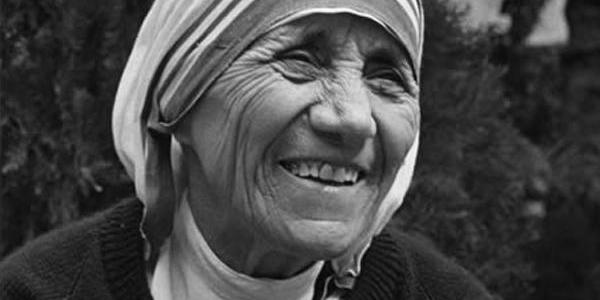
As in Saint Teresa of Calcutta. Known as Mother Teresa during her time here on earth.

Saint Teresa was someone I knew about during my formative years, but only vaguely. And then, more recently, when I became more aware of the social justice issues of our times, I felt more connected to her, and the heart that she had for the poor and underserved. Before I even entertained the idea of becoming Catholic, I had purchased a piece of art for our home that contained a quote from Mother Teresa.

There are a lot of things about Saint Teresa’s life that I can look up to, and strive to model. I can only hope to grow to a point that I can live as selflessly as she. Today I want to specifically write about one of my favorite quotes of hers. She said this in response to a nun wanting to follow in her footsteps and move to Calcutta. Saint Teresa gave her unexpected advice:

“Stay where you are. Find your own Calcutta. Find the sick, the suffering, and the lonely right there where you are — in your own homes and in your own families, in your workplaces and in your schools. You can find Calcutta all over the world, if you have the eyes to see. Everywhere, wherever you go, you find people who are unwanted, unloved, uncared for, just rejected by society — completely forgotten, completely left alone.” 

-Saint Teresa of Calcutta

It is difficult to always know how we are serving God in our day to day lives. But this is such a beautiful reminder that Calcutta is everywhere.

When I am teaching students, some of whom desperately need routine and structure, and all of whom need love, I am in Calcutta.

When I respond to my baby’s cries for me, I am in Calcutta.

When something I have written has been an encouragement to another soul, I, without even knowing it, am in Calcutta.

What else? Who are the people in our neighborhoods who are sad or lonely? Who are the people in the pews around us at church who need friends? The orphans and widows in our own communities… People at the grocery store, in traffic… the homeless person on the street corner. And also at home, our children, and our spouses.

Even just thinking about this I am realizing that there are a lot of opportunities to serve my Calcutta that I am missing. I am far too often engaged in my own head and thinking about my own things, that I miss many opportunities to make eye contact, to see and possibly fill a need, to be the hands and feet of Jesus to those I encounter, if even briefly.

And this serves as a good reminder, on my anniversary, to continue to work to consider the needs of others before myself. With the hope that every single soul I encounter continues on knowing they were treated with dignity.

Saint Teresa did that beautifully. And it is something I am convicted to improve in, and glad to strive towards. Confirmation has given me many graces, but connecting me spiritually with a Saint has been one of the most beautiful gifts.

So, while my official name continues to be Lorelei, I ask, on this day of my Confirmation Anniversary, that you pray for me and for us all to grow more like my Confirmation Saint, Saint Teresa of Calcutta. And also, that we all pray to remember to find the Calcutta that is all around us.

– Lorelei

P.S. If you found this post interesting, and would like to read more on This Catholic Family… hit up that follow button on the top left of our page, or follow us on Facebook. We’d love to have you back again!

Purchase Lorelei’s Books Here:

Superman, Spit-up Shirts, And Other Mommy Things

Oh man are we in the thick of it!

And we only have three! Bless you mommas who have more. And bless you mommas who have less. Depending on the personality cocktail of our kids, one can seem like many, and many can seem like an army.

Here’s a few things, or tidbits, if you will, that this momma has paid attention to of late:

1- My son wants to be a superhero. I don’t know how this happened, other than it is inside of him somehow. We don’t watch superhero movies, we don’t have superhero books. But he got a Superman figurine somewhere, somehow, and all of a sudden every blanket is a cape, and he is running around defeating bad guys. This kid wants to fight for justice. He wants to be strong. He wants to have what it takes to save the day. I love that about him.

2- I am the world to this baby. For now. When this tiny infant of mine cries to be held for the bajillionth time each day, it helps me to remember that to her, right now, I am the entire world. Within a very short amount of time, I won’t be. I already have to bargain with my two year old for snuggles, depending on the time of day. So, when she cries, again, for her momma, I am trying to just embrace this fleeting time.

3- The creativity of children astounds me. We have a room full of Many A Toy, and you know what the kids spend most of their time playing with? Blankets, pillows, cushions, blocks, art stuff, and books. My oldest daughter has an amazing imagination. She leads her little minion brother on the coolest adventures. They make forts, and Fun Parks, and piles, along with other crazy messes (that I try hard not to overreact to). And all those fancy schmancy toys just kind of hang out and enjoy the show. We have, for a while now, stopped stocking them with many additional fancy schmancy toys. And they don’t seem to mind a bit.

4- Sometimes I have spit-up on my shirt. Yeah, I know it’s there. And no, I don’t feel like making extra laundry, so this baby is going to ride out the day.

5- Dinner is easier to make in the morning. Dinner time is the Witching Hour around here… where Bigs are tired from the day, and Little is fussy. Tis much easier to reheat a kind-of-soggy-fajita than to attempt to make a not-as-soggy fajita at five pm.

Perhaps these are kind of random… but that’s kind of how my thoughts are throughout most of the days most of the time. Any other coherent-ish posts you may have read require late nights, covert trips to Starbucks, or many, many edits. And these tidbits I’ve mentioned have been popping up around me lately over and over again. Especially the spit-up clad shirt thing. Whatevs. So I smell like sour milk. I keep these little humans alive.

-Lorelei

Purchase Lorelei’s Books Here:

Why I Accept the Authority of the Catholic Church

One of the big concerns I had as a non-Catholic was that Catholics don’t believe in Sola Scriptura, or Bible Alone theology. Catholics accept the Authority of the Catholic Church on interpretation of the Bible, and to discern other Truths important to the faith though Tradition and the Magisterium.

I now view the Authority of the Church as the lens through with I view Scripture. And making sure that lens contains Truth is very important indeed. Which is why I don’t place my trust in myself. Because I don’t have to, and, I suggest, was never meant to in the first place.

What is Essential?

When I was Protestant, I enjoyed the idea that: “In the essentials, unity; in non-essentials, liberty; in all things love.” And now, as a Catholic, I still appreciate the sentiment. However, at some point during my conversion journey, I started asking these questions: Who decides what is essential? What gives them the authority to do so? Who decides what isn’t essential? What if we think something is a non-essential, that actually is an essential?

Case in point. There are some churches that believe infant baptism is essential. Others that believe adult or “believers” baptism is essential. Still others that don’t believe baptism is essential at all. Who is right? How can we be sure?

Most people, when they are talking about essentials, in essence, mean the Gospel. Which, is pretty much agreed upon by everyone. But, we can’t even agree on the implications of this essential. Some believe in Once Saved Always Saved… that you can’t lose salvation once you convert. Others believe that you have free will and could genuinely convert, but then choose to genuinely reject God at a later point in life. Again, who is right and how do we know?

I started thinking that all this hubbub about essentials and non-essentials goes against our common understanding that Absolute Truth is important. Is some Truth worth more than others? Did God allow any part of Scripture to be written where he was like… “meh, this part isn’t that important?” And, if its all important… why are we so keen on tiering the value of different Truths? And, how do we know we are weighting them correctly?

A Simple Message

I’ve also heard it said many times that people over complicate things when it comes to the Gospel. That it’s a really simple message, and is easy to understand.

In many ways I still agree with this. The Gospel, for example, was explained to me as a young girl. I understood it, and was able to accept it with my childlike, yet still very valid, faith.

But, as simple as the Gospel message is on the surface, I think it is also important to remember that we are talking about a God who is infinite. That compared to God, our minds work like babies. And that though, yes, many aspects of the Gospel and also the Bible as a whole can be understood by most with relative ease, the Bible is actually not a ‘simple’ book.

And what I mean by that is, yes, we can get a lot out of the Bible through personal study. And as Christians we should be in personal study, frequently. But, like any great book ever written, what you can garner from a surface-level understanding and what you can garner as you peel back the many layers are two different things.

And the Bible has many, many complex and beautiful layers.

And how do we ensure we are understanding those layers as they were meant to be understood? Herein begins my exploration of the problems involved in not having an authority.

Peeling Back the Layers

A few examples:

If we do not understand Jewish culture and practices, we could possibly misunderstand some things in Scripture. Specifically… we can read about the Last Supper in the Gospels, and have a decent, basic sense of what went on that night. However, we miss out on the deeper meaning of what Jesus was doing if we do not understand Judaism, as Jesus’ actions in the Last Supper were ripe with meaning for his disciples… who were all Jews. They would have understood Jesus’ actions and words in a much deeper way, simply because they understood the culture they were living in. It was a given for them. For us, 2,000 years removed from the Jewish culture of Jesus’ day… we are in danger of missing a lot.

If we do not understand the literary forms used in the Bible, we could misinterpret things. What was meant to be historical, what was meant to be allegorical, what is poetry, what is parable, what is symbol, what is fact? If we don’t understand the original language, and the specific meaning of the words Jesus chose… then we could be interpreting things wrong. John 6, and the Bread of Life Discourse is a prime example of this. Catholics use John 6 to substantiate our belief in the True Presence of Jesus in the Eucharist. Those who don’t subscribe to this belief, might argue that Jesus wasn’t being literal. That he was using symbolism. But, when you look back at the original language, and the reaction the people who heard Jesus speak had to what he was saying… it is very hard not to understand that Jesus meant what he said. Literally. We are reading the Bible in English, and sometimes imperfectly translated from the original languages. And therefore, if we don’t understand Greek and Hebrew… we, on our own, might be interpreting things incorrectly. (And which English translation are we to use anyway?!)

The same applies if we don’t understand the politics and history of the times in which books of the Bible were written. So many times books of the Bible relate to the historical context of the times. They mean certain things for certain people at a certain time in history. We can learn from and apply the purposes of many of these things to our world and life today, but we cannot assume that context is irrelevant. Again, we can lose meaning, or conclude meaning incorrectly if we are going at this on our own.

This was a difficult pill for me to swallow. Looking back, I think I didn’t want to believe that I couldn’t figure out the whole Bible on my own. Or that it wasn’t okay for me just to pick a theologian I liked and trust their interpretation. I had grown up believing that it was simple, and that I didn’t need an authority. Initially, realizing that I was wrong was difficult.

The Fallacy of Individual Interpretation

Most Christian people I speak with would agree that God has a specific intention and purpose for every word that he has, through human beings guided by the Holy Spirit, written in Scripture. That there is Absolute Truth. Yes, either God intended “This is my body” to be literal, or figurative. Not “either or” and definitely not both.

So, how do we know who has it right?

I believe I am paraphrasing a famous theologian and Catholic convert Dr. Scott Hahn when I say that I believe God is loving. And that a loving God wouldn’t leave us with an inerrant Bible, but only broken means to interpret it.

Most Christian, non-Catholic people that I speak with also firmly believe that the Holy Spirit guides Christians to interpret Scripture correctly.

But… with our general assent that God did, in fact, have a meaning in mind for what he allowed in the Bible, and the absolute fact that there are over 30,000 Christian denominations worldwide… we can only conclude one of two things.

1- That the Holy Spirit actually isn’t guiding us all to individually interpret things correctly… because this Christian believes in Calvinism, and this Christian believes in Arminianism. Because this Christian believes in believers baptism, and this Christian believes in infant baptism. Because this Christian believes in ordaining women, and this Christian does not. Because, because… If the Holy Spirit is genuinely guiding all those who are genuinely seeking him through their own personal interpretation of things… why are so many Christians coming to so many different conclusions? If this is the case, God gave us a Bible, and didn’t give us any way to know for certain what he meant! That doesn’t sound very loving to me.

2- The other option is Jesus never intended for us as individuals to carry the weight of correct interpretation on our shoulders at all. This would be the Catholic perspective. Catholics don’t believe that Jesus left us only a Bible. Which, he actually, definitely didn’t do, because the New Testament wasn’t even a thing for quite a while after Jesus’ life on earth. No, he didn’t leave us just a Bible. We believe he left us a Church. And that Church has been granted the discernment of the Holy Spirit through the ages, to correctly interpret the Bible.

Here’s Why

1 Timothy 3:15 states: “This is the church of the living God, which is the pillar and foundation of the truth.” Here’s a good article on the matter, but in essence, historically, prior to very recent Christian history, no one believed we should interpret the Bible individually. It was accepted and believed that Jesus promised the Holy Spirit would guide The Church to discern truth. The Church he himself established.

I don’t really think it’s that much a stretch for this to make sense. Christians believe that the Bible is inerrant. That God used dozens of authors, over hundreds and hundreds of years to give us an infallible book. God also gave the Church the Holy Spirit, with dozens of Popes over hundreds and hundreds of years to help the Church interpret that book infallibly.

John 16:13 says that when the Holy Spirit would come, He would guide us into all truth. Not just truth on the essentials (whatever those are determined to be), not just some of the truth, but all of it. He planned, from the very start, to give us a means to interpret Truth accurately.

We All Assent To Authority

Regardless if someone is Catholic or Protestant now, everyone assents to the authority of the Catholic Church on some issues.

For example… the Trinity is never mentioned in the Bible. Not once. But, interestingly enough, I was at a small group at my old Protestant church prior to my conversion, and the leader not only admitted that the Trinity isn’t in the Bible, but he acknowledged that we’ve trusted the Church to correctly form that doctrine for us. Now, I don’t think he was meaning to specifically reference the Catholic Church… but at the time the doctrine of the Trinity was formalized…. there was no Protestant Church. It was just Catholics everywhere. So, for all of us Christians that believe in the Trinity, we are assenting to the authority of the Catholic Church on that matter.

We also trust the authority of the Catholic Church with the Creeds of our faith. And we trust the Catholic Church to determine the Canon of Scripture (though Luther did have a few books removed during the Reformation… which in itself is another post).

At what point did God decide that submitting to the authority of the Church He established was no longer the way to do things, and that it was now up to the individual Christian to discern for him or herself what was true? I argue that He didn’t.

I honestly believe, based on the issues that Luther contended with at the time of the Reformation, and given the landscape of Christianity today- Luther would be Catholic. The issues he contended with aren’t issues anymore. He was right- the Church did need reforming at the time. And it did, most certainly, reform. And through it all, sound interpretation of our faith has been preserved. Even in times when there has been a corrupt Pope, or a heresy popping up, nothing doctrinally has been altered to the detriment of Truth. The bad Pope’s didn’t change things. The heresies were called out for what they were and snuffed out. Just like with the writing of the Bible, God is using fallible people to help preserve Infallible Truth.

Conclusion

The long and short of this post is to explain some of the reasoning behind why I accept the Authority of the Catholic Church.

I still read my Bible. Every day (much thanks to Lent for helping me solidify this discipline). But, when something comes up that I’m not sure about, I know where to go. There was just this sort of rabbit hole for me when I was Protestant that became very concerning. I was seeing people even within my own Church have different opinions on different issues in Scripture. How were they to know who was right? They may have taken their concern to the Pastor… well how were they to know the Pastor was interpreting things correctly? The Pastor might refer to a commentary or expository writing on that particular issue… but how were they to know that the author of that writing was interpreting things correctly? And on and on it goes… I’ve come to the conclusion that without a Pope, through whom the Holy Spirit works to protect Church teaching in matters of faith and morals, everyone is kind of their own. And that based on Scripture, that isn’t what Jesus was setting us up to be.

That’s why, ultimately, I saw no other way forward than to accept the Authority of the Catholic Church. Because I believe there is Biblical evidence that Jesus established a Church, and that He promised the Holy Spirit would preserve that Church in all Truth. And because I believe God keeps his promises.

– Lorelei

P.S. If you found this post interesting, and would like to read more on This Catholic Family… hit up that follow button on the top left of our page, or follow us on Facebook. We’d love to have you back again!

P.P.S. We’d love to hear your thoughts/comments on this or any other post. And thank you so much for reading!

Purchase Lorelei’s Books Here:

JP’s Corner: On Cultivating Curiosity

Today I was pondering something that I’ve pondered for a while: how to teach people things that have made such a deep and meaningful impact in my life. I’m referring primarily to the journey back to Catholicism Lorelei and I somewhat recently made that she has so beautifully expounded on over many posts, but specifically in “On Hating the Catholic Church.” As I say to people, I fell in love with Jesus in the Protestant Church and found him in his fullest in Catholicism.

So what did I do after finding Jesus in his fullest? Obviously, for those who know me well, I kept this to myself and never mentioned it unless asked. Ha! Actually, what I really did was I started talking people’s ears off.

Theology finally made sense to me. After seven years of post-graduate scientific study where I learned more than I ever imagined possible about cells and molecules, I finally could rest assured that God not only exists but that he gave us a Church with a logically consistent set of doctrines and a logically consistent theology. It’s hard to describe how exciting this was, and still is, to me. I am a man of logic by profession. I make a living by logic. Nature works a certain way, therefore if I know what nature does in such and such a situation, I can make a prediction about a particular aspect I don’t yet know about and, granting nature will behave the same way again, I can learn something new about God’s creation. Logic. It’s the name of my game, as it is many other people’s too, not just biomedical scientists.

So, having gone through a few years of what didn’t quite feel like logically consistent theology, I routinely struggled with not being able to fully share my faith. I didn’t really even fully have a faith… that is until it finally made sense. And when it made sense, and when I realized that Jesus is to be found in his fullest possible form at the alter at each Catholic Mass, I first went straight to the alter to meet him there, and then I went about telling everyone I possibly could that they could find him there too! And everyone I told immediately followed me right to the alter the very next daily Mass we could find!

Actually…..No again. Why? Wasn’t my enthusiasm infectious? It seemed like people wanted to hear what I had to say. It seemed like they genuinely liked being around me to see this new-found enthusiasm. And I simply assumed all they needed to share in my enthusiasm was my explanation of what made me so enthusiastic to begin with.

And that is where the pondering starts. Why don’t people respond to my explanations of what is so exciting to me with the same excitement I have?

“People don’t care about answers to questions they are not asking.” I don’t know who to attribute this quote to specifically, except to say I’ve heard it from multiple sources in the Catholic Church. It makes sense. It makes sense in my life, and I’m sure in yours too. You ever listen to NPR and wonder how this stuff could be interesting to anyone? Who wants to know about this? Why would I spend an hour of my life learning about that? … But then comes a time in your life, if you’re like me, when you started to get curious about things and all of a sudden NPR is your favorite radio station! What changed? Not the information, but the simple fact that I got curious.

Today I realize that my job as an evangelist and as a father is not primarily to provide the answers but to learn how to teach people to want to learn, to cultivate curiosity. Then, and only then – when people finally really want to know “JP, why do you love the Catholic faith so much, and do you think I could find Jesus there too?” – then the answer I give might cause the effect it did in me.

The funny part about this is that immediately after I came to this conclusion today – as I was driving in slow moving Chicago traffic – I pulled up next to a bus with an advertisement on the side marketing the exact thing I was thinking! If it didn’t say this exactly, it certainly intimated it: “Cultivate Curiosity.” And then it showed a picture of a student.

You see, cultivating curiosity is far more beneficial than ramming facts and knowledge into people’s brains. Parents, let us cultivate curiosity in our children. Don’t fear, they have what it takes to learn how to learn. But the deep seeded burning flame to want to learn, that is a harder thing to instill. Let us start now.

Fellow brothers and sisters in Christ, let us continue to cultivate our own curiosity. I encourage all of us to humble ourselves and admit that there is far more to learn about God and our relationship with Him than we can hope to learn in a life-time. Disagree? Can the created being be greater than the creator?

Let us cultivate our own curiosity so that there is never a dull day in our lives. Seriously, I firmly believe there is nothing boring in our life. If you are at a point where that is true, I encourage you to learn about something new. Start to see how it’s all connected. There is crazy stuff to learn about the thread of material in your carpet. Have you asked why it is there in the first place? Have you asked why doesn’t it vanish into thin air? Have you asked what holds it together?

When I started to learn the science behind the answers to these questions – which include atomic and even subatomic physics – I immediately began to appreciate how vast God is. And when I started to appreciate how vast God is, I then started to appreciate how RADICAL it is that HE, the one whom the universe is not big enough to contain, confined himself to becoming a human being!

And just like each one of us, He started his humanity as a single fertilized egg, made up of a quantifiable set of proteins, nucleic acid, metabolites, etc.

Cultivate curiosity.

And when you finally ask yourself why I love Catholicism so much, please ask me! I’m happy to answer.

-JP

Purchase Lorelei’s Books Here:

Empty Me… Fill Me

There’s a Christian song I really like called “Lead Me To The Cross.” In one line the singer asks God to “Rid me of myself.” The song and that lyric in particular have always resonated with me.

As I think about the lives of the Saints- those people who followed God to the extreme, it was always the same. Their lives became not about what they wanted for themselves, but about accepting what God had for them. About God giving them everything they want, because they want everything He gives (St. Therese of Lisieux).

Let it be known that I have quite the distance to travel to reach Sainthood. Still, I find more and more, that lately, my prayer has been that I would be emptied of all the things that are me-focused… and that God would grow in me the Grace to be other-focused, and Him-focused.

I am praying to be emptied of myself.

To be emptied of pride. Pride that is so sure my own way is the best. That I can do things better than others.

To be emptied of distractedness. The need to escape the present.

To be emptied of bitterness. The idea that holding onto the pain others have caused me is somehow my right.

To be emptied of impatience. A hurriedness that forgets to slow down and see the beauty of the world that is around me.

To be be emptied of selfishness. That desires my own pleasure above that which is good for those I love.

This…. and so much more. I desire to be emptied. But, not only emptied. For if I were emptied of these things and not filled with something else I would only be a useless vessel, void of substance. I want to be emptied, yes. But not only emptied. I also want to be filled.

Both Jesus and Mary are described in the Bible as “Full of Grace,” and only a few others that use similar terminology to describe them in essence, as “Full of the Holy Spirit.” I want to be emptied. But I want to be filled with the Grace that allows me to live my life more in union with my Savior. This is not something I can accomplish of my own doing. This is something that God can do inside of me, should I turn toward Him and allow Him to work in me.

I am praying to be filled with Grace.

Fill me with the Grace to be humble. The ability to acknowledge others above myself. And to defer my own preference to the benefit of those I encounter.

Fill me with the Grace to be present. To be truly, and fully, where I am. Right then. And right there. Mind, body and soul.

Fill me with the Grace to forgive. To extend the Grace you have given me to those who have wronged me. And to fill me with the Grace that will help me to be uneasily offended by others.

Fill me with the Grace to be patient. Patience when my children move slower than I would. Patience when my husband sees and does things differently than I would. Patience to realize that there is value in these things. That my way is not always the best.

Fill me with the Grace to be selfless. That I would not fight so much for my own rights, as to defend the rights of others. That I would be content to be the least, and rejoice with others as they are more than I. To be content and seeking out only that which God has called me to do.

Fill me with the Grace to to develop all of these things. That my life might more resemble that of your Son, Jesus. And your mother, Mary. And all the other Saints on earth and in heaven who have emptied themselves, and allowed You to fill them with the traits that help their lives look radically, and totally like Jesus, in each and every way.

-Lorelei

Purchase Lorelei’s Books Here:

Jesus, You Know Me

I recently went to Confession.

The theme of this one was how I’m feeling exasperated, and impatient. How I’m struggling to maintaing peace because the baby is at a demanding phase where she only wants Mommy. And she doesn’t sleep for very long at a time during the day. And it’s just wearing me out, which causes me to not handle other things as well as I could.

Father listened, and nodded, and smiled as I shared.

My penance (which has nothing to do with my actual forgiveness… but is more medicine for my soul that helps me continue to move toward God) was simple. And it was that I take an amount of time to just be alone, by myself, to listen, and be in prayer.

Oh how I needed that.

My eyes welled up with tears, because here was a Priest, speaking on behalf of my Savior, hearing the things I was struggling with, and seeing right to the core of me. Knowing, I just needed some rest. That I needed quiet. And stillness.

To not have the putter putter of my baby’s little vocal engine interrupt my thoughts- even for a little while. That this exercise in self-care would better refresh me and enable me to continue the important work of raising her that God has asked me to do by being her mommy.

It’s an important lesson for me. I am doing no one any favors by running myself dry. And, yes, while I step away for a while, the baby may cry. But her daddy knows how to take care of her and she will be safe and loved until I return. But to have that time… time where my thoughts are clear and I can think a few complete thoughts in a row… of course this is what is good for me. But I was too deep in it to see it for myself. And, of course, Jesus was able to use the Priest in the Sacrament of Reconciliation to remind me of what would be good for me. Goodness that would spread into goodness for all my family. Of course. Of course. Because Jesus knows me so well.

Time and again, I am so thankful for Confession. Because, time and again, Jesus meets me there and loves me and forgives me and equips me to continue the good work he has set out for me to do. Because He who knit me together in my mother’s womb knows me better than anyone. And He meets us. In the confessional, in our prayer life, in little and unexpected moments. And, He meets us through the words of a Priest, that cut right through to the heart of an issue, and give one tired momma permission to grant herself some rest.

Lorelei

Purchase Lorelei’s Books Here:

Catholics And The Bible: My Own Lenten Journey

“What’cha giving up for Lent?”

A common question, always interesting to find out the answer. There’s been a big push in recent times to help people understand that, during Lent, we don’t just ‘give up’ things for no good reason. The point is to do something, whether it be letting go of something or picking something up, but to do something that either removes a distraction in your life, or something that adds a discipline in your life. The goal of either of those things is to move you closer in your relationship with God.

Funny story. My mom just told me that when she was a little kid, she would give up lemons for Lent. Then, occasionally throughout the year, she would eat lemons to try and prove to herself that she liked them, so then it would be okay that lemons were what she chose to give up. I thought that was cute. And probably sour.

There’s kind of a stereotype that Catholics don’t know their Bible, and it is sometimes implied that therefore they don’t think it is important. I think, having lived on both sides, that there are Protestants and Catholics that do and don’t know The Bible well. Perhaps in some way, the idea of Sola Scriptura bends in the Protestant’s favor in the sense that they feel a higher obligation to read the Bible, because they are the ones interpreting it for themselves. I don’t know. Maybe. Either way, I’ve been all those things. Both a Protestant and a Catholic, over the years, that did and did not read her Bible.

But, in addition, submitting to the Authority of The Church is no excuse for us Catholics to not be in Scripture. In fact, here’s a saintly quote on the matter:

“Ignorance of Scripture is ignorance of Christ!”

-St. Jerome

Yes St. Jerome. I note your exclamation point, and I agree with you.

At various times in my life, I have done a good job being in the Bible, and at others I haven’t. This is something I’ve wanted to change for quite some time. I don’t want to read the Bible in waves, and totally abandon it at other times. It’s a discipline I need to develop further in my own life.

Now, one thing that has helped me in general (especially of late when individual reading has been less-practiced) is how much Bible there is in a Catholic Mass. At the church we used to go to, sometimes only a couple of Bible verses would be read during the whole of the service. Those few verses were then preached on for sometimes more than 30 minutes. Which, looking back kind of feels more like a Bible Study to me now. It was officially called Expositional Preaching. A lot of times it was interesting, but it didn’t throw a lifeline to someone like me who was struggling with getting into the Bible.

Catholic Mass on a Sunday has 4 readings from the Bible. An Old Testament Reading, Psalm, New Testament Reading and a reading from The Gospel. So there’s actually a lot of Bible in Mass, plus pretty much the entire Mass itself is a living and breathing embodiment of the Book of Revelation. And then throw in there that all those readings are thematically connected. So the OT reading will have some connection to the other readings. Really helps a gal like me see the bigger picture of our salvation narrative.

So. The Bible in Mass. Cool cool.

But, my goal has ultimately been personal reading and study. So, for Lent this year I have added the Daily Readings to my every day routine. The Daily Readings are what you would hear were you to go to Daily Mass. Catholics have “Church” 7 days a week. Turns out, if you follow the Daily Readings every single day, you’ll have read through pretty much the entire Bible in 3 years.

My plan has been to get up and read the Daily Readings whilst I eat my oatmeal. So far, we’ve been doing pretty good. Most days, I also read a devotion or commentary to go along with the readings. Again, I just love how they thematically connect the Old and New Testament. So helpful.

Another great benefit of Lent is that those new habits you work to develop over the 40 days can carry over into your non-Lenten life once we arrive at Easter. I would love if I can keep this up long-term. I already am seeing the benefits to starting my day in this intentional, yet manageable way. Leaning into Scripture first thing is just a beautiful and grounded way to start my day.

Some reading this might be ol’ Bible reading pro’s. If you are- awesome. Would you be willing to pray for me, that I continue to stay personally connected to the Word of God?

Or, if you struggle in the same way I do, it’s not too late to add something for Lent. Want to join me in the daily readings? I have been using the Daily Reading Devotionals at Blessed is She. Come on along!

And, if you’ve given up or added something for Lent and want to share it, post a comment or shoot us an email. It’s always wonderful to hear the different ways that others are using this time to develop habits that help us continue to turn our hearts towards God.

Lorelei

Purchase Lorelei’s Books Here:
JP’s Corner: 15 Years Missing My Mother

Hello readers. I haven’t written in a while, and, I must say, it’s partly because I feel a tinge of cognitive dissonance about writing. In this internet age, no one talks to each other. We talk to everyone, but no one in particular. We all just put our thoughts out there without anyone actually asking us a pointed question.

Yet, in spite of me saying these things, here I am taking the mic and speaking to the world. If anyone reading this enjoys hearing what I have to say, then it is worth the effort.

This week marks the 15 year anniversary of my birth mother’s birthday into heaven. “Unless a grain of wheat falls to the ground and dies, it remains just a grain of wheat” – Our Lord and Savior, Jesus Christ. As Christians we have no need to mourn a believer’s death. A believer’s death is what that person, hopefully, has been longing for their entire life, because it is in death that we truly live. All throughout life on earth, the more we die to ourselves, the freer we are. In our bodily death, we meet freedom Himself, so long as we accept His invitation.

In remembering my mom today, I was reminded of what a very spiritual and holy priest said once at a healing mass Lorelei and I went to. He said that when we die we will all meet Jesus. He will offer us His grace and invite us into heaven. He leaves it entirely up to us whether to accept his offer or not. When I pondered this, I suddenly knew without a doubt that mom would never reject Our Lord’s offer. She loved him with all hear heart! Thus, my mother is in heaven.

During tonight’s prayer with our children, I asked mom to pray for us. I also asked God to bring her into his presence so that she would see him as he is, so that she would share fully in the divine life of the Trinity – Father, Son, and Holy Spirit. As I asked this, a tinge went through me, a little jolt of heat and tingle. I thanked God for the sign.

I wish she were here for me to see her love her grandkids. Like so many of us that have experienced the death of loved ones, I wish I could talk face to face with my mom. There are parts of me that I know come from her. And it is these parts that I often find un-related to by others, like little holes that need filling, but I can’t find the pieces that fit those holes.

But what’s my point in writing this? I’m not sure. It’s tough for me not to have a point, a learning objective. I’ve taught courses before, and a good learning objective is at the heart of effective teaching. Maybe my learning objective here is that I hope we all start talking to each other about the things that really matter in life, like our Father in heaven, the source of our being, and our destiny. Like all of us, God made my mother for himself, and he provides the Way for her to unite with him.

Precious Jesus, why you created human beings for yourself, in spite of what it would take you to provide the way for them to share in your life, only You who are Infinite Love knows. Father, for as much as it is worth, I thank you. For those of us who profess the Christian faith, the least of what we can do is do as He says!

Purchase Lorelei’s Books Here: